Expert Care Guide: Cleaning Your Delicate Gold Leaf Necklace
Learn expert techniques to safely clean, store, and maintain your delicate gold leaf necklace without damaging the fragile 24k foil or resin.

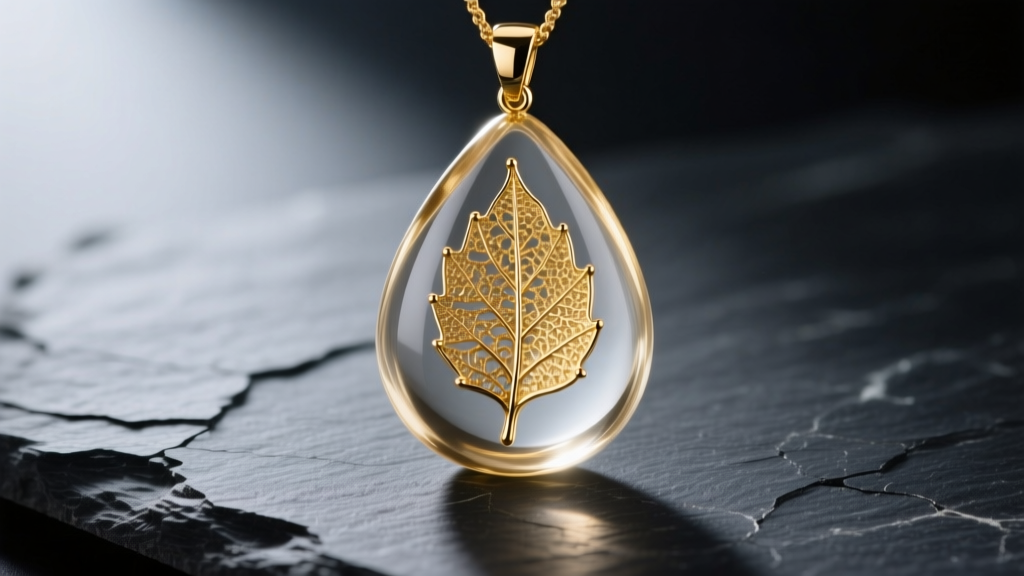
A gold leaf necklace is a breathtaking piece of wearable art. Whether the 24-karat gold foil is suspended in a teardrop of crystal-clear resin, sealed beneath a glass cabochon, or carefully hammered into an ultra-thin metallic pendant, it offers an ethereal, luminous quality that solid gold simply cannot replicate. However, this breathtaking beauty comes with a unique set of vulnerabilities. Genuine gold leaf is typically only 0.1 to 0.125 microns thick—so thin that a single careless wipe can cause micro-tears, delamination, or irreversible clouding of the encasing material.
If you own one of these delicate pieces, standard jewelry cleaning methods are not just ineffective; they are actively destructive. In this comprehensive 2026 care guide, we break down the exact conservation-grade protocols for cleaning, storing, and troubleshooting your gold leaf necklace to ensure it remains radiant for generations.
Understanding the Vulnerabilities of Gold Leaf Jewelry
Before applying any cleaning solution, it is crucial to understand the material science behind your necklace. According to the Gemological Institute of America (GIA), pure 24k gold is exceptionally soft, rating just 2.5 on the Mohs hardness scale. When beaten into leaf, it loses almost all structural integrity. To protect it, jewelers typically encase the leaf in epoxy resin, UV-cured resin, or glass.
- Resin Encasement: While resin protects the leaf from physical contact, it is highly porous at a microscopic level and prone to chemical degradation, yellowing from UV exposure, and scratching (Mohs 2-3).
- Glass Encasement: Glass is harder (Mohs 5.5-7) and resists scratching, but the adhesive seals holding the glass bezel together can be compromised by harsh solvents, leading to moisture ingress.
- Exposed Hammered Leaf: Some artisan pieces use ultra-thin hammered gold foil sealed with a microscopic wax coating. Friction will strip this wax, leaving the gold vulnerable to oxidation and physical flaking.
The Safe Cleaning Protocol for Gold Leaf Pendants
Never use commercial jewelry dips, polishing cloths, or ultrasonic cleaners on a gold leaf necklace. Ultrasonic cleaners use cavitation—microscopic bubbles that implode with intense force—which will instantly shatter delicate gold leaf or cause it to detach from its backing. Instead, follow this conservation-inspired wet cleaning method.
Step 1: The Distilled Water Pre-Soak
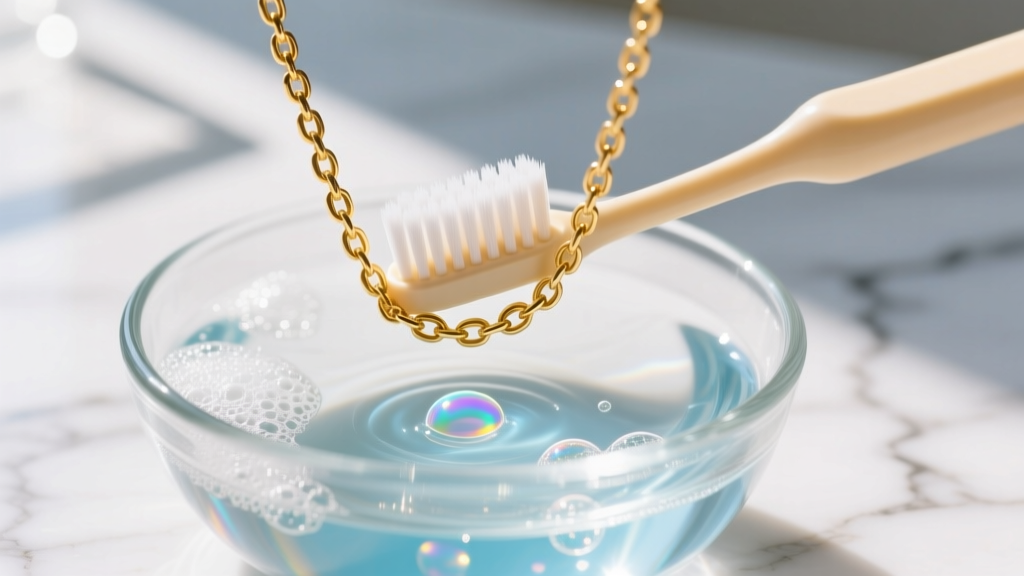
Fill a small glass bowl with lukewarm distilled water. Tap water contains trace minerals and chlorine that can leave micro-deposits on the resin or seep into chain links. Submerge only the chain and the pendant for 3 to 5 minutes. This loosens body oils and environmental dust without the need for friction.
Step 2: The Surfactant Application
Add exactly one drop of pH-neutral, phosphate-free liquid dish soap (such as Dawn Ultra or a mild Castile soap) to the water. Avoid soaps with added moisturizers, citrus extracts, or micro-beads, as these can leave a cloudy film on resin and glass.
Step 3: Targeted Agitation
Using a clean, ultra-soft baby toothbrush (look for silicone bristles if possible), gently brush the metal chain and the bail (the loop connecting the pendant). Do not brush the pendant itself. Instead, use a lint-free microfiber cloth dampened with the soapy solution to gently pat and wipe the surface of the resin or glass.
Step 4: The Rinse and Dry
Rinse the necklace under a gentle stream of lukewarm distilled water. Immediately pat dry with a fresh microfiber cloth. Allow the piece to air dry completely on a clean paper towel in a low-humidity room before storing. Never use a hair dryer or compressed air, as the heat can warp resin and the force can lift exposed gold leaf edges.
Chemicals to Avoid: The Gold Leaf Destroyers
The American Institute for Conservation emphasizes that historical gold leaf requires strictly controlled environments, and the same rules apply to modern gold leaf jewelry. Many common household cleaners will permanently ruin the optical clarity of the encasement or destroy the gold itself.
| Common Household Item | Chemical Composition | Effect on Gold Leaf Jewelry |
|---|---|---|
| Windex / Glass Cleaner | Ammonia | Causes irreversible clouding in epoxy resins and degrades glass adhesives. |
| Baking Soda Paste | Sodium Bicarbonate | Acts as an abrasive sandpaper, leaving permanent micro-scratches on resin. |
| Toothpaste | Hydrated Silica | Strips protective wax coatings and scuffs glass settings. |
| Rubbing Alcohol | Isopropyl Alcohol | Causes micro-fractures and 'crazing' in UV-cured resins over time. |
| Bleach / Pool Water | Chlorine | Attaches to alloy metals in the chain and breaks down resin molecular bonds. |
Proper Storage to Prevent Micro-Abrasions
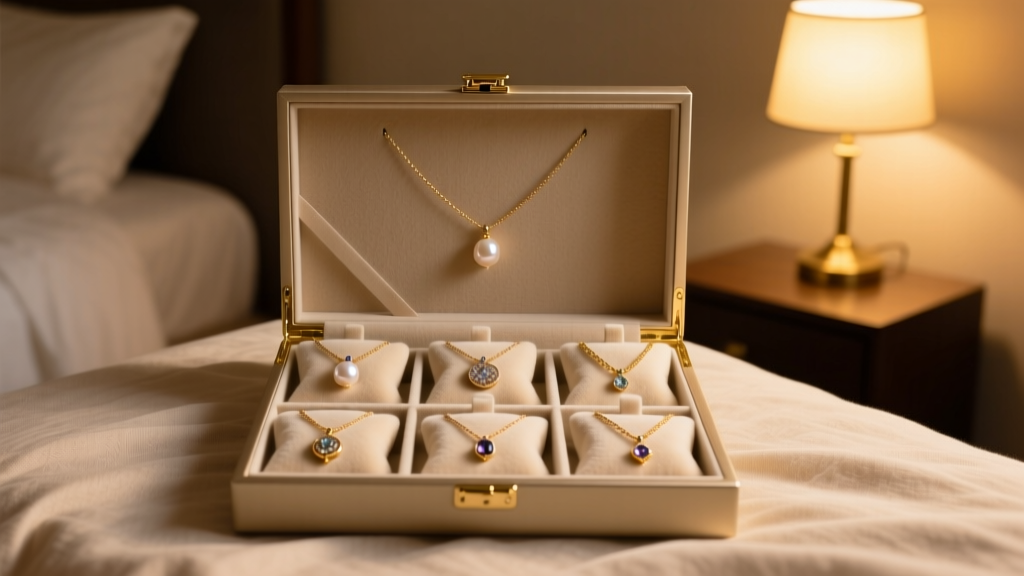
How you store your gold leaf necklace is just as critical as how you clean it. Resin and glass are highly susceptible to micro-abrasions when they rub against other jewelry pieces. Furthermore, the metal chain can easily tangle, and pulling a tangled chain can exert enough torque to snap the delicate bail attached to the fragile pendant.
"The key to preserving mixed-media jewelry is isolating the piece from volatile organic compounds (VOCs) and physical friction. Individual, inert plastic storage is non-negotiable for long-term preservation."
Always store your gold leaf necklace in an individual polyethylene zip-lock bag or an anti-tarnish flannel pouch. Never use polyvinyl chloride (PVC) plastic bags, as PVC off-gases hydrochloric acid over time, which will degrade resin and tarnish the metal chain. Include a small packet of silica gel in your storage box to maintain a relative humidity (RH) of around 40-50%, preventing moisture from seeping into the pendant's bezel.
Troubleshooting Common Gold Leaf Damage
Even with meticulous care, accidents happen. Here is how to address the most common issues faced by gold leaf necklace owners without causing further harm.
Issue: The Resin is Turning Yellow
The Cause: UV resin and certain epoxies naturally yellow when exposed to ultraviolet light and oxygen over time. This is a chemical breakdown of the polymer chains.
The Fix: Unfortunately, resin yellowing is irreversible. You cannot 'bleach' or polish the yellow out. To prevent this, never store your necklace in direct sunlight or on a sunny windowsill. If the yellowing is severe, contact the original artisan; some jewelers offer a 'repouring' service where they carefully extract the gold leaf and re-encase it in fresh, UV-stabilized resin.
Issue: Exposed Gold Leaf is Flaking or Lifting
The Cause: Physical trauma, friction from clothing, or exposure to high humidity has compromised the adhesive backing.
The Fix: Stop wearing the necklace immediately. Do not attempt to glue it down with cyanoacrylate (Super Glue), as the fumes will create a white, cloudy 'bloom' on the gold and the resin. If you must stabilize it before taking it to a professional jeweler, use a microscopic dab of Paraloid B-72, an acrylic conservation adhesive used by museum professionals that remains reversible and dries optically clear.
Issue: Moisture Trapped Inside Glass
The Cause: The bezel seal has failed, allowing water from a shower or pool to enter the glass chamber.
The Fix: Place the necklace in a sealed container filled with uncooked rice or fresh silica gel packets for 48 hours to draw out the moisture. Once clear, take it to a jeweler to have the bezel professionally re-sealed with a waterproof jeweler's epoxy.
Conclusion
A gold leaf necklace is a masterclass in delicate jewelry design, capturing the raw, organic beauty of pure gold in a way that feels almost magical. By abandoning harsh chemicals, avoiding ultrasonic cleaners, and adopting a gentle, conservation-minded approach to cleaning and storage, you can protect the fragile 24k foil and its encasement. Treat your piece with the respect a museum artifact demands, and it will continue to catch the light beautifully for decades to come.


