eNewton Heart Necklace Fixes: Tarnish & Chain Repair
Troubleshoot common eNewton heart necklace issues. Learn expert fixes for gold-filled tarnish, tangled chains, and broken clasps to restore your jewelry.

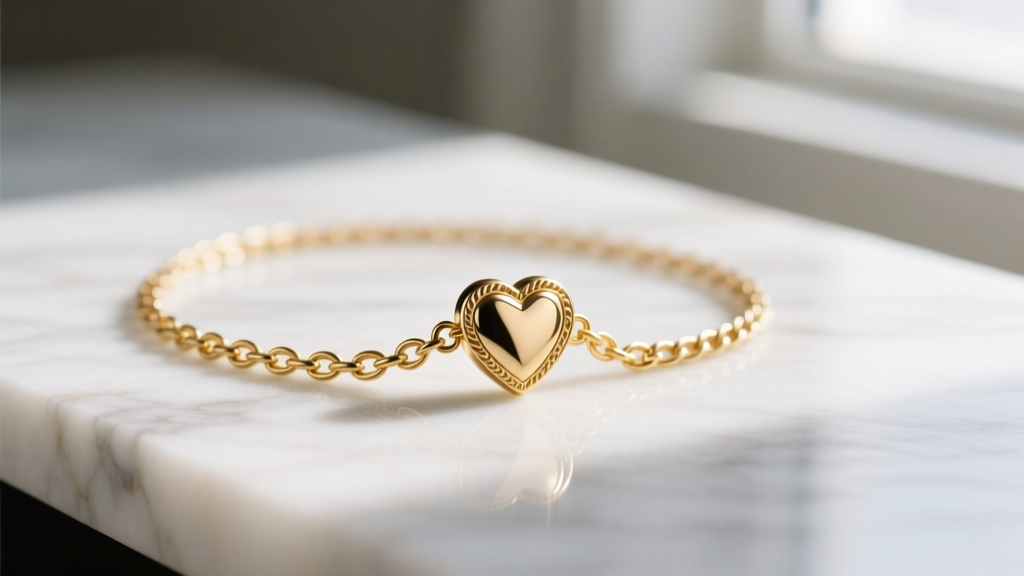
The eNewton heart necklace has become a staple in demi-fine jewelry collections, beloved for its minimalist aesthetic and accessible price point. However, like all delicate jewelry worn close to the skin, these pieces are subject to daily wear and tear. From sudden chain tangles to mysterious dark spots on the gold finish, owners frequently encounter issues that can make the necklace look worn out long before its actual lifespan is over.
As a jewelry repair specialist, I see these specific demi-fine pieces on my workbench weekly. The good news? Most issues with your eNewton heart necklace can be resolved at home without professional intervention. This troubleshooting guide will walk you through the exact material science behind your necklace and provide actionable, step-by-step fixes for the most common problems.
The Anatomy of Your eNewton Heart Necklace
Before applying any cleaning solutions or bending any metal, you must understand what your necklace is actually made of. eNewton primarily utilizes two types of metal construction for their gold pieces: 14k gold-filled wire and 14k gold vermeil castings. According to the Gemological Institute of America (GIA), gold-filled materials consist of a brass or copper core that is mechanically bonded with a thick outer layer of 14k gold (comprising at least 5% of the total weight). Gold vermeil, on the other hand, is a thick layer of gold electroplated over a sterling silver base.
Why does this matter for troubleshooting? Because the cleaning agents that safely remove tarnish from a solid sterling silver heart charm will permanently strip the gold layer off a vermeil piece if left on for too long. Furthermore, the delicate 1.0mm to 1.2mm cable chains used by eNewton have low tensile strength; pulling a knot with brute force will stretch the individual links past their yield point, causing permanent structural failure.
Troubleshooting Tarnish and Discoloration
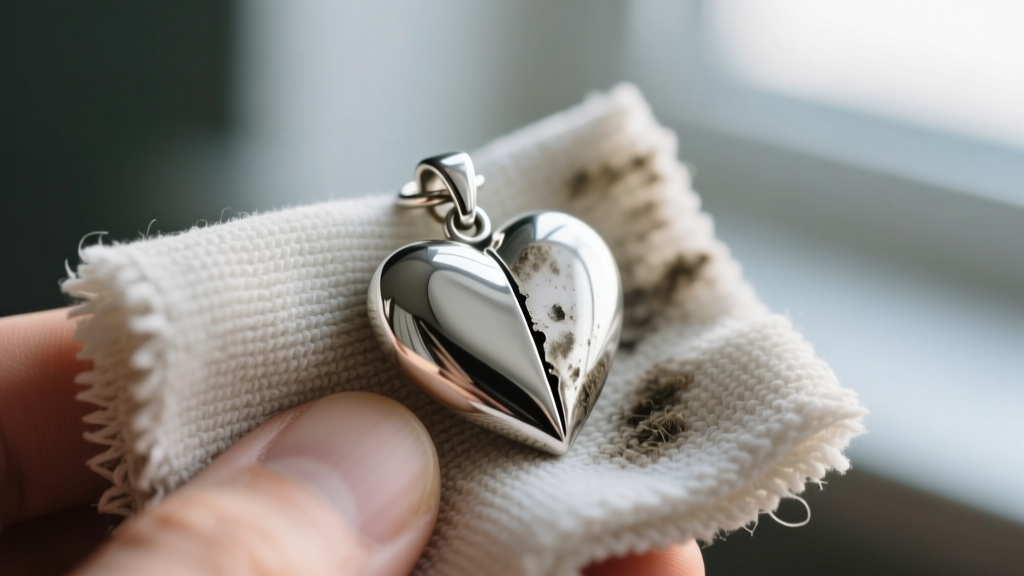
The Problem: You notice a brassy, dark, or greenish tint appearing on the back of the heart charm or along the clasp area of the chain.
The Cause: Tarnish on demi-fine jewelry is rarely the gold itself oxidizing. Instead, it is the underlying base metals (copper in brass, or silver in vermeil) reacting with sulfur, moisture, and the natural acids in your skin. When the microscopic outer layer of gold wears thin from friction, the base metal is exposed to the air and begins to oxidize.
The Safe Cleaning Protocol
Never use commercial silver dip solutions, ultrasonic cleaners, or baking soda pastes on your eNewton pieces. These are highly abrasive or chemically aggressive and will strip the gold layer entirely. Instead, follow this gentle restoration method:
- Prepare a Lukewarm Bath: Mix three drops of mild, phosphate-free dish soap (like Dawn) into a bowl of lukewarm distilled water. Avoid hot water, which can weaken the mechanical bonds in gold-filled wire.
- Soak Briefly: Submerge the necklace for exactly 3 to 5 minutes. This softens body oils and lotion buildup trapped in the chain links.
- Agitate Gently: Use an extra-soft baby toothbrush to lightly sweep the crevices of the heart charm and the lobster clasp. Do not scrub the flat surfaces.
- Rinse and Dry: Rinse under cool distilled water. Immediately pat dry with a lint-free microfiber cloth. Air-drying leaves hard water spots that mimic tarnish.
Rescuing Tangled and Kinked Cable Chains
The Problem: The delicate cable chain has formed a tight, microscopic knot, often near the jump ring connecting the heart pendant.
The Cause: Fine cable chains (under 1.5mm) easily slip through their own links when stored loosely in a jewelry box or when caught on a sweater thread. Pulling the chain to undo the knot compresses the links, creating a rigid kink that can snap the wire.
The Pin and Oil Method
To untangle a severe knot without stretching the gold-filled wire, you need to eliminate friction.
- Place the necklace flat on a hard, non-porous surface like a glass table or ceramic plate.
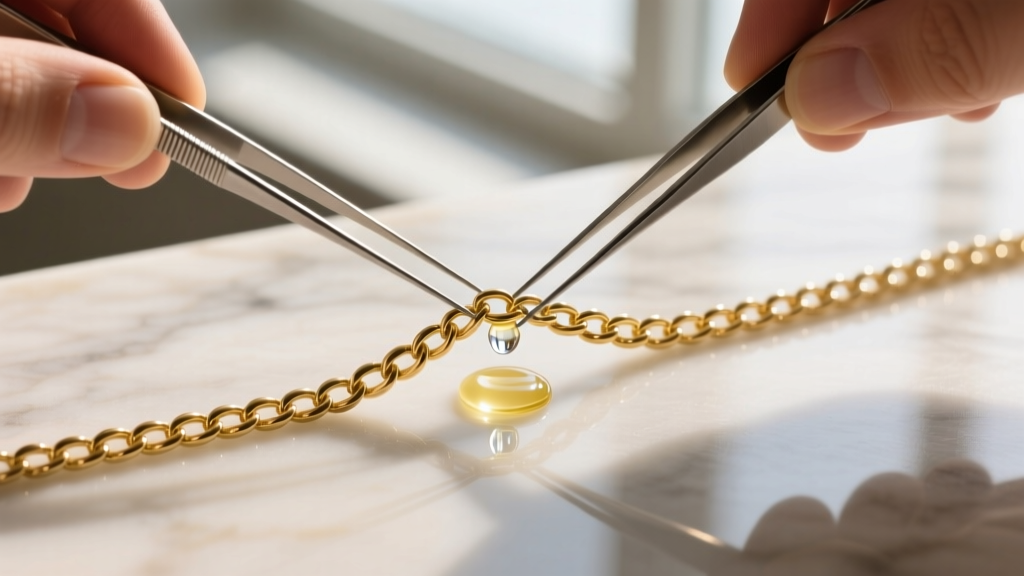
- Apply a single drop of mineral oil or baby oil directly onto the center of the knot. This acts as a microscopic lubricant.
- Take two fine sewing pins or beading awls. Insert the tips of both pins into the center of the knot.
- Gently wiggle the pins outward in opposite directions. Do not pull the chain ends; let the pins do the work of loosening the links.
- Once the knot is loose, wipe the chain thoroughly with a microfiber cloth and a drop of dish soap to remove the oil residue.
Fixing Jump Rings and Clasp Tension
The Problem: The heart pendant keeps sliding off the chain, or the lobster clasp refuses to snap shut securely.
The Cause: The jump ring holding the heart charm has been pulled open rather than twisted, creating a gap. Alternatively, the internal spring mechanism of the lobster clasp is clogged with lotion or debris.
Proper Jump Ring Manipulation
According to guidelines from Jewelers of America, jump rings should never be pulled apart laterally, as this distorts their perfect circular shape and weakens the metal. To close a gap in the jump ring holding your eNewton heart charm:
- Use two pairs of flat-nose or chain-nose jewelry pliers.
- Grip the jump ring on either side of the split.
- Twist one hand toward you and the other away from you, creating a lateral sliding motion.
- Wiggle the ends back and forth until you feel them click perfectly flush against each other. This ensures the gap is entirely closed, preventing the delicate chain from slipping through.
Clearing a Sticky Lobster Clasp
If your clasp feels stiff or won't snap back, the tiny spring inside is likely jammed with hand cream or dead skin cells. Dip a cotton swab in isopropyl alcohol (70% or higher) and run it over the clasp lever while clicking it open and closed repeatedly. The alcohol will dissolve the oils and evaporate quickly without causing rust or tarnish.
Troubleshooting Quick Reference Chart
Use this diagnostic table to quickly identify your necklace issue and apply the correct solution without causing collateral damage to the gold finish.
| Symptom | Likely Cause | DIY Fix | What to Avoid |
|---|---|---|---|
| Dark spots on the heart charm | Silver oxidation (vermeil) or brass exposure | Polish gently with a treated silver cloth on the affected spot only | Submerging in liquid silver dip |
| Chain feels stiff or kinked | Links bent out of their natural plane | Roll the chain between your thumb and index finger over a soft pad | Pulling the chain taut with both hands |
| Clasp won't stay closed | Debris in the spring mechanism or bent lever | Clean with isopropyl alcohol and a cotton swab | Using WD-40 or household oils |
| Pendant detaches frequently | Jump ring pulled open laterally | Twist closed using two pairs of flat-nose pliers | Squeezing the ring with one pair of pliers |
Cost Analysis: Repair vs. Replace
Because eNewton necklaces typically retail between $55 and $85, you must weigh the cost of professional repair against replacement. If your delicate cable chain snaps cleanly, a professional jeweler can laser-weld the link back together. However, laser welding a 1.0mm gold-filled chain usually costs between $40 and $60, and the heat can sometimes discolor the surrounding gold layer. The Federal Trade Commission's Jewelry Guides note that gold-filled items cannot be easily melted and recast like solid gold, making traditional soldering nearly impossible without leaving a visible dark seam.
The Expert Verdict: If the chain breaks near the clasp, a jeweler can easily replace the end links and clasp for about $25. If the chain breaks in the middle, or if the gold layer has completely worn off the heart charm revealing bare brass, it is more cost-effective to retire the piece and purchase a new one. Save your repair budget for solid 14k gold or heavy vermeil pieces.
Long-Term Storage to Prevent Micro-Scratches
Troubleshooting is reactive; proper storage is proactive. The most common reason the gold finish on an eNewton heart necklace degrades prematurely is micro-scratching caused by storing it in a communal jewelry box. When harder gemstones or solid metals rub against gold-filled wire, they act like sandpaper, slowly wearing away the gold layer.
Always store your necklace in an individual, airtight polyethylene ziplock bag. Squeeze out as much air as possible before sealing to slow down oxidation. For an extra layer of protection, drop a 3M anti-tarnish strip into the bag. These strips absorb sulfur gases in the immediate environment and can extend the pristine life of your demi-fine jewelry by years, ensuring your heart necklace remains a lasting staple in your everyday rotation.


