How to Clean a Gold Necklace: A Complete Care Guide
Learn how to safely clean, polish, and restore your gold necklace with this step-by-step guide. Expert tips on karat grades, solutions, and storage.

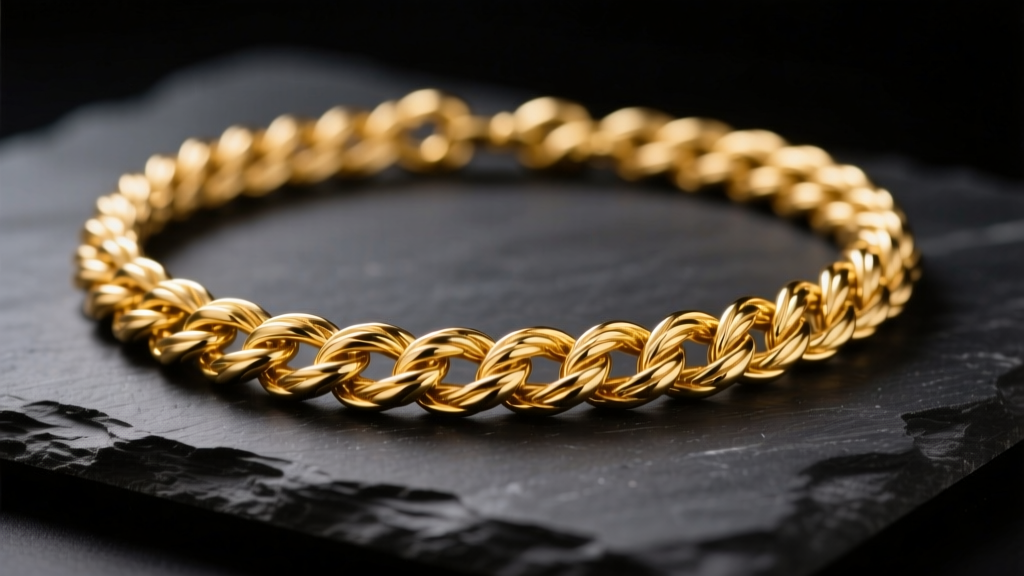
A pristine gold necklace is a cornerstone of any fine jewelry collection, offering unmatched versatility and timeless elegance. However, daily wear exposes these pieces to environmental pollutants, cosmetic residues, and natural body oils that can severely diminish their brilliance. When evaluating a vintage gold necklace, gold necklace hallmarks are your best indicator of its metallurgical composition, which in turn dictates the exact cleaning protocols you must follow to avoid irreversible damage. According to the Gemological Institute of America (GIA), understanding the specific alloy makeup of your jewelry is the critical first step in establishing a safe, effective maintenance routine.
This comprehensive, step-by-step guide will walk you through the exact metallurgical science behind gold tarnish, provide a meticulous at-home cleaning protocol, and outline advanced restoration techniques for heavily soiled chains and pendants. Whether you own a delicate 22K gold rope chain or a durable 10K gold figaro link, these expert methodologies will restore your jewelry to its original luster.
The Metallurgy of Tarnish: Why Gold Loses Its Luster
To properly clean gold, you must first understand why it tarnishes. Pure 24-karat gold is a noble metal, meaning it is highly resistant to corrosion and oxidation. It will never tarnish, rust, or lose its color. However, pure gold is exceptionally soft (rating just 2.5 to 3 on the Mohs hardness scale), making it entirely unsuitable for everyday necklace chains that require structural integrity.
Alloy Composition and Oxidation
To increase durability, jewelers alloy pure gold with base metals such as copper, silver, zinc, and nickel. It is these secondary metals—not the gold itself—that react with oxygen, sulfur, and moisture in the environment to create tarnish. For instance, a 14K gold necklace contains only 58.3% pure gold, leaving 41.7% of the metal mass vulnerable to oxidation. When the copper within a 14K or 18K alloy reacts with sulfur compounds in the air or on your skin, it forms copper sulfide, manifesting as a dull, dark film on the surface of the chain links.
Furthermore, exposure to harsh chemicals like chlorine (found in swimming pools and household bleach) can trigger a destructive process known as stress corrosion cracking. Chlorine attacks the alloy metals at the microscopic level, particularly at the solder joints of the clasp and jump rings, leading to sudden, catastrophic chain breakage. The Jewelers of America strongly advises removing all gold jewelry before swimming or using harsh cleaning agents to prevent this irreversible metallurgical fatigue.
Step-by-Step Guide: How to Clean a Gold Necklace at Home
For routine maintenance and the removal of everyday oils, lotions, and environmental dust, a gentle aqueous cleaning solution is the safest and most effective method. This process lifts debris without abrading the metal surface.
Materials Required
- Mild Dish Soap: Use a pH-neutral, phosphate-free liquid dish soap (such as original Dawn). Avoid soaps with heavy moisturizers or exfoliating beads.
- Distilled or Filtered Water: Tap water contains hard minerals like calcium and magnesium that can leave microscopic water spots on the gold surface.
- Extra-Soft Baby Toothbrush: Standard or hard-bristled brushes can leave micro-scratches, especially on higher-karat gold. Ensure the bristles are exceptionally soft.
- Lint-Free Microfiber Cloth: Never use paper towels or facial tissues, as they are manufactured from wood pulp and will cause microscopic abrasions on the metal.
- Two Small Glass or Ceramic Bowls: Avoid metal bowls that could cause galvanic reactions or scratch the jewelry.
The 5-Step Cleaning Protocol
Step 1: The Preparatory Soak
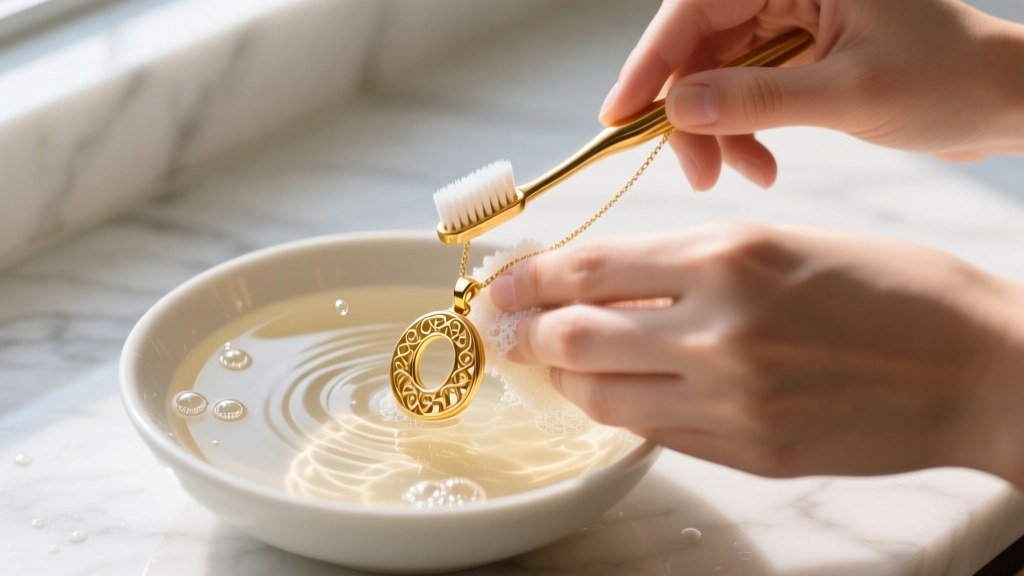
Fill the first bowl with lukewarm distilled water (approximately 95°F or 35°C). Add three to four drops of the pH-neutral dish soap and gently agitate the water to create a mild lather. Submerge your gold necklace completely and let it soak for 15 to 20 minutes. This crucial step emulsifies trapped sebum, cosmetic oils, and dead skin cells lodged deep within the chain links.
Step 2: Targeted Agitation
Remove the necklace from the solution. Using the extra-soft baby toothbrush, gently brush the chain and pendant. Use light, circular motions, paying special attention to the clasp mechanism, jump rings, and the back of any pendants where debris accumulates. Never apply heavy pressure; let the bristles do the work.
Step 3: The Purified Rinse
Fill the second bowl with clean, lukewarm distilled water. Submerge the necklace and gently swish it around to rinse away all soap residue. Soap film left behind will dry into a dull, cloudy layer that obscures the gold's natural reflectivity.
Step 4: The Microfiber Dry
Lay the necklace flat on a clean, dry microfiber cloth. Gently pat the chain to absorb the bulk of the moisture. Then, carefully thread the cloth between the links if dealing with a thick chain (like a Cuban link or rope chain) to ensure no water remains trapped in the crevices.
Step 5: Air Curing
Allow the necklace to air dry completely for an additional 30 minutes in a well-ventilated area before storing it. Storing a damp necklace in an enclosed space accelerates the oxidation of the alloy metals.
Advanced Restoration: Dealing with Heavy Tarnish
If your gold necklace has developed severe, dark tarnish that the soap soak did not remove, you must escalate your cleaning methodology based on the specific karat grade of the piece.
| Karat Grade | Purity Level | Tarnish Susceptibility | Recommended Advanced Cleaning Method |
|---|---|---|---|
| 24K Gold | 99.9% | None (Does not tarnish) | Soap and water only. Never use chemicals. |
| 22K Gold | 91.6% | Very Low | Mild soap soak; gentle polishing cloth. |
| 18K Gold | 75.0% | Low to Moderate | Ammonia solution (1 part ammonia to 6 parts water) for 60 seconds max. Rinse immediately. |
| 14K Gold | 58.3% | Moderate to High | Commercial non-abrasive gold dip; ultrasonic cleaner (if no porous gemstones are present). |
| 10K Gold | 41.7% | High | Professional jeweler polishing to remove deep copper sulfide layers. |
The Ammonia Degreaser Technique (18K and Below Only)
For heavily soiled 14K or 18K gold chains without gemstones, a diluted ammonia solution acts as a powerful degreaser and mild tarnish remover. Mix one part clear household ammonia with six parts lukewarm water. Submerge the necklace for no more than 60 seconds. Prolonged exposure to ammonia can cause stress corrosion in the alloy metals and will permanently cloud or dissolve porous gemstones like pearls, opals, turquoise, and emeralds. Rinse thoroughly with distilled water immediately after removal.
Ultrasonic Cleaning Warnings
While ultrasonic cleaners use high-frequency sound waves to cavitate and dislodge dirt, they pose severe risks to certain jewelry. Never place a gold necklace with fracture-filled diamonds, treated emeralds, or organic gems (pearls, coral, amber) into an ultrasonic machine. The intense vibrations can shatter fragile stones or strip away fracture-filling resins, leaving the gemstones opaque and heavily fractured.
Preventative Care and Proper Storage Techniques
The most effective way to maintain a gold necklace is to prevent tarnish and physical damage before they occur. Implementing a strict storage and wearing protocol will drastically reduce the frequency of deep cleanings required.
The "Last On, First Off" Rule
Always put your gold necklace on after you have applied all cosmetics, perfumes, hairsprays, and lotions. The alcohols and volatile organic compounds (VOCs) in fragrances, as well as the emollients in lotions, create a sticky film on the gold that attracts environmental dust and accelerates the oxidation of the alloy metals. Conversely, the necklace should be the first item you remove when returning home.
Optimal Storage Environments
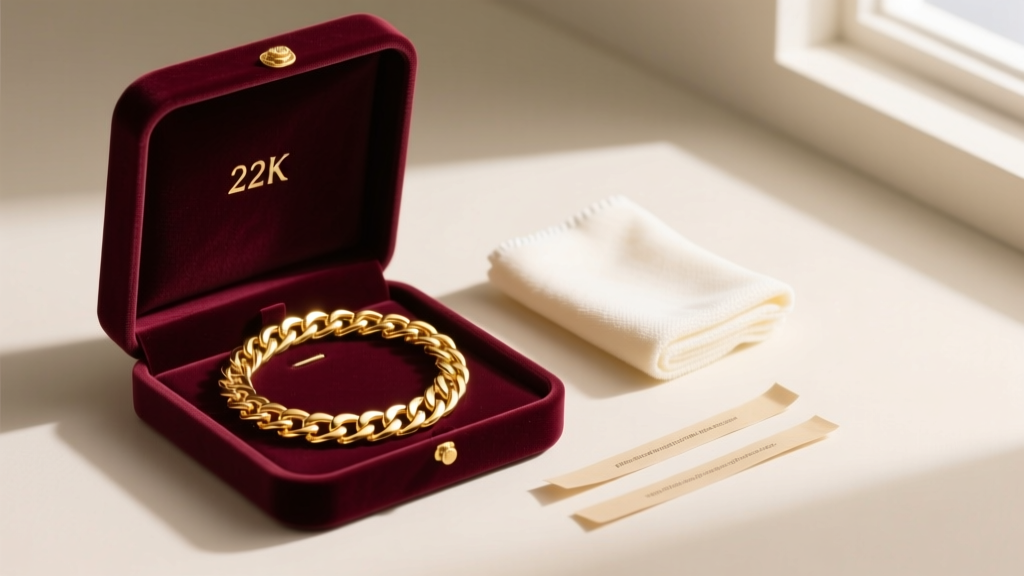
Store your gold necklaces individually in soft, anti-tarnish flannel pouches or a lined jewelry box. Never toss multiple chains into a single drawer; gold is soft, and the friction between chains will cause micro-scratches and severe tangling. Place a 3M anti-tarnish strip inside your jewelry box or storage pouch. These strips contain activated carbon and silver salts that absorb atmospheric sulfur and hydrogen sulfide gases, neutralizing the primary catalysts for alloy oxidation before they can reach your jewelry.
When to Seek Professional Jewelry Cleaning
While at-home maintenance is excellent for surface oils and mild tarnish, certain situations require the expertise of a professional bench jeweler. If your gold necklace features deep, black copper sulfide tarnish that does not respond to chemical dips, a jeweler can perform a controlled mechanical polish using a motorized buffing wheel and specialized jeweler's rouge (iron oxide compound). This process removes a microscopic layer of the tarnished metal, revealing the pristine, untarnished gold beneath.
Additionally, if your necklace features intricate filigree work, pavé diamond settings, or a damaged clasp, professional ultrasonic cleaning combined with a thorough prong and solder-joint inspection is the only safe option. A professional will also check for the aforementioned stress corrosion cracking at the jump rings, ensuring your valuable gold necklace remains secure for decades to come.


