Deer Antler Necklace Styling: 2026 Trend Analysis & Care Guide
Discover 2026 deer antler necklace trends, ethical sourcing guides, and expert styling tips for organic bone jewelry. Elevate your earth-core aesthetic.

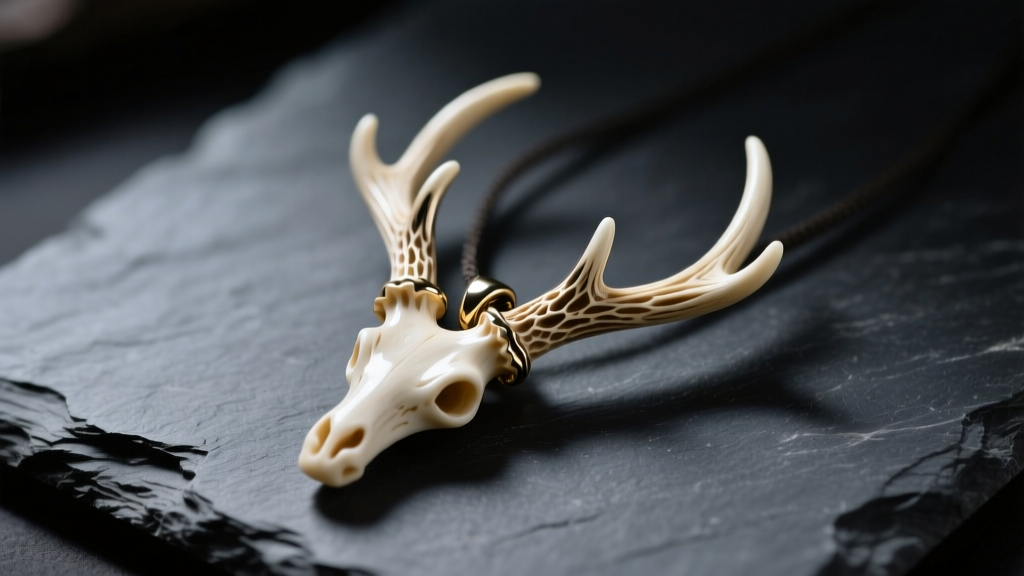
The 2026 Resurgence: Earth-Core and Feral Fashion
As we navigate the jewelry landscape of 2026, the pendulum has swung decisively away from the ultra-minimalist, high-polish gold aesthetics that dominated the early 2020s. In its place, a raw, tactile movement has taken root. Driven by the evolution of "gorpcore" into what fashion forecasters are now calling "earth-core" and "feral fashion," organic materials are experiencing a massive renaissance. At the forefront of this movement is the deer antler necklace. No longer relegated to rustic souvenir shops or hunting lodges, contemporary antler pendants are being reimagined by artisan jewelers who treat this organic material with the same reverence as ivory or jade.
Styling a deer antler necklace today requires an understanding of both its unique material properties and its cultural resonance. This comprehensive guide breaks down the anatomy, ethical sourcing, hardware pairings, and preservation techniques necessary to master this striking organic accessory.
Material Anatomy: Base, Beam, and Tine
To properly style and care for antler jewelry, one must first understand its biological structure. Unlike horns, which are permanent keratin sheaths, antlers are true bone that grow, calcify, and shed annually. A deer antler necklace can be carved from three distinct anatomical zones, each offering different aesthetic and structural properties:
- The Burr (Base): The pedicle attachment point is highly textured, dense, and porous. Jewelers often leave the burr unpolished to provide a rugged, organic contrast against smooth metals. However, its high porosity makes it susceptible to trapping skin oils and lotions.
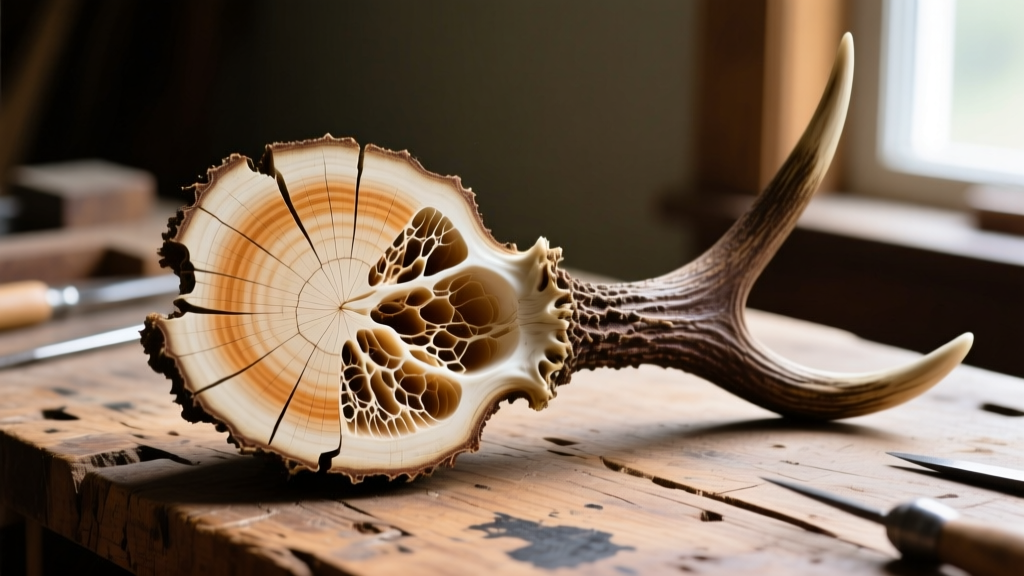
- The Beam (Mid-section): The main shaft offers the best balance of density and workability. Cross-sections of the beam reveal a striking contrast between the hard, ivory-like outer cortex and the darker, spongy inner medulla.
- The Tine (Points): The tips are entirely solid, dense cortical bone. Tines take a brilliant, glass-like polish and are frequently used for delicate, high-detail carving or minimalist geometric pendants.
With a Mohs hardness rating of approximately 2.5 to 3.0, antler is relatively soft compared to quartz or agate. This means a deer antler necklace must be protected from abrasive surfaces and stored separately from harder gemstones to prevent micro-scratches.
Ethical Sourcing and Regulatory Compliance
The most critical conversation surrounding organic jewelry in 2026 is ethical provenance. Consumers are demanding transparency, and the antler market has responded. The gold standard for antler jewelry is "naturally shed" (often called "sheds"), which are collected from the forest floor after the annual winter drop. This ensures a 100% cruelty-free, sustainable supply chain.
However, international trade and even interstate commerce of cervid (deer family) parts are heavily regulated to prevent the spread of Chronic Wasting Disease (CWD). When sourcing or shipping a deer antler necklace across borders, jewelers must comply with USDA APHIS veterinary permit regulations and ensure the material has been properly sterilized or sealed. Furthermore, while common species like the White-tailed deer are generally exempt from CITES restrictions, rarer species or international exports require meticulous documentation to prove the material is not derived from endangered populations.
Species Comparison: Density and Aesthetic Profiles
Not all antlers are created equal. The species of origin drastically dictates the weight, color palette, and carving potential of the final pendant.
| Species | Cortex Density | Color Profile | Best Jewelry Application |
|---|---|---|---|
| White-Tailed Deer | Medium | Pale cream to warm tan | Intricate carving, lightweight pendants |
| Elk (Wapiti) | Very High | Deep mahogany to ivory | Heavy statement pieces, cross-section slices |
| Red Deer | High | Earthy ochre and brown | Polished tines, minimalist geometric shapes |
| Fallow Deer | Medium-Low | Speckled, pale ivory | Delicate wire-wrapped pendants, inlay work |
Chain Pairings and Hardware Selection
A common failure point in mass-produced antler jewelry is the hardware. Because antler is hygroscopic (meaning it absorbs and releases moisture from the air), it expands and contracts microscopically. Traditional glued-in jump rings or tension-set bails will eventually fail as the bone shifts.
Expert Hardware Recommendations
- Threaded Bails: For a secure, permanent fixture, the antler should be drilled and tapped to accept a threaded sterling silver or titanium bail, secured with a two-part jeweler's epoxy rather than cyanoacrylate (super glue), which degrades organic bone over time.
- Wire Wrapping: Using 20-gauge dead-soft oxidized sterling silver wire allows the pendant to be cradled without the need for invasive drilling. The dark oxidation of the silver perfectly complements the earthy tones of the antler.
- Chain Selection: Avoid delicate cable chains. A deer antler necklace carries visual and physical weight. Opt for a 2mm oxidized sterling silver wheat chain, or for a more rugged aesthetic, a 3mm braided bison leather cord with a magnetic neodymium clasp. Standard lengths should be 24 to 28 inches to allow the pendant to rest on the sternum, below the collarbone.
Neckline Mapping: How to Wear Antler Pendants
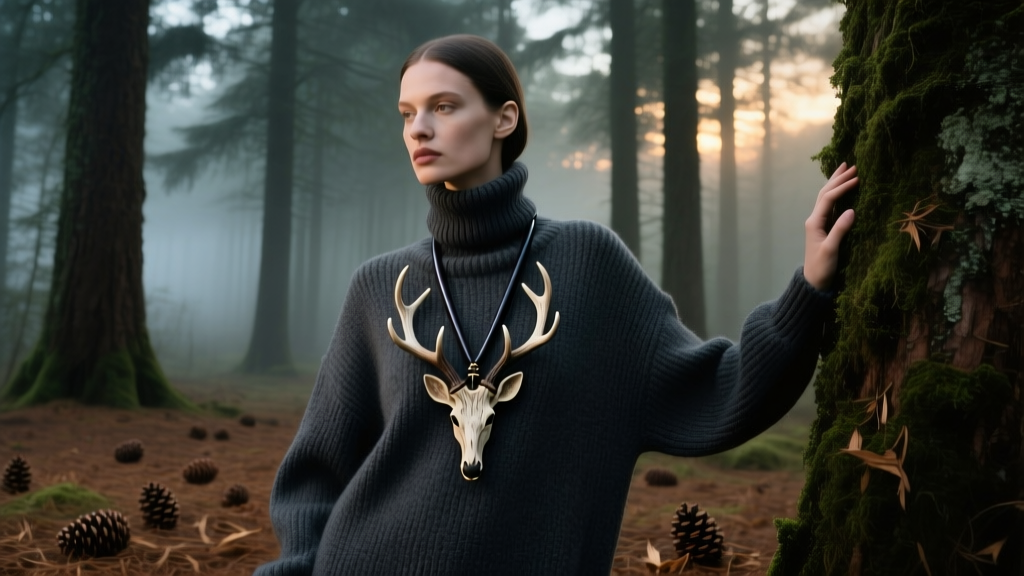
Styling a deer antler necklace requires balancing its inherent ruggedness with your wardrobe. The "feral fashion" trend of 2026 thrives on juxtaposition—mixing raw, wild elements with refined, structured tailoring.
- The Chunky Knit: A 28-inch leather cord paired with a large elk antler cross-section pendant is the ultimate companion for heavy cable-knit turtlenecks and fisherman sweaters. The matte texture of the wool contrasts beautifully with the polished bone.
- The Plunging V-Neck: For a more feminine, neo-bohemian look, layer a delicate, wire-wrapped fallow deer tine pendant over a silk-blend V-neck blouse. The organic shape softens the sharp lines of the neckline.
- Flannel and Denim: The heritage workwear look demands a pendant featuring the unpolished burr, hung on a heavy oxidized silver rope chain. This grounds the piece in its utilitarian roots while maintaining a high-fashion edge.
"Organic gems like antler, bone, and horn are not static materials; they are living archives of the environment. Treating them with the same structural respect as a sapphire or diamond is what separates artisan jewelry from cheap trinkets." — Master Jeweler & Organic Materials Specialist
Preservation: Combating Hygroscopic Degradation
The greatest threat to a deer antler necklace is not physical impact, but environmental instability. Because antler is hygroscopic, exposing it to extreme dryness (like winter indoor heating) can cause the medullary cavity to crack. Conversely, high humidity or prolonged contact with sweat can cause the porous burr to harbor bacteria and develop an unpleasant odor.
The 2026 Care Protocol
- Sealing: Once a year, lightly buff the pendant with microcrystalline wax (such as Renaissance Wax). This museum-grade wax stabilizes the moisture content without leaving a greasy residue or altering the natural color of the bone.
- Cleaning: Never use ultrasonic cleaners, steamers, or chemical silver dips on a piece containing antler. Wipe gently with a barely damp microfiber cloth and dry immediately.
- Storage: Store your necklace in a breathable cotton pouch rather than an airtight plastic bag, which can trap moisture and encourage mold growth in the porous sections of the bone. Include a small silica gel packet in your jewelry box to regulate ambient humidity.
By understanding the biological origins, structural vulnerabilities, and styling potential of this remarkable material, you can confidently integrate a deer antler necklace into your wardrobe. It is more than just a trend; it is a wearable connection to the wild, demanding both respect and expert care.


