Eren Key Necklace Value Guide: Materials and Pricing
Discover the true value of an Eren key necklace. We compare alloy, brass, and sterling silver replicas to help you budget for the perfect anime pendant.

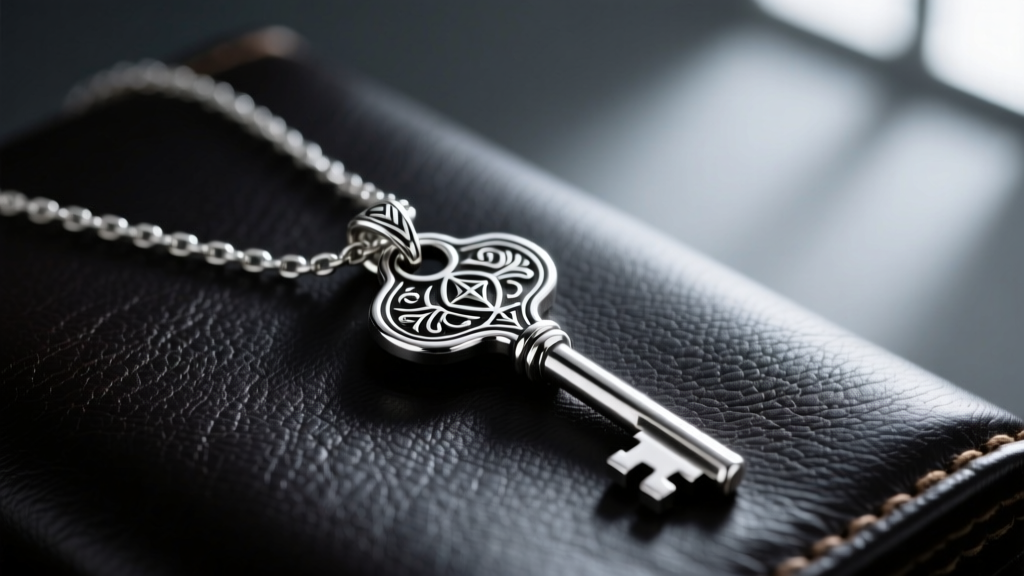
The anime merchandise landscape in 2026 has matured significantly. Fans and cosplayers no longer settle for flimsy, mass-produced convention trinkets that turn their skin green after a single wear. Among the most iconic pieces of jewelry in modern anime history is the Eren key necklace, a direct replica of the basement key left behind by Grisha Yeager in Attack on Titan. While it serves as a profound symbol of lore, freedom, and mystery within the series, in the real world, it presents a unique challenge for buyers navigating a market flooded with varying qualities of replicas.
Whether you are building a screen-accurate cosplay, looking for a subtle everyday pendant, or simply want a durable piece of fandom jewelry, understanding the metallurgy and pricing tiers of these pendants is crucial. This comprehensive value assessment breaks down exactly what you should pay based on material grades, casting methods, and chain mechanics, ensuring you never overpay for subpar metalwork.
The Anatomy of the Basement Key Pendant
Before assessing value, we must establish the baseline for design accuracy. A high-value Eren key necklace requires precise attention to the original prop's anatomy. The pendant consists of three main sections: the ornate bow (the top loop with its distinct winged or floral motifs), the elongated shaft, and the complex bit (the teeth that engage the lock).
Cheap replicas often simplify the bit, reducing the intricate teeth to a basic jagged edge, and flatten the bow's engraved details. Premium replicas utilize 3D scanning or meticulous hand-carved wax models to capture the subtle asymmetries and wear marks of the original prop. When evaluating a listing, zoom in on the bit of the key. If the teeth look like a generic skeleton key rather than the specific, multi-layered grooves seen in the anime, you are looking at a low-effort, low-value casting.
Material Breakdown: Alloy vs. Brass vs. Sterling Silver
The single largest factor dictating the price and longevity of an Eren key necklace is the base metal. The market is currently dominated by three primary materials, each with distinct failure modes and aesthetic qualities.
Zinc Alloy (Zamak)
Zinc alloy, often marketed simply as 'alloy' or 'Tibetan silver,' is the standard for budget anime jewelry. It is created through die-casting, where molten zinc mixed with aluminum, magnesium, and copper is injected into steel molds. While this allows for high-detail mass production at a fraction of the cost, Zamak is highly susceptible to 'zinc pest'—a slow, intergranular corrosion that causes the metal to swell, crack, and crumble over time, especially in humid environments. Furthermore, alloy pendants are usually plated with a thin layer of silver or bronze. Once this plating wears off from friction against the skin, the underlying copper and nickel can cause severe contact dermatitis.
Solid Brass
For the mid-tier buyer, solid brass offers a massive upgrade in structural integrity. Brass is an alloy of copper and zinc, prized in jewelry making for its excellent machinability and natural golden-bronze hue. High-end brass Eren keys are often CNC-machined or sand-cast, resulting in a heavy, satisfying pendant that will not crumble. Brass will naturally oxidize and develop a patina, which actually enhances the antique, weathered look of the basement key. However, it requires occasional polishing with a brass-specific compound to maintain its shine if a polished look is preferred.
925 Sterling Silver
At the apex of the market sits 925 sterling silver. Comprising 92.5% pure silver and 7.5% copper, this material is typically produced using lost-wax casting, which captures microscopic details of the key's engravings. Sterling silver is hypoallergenic, inherently valuable, and takes oxidation treatments beautifully. According to the Gemological Institute of America (GIA), sterling silver requires specific care to prevent sulfur-induced tarnishing, but it remains the ultimate choice for heirloom-quality anime jewelry.
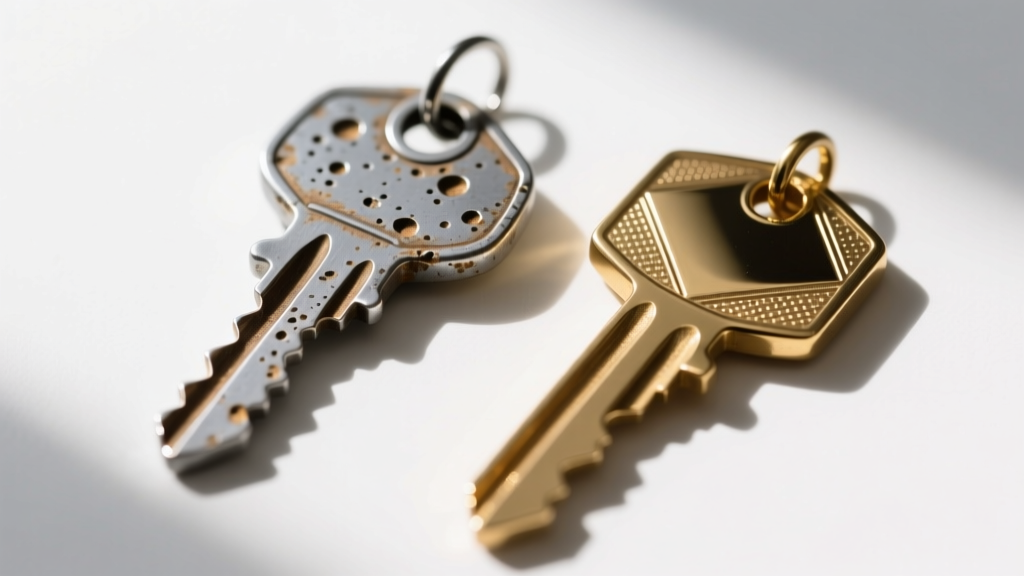
Price and Material Comparison Chart
To help you budget effectively, refer to the table below. These price ranges reflect direct-to-consumer artisan pricing in 2026, excluding inflated 'boutique' markups.
| Material | Avg. Price Range | Casting Method | Tarnish / Corrosion Profile | Estimated Lifespan |
|---|---|---|---|---|
| Zinc Alloy (Plated) | $8 - $18 | Die-Casting | Plating flakes; high skin irritation risk | 1 - 3 Years |
| Solid Brass | $30 - $55 | Sand Cast / CNC | Develops natural patina; easily polished | Lifetime |
| 925 Sterling Silver | $85 - $160 | Lost-Wax Casting | Tarnishes with sulfur exposure; hypoallergenic | Heirloom |
Chain Quality: The Hidden Cost Factor
A pendant is only as secure as the chain holding it. Many sellers pair a high-quality brass or silver Eren key with a flimsy, hollow-base metal chain to artificially inflate their profit margins. When assessing the overall value of the necklace, you must scrutinize the chain's gauge, weave, and clasp.
Gauge and Weave Mechanics
The basement key is a visually heavy, vertically oriented pendant. It requires a chain that provides visual balance without snapping under dynamic movement. The sweet spot for an Eren key is a 1.5mm cable chain. Chains thinner than 1.2mm are prone to tensile failure and kinking, while chains thicker than 2.5mm will visually overpower the delicate engravings on the key's bow. According to metalworking guidelines from Rio Grande, a solid 1.5mm stainless steel or sterling silver cable chain offers the optimal ratio of flexibility to tensile strength for pendants weighing between 10 and 25 grams.
Clasp Failure Modes
Never accept a spring-ring clasp on a premium anime pendant. Spring rings rely on a tiny internal tension spring that frequently fails, pops open, or jams, leading to lost jewelry. A high-value Eren key necklace must feature a lobster clasp. Lobster clasps utilize a stronger, dual-spring mechanism and a wider gate, ensuring the heavy key remains securely around your neck during conventions or daily commutes.
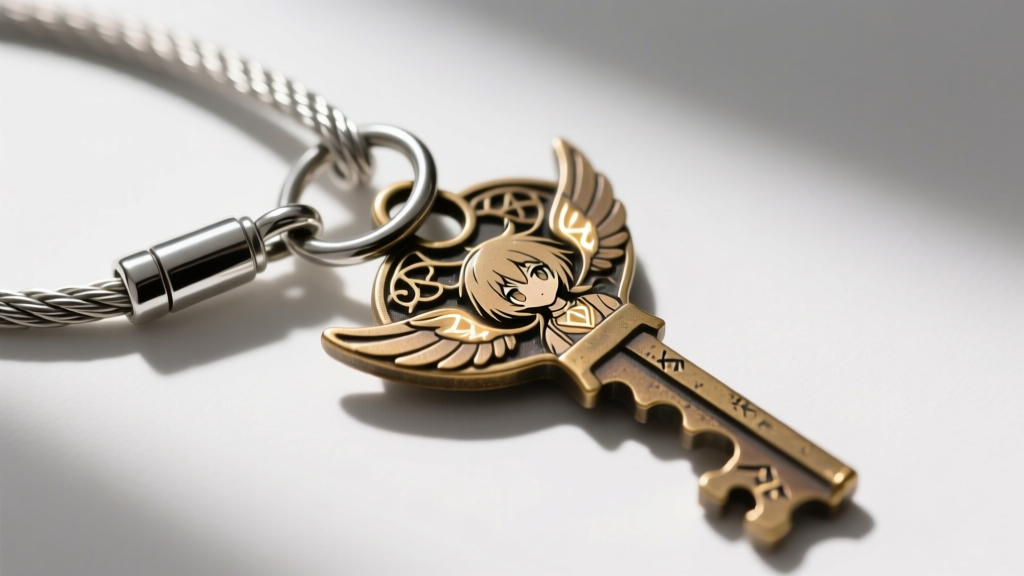
How to Spot Overpriced Dropshipped Replicas
The 2026 anime jewelry market is unfortunately saturated with dropshippers who source $4 zinc alloy keys from overseas wholesale platforms, repackage them in branded cardboard boxes, and sell them for $35 as 'premium cosplay gear.' To protect your budget, employ these verification tactics:
- Check for Mold Lines: Zoom in on the edges of the key shaft. Die-cast zinc alloy keys will often have a faint, raised vertical line running down the side where the two halves of the steel mold met. CNC-machined brass or hand-finished silver will have smooth, continuous edges.
- Inspect the Jump Ring: The jump ring connecting the key to the chain should be soldered shut or made of thick, hard-tempered wire. If the gap in the jump ring is wide enough to slide a piece of paper through, the pendant will eventually slip off and be lost.
- Reverse Image Search: If a 'boutique' anime store is selling the key for $40, take their primary product photo and run it through a reverse image lens. If identical photos appear on wholesale marketplaces for $3, you are paying a massive markup for a base-metal product.
The Art of Patina and Antiquing
For those seeking ultimate screen accuracy, the value of an Eren key necklace is heavily tied to its finish. The original prop is not a shiny, polished piece of metal; it is an aged, weathered artifact. Artisans achieve this look using liver of sulfur, a chemical compound that rapidly oxidizes the surface of silver or brass, turning it black. The jeweler then uses a polishing cloth to remove the black oxidation from the high points of the key, leaving the dark patina trapped in the deep engravings of the bow and shaft.
This high-contrast antiquing process not only makes the intricate details pop but also mimics decades of in-universe wear. When purchasing from independent silversmiths, always look for listings that specify 'hand-antiqued' or 'oxidized finish,' as this requires skilled labor and significantly increases the artistic value of the piece compared to a flat, machine-polished pendant.
Final Verdict: Maximizing Your Cosplay Budget
When evaluating an Eren key necklace, your budget should align with your intended use. If you need a disposable prop for a single weekend convention where the necklace might get snagged or lost in a crowd, a $12 zinc alloy replica is a financially sound choice. However, if you view your cosplay as a long-term craft, or if you want a subtle, wearable tribute to the series that can withstand daily exposure to the elements, investing $45 in a solid brass piece or $120 in an oxidized 925 sterling silver casting is the true path to value. By prioritizing material integrity, secure 1.5mm cable chains, and accurate bit detailing, you ensure that your pursuit of freedom remains untarnished for years to come.


