What Does the Evil Eye Necklace Mean? Material & Meaning Guide
Discover what the evil eye necklace means across cultures and how materials like lapis, glass, and gold alter its protective properties and durability.

The Core Symbolism: What Does the Evil Eye Necklace Mean?
When exploring the rich tapestry of global amulets, one question consistently arises among jewelry collectors and cultural historians alike: what does the evil eye necklace mean? At its core, the evil eye (known as Nazar in Turkish, Mati in Greek, and Mal de Ojo in Spanish) is not a curse you cast upon others, but rather a protective talisman designed to deflect the malevolent glare of envy. Tracing its origins back over 5,000 years to ancient Mesopotamia, the symbol was historically crafted to absorb negative energy directed at the wearer, preventing misfortune, illness, or financial ruin.
However, as a senior gemologist and jewelry analyst, I often remind clients that the meaning and efficacy of the amulet are deeply intertwined with its physical material. In 2026, the market is flooded with mass-produced resin and plastic knock-offs, but true collectors and practitioners of cultural traditions understand that the geological and metallurgical properties of the amulet dictate both its spiritual resonance and its physical longevity. Let us dissect the material science behind the world's most famous protective pendant.
How Material Choice Alters the Talisman's Properties
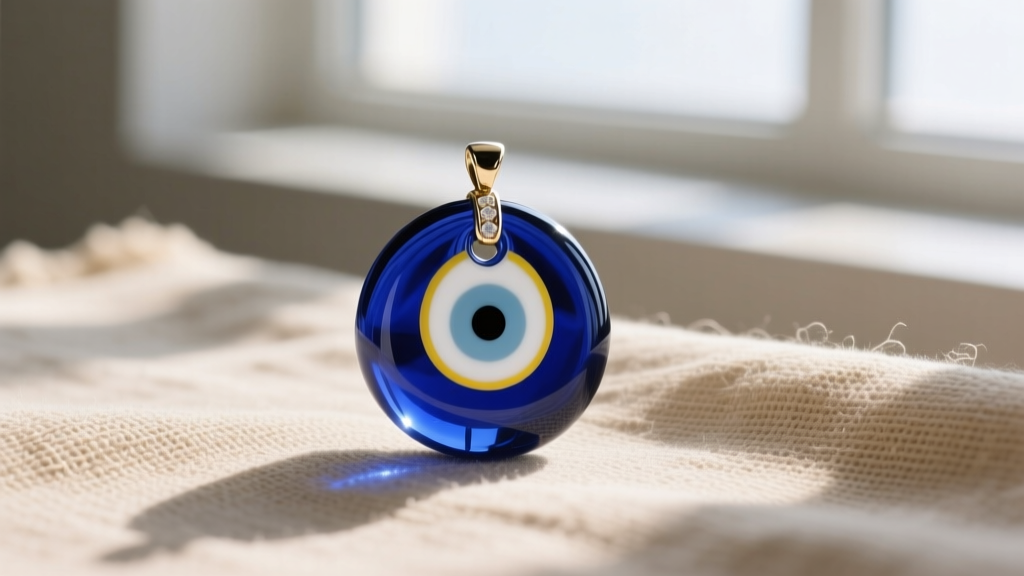
The traditional representation of the evil eye features concentric circles of dark blue, white, yellow, and black. Yet, the medium used to render these colors changes everything from the pendant's Mohs hardness to its cultural lore.
Traditional Murano & Cobalt Glass (The Classic Nazar)
The ubiquitous Nazar Boncuğu is traditionally hand-blown using soda-lime glass, colored with cobalt oxide to achieve its signature deep blue hue. Glass ranks around 5.5 to 7 on the Mohs scale, making it moderately scratch-resistant but highly susceptible to shattering upon impact. In traditional Anatolian folklore, this fragility is a feature, not a bug. The lore dictates that when a glass evil eye necklace shatters or cracks, it has absorbed the maximum capacity of negative energy and has successfully protected the wearer from a severe curse. Once broken, it must be respectfully buried and replaced.
Lapis Lazuli & Turquoise (The Ancient Stone Amulets)
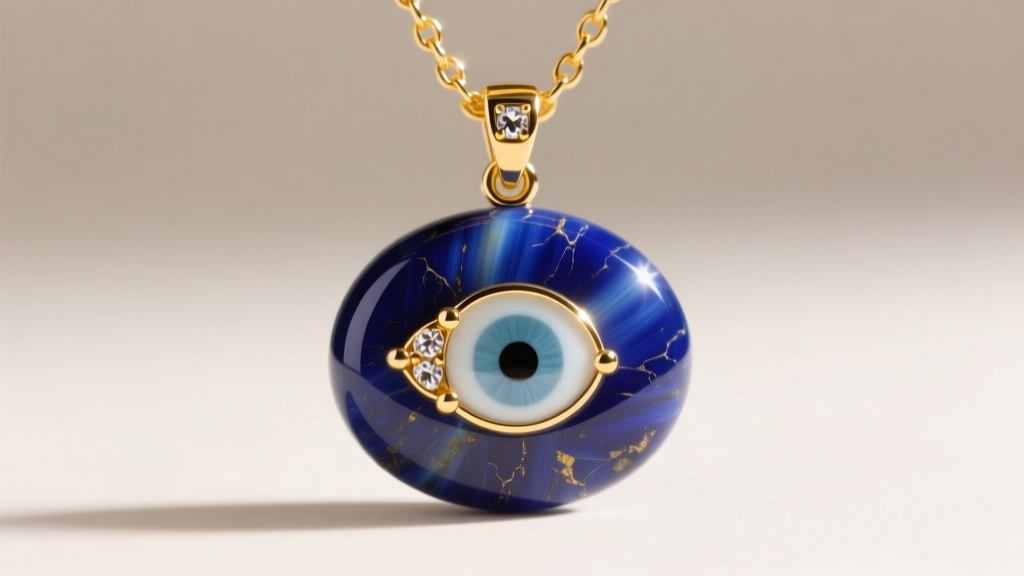
Before glassblowing was perfected, ancient Egyptians and Persians carved evil eye amulets from lapis lazuli and turquoise. According to the Gemological Institute of America (GIA), high-grade lapis lazuli is a metamorphic rock composed primarily of lazurite, often speckled with golden pyrite inclusions. Ranking 5 to 6 on the Mohs scale, lapis is relatively soft and porous. It requires protection from harsh chemicals and ultrasonic cleaners, which can strip its natural oils and dull its polish. Turquoise, similarly porous, is often stabilized with epoxy or treated via the Zachery process to enhance its durability without altering its natural matrix.
Vitreous Enamel on Fine Metals (The Modern Luxury Standard)
In contemporary fine jewelry, the most durable and vibrant interpretation of the evil eye is achieved through vitreous enamel. Unlike cold enamel (which is essentially painted epoxy resin that yellows over time), vitreous enamel is finely ground glass fused to a metal backing—usually 18k gold or platinum—at temperatures exceeding 1,400°F (760°C). This creates a permanent, scratch-resistant bond that will not fade, chip, or degrade under normal wear, making it the superior choice for an heirloom piece meant to provide lifelong protection.
Material Comparison Chart: Durability, Care, and Lore
To help you select the right evil eye pendant for your lifestyle, consult this technical comparison matrix detailing the physical properties and maintenance requirements of the most common materials.
| Material | Mohs Hardness | Durability & Wear | Care Instructions | Traditional Lore |
|---|---|---|---|---|
| Cobalt Glass | 5.5 - 7.0 | High scratch resistance; shatters on hard impact. | Wipe with microfiber; avoid thermal shock. | Must break to prove it has absorbed a curse. |
| Lapis Lazuli | 5.0 - 6.0 | Prone to scratching; sensitive to acids and heat. | Clean only with warm soapy water and a soft brush. | Attracts divine protection and royal favor. |
| Natural Turquoise | 5.0 - 6.0 | Highly porous; absorbs skin oils and cosmetics. | Keep away from perfumes; store in soft pouch. | Brings wealth, health, and wards off the desert evil eye. |
| Vitreous Enamel | 6.0 - 7.0 | Exceptional color stability; resistant to UV fading. | Ultrasonic safe if on solid gold; avoid harsh drops. | Modern synthesis of ancient glass and metal alchemy. |
Chain Materials: Grounding the Amulet
An evil eye pendant is only as secure as the chain that holds it. The metallurgical properties of your chain dictate both the aesthetic and the tensile strength of the necklace.
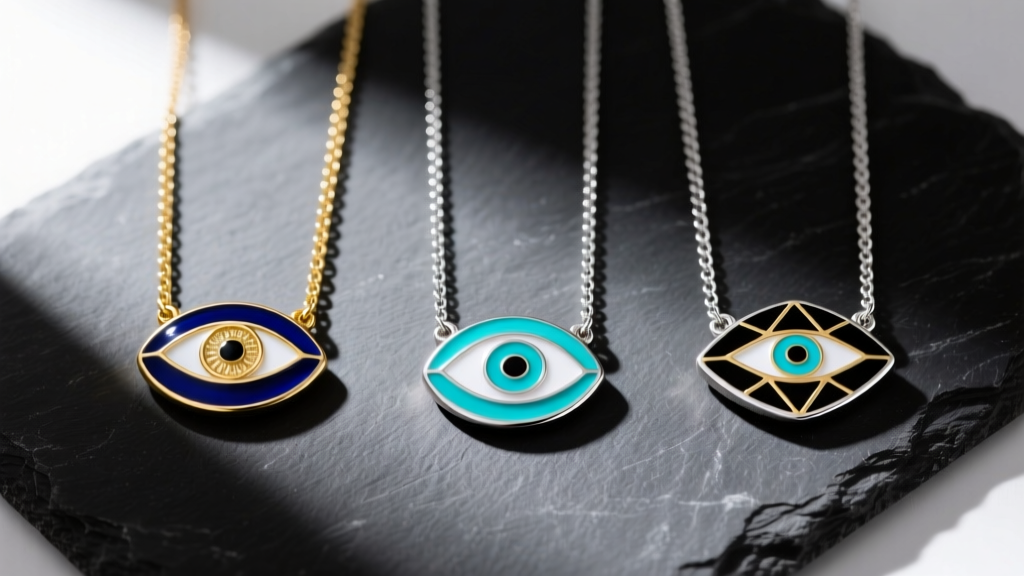
According to data from the World Gold Council, 14k gold (58.5% pure gold) offers the optimal balance of rich color and structural integrity for daily wear. While 18k gold (75% pure) provides a deeper, more luxurious yellow hue and superior hypoallergenic properties, it is softer and more prone to stretching if the pendant is heavy. For the chain link itself, a box chain or rolo chain in 1.0mm to 1.5mm thickness provides the highest tensile strength, ensuring that a solid stone or glass pendant will not snap the links during accidental snagging.
Sterling silver (925) remains a popular, cost-effective alternative, but it is prone to sulfidation (tarnishing). If you choose a silver chain for your evil eye amulet, ensure it is plated with a thin layer of rhodium to delay oxidation and maintain a bright, white-metal luster that complements the blue of the eye.
Sizing, Layering, and Wearing the Evil Eye
How you wear the evil eye impacts both its visibility as a deterrent and its physical safety. Consider these structural guidelines when styling your piece:
- The 16-Inch Choker: Sits at the base of the neck. Ideal for lightweight glass or enamel pendants under 5 grams. Keeps the amulet close to the throat chakra, traditionally associated with warding off spoken curses or gossip.
- The 18-Inch Princess Length: Rests on the collarbone. This is the most versatile length, allowing heavier lapis or turquoise pendants to sit flat against the chest without swinging and striking hard surfaces.
- Layering Protocols: When layering an evil eye necklace with other chains, always make the evil eye the shortest or longest strand. Placing it in the middle increases the risk of the pendant's bail rubbing against adjacent metal clasps, which can wear down the solder joint over time.
Conclusion: Choosing Your Protective Armor
So, what does the evil eye necklace mean in the context of modern jewelry? It is far more than a passing aesthetic trend; it is an ancient psychological armor, translated through the language of gemology and metallurgy. Whether you choose the traditional, sacrificial nature of hand-blown cobalt glass, the ancient geological weight of Afghan lapis lazuli, or the permanent brilliance of vitreous enamel on 18k gold, understanding the material properties ensures your talisman remains both physically intact and spiritually resonant. Select the material that aligns with your lifestyle, respect its care requirements, and wear it with the confidence of a 5,000-year-old tradition.


