Family Birthstone Tree Necklace: The Ultimate Buying Guide
Discover how to choose the perfect family birthstone tree necklace. Expert guide on metals, gemstone settings, chain weights, and pricing tiers.

The Anatomy of a Quality Tree Pendant
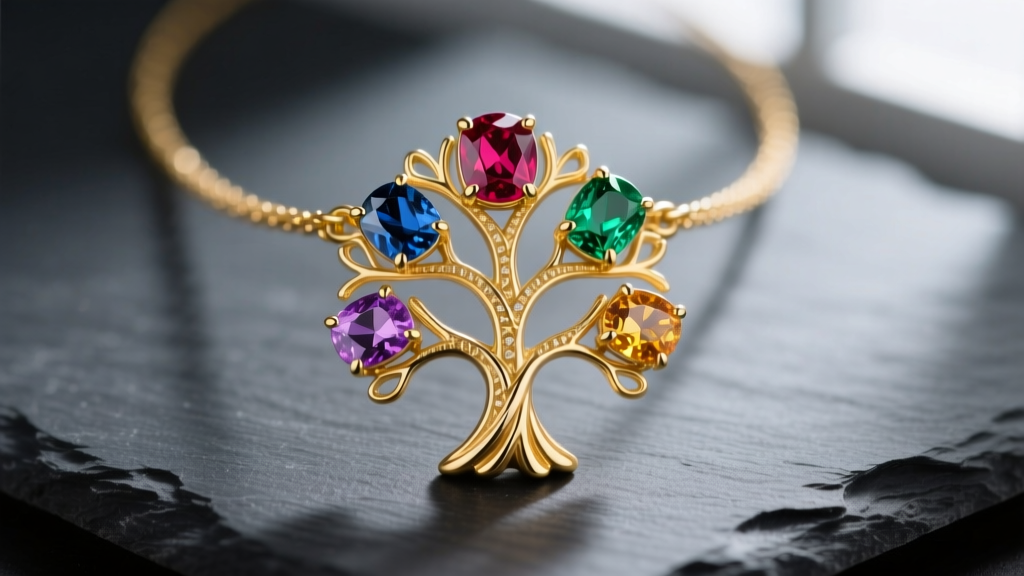
The family birthstone tree necklace is more than just a piece of jewelry; it is a wearable genealogy and a deeply personal heirloom. However, the market is flooded with flimsy, mass-produced pendants that tarnish, bend, or lose stones within months. When evaluating a tree pendant, structural integrity is your first checkpoint. A high-quality tree trunk should be solid cast, not hollow, with a minimum thickness of 1.5mm to prevent warping under the weight of multiple gemstones. The bail—the loop that connects the pendant to the chain—must be seamlessly integrated and wide enough to accommodate a chain up to 2.5mm in thickness. Avoid pendants where the bail is merely soldered onto a thin branch, as this is a primary failure point that leads to lost jewelry.
Metal Alloys and Plating Standards
The metal you choose dictates both the longevity and the skin-compatibility of your necklace. Here is what you need to look for when reviewing product specifications:
- 925 Sterling Silver: The most common base metal. Ensure it is plated with rhodium (at least 0.1 to 0.2 microns thick) to prevent oxidation and tarnishing. Raw sterling silver will react with the sulfur in the air and your skin's natural oils, turning black over time.
- Gold Vermeil: Not all gold-plated jewelry is created equal. According to the FTC Jewelry Guides, true vermeil must have a sterling silver base and be plated with at least 10k gold to a minimum thickness of 2.5 microns. Anything less is considered standard gold plating and will wear through to the base metal within a year of daily wear.
- Solid 14k or 18k Gold: The only true heirloom option. 14k gold (58.5% pure gold) offers the best balance of rich color and tensile strength, making it ideal for holding prong-set gemstones securely over decades.
Birthstone Selection: Natural vs. Lab-Created
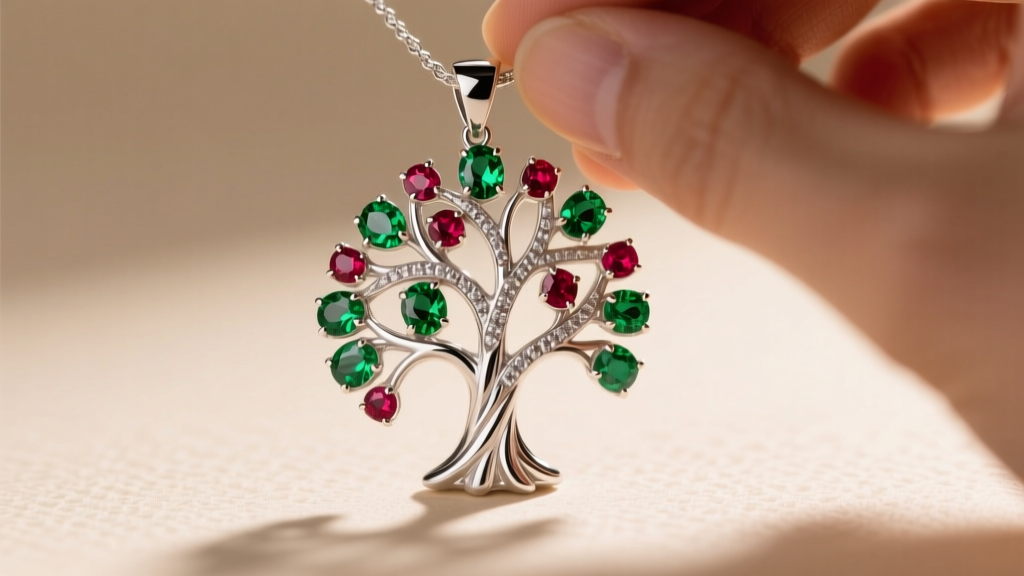
When customizing a family birthstone tree necklace, you will typically choose between natural gemstones, lab-created stones, and simulated alternatives like cubic zirconia (CZ) or nano-sital glass. For colored birthstones, nano-sital glass is vastly superior to CZ. It offers better light refraction, deeper color saturation, and a Mohs hardness of 7, compared to CZ's 8.5 but lower structural stability over time.
Crucially, the setting style must match the gemstone's hardness on the Mohs scale. According to the Gemological Institute of America (GIA), softer stones like October's Opal (Mohs 5.5-6.5) or December's Turquoise (Mohs 5-6) are highly susceptible to chipping. These stones must be set in a bezel setting, where a rim of metal completely surrounds the girdle of the stone. Conversely, harder stones like April's Diamond/Moissanite (Mohs 10/9.25) or September's Sapphire (Mohs 9) can safely be held in prong settings, which allow more light to enter the stone and maximize brilliance.
Chain Mechanics and Weight Distribution
A common mistake buyers make is pairing a heavy, multi-stone tree pendant with a delicate, lightweight chain. A standard 25mm tree pendant with five gemstones weighs between 4 and 7 grams. A 1.0mm cable chain will eventually snap at the clasp or the links under this dynamic load. According to Jewelers of America, matching the chain's tensile strength to the pendant's weight is critical for security.
| Chain Type | Recommended Thickness | Best For Pendant Weight | Durability & Notes |
|---|---|---|---|
| Box Chain | 1.5mm - 2.0mm | 4g - 8g | Excellent. Flat, interlocking links resist kinking and snapping. |
| Rope Chain | 2.0mm - 3.0mm | 8g - 15g | Very High. Twisted links offer superior strength and high brilliance. |
| Cable Chain | 1.8mm - 2.5mm | 3g - 6g | Moderate. Classic look, but individual oval links can pull apart. |
| Snake Chain | 1.5mm - 2.5mm | 3g - 5g | Low. Sleek appearance, but prone to permanent kinking if bent. |
Clasp Warning: Always upgrade to a lobster clasp. Spring ring clasps, which are standard on budget chains, have weak internal springs that fail under the pendulum-like motion of a heavy tree pendant.
Engraving and Personalization Limits
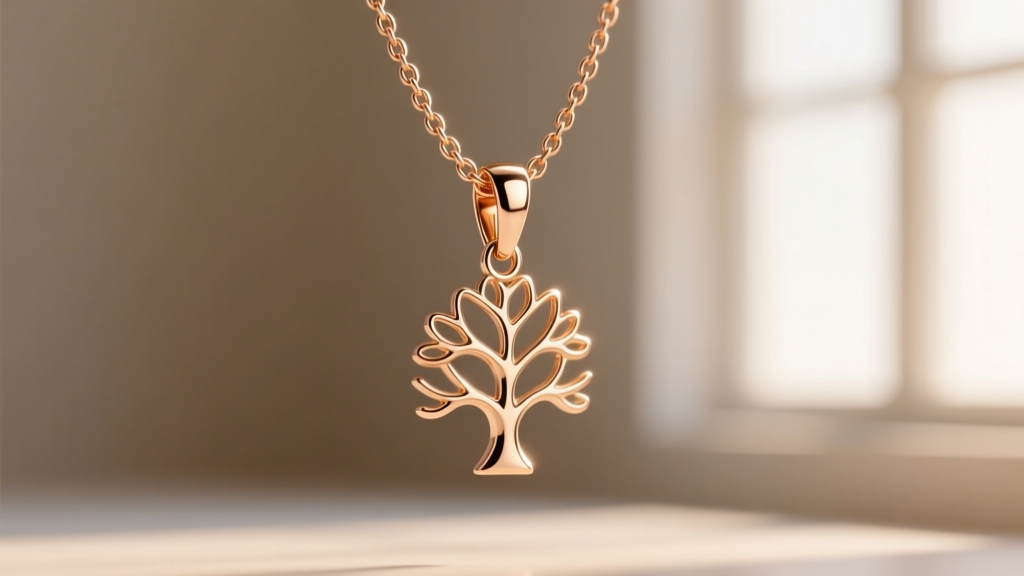
Many jewelers offer engraving on the back of the tree trunk or on an accompanying secondary disc. For the best results, opt for laser engraving rather than hand engraving, as laser technology provides precise, deep, and uniform lettering on small surface areas. Stick to sans-serif fonts (like Arial or Helvetica) and ensure the font height is no smaller than 1.5mm. Anything smaller will become illegible over time as the metal naturally develops micro-scratches and patina. If you are engraving names and birthdates, consider a double-sided pendant to maximize your canvas space without compromising the visual balance of the tree on the front.
Pricing and Value Tiers
Understanding what you should pay helps you avoid overpriced dropshipped items or suspiciously cheap alloys that may contain nickel or lead.
- Budget Tier ($40 - $120): Typically gold-plated brass or thin sterling silver with simulated CZ stones. Expect a lifespan of 1-2 years with regular wear before plating wears off or stones cloud.
- Mid-Range Tier ($150 - $450): Solid 925 sterling silver with heavy rhodium plating, or high-quality gold vermeil. Features lab-created nano-sital stones or genuine semi-precious stones (like amethyst or garnet) in secure bezel or prong settings. This is the sweet spot for value and longevity.
- Luxury Tier ($600 - $2,500+): Solid 14k or 18k gold with natural, ethically sourced gemstones or lab-grown diamonds. Custom-cast with heavy, durable bails and premium 2.0mm box or rope chains. These are true generational heirlooms.
Long-Term Care and Stone Security
Maintaining a multi-stone pendant requires specific care protocols. Never use ultrasonic cleaners on a family birthstone tree necklace if it contains porous or fractured stones like opal, emerald, turquoise, or pearl. The high-frequency vibrations can shatter these stones or strip away the oils that keep them stable. Instead, clean your necklace weekly using a few drops of mild dish soap, warm water, and a soft-bristled baby toothbrush to gently dislodge lotion and skin cells from behind the gemstone settings. Finally, inspect the prongs every six months. If a prong feels rough or catches on your clothing, take it to a local jeweler for a quick tightening to prevent a lost birthstone.


