Farandole Long Necklace 160: Expert Guide to 160cm Diamond Chains
Master the farandole long necklace 160 with our expert technical guide. Explore 160cm drape physics, diamond specs, hinge mechanics, and styling.

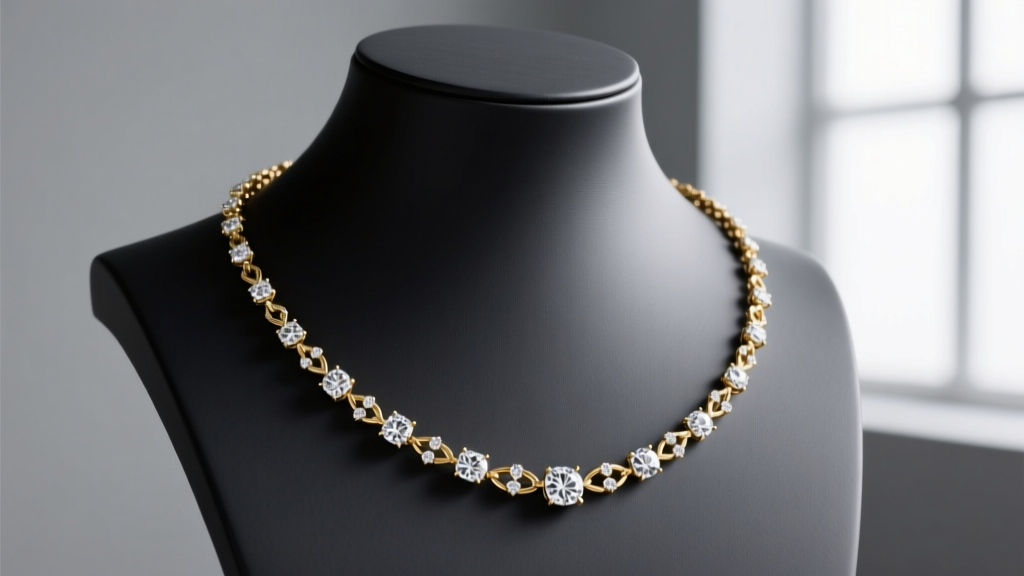
The Anatomy of the Farandole Long Necklace 160
When evaluating luxury kinetic jewelry, the farandole long necklace 160 represents a masterclass in articulated gemology and drape physics. Unlike traditional cable, curb, or rolo chains that rely on uniform interlocking links, the farandole design is characterized by a fluid, dancing sequence. It alternates between rigid precious metal bars and bezel-set diamonds, all connected by microscopic jump rings or tension hinges. At exactly 160 centimeters (approximately 63 inches), this specific rope-length iteration transcends standard collar and princess chains, offering complex multi-wrap versatility and a liquid-like drape that responds dynamically to the wearer's movements.
The engineering required to maintain structural integrity over a 160cm span while supporting several carats of diamonds is substantial. High-end maisons utilize precision-cast micro-hinges that allow the bezel cups to rotate up to 45 degrees relative to the gold bar links. This flexibility is what gives the farandole its signature 'fluid' appearance, preventing the necklace from kinking or folding awkwardly when layered or knotted.
Metallurgical and Gemological Specifications
Constructing a 160cm diamond chain requires strict adherence to material tolerances. According to World Gold Council metallurgical data, 18k gold (750 purity) is the industry standard for luxury chains, but the specific alloy composition is critical for the micro-hinges. White gold alloyed with palladium offers superior spring-back and tensile strength for the tiny jump rings compared to nickel-based alloys, which are prone to stress-fracturing over time and pose allergenic risks.
| Parameter | Standard Specification (160cm) |
|---|---|
| Total Length | 160 cm (62.99 inches) |
| Gold Purity | 18k (750) White, Yellow, or Rose Gold |
| Total Carat Weight (TCW) | 3.50 ct to 6.00 ct (depending on link density) |
| Diamond Quality | F-G Color, VS1-VS2 Clarity (Minimum) |
| Average Chain Weight | 28g - 42g (Gold weight excluding diamonds) |
| Hinge Wire Thickness | 0.45mm - 0.60mm |
Gemologically, the diamonds used in a farandole chain are typically single-cut or full-cut melee stones ranging from 0.03 to 0.10 carats each. Because the bezels enclose the girdle of the stone, maximizing light return requires stones with excellent cut grades. Adhering to GIA clarity grading standards, reputable manufacturers use VS1-VS2 stones to ensure that no inclusions compromise the structural integrity of the diamond during the bezel-setting process, which exerts immense localized pressure on the stone's edges.
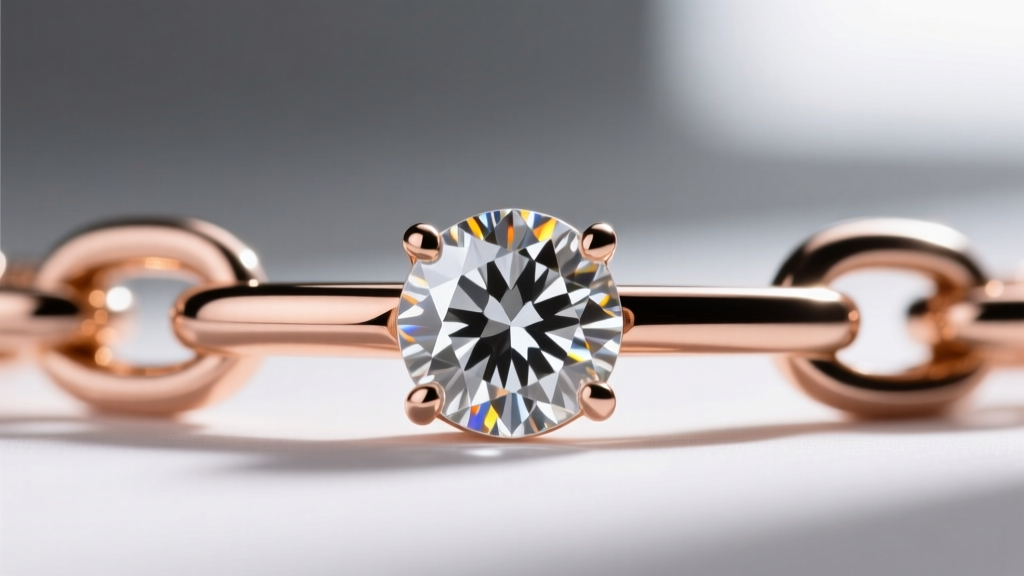
Drape Physics and Styling the 160cm Length
The 160cm length places the farandole firmly in the 'rope' category of necklace lengths. The physics of how this chain drapes is dictated by its mass distribution. Because the diamond bezels are heavier than the gold connecting bars, the chain naturally seeks a low center of gravity.
- The Single Drop: On an average 5'4" frame, a 160cm chain will plunge past the sternum, resting near the navel. This creates an elongating vertical line, ideal for deep V-necklines or open blazers.
- The Double-Wrap Opera: Wrapping the chain twice creates a layered effect, typically resulting in a 40cm choker layer and a 60cm opera layer. The kinetic hinges allow the two layers to nest against each other without tangling, provided the links are adequately spaced.
- The Lariat Knot: Tying a loose overhand knot at the sternum transforms the piece into a Y-necklace. However, knotting introduces acute shear stress on the micro-hinges at the bend point. Expert jewelers advise against tight knots, recommending loose, draped crossovers instead to preserve the 0.5mm jump rings.
Clasp Engineering and Security
A 160cm farandole necklace carries significant dynamic mass—often exceeding 35 grams of gold plus the weight of the diamonds. Standard lobster clasps are entirely inadequate for this load; the lever mechanism can easily snap or deform under the pendulum-like swing of a rope-length chain.
Instead, master jewelers employ hidden tongue-and-groove box clasps. These clasps are integrated seamlessly into the farandole pattern, often disguised as a standard gold bar link. The internal tongue is stamped from a single piece of hardened 18k gold to provide a secure 'click' upon insertion. Crucially, these clasps must be paired with dual figure-eight safety catches on the exterior. If the primary box mechanism fails due to a manufacturing defect or impact, the safety catches—woven from high-tensile 18k gold wire—will catch the opposing jump ring, preventing the catastrophic loss of a $40,000 necklace.
Maintenance, Ultrasonic Risks, and Hinge Fatigue
The primary failure mode of any articulated diamond chain is hinge fatigue. The micro-jump rings connecting the bezel cups to the gold bars are subject to constant friction. Over a period of 5 to 7 years of daily wear, gold-on-gold friction can wear down a 0.45mm wire jump ring, leading to elongation and eventual separation.
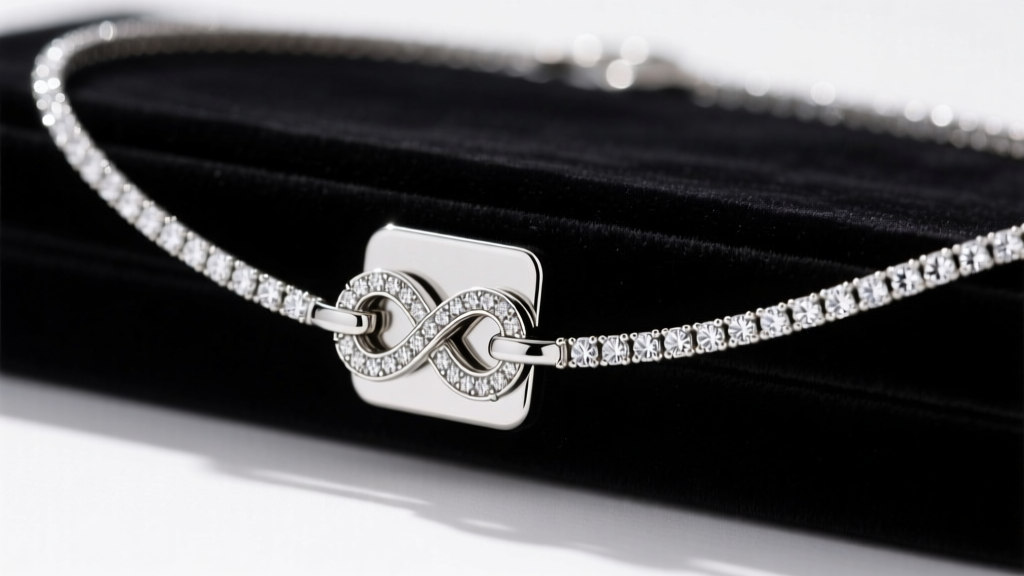
Maintenance requires specialized care. While ultrasonic cleaners are excellent for removing sebum and cosmetic buildup from diamond bezels, they pose a severe risk to the farandole's micro-hinges. The high-frequency vibrations can cause the tiny jump rings to vibrate against each other, accelerating metal fatigue and potentially loosening the friction-fitted bezel walls. Experts recommend cleaning the farandole long necklace 160 using a soft-bristled brush, warm water, and a mild, ammonia-free surfactant. Annual inspections by a certified bench jeweler are mandatory to check for jump ring thinning using a 10x loupe and digital calipers.
2026 Market Valuation and Investment Outlook
In the 2026 luxury jewelry market, articulated diamond chains continue to command a premium due to the immense labor costs associated with hand-assembling hundreds of micro-hinges. Base models of the 160cm farandole featuring a 3.50 TCW (Total Carat Weight) typically start in the $28,000 to $34,000 range. High-density versions, which feature tighter link spacing and a 6.00 TCW, easily push past $65,000.
When acquiring a farandole long necklace 160, buyers must prioritize the provenance of the melee diamonds and the precision of the hinge casting. A poorly cast hinge will exhibit lateral 'play' or wobble, destroying the liquid drape effect that defines the farandole style. Always request a macro-video of the chain in motion before purchase to verify the kinetic fluidity and structural integrity of the links.


