Metallurgy & Mechanics: Choosing a Durable Father Son Necklace
Discover the metallurgy and chain mechanics behind a durable father son necklace. Compare steel, titanium, and gold alloys for lifelong wear.

The Anatomy of a Generational Father Son Necklace
Most matching jewelry sets fail within three years. Not because the sentiment fades, but because the metallurgy and chain mechanics are fundamentally flawed for daily male wear. When selecting a father son necklace intended to survive decades of active lifestyles, showering, and eventual hand-me-down, you must look past the aesthetic and evaluate the tensile strength, galvanic corrosion resistance, and structural redundancy of the piece. This guide strips away the marketing fluff and dives deep into the material science and engineering required to build a necklace that actually lasts.
Metallurgical Breakdown: Which Alloys Survive Decades?
The base metal dictates the lifespan of the pendant and chain. Men's jewelry is subjected to high chloride exposure (sweat), mechanical shock, and constant friction. Here is how the top three metals perform under stress.
Surgical Stainless Steel (316L vs. 304)
Many mass-market necklaces use 304 stainless steel. While adequate for kitchen appliances, 304 lacks the molybdenum required to resist chloride pitting. A genuine 316L surgical steel contains 2-3% molybdenum, making it highly resistant to the corrosive salts found in human sweat. If a father and son are wearing their necklaces daily during sports or manual labor, 316L is the absolute minimum acceptable grade to prevent microscopic pitting and eventual structural failure.
Aerospace-Grade Titanium (Ti-6Al-4V)
Titanium is legendary for its strength-to-weight ratio, but not all titanium is equal. Commercially pure Grade 2 titanium has a tensile strength of roughly 50 ksi (kilopounds per square inch). However, Grade 5 titanium (Ti-6Al-4V), alloyed with aluminum and vanadium, boasts a tensile strength exceeding 130 ksi. According to materials science data from AZoM, Grade 5 titanium is nearly three times stronger than pure titanium and highly biocompatible. For a heavy pendant on a thin chain, Grade 5 prevents the bail from warping under kinetic stress.
Gold Alloys (14K vs. 18K Tensile Strength)
Pure 24K gold is far too soft for daily wear. The Gemological Institute of America (GIA) notes that alloying gold with copper, silver, and zinc increases its durability. For a father son necklace, 14K gold (58.5% pure gold) is vastly superior to 18K gold. 14K gold possesses a Vickers hardness of approximately 130-150 HV, compared to 110-120 HV for 18K. This extra hardness prevents the chain links from stretching and thinning out over years of friction.
Chain Weave Mechanics and Tensile Failure Points
The chain is the suspension system for your pendant. The weave pattern determines how mechanical load is distributed across the links. When sourcing a chain for an active father and son, wire gauge and link redundancy are critical.
- Cable Chains (14-16 Gauge): The most common and the most prone to failure. Each link relies on a single soldered weld. If the weld fails or the wire fatigues, the chain snaps instantly with zero redundancy.
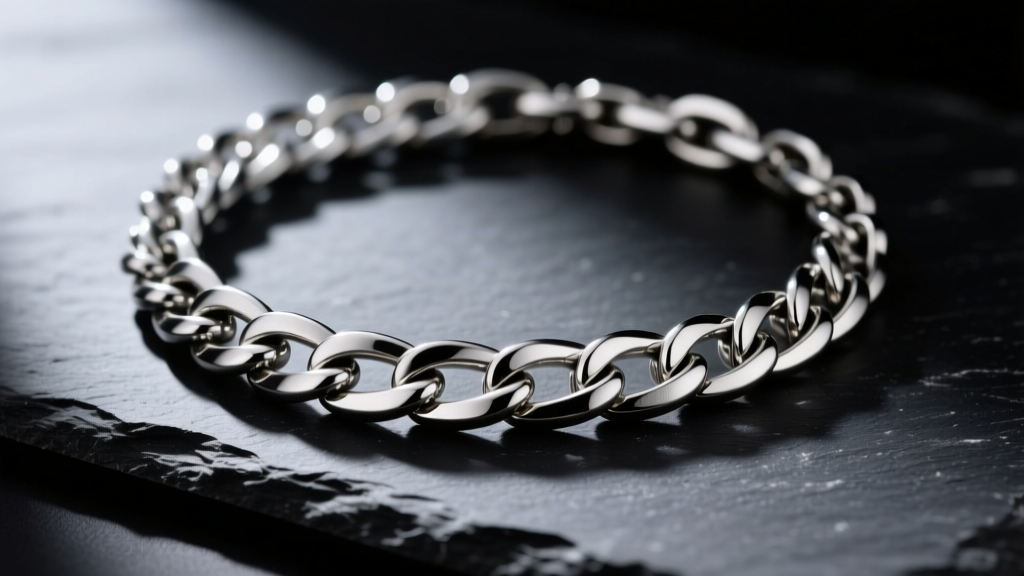
- Curb Chains: Links are twisted to lay flat. While they offer a masculine aesthetic, the twisted geometry creates localized stress points at the bends. They are highly susceptible to catching on clothing and snapping under sudden lateral tension.
- Wheat (Spiga) Chains: The gold standard for heavy pendants. Wheat chains weave four links together in a continuous, braided pattern. This creates redundant load paths; if one micro-weld fails, the surrounding three links absorb the kinetic shock, preventing a catastrophic drop of the pendant.
- Rope Chains: Highly reflective and aesthetically pleasing, but the twisted helix structure makes them nearly impossible to repair if they kink or snap. Avoid for active children.
The Weakest Link: Clasp Engineering and Galvanic Corrosion
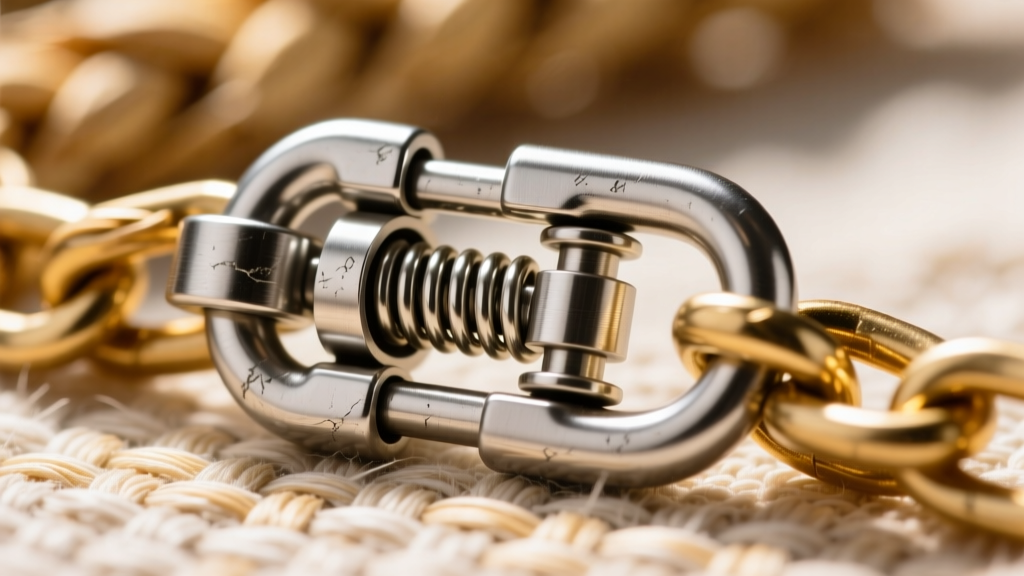
The clasp is responsible for 80% of all necklace losses. The standard lobster clasp relies on an internal spring mechanism. In cheaper manufacturing, the outer shell of the clasp might be cast from brass or low-grade alloy, while the internal spring is stainless steel. When exposed to moisture, this creates a galvanic cell, leading to rapid galvanic corrosion that seizes the spring shut or causes it to snap.
The Fix: Always verify that the entire clasp assembly, including the internal spring and the jump ring, is machined from a single homogeneous metal (e.g., solid 316L or solid 14K gold). Furthermore, the jump ring connecting the clasp to the chain must be laser-welded or hard-soldered. An unsoldered, simply bent jump ring will slowly pry open under the cyclical loading of a swinging pendant.
Laser Engraving vs. Rotary: Preserving the Message
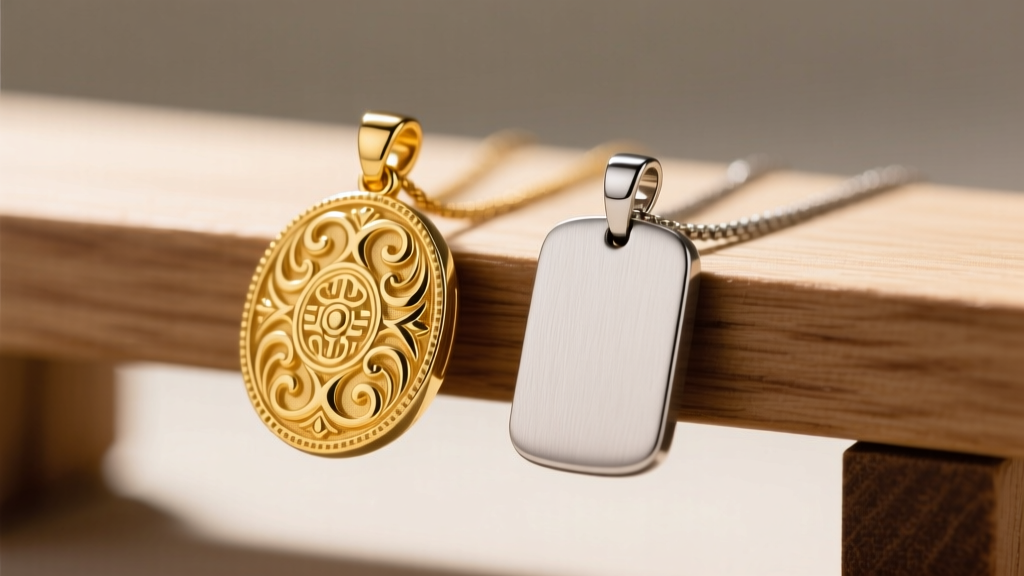
A father son necklace often features a deeply personal engraving. The method used to etch the metal fundamentally alters the pendant's structural integrity.
Rotary (CNC) Engraving
Rotary engraving uses a physical carbide bit to carve away metal. On a standard 1.5mm thick pendant, cutting a groove 0.3mm deep removes 20% of the material's cross-sectional thickness at that point. This creates a stress concentrator, making the pendant highly susceptible to snapping if dropped or bent.
Fiber Laser Annealing
Modern fiber lasers (operating at a 1064 nm wavelength) can anneal the surface of steel or titanium. By carefully controlling the heat input, the laser oxidizes the surface layer to create a dark, permanent mark without removing any base material. This preserves 100% of the pendant's structural integrity, ensuring the message survives as long as the metal itself.
Quick Reference: Material & Chain Matrix
Use this matrix to match the metallurgical properties to the lifestyle of the wearer.
| Material Grade | Tensile Strength | Vickers Hardness | Optimal Chain Weave | Estimated Price Range (USD) |
|---|---|---|---|---|
| 316L Surgical Steel | ~70 ksi | 150-190 HV | Wheat / Curb | $45 - $120 |
| Grade 5 Titanium (Ti-6Al-4V) | ~130 ksi | 330-360 HV | Cable / Wheat | $85 - $250 |
| 14K Yellow Gold | ~85 ksi | 130-150 HV | Rope / Wheat | $400 - $1,200+ |
| 18K Yellow Gold | ~70 ksi | 110-120 HV | Curb (Lightweight) | $800 - $2,500+ |
Final Verdict on Generational Durability
A true heirloom is engineered, not just designed. When commissioning or purchasing a father son necklace, prioritize a Grade 5 titanium or 14K gold pendant paired with a 14-gauge wheat chain and a solid, soldered lobster clasp. By focusing on tensile strength, redundant link weaves, and non-destructive laser engraving, you ensure the piece remains intact long enough to be passed down to the next generation.


