The Anatomy of a Fine Shark Tooth Gold Necklace: An Expert Guide
Discover the metallurgy, casting techniques, and chain pairings for a fine shark tooth gold necklace. An expert guide to karats, pricing, and styling.

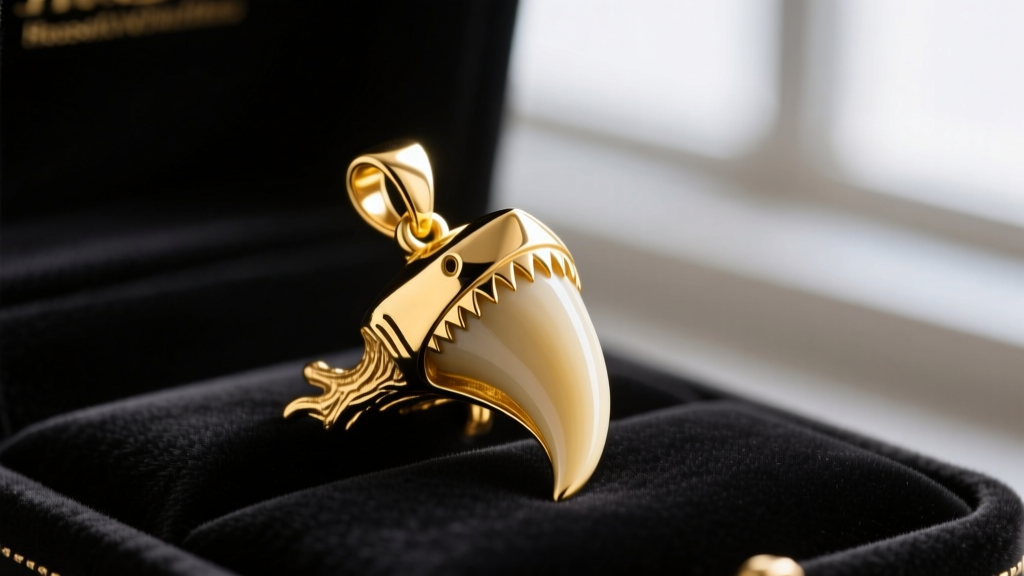
When most people envision a shark tooth gold necklace, they picture a mass-produced, gold-plated shell purchased from a coastal tourist trap. However, in the realm of fine jewelry, sculptural pendants inspired by marine apex predators represent a masterclass in metallurgy, anatomical accuracy, and structural engineering. Crafting a high-end, solid gold shark tooth pendant requires navigating the delicate balance between preserving the razor-sharp serrations of the design and ensuring the structural integrity of the precious metal.
This expert deep dive bypasses generic styling advice to explore the technical specifications, casting methodologies, and mechanical requirements that define a true luxury shark tooth gold necklace in 2026.
The Metallurgy of Sculptural Gold: 14k vs. 18k Alloys
The defining feature of a high-quality shark tooth pendant—particularly those modeled after the Great White (Carcharodon carcharias) or Mako (Isurus oxyrinchus)—is the crispness of its serrated edges. This requirement directly dictates the optimal gold alloy.
According to the Gemological Institute of America (GIA), pure 24k gold is far too malleable for sculptural jewelry, possessing a Vickers Hardness (HV) of roughly 25. To achieve the necessary durability, jewelers must alloy gold with metals like copper, silver, and zinc.
- 18k Yellow Gold (75% Au): With an HV of approximately 115-125, 18k gold offers a rich, deep color and takes a mirror polish beautifully. However, its relative softness means the microscopic tips of the serrations are prone to blunting or denting if dropped on a hard surface.
- 14k Yellow Gold (58.5% Au): Boasting an HV of 135-150 depending on the exact copper-to-silver ratio, 14k gold is the metallurgical sweet spot for a shark tooth gold necklace. The higher alloy content provides the tensile strength required to hold razor-sharp edges and deep root textures without deforming during daily wear.
For collectors seeking the highest anatomical fidelity in the serrations, 14k gold is overwhelmingly the superior technical choice, despite the higher intrinsic gold value of 18k.
Lost-Wax Casting and Anatomical Fidelity
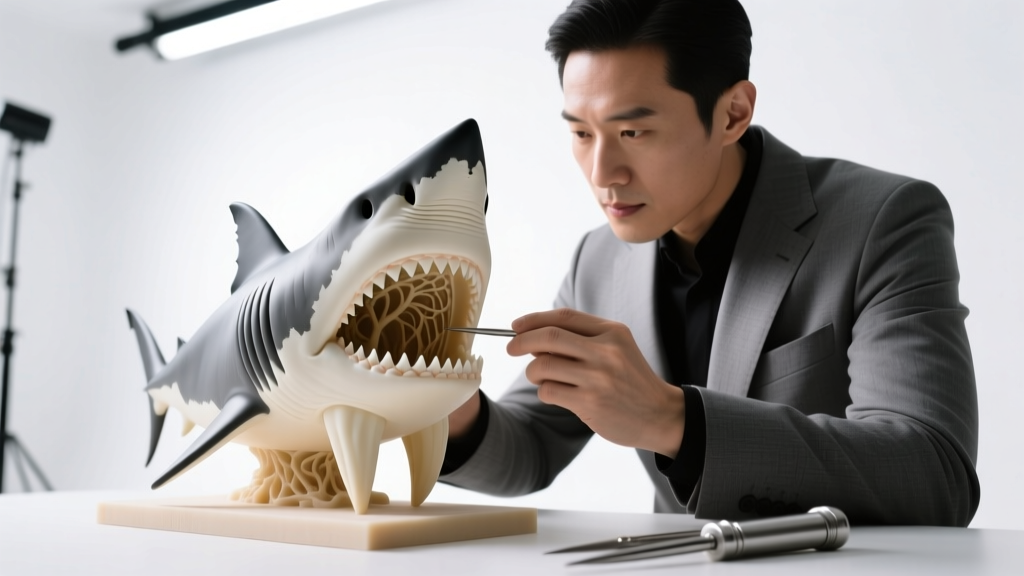
Transitioning a biological specimen into a permanent gold artifact relies on precision lost-wax investment casting. The process begins with creating a master model. While older methods required pressing a real fossil into silicone to create a mold—often losing microscopic details in the undercuts—modern fine jewelers utilize micro-CT scanning and high-resolution resin 3D printing.
Capturing the Root and Foramina
Amateur castings often feature a flat, featureless base where the tooth meets the jaw. Expert jewelers pay meticulous attention to the root (the base of the tooth) and the nutrient foramina—the small, natural grooves and holes where blood vessels once entered the tooth. Replicating these porous textures requires a highly fluid investment powder and precise burnout cycles.
As noted by manufacturing experts at Rio Grande, the burnout temperature and ramp rates must be strictly controlled to ensure the wax residue is completely vaporized before the molten gold is introduced. If the flask temperature drops below the optimal threshold (typically around 1000°F to 1100°F for gold alloys), the molten metal will freeze prematurely, resulting in incomplete fills and a loss of detail in the deepest crevices of the root structure.
Bail Engineering and Weight Distribution
A solid gold Megalodon or large Great White tooth pendant is not a lightweight trinket; it is a substantial piece of metal. A 40mm Megalodon pendant cast in solid 14k gold can easily weigh between 20 and 35 grams. This immense weight introduces severe mechanical stress at the point of suspension: the bail.
Expert Warning: Never purchase a heavy, solid gold sculptural pendant suspended by a standard 20-gauge or 22-gauge soldered jump ring. The dynamic force of the pendant swinging will eventually fatigue the thin wire, leading to catastrophic failure and loss of the piece.
For a premium shark tooth gold necklace, look for the following bail engineering standards:
- Integrated Cast Bails: The bail is cast as a single, continuous piece with the tooth, eliminating the weak point of a solder joint. The inner diameter should be at least 4mm to accommodate heavier chains.
- 14-Gauge Wire Wraps: If a wrap bail is used to cap the root, the wire must be a minimum of 14-gauge (approx. 1.6mm thick) to withstand the sheer weight of the pendant without unwinding.
Chain Pairing: Matching Gauge to Grammage
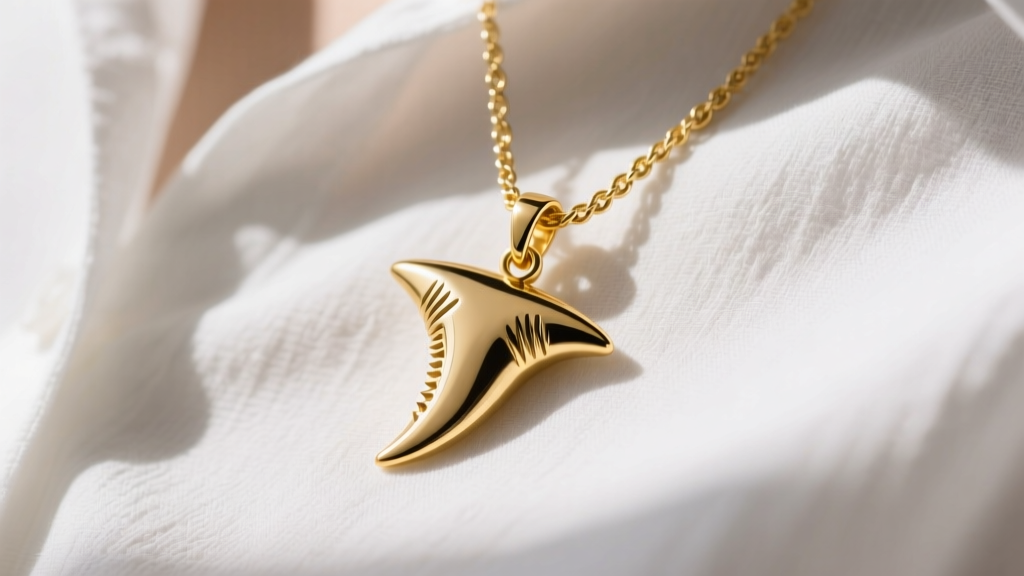
The chain is not merely an afterthought; it is the structural suspension system for your pendant. Pairing a 30-gram gold shark tooth with a delicate 1mm box chain is a mechanical error that will result in a snapped chain. The chain must possess high torsional strength and a gauge commensurate with the pendant's weight.
| Pendant Weight | Recommended Chain Style | Minimum Chain Gauge | Clasp Requirement |
|---|---|---|---|
| 5g - 12g (Mako/Tiger) | Wheat or Curb Chain | 2.0mm - 2.5mm | Lobster Claw (Spring-loaded) |
| 13g - 25g (Great White) | Rope or Figaro Chain | 3.0mm - 4.0mm | Heavy Lobster or Small Box Clasp |
| 26g - 45g+ (Megalodon) | Solid Rope or Cuban Link | 4.5mm - 6.0mm | Double-Locking Box Clasp |
Rope chains are highly recommended for heavier teeth. The twisted, helical structure of a rope chain distributes dynamic stress across multiple interlocking links, making it one of the most durable chain styles available for heavy sculptural pendants.
Pricing Matrix and Authenticity
Understanding the pricing of a fine shark tooth gold necklace requires looking beyond the daily spot price of gold. You are paying for 3D modeling, casting labor, and extensive hand-finishing (filing and polishing the serrations without rounding the edges).
- Hollow/Electroformed (Tourist Tier): $150 - $400. Lightweight, prone to denting, impossible to repair.
- Solid 10k/14k (Mid-Tier Artisan): $800 - $2,500. Weight-dependent. Features accurate serrations and solid casting.
- Custom 18k/22k & Diamond Accents (Haute Joaillerie): $4,000 - $15,000+. Includes micro-pavé diamond dusting on the root or fossil-inlay techniques.
Always demand a hallmark stamp (e.g., 14K, 585, 18K, 750) and a certificate of authenticity detailing the exact gram weight of the piece.
Crevices and Care: Ultrasonic vs. Steam
The deep anatomical grooves and nutrient foramina of a realistic shark tooth pendant are magnets for skin oils, lotions, and environmental dust. Cleaning these deep crevices requires specific protocols to avoid damaging the metal.
According to GIA's care guidelines, warm water with a few drops of mild, phosphate-free dish soap and a soft-bristled baby toothbrush is the safest method for routine cleaning. The soft bristles can reach into the serrations without scratching the high-polish gold.
Ultrasonic Cleaning: While ultrasonic cleaners are excellent for shaking dirt out of deep crevices, they should only be used on solid gold pieces. If your shark tooth pendant features secondary inlaid materials (like turquoise, lapis lazuli, or fossilized bone in the root), the high-frequency vibrations can fracture the inlay or dissolve the adhesives used to set them.
By understanding the metallurgy, structural engineering, and anatomical details that go into a premium piece, you can confidently invest in a shark tooth gold necklace that is not just a striking accessory, but a masterfully engineered work of wearable art.