How to Choose and Style Your First Gold Tooth Necklace
Discover everything you need to know about the gold tooth necklace trend. Learn how to choose the right karat, chain length, and styling tips for beginners.

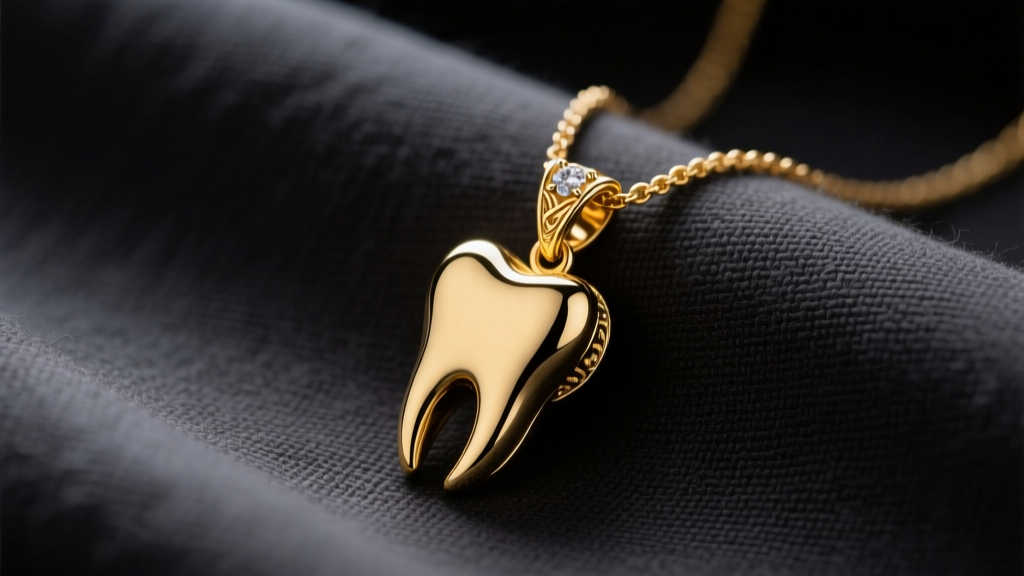
The Evolution of the Gold Tooth Necklace
The gold tooth necklace has transitioned from a niche hip-hop staple into a mainstream jewelry phenomenon. Originally popularized through dental grillz, the aesthetic has evolved into highly detailed, wearable pendants. Whether you are drawn to the edgy, rebellious vibe of a gold molar charm or the subtle sophistication of a minimalist gold fang, understanding the anatomy of this unique accessory is crucial for making a smart purchase. This beginner-friendly guide will walk you through metal grades, chain pairings, and expert styling techniques to ensure your first gold tooth necklace is a lasting investment.
Custom Cast vs. Mass-Produced Pendants
Before selecting a metal, you must decide on the manufacturing method. Mass-produced gold tooth charms are typically created from standard silicone molds, offering uniform, anatomically generalized shapes. They are widely available and generally range from $150 to $400.
Conversely, custom pendants utilize the lost-wax casting method. Jewelers take a 3D scan or a physical impression of an actual tooth (often a childhood molar or an extracted wisdom tooth) and cast it in solid gold. This bespoke approach captures every microscopic groove and root structure. According to the Gemological Institute of America (GIA), custom casting requires precise temperature control to ensure the gold flows into the finest details of the wax mold without porosity. Custom pieces typically start at $600 and can exceed $2,000 depending on the gold weight and karat.
Decoding the Metals: What Karat is Right for You?
Gold purity drastically affects both the color and the durability of your pendant. Because tooth charms feature deep crevices and sharp ridges, the metal must be durable enough to resist bending and scratching. The Federal Trade Commission (FTC) Jewelry Guides strictly regulate how these karats are stamped and marketed, ensuring you get what you pay for.
| Karat | Gold Content | Durability | Price Range | Best For |
|---|---|---|---|---|
| 10k Gold | 41.7% | Very High | $150 - $300 | Everyday wear, high-impact environments |
| 14k Gold | 58.5% | High | $350 - $800 | The ideal balance of rich color and scratch resistance |
| 18k Gold | 75.0% | Moderate | $800 - $1,500+ | Special occasion wear, heirloom custom casts |
| Gold Vermeil | Sterling Silver Base | Low (Prone to wear) | $50 - $120 | Budget-friendly trend testing |
Expert Tip: Avoid gold-plated brass or copper for tooth pendants. The crevices of a molar design trap sweat and skin oils, which will rapidly corrode base metals and cause skin discoloration. Always opt for solid 14k gold or, at minimum, heavy gold vermeil over sterling silver.
Choosing the Perfect Chain for Your Tooth Charm
A common beginner mistake is pairing a delicate tooth charm with an overly thick chain, or worse, buying a chain that physically cannot fit through the charm's bail (the loop at the top).
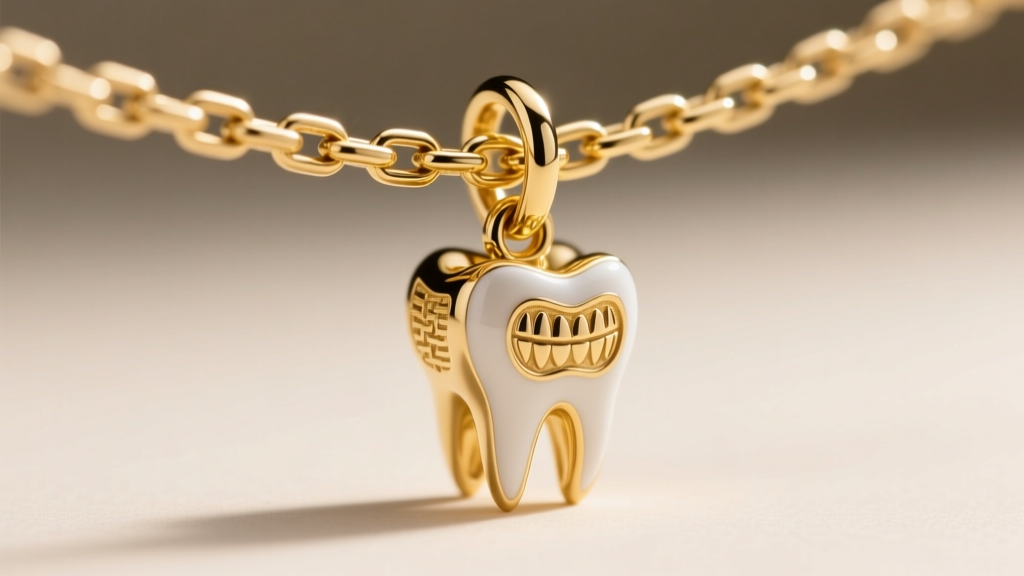
Bail Sizing and Chain Thickness
Most standard gold tooth pendants feature a bail with an inner diameter of 4mm to 5mm. This means your chain must be 3.5mm or thinner to slide through comfortably.
- Cable and Box Chains (1.5mm - 2.5mm): These offer a clean, minimalist backdrop that allows the intricate details of the gold tooth to take center stage. A 2mm box chain is exceptionally strong and resists kinking.
- Figaro and Rope Chains (2.0mm - 3.0mm): These provide a classic, textured look that complements the organic, asymmetrical shape of a molar or fang charm. The twisted links of a rope chain catch the light beautifully, mimicking the natural shine of dental gold.
- Cuban Links (4.0mm+): Generally too thick for standard tooth pendants. If you prefer a heavy Cuban link, you will need to have a jeweler solder a custom oversized bail onto your charm.
Sizing and Proportions: Getting the Fit Right
The visual impact of a gold tooth necklace relies heavily on chain length and charm proportions. A 10mm incisor charm will disappear on a 24-inch chain, while a 25mm molar pendant will look overwhelmingly bulky on a 16-inch choker.
The Length Guide
- 16 Inches (Choker/Collar): Sits snugly at the base of the neck. Best for small, subtle fang charms (8mm-12mm) worn as a delicate, feminine accent.
- 18 Inches (Collarbone): The universal standard. The pendant rests perfectly in the sternal notch. Ideal for medium-sized molar charms (15mm-20mm) and the most versatile length for everyday wear.
- 20 to 22 Inches (Chest): Sits lower on the chest. This length is mandatory if you are layering the tooth necklace with other pendants or wearing it over heavier clothing like hoodies and flannels.
Styling Your Gold Tooth Necklace: Necklines and Layering
The gold tooth necklace is inherently a statement piece, but it can be integrated into both streetwear and elevated casual wardrobes.
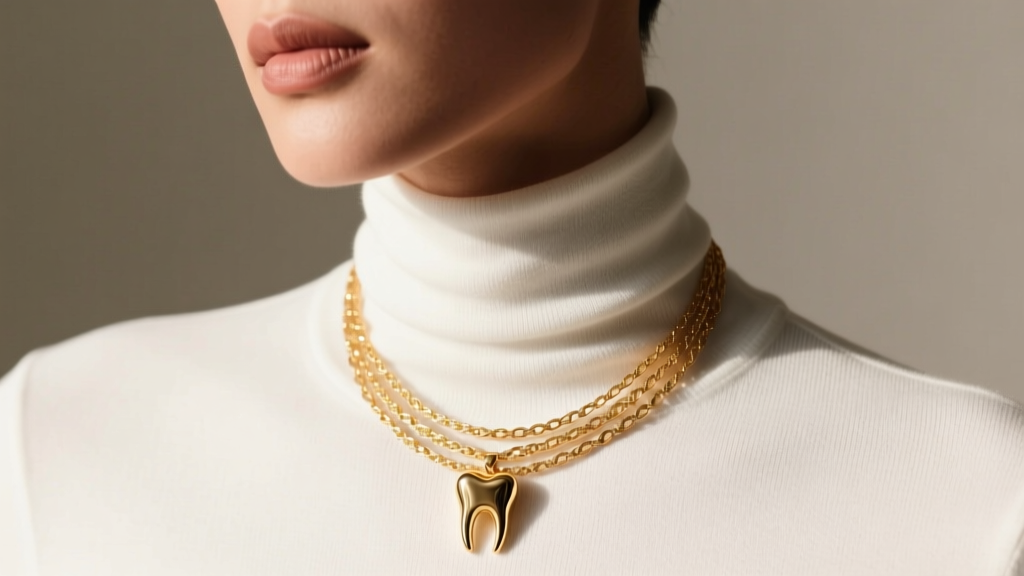
Mastering the Layered Look
To layer effectively without creating a tangled mess, adhere to the "two-inch rule." Your gold tooth necklace should be at least two inches longer or shorter than the accompanying chains. For example, pair an 18-inch 14k gold tooth pendant on a 2mm rope chain with a 16-inch 1.5mm herringbone snake chain. The contrasting textures (twisted rope vs. smooth snake) create visual depth, while the spacing ensures the tooth charm remains the focal point.
Matching Necklines
Crewnecks and tight collars can cause the bail of the pendant to rub against the fabric, accelerating wear. V-necks and open-button shirts naturally frame the sternum, creating a visual arrow that points directly to the gold tooth charm. For a high-fashion editorial look, try wearing a polished 18k gold molar pendant over a dark, ribbed turtleneck; the contrast between the dark fabric and the high-karat yellow gold is striking.
Care and Maintenance: Keeping the Shine Alive
Dental-inspired jewelry presents a unique maintenance challenge: the anatomical grooves, roots, and gum-line ridges are magnets for soap scum, lotion, and dead skin cells. If neglected, a brilliant gold tooth charm will quickly look dull and grayish in the crevices.
The Golden Rule of Cleaning: Never use toothpaste to clean your gold tooth necklace. Toothpaste contains silica and baking soda, which are highly abrasive and will create micro-scratches on the gold surface, permanently dulling the high-polish finish.
Step-by-Step Deep Cleaning
- The Soak: Mix a few drops of mild, phosphate-free dish soap (like Dawn) into a bowl of warm distilled water. Let the necklace soak for 15 minutes to loosen trapped oils.
- The Agitation: Use a brand-new, extra-soft baby toothbrush to gently agitate the crevices of the tooth roots and the bail. Do not use a standard adult toothbrush, as the bristles are too stiff and can bend delicate prongs or scratch softer 18k gold.
- The Rinse: Rinse thoroughly under lukewarm running water. Ensure the drain is plugged!
- The Dry: Pat dry with a lint-free microfiber cloth. Avoid paper towels, as the wood pulp fibers can leave microscopic scratches on the gold.
Final Thoughts on Dental-Inspired Jewelry
A gold tooth necklace is more than just a trend; it is a conversation starter that bridges the gap between subcultural history and modern fine jewelry. By prioritizing solid 14k gold, respecting bail-to-chain ratios, and committing to proper crevice cleaning, your pendant will retain its edge and its luster for decades. Whether you opt for a mass-produced minimalist fang or invest in a custom-cast family heirloom, you are now equipped to make a confident, informed purchase.


