5 Diamond Necklace Guide: Metal Alloys & Stone Properties
Discover how to choose the perfect metal and stone grades for a 5 diamond necklace. Compare platinum, gold, and diamond clarity for lasting wear.

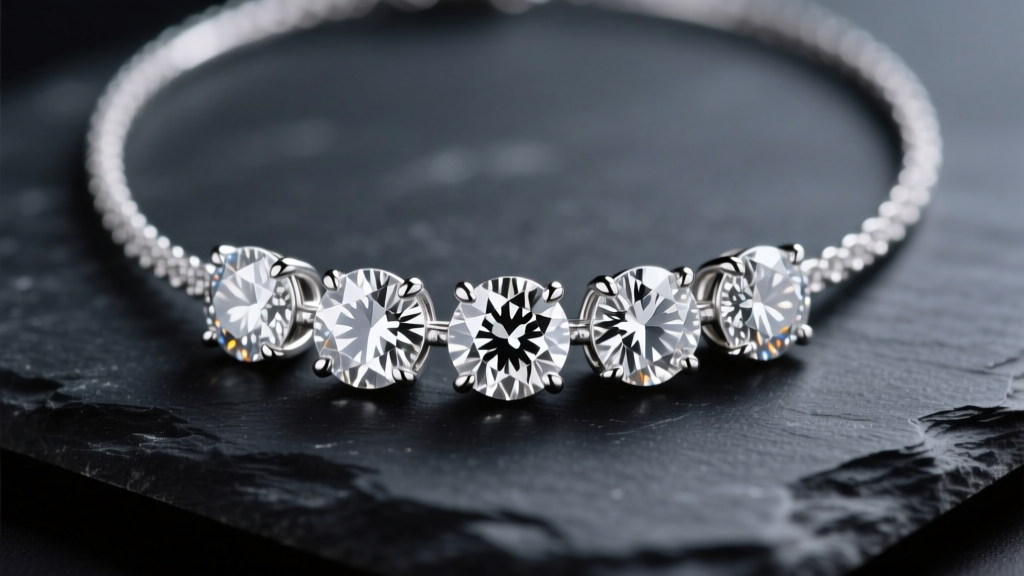
The Anatomy and Engineering of a 5 Diamond Necklace
A 5 diamond necklace is a masterclass in balanced jewelry design. Whether configured as a graduated line, a clustered pendant, or a spaced station necklace, the five-stone layout represents a unique structural challenge. Unlike a single solitaire pendant where the chain bears the load of one central point, a 5 diamond necklace distributes weight and kinetic stress across multiple anchor points. When you invest in this specific configuration, understanding the metallurgical properties of the setting and the gemological nuances of multi-stone matching is critical for long-term durability and optical performance.
The first engineering consideration is the chain gauge. A standard 5-stone necklace featuring 0.50-carat diamonds (2.50 Total Carat Weight) will weigh between 4.5 and 6 grams, depending on the metal used. Many commercial jewelers pair these heavy multi-stone settings with flimsy 0.8mm or 0.9mm cable chains to cut costs. Over time, the repetitive friction at the clasp and the sheer weight of the five diamonds will cause a sub-1.0mm chain to stretch, deform, or snap. For a 5 diamond necklace of this weight, a 1.2mm to 1.5mm wheat chain or a reinforced box chain is mandatory to provide adequate tensile strength and prevent the clasp from migrating to the front of the neck.
Metal Comparison: Platinum vs. 18k vs. 14k Gold
The metal alloy you choose dictates not only the color profile of the necklace but also its Vickers hardness, porosity risk, and maintenance cycle. Because a 5 diamond necklace requires a minimum of 20 individual prongs (assuming a classic 4-prong setting per stone), the wear rate of the metal is a primary concern.
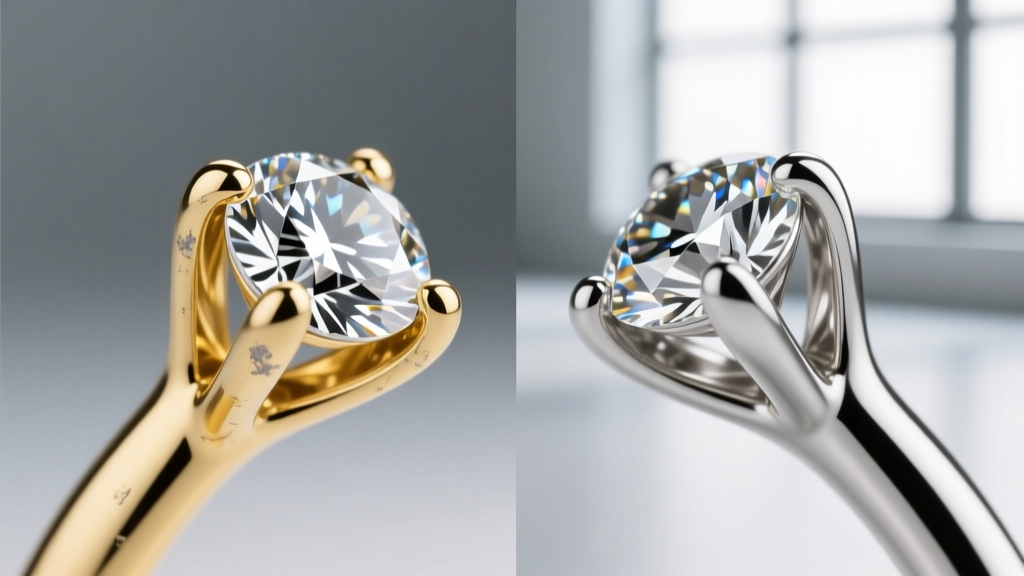
According to the World Gold Council, alloying pure gold with metals like copper, silver, and zinc drastically alters its structural integrity. 18k white gold, for instance, is heavily reliant on rhodium plating to achieve its bright white finish. In a 5-stone setting, the friction against clothing can wear down the 0.75-micron rhodium layer on the prongs within 12 to 18 months, revealing the warm, yellowish undertone of the underlying gold alloy. Platinum, conversely, does not require plating. While it develops a patina, its density ensures that when a platinum prong is scratched, the metal is merely displaced rather than lost, making it vastly superior for securing multiple high-value stones.
| Metal Alloy | Composition | Vickers Hardness (HV) | Maintenance Cycle | Best Setting Style |
|---|---|---|---|---|
| 950 Platinum | 95% Pt, 5% Ru | 135 HV | Polishing (Patina) | Shared Prong / Bezel |
| 18k White Gold | 75% Au, 25% Alloy | 125 HV | Rhodium (12-18 mos) | Classic 4-Prong |
| 14k Rose Gold | 58.5% Au, Cu/Ag | 140 HV | Minimal | Bezel / Flush |
Diamond Properties for Multi-Stone Configurations
Sourcing diamonds for a 5 diamond necklace is exponentially more complex than sourcing a single solitaire. The human eye is highly sensitive to asymmetry and color gradients when scanning horizontally across the collarbone. If you are purchasing a graduated 5-stone necklace (e.g., stones weighing 0.75ct, 0.50ct, 0.40ct, 0.30ct, and 0.20ct), the color must be meticulously matched.
The Gemological Institute of America (GIA) notes that color grading is assessed face-down, but in a mounted necklace, stones are viewed face-up through the table. A 1-grade color difference (e.g., an F color center stone flanked by H color outer stones) will be glaringly obvious in a 5-stone layout. To avoid this, expert jewelers sort 'melee' and precision-cut stones from the same rough batch, ensuring the fluorescence and body color are identical across all five diamonds.
Clarity and Cut: Why SI1 is a Risk in 5-Stone Layouts
While an SI1 (Slightly Included) clarity grade is often a smart value choice for a single round brilliant solitaire, it poses a risk in multi-stone necklaces, particularly if you opt for step-cuts like emerald or Asscher shapes. In a 5 diamond necklace featuring emerald cuts, the large, open table facets act like windows, making carbon inclusions and feathers immediately visible without magnification. For step-cut 5-stone necklaces, VS2 or higher is the recommended baseline. For round brilliant cuts, the facet complexity masks inclusions well, making VS2 to SI1 a safe and cost-effective range, provided the inclusions are not located directly under the table.
Furthermore, cut quality is paramount. Because the stones sit in a rigid or semi-rigid line, light leakage in poorly cut diamonds will result in 'dead' spots across the necklace. Insist on stones with Excellent/Ideal cut grades, and ideally, look for Hearts and Arrows precision cutting to guarantee uniform scintillation across all five stones.
Natural vs. Lab-Grown in 2026
As of 2026, the lab-grown diamond market has fully stabilized, offering an exceptional avenue for 5 diamond necklaces. Because matching five natural diamonds of identical color, clarity, and fluorescence requires immense inventory and drives up the premium, lab-grown diamonds offer a distinct advantage. Manufacturers can grow stones from the same CVD (Chemical Vapor Deposition) batch, ensuring near-perfect optical symmetry and color matching across all five stones at a fraction of the cost of their mined counterparts.
Prong Failure Modes and Real-World Troubleshooting
Owning a 5 diamond necklace means managing 20 to 40 individual prongs. The most common failure mode is not the chain breaking, but prong shear and snagging. When prongs are cast in 14k or 18k gold, microscopic porosity can occur if the casting temperature is poorly regulated. This porosity creates weak points at the base of the prong. When the necklace catches on a silk blouse or a knit sweater, the lateral force can snap a porous prong cleanly off, resulting in a lost diamond.
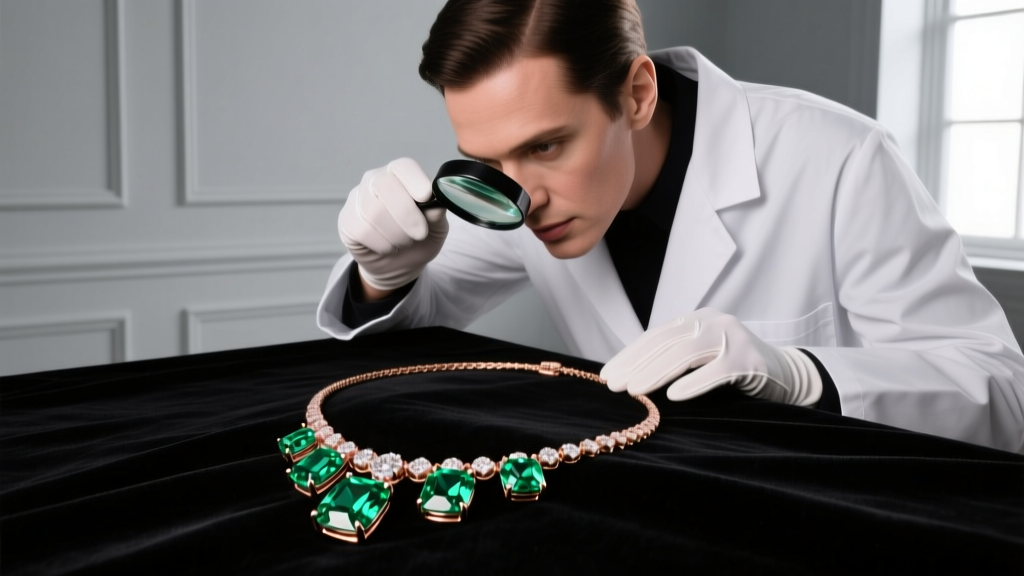
To mitigate this, inspect the prongs under a 10x loupe upon purchase. They should be smooth, evenly spaced, and rest flush against the crown of the diamond. If you lead an active lifestyle or wear high-collared clothing frequently, consider a bezel or semi-bezel setting for your 5 diamond necklace. While bezel settings reduce the visible surface area of the diamonds by about 10%, they eliminate the snag risk entirely and reduce the required maintenance from annual prong-tightening to virtually zero.
Pricing Tiers and Value Retention
Understanding the pricing architecture of a 5 diamond necklace helps you allocate your budget effectively. Prices fluctuate based on the metal weight and the origin of the diamonds. Below is a realistic pricing framework for a 2.50 TCW (Total Carat Weight) graduated 5-stone necklace in the current market:
- Lab-Grown Diamonds in 14k Gold: $2,200 – $3,500. The most cost-effective route, allowing you to maximize carat weight and color grade (D-F) without compromising the chain quality.
- Lab-Grown Diamonds in Platinum: $3,000 – $4,800. Adds roughly $800-$1,300 to the base price due to platinum's density and higher melting point manufacturing costs.
- Natural Diamonds in 18k Gold: $11,000 – $16,000. The premium reflects the extreme rarity of finding five perfectly matched natural stones with G/VS2 or better grading.
- Natural Diamonds in Platinum: $13,500 – $19,000+. Reserved for heirloom-tier pieces where maximum security and prestige are required.
When purchasing, always ensure the jeweler provides a comprehensive appraisal that lists the exact millimeter dimensions and carat weights of all five individual stones, not just the aggregate TCW. This documentation is vital for insurance replacement, ensuring that if the necklace is lost, the insurer is bound to replace it with a mathematically and optically identical 5 diamond necklace.


