Five Finger Necklace Meaning: Metal & Material Guide
Discover the five finger necklace meaning and how metal choices like sterling silver, 14k gold, and brass affect its protective properties and durability.

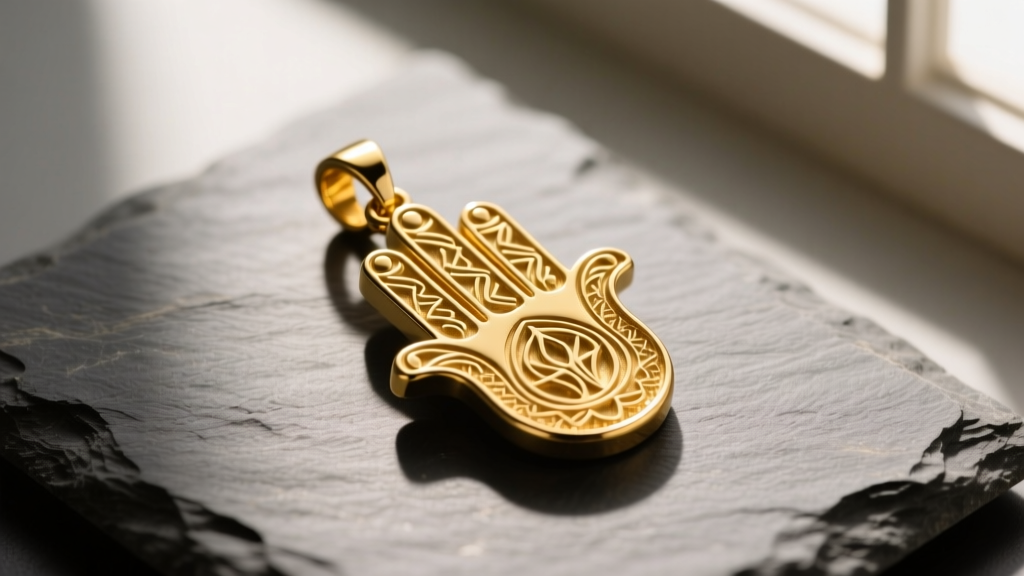
When exploring protective jewelry, few symbols carry as much historical weight and cross-cultural resonance as the five-fingered hand amulet. Often recognized as the Hamsa, Hand of Fatima, or Hand of Miriam, this ancient talisman has transcended its Middle Eastern and North African origins to become a global staple in modern jewelry design. However, understanding the true five finger necklace meaning requires looking beyond mere aesthetics. The symbolism of the five digits is deeply intertwined with the physical materials used to forge them. In 2026, conscious consumers and jewelry collectors are increasingly examining how metallurgy, alloy compositions, and gemstone inlays interact with the amulet's traditional energetic properties.
Decoding the Five Finger Necklace Meaning
Before analyzing the metallurgy, we must establish the baseline symbolism. The five fingers of the amulet are universally recognized as a shield against the 'evil eye' and a magnet for health, happiness, and good fortune. In various esoteric traditions, each finger represents a distinct element or spiritual pillar:
- Thumb: Represents the fire element, inner strength, and the ability to manifest willpower.
- Index Finger: Symbolizes water, intuition, and the flow of creative energy.
- Middle Finger: Connects to the sky or ether, representing spiritual balance and the divine spark.
- Ring Finger: Grounds the wearer to the earth, signifying deep connections, loyalty, and physical stability.
- Pinky Finger: Associated with air, communication, and the articulation of personal truth.
When you wear a five-finger pendant, you are wearing a localized map of elemental balance. The metal you choose acts as the 'conductor' for this energy, fundamentally altering how the amulet interacts with your body's electromagnetic field and your daily environment.
Metallurgy and Mysticism: How Materials Alter the Amulet
The physical properties of a metal—its thermal conductivity, reflectivity, and chemical reactivity—dictate not only its durability but also its metaphysical alignment. Let us break down the most common materials used for five-finger pendants and analyze their specific properties.
925 Sterling Silver: The Lunar Reflector
Sterling silver is an alloy consisting of 92.5% pure silver and 7.5% copper. In metaphysical circles, silver is deeply tied to lunar energy, intuition, and emotional regulation. From a materials science perspective, silver boasts the highest electrical and thermal conductivity of any metal. This means a sterling silver five-finger pendant will quickly adapt to your body temperature, creating a seamless physical connection. However, the 7.5% copper content makes it susceptible to tarnishing when exposed to atmospheric sulfur. According to the Silver Institute, this oxidation is a natural chemical reaction, not a defect, and can be easily reversed with proper polishing.
14k and 18k Yellow Gold: Solar Conductors
Gold is historically associated with solar energy, vitality, and wealth. Pure 24k gold is too soft for daily wear (measuring a mere 25-30 on the Vickers hardness scale), so it is alloyed with metals like copper, silver, and zinc. A 14k gold pendant (58.5% pure gold) offers a Vickers hardness of approximately 140-160, making it highly resistant to scratching and deformation. An 18k piece (75% pure gold) is softer (around 110-130 HV) but offers a richer, deeper yellow hue that amplifies the 'solar' warming effect of the amulet. The Gemological Institute of America (GIA) notes that the specific alloy mix in gold not only determines its color but also its hypoallergenic properties; nickel-free 14k gold is generally the safest bet for wearers with contact dermatitis.
Brass and Bronze: Earthy Grounding Agents
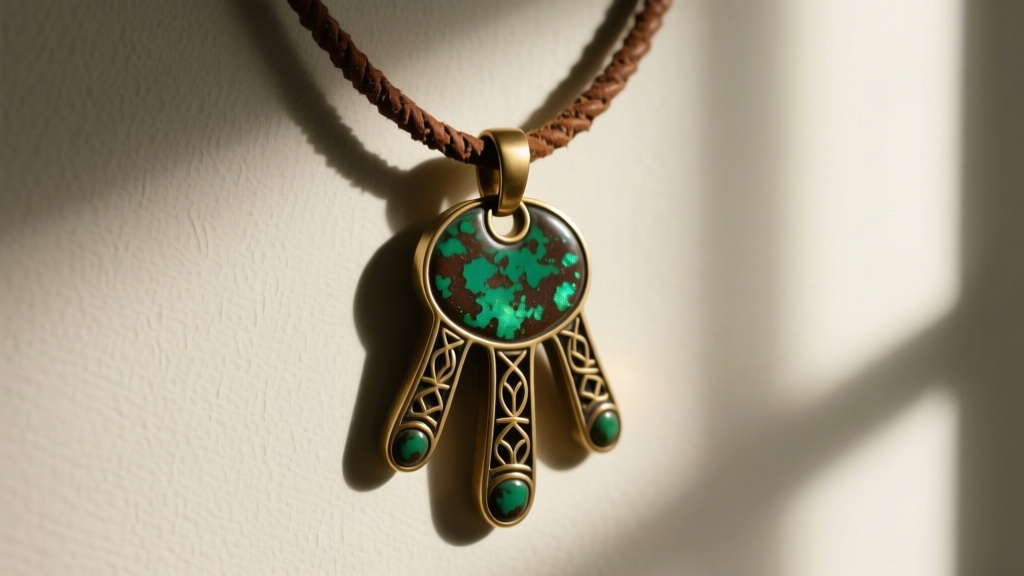
For those seeking a more rugged, antiqued aesthetic, brass (copper and zinc) and bronze (copper and tin) are popular choices for five-finger amulets. These copper-heavy alloys are incredibly grounding and possess natural antimicrobial properties. However, they are highly reactive. When the copper in brass interacts with the acidity of human sweat (which typically ranges from a pH of 4.5 to 7.0), it produces copper chloride and copper carbonate, resulting in the infamous 'green skin' effect. While harmless, this requires the wearer to either apply a clear jeweler's lacquer to the back of the pendant or embrace the patina as part of the amulet's living history.
Comparative Data: Durability, Hardness, and Wearability
Choosing the right material for your five-finger necklace requires balancing symbolic intent with practical wearability. The table below provides a technical comparison of the most common pendant materials.
| Material | Composition | Vickers Hardness (HV) | Tarnish / Oxidation Risk | Avg. Price (1" Pendant) |
|---|---|---|---|---|
| 925 Sterling Silver | 92.5% Ag, 7.5% Cu | 65 - 120 | Moderate (Sulfur reaction) | $45 - $120 |
| 14k Yellow Gold | 58.5% Au, Cu/Ag/Zn | 140 - 160 | Very Low | $350 - $800 |
| 18k Yellow Gold | 75% Au, Cu/Ag/Zn | 110 - 130 | Very Low | $600 - $1,400 |
| Solid Brass | 65-85% Cu, 15-35% Zn | 80 - 110 | High (Skin acidity reaction) | $20 - $60 |
| Surgical Steel (316L) | Fe, Cr, Ni, Mo | 150 - 190 | Negligible | $25 - $75 |
Gemstone Inlays: Amplifying the Five Fingers
The center palm of a five-finger pendant often features an 'eye' or a central gemstone to further deflect negative energy. The material properties of these inlays are just as critical as the metal setting.
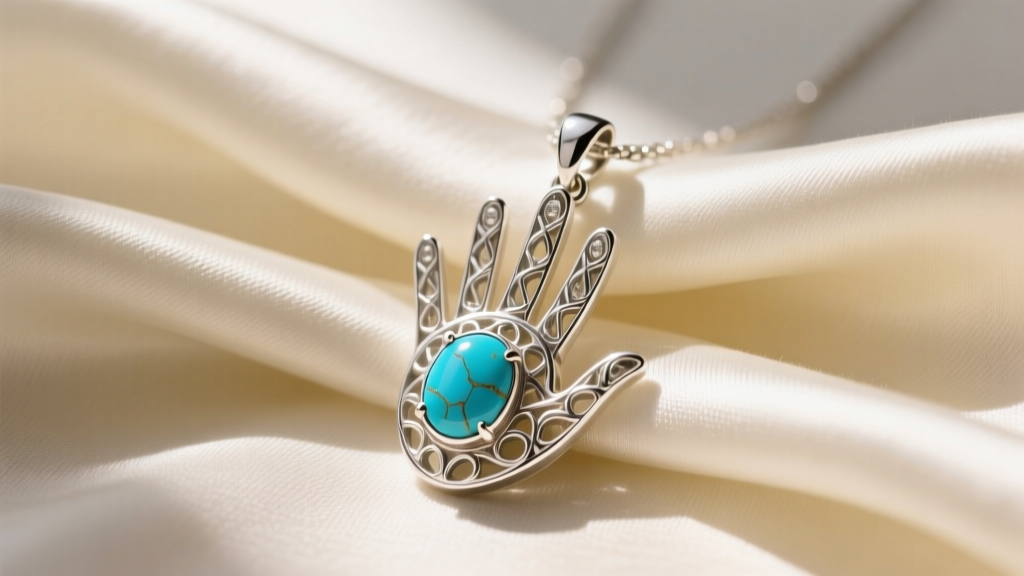
- Turquoise (Mohs 5-6): The most traditional inlay for Hamsa amulets. Turquoise is a porous hydrous phosphate of copper and aluminum. Because it is relatively soft and porous, it can absorb oils and lotions, altering its color over time. The GIA recommends avoiding ultrasonic cleaners for turquoise, as the vibrations and heat can fracture the stone or damage common stabilization treatments.
- Lapis Lazuli (Mohs 5-5.5): Composed primarily of lazurite, calcite, and pyrite. The pyrite inclusions (fool's gold) create a striking celestial effect. However, the calcite veins make it vulnerable to acidic cleaners. Lapis is ideal for wearers seeking to enhance the 'index finger' (water/intuition) energy of the amulet.
- Malachite (Mohs 3.5-4): A copper carbonate hydroxide known for its vivid, banded green patterns. Malachite is exceptionally soft and highly sensitive to heat and acids. It requires a protective bezel setting to prevent chipping along the edges of the five-finger pendant.
Chain Gauges and Hardware: Supporting the Pendant
The meaning of the five-finger amulet is compromised if the chain cannot adequately support its weight or match its aesthetic. The structural integrity of your necklace relies heavily on chain gauge and clasp selection.
For lightweight, hollow-cast silver or brass pendants (under 5 grams), a 1.0mm to 1.2mm cable chain is sufficient. Cable chains distribute weight evenly and offer a classic, unobtrusive look. However, for solid 14k gold or heavy cast-bronze pendants exceeding 10 grams, you must upgrade to a 2.0mm to 2.5mm rope or box chain. Rope chains feature interwoven links that provide superior tensile strength, while box chains offer a rigid, geometric structure that complements the architectural lines of the five fingers.
Never rely on a standard 5mm spring ring clasp for heavy amulets. The internal spring mechanism is a known failure point under dynamic stress. Always opt for a lobster clasp (minimum 10mm) or a toggle clasp, which uses gravity and tension to remain securely closed.
Material-Specific Maintenance Protocols
To ensure your five-finger necklace retains both its physical luster and its symbolic clarity, adhere to these strict maintenance protocols based on your chosen material:
The Golden Rule of Amulet Care: Never use abrasive toothpaste or baking soda pastes on any gemstone-inlaid five-finger pendant. The microscopic abrasives will permanently scratch both the metal setting and the polished surface of stones like turquoise and lapis lazuli.
For Sterling Silver: Store the necklace in an anti-tarnish cloth pouch infused with silver nitrate to absorb ambient sulfur. Clean monthly with a specialized liquid silver dip, but ensure the pendant is rinsed thoroughly in distilled water afterward to halt the chemical cleaning process.
For Solid Gold: A simple soak in warm water with a few drops of mild, phosphate-free dish soap for 15 minutes, followed by gentle agitation with a soft-bristled baby toothbrush, will remove sebum and environmental grime without degrading the alloy.
For Brass and Bronze: If you wish to maintain a high polish, use a commercial brass cleaner containing mild oxalic acid. If you prefer the antique, oxidized look that develops over years of wear, simply wash the pendant with mild soap and water, drying it immediately to prevent uneven water spotting.
Ultimately, the five finger necklace meaning is not static; it is a dynamic relationship between ancient symbolism and modern materials science. By carefully selecting the metal, gemstone, and chain architecture, you transform a simple piece of jewelry into a highly personalized, structurally sound talisman equipped for the demands of contemporary life.


