Fix Your 14k Gold Star Necklace: Tarnish, Flipping & Chain Tangling
Is your 14k gold star necklace tarnishing, tangling, or flipping? Discover expert troubleshooting for alloy reactions, bail fixes, and chain care.

The Reality of Wearing Celestial Jewelry in 2026
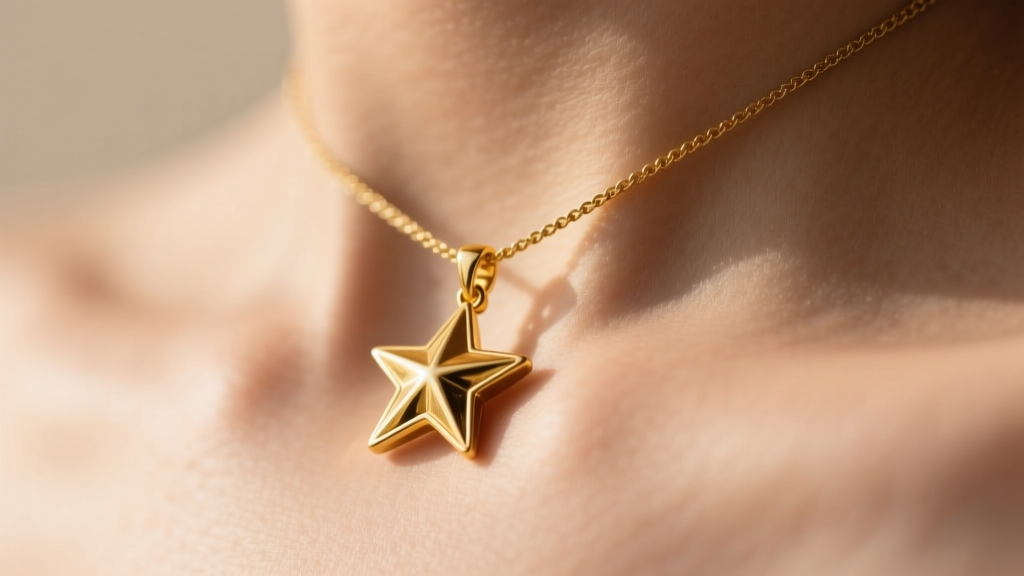
The 14k gold star necklace remains a cornerstone of modern celestial jewelry, prized for its versatility and subtle brilliance. However, as we navigate the jewelry market in 2026, many wearers are frustrated by a trio of common issues: unexpected tarnishing, the pendant constantly flipping upside down, and persistent chain tangling. Unlike pure 24k gold, 14k gold is an alloy engineered for durability, but this very engineering introduces specific chemical and physical vulnerabilities. If your favorite star pendant is underperforming, the issue rarely lies with the design itself, but rather with a mismatch in chain physics, alloy composition, or maintenance routines. This comprehensive troubleshooting guide will help you diagnose and permanently resolve the most common failures associated with your 14k gold star necklace.
Why Your 14k Gold Star Necklace is Tarnishing (and How to Fix It)
A common misconception is that 'real gold' never tarnishes. While pure 24k gold is entirely non-reactive, a 14k gold star necklace is composed of only 58.5% pure gold. The remaining 41.5% consists of alloy metals—typically copper, silver, zinc, and sometimes nickel—added to increase tensile strength. According to the Gemological Institute of America (GIA), it is these alloy metals that react to environmental factors.
The Chemistry of Tarnish
When the copper in your 14k yellow or rose gold star necklace is exposed to sulfur compounds in the air, or to the natural acids and salts in human sweat, it undergoes oxidation. This creates a microscopic layer of copper sulfide on the surface, appearing as a dull, darkened film, particularly in the deep crevices of the star's engraved details or along the chain links.
- The Fix: Avoid commercial 'dip' cleaners, which often contain harsh thiourea chemicals that can strip the alloy's natural luster over time. Instead, create a solution of warm water and a few drops of phosphate-free dish soap (like Dawn). Use an extra-soft baby toothbrush to gently agitate the crevices of the star pendant. Rinse thoroughly and dry with a microfiber cloth.
- Prevention: Apply perfumes, lotions, and sunscreens at least 15 minutes before putting on your necklace. The alcohol and chemical compounds in cosmetics accelerate the oxidation of the copper alloys.
The 'Flipping Pendant' Problem: Weight & Bail Troubleshooting
Nothing is more annoying than adjusting your necklace, only to look down five minutes later and see the back of the star pendant facing outward. This 'flipping' issue is a matter of physics, specifically related to the center of gravity and the bail (the loop that connects the pendant to the chain).
Diagnosing the Bail and Jump Ring
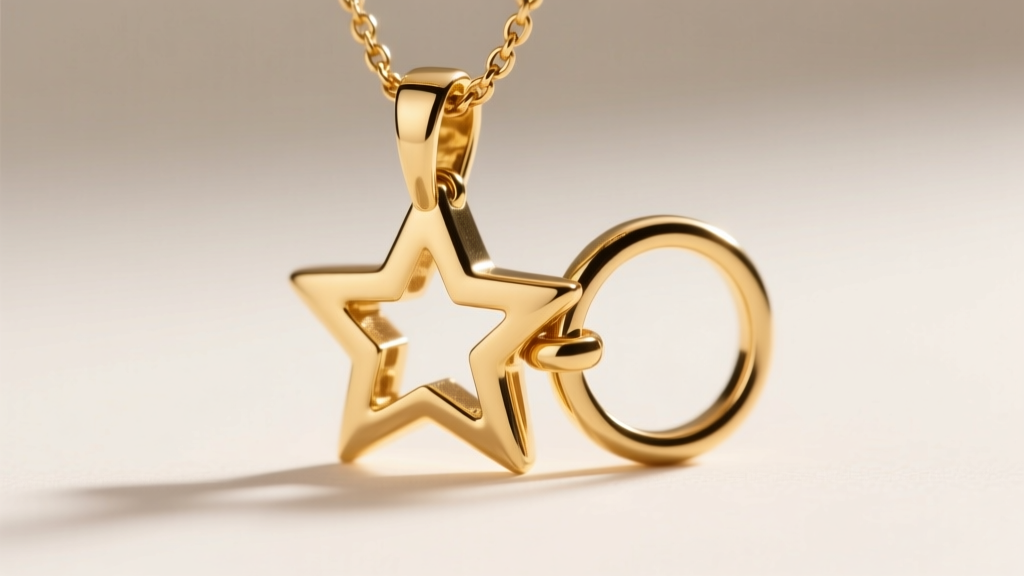
Star pendants typically have a wide horizontal axis. If the bail is soldered too high, or if the jump ring connecting the bail to the chain is too small, the pendant lacks the rotational clearance to hang flat against the sternum. When the chain moves, the friction forces the star to rotate to its path of least resistance—often upside down or sideways.
Engineering the Solution
To stop the flipping, you must increase the clearance between the chain and the pendant bail. Take your necklace to a local jeweler and request a jump ring upgrade. If you are wearing a 1.0mm cable chain, the inner diameter of the jump ring should be at least 4.5mm to 5.0mm. This provides the star pendant with enough 'swing room' to naturally correct its orientation when you move. Additionally, ensure the jeweler solders the jump ring shut; an open jump ring will eventually warp under the pendulum-like stress of a heavy star pendant, leading to loss.
Chain Tangling & Breakage: Gauge and Link Style Solutions
The delicate points of a star pendant act like tiny hooks, catching on clothing, hair, and most notably, the chain itself. The structural integrity of your necklace relies heavily on the chain style and gauge (thickness) you select.
The Worst Chains for Star Pendants
- Herringbone Chains: While they lay flat and look beautiful, herringbone chains are notorious for kinking. Once a herringbone chain kinks, the structural damage is permanent and highly prone to snapping, especially when weighed down by a solid 14k gold star pendant.
- Box Chains: The sharp, geometric edges of box chain links tend to catch on the points of star pendants and trap body hair, leading to severe tangling.
The Optimal Chain Selection
For a standard 10mm to 15mm solid 14k gold star pendant, the ideal chain is a 1.0mm to 1.2mm Cable chain or a 1.2mm Figaro chain. Cable chains feature simple, uniform oval links that glide smoothly through the pendant bail, minimizing friction and preventing the star from catching. Furthermore, according to Jewelers of America, regular inspection of the chain's clasp and links is vital; a 1.0mm chain can support up to 5-7 grams of pendant weight safely, but anything heavier requires a 1.5mm rope chain for adequate tensile support.
Skin Discoloration & Allergies: The 14k Alloy Breakdown
If your 14k gold star necklace is leaving a green or black smudge on your chest, or causing an itchy, red rash, you are experiencing an alloy reaction. This is not a sign that your jewelry is 'fake'; it is a direct result of the specific metals used to create the 14k color.
Yellow Gold vs. White Gold Reactions
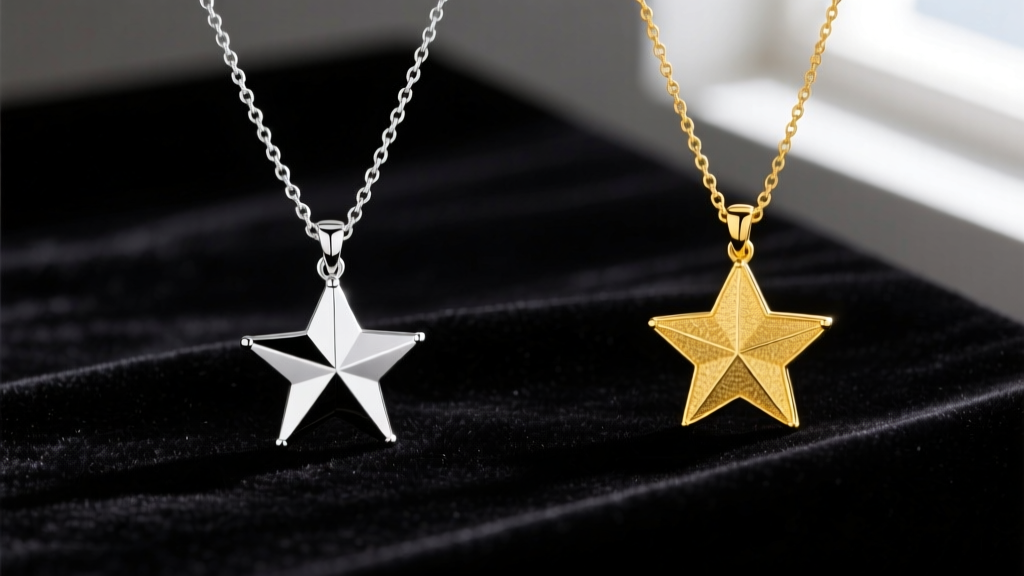
The green smudge is almost exclusively caused by copper oxidation reacting with the acidity of your skin. This is common in 14k yellow and rose gold. To mitigate this, wipe the back of the star pendant daily with a soft cloth to remove sweat and skin oils. Conversely, if you are experiencing a red, itchy rash, you are likely reacting to nickel. Nickel is frequently used in 14k white gold alloys to achieve a bright, silvery color. Under current 2026 dermatological guidelines, prolonged skin contact with nickel alloys is a primary trigger for contact dermatitis. If you have sensitive skin, seek out a 14k white gold star necklace that is alloyed with palladium instead of nickel, or ensure the piece has a fresh, thick rhodium plating barrier.
Authentication Troubleshooting: Is Your Star Pendant Really 14k?
When purchasing vintage or second-hand celestial jewelry, verifying the gold content is critical. The Federal Trade Commission (FTC) strictly regulates gold marking in the United States, but counterfeit stamps do exist.
Hallmarks and the Magnet Test
Inspect the bail or the clasp of the chain for a hallmark. You should see '14k', '14K', or the European equivalent '585'. You may also see '14KP'. The 'P' stands for 'Plumb', a term used in the industry to guarantee that the piece is exactly 14k (58.5%) or higher, with no negative tolerance. To perform a basic at-home troubleshooting test, use a strong neodymium magnet. Gold is entirely non-magnetic. If your star pendant or chain exhibits even a slight magnetic pull, it contains a ferrous metal core and is either heavily gold-plated or entirely counterfeit.
Troubleshooting Matrix: Quick Reference Guide
| Problem | Root Cause | Expert Solution |
|---|---|---|
| Dark tarnish in crevices | Copper alloy reacting to sulfur/sweat | Clean with mild dish soap and a soft baby toothbrush; avoid chemical dips. |
| Pendant flipping upside down | Jump ring too small; high center of gravity | Upgrade to a 4.5mm or 5.0mm soldered jump ring for better rotational clearance. |
| Chain constantly kinking | Using a herringbone or snake chain | Swap to a 1.0mm - 1.2mm cable or Figaro chain for smooth bail movement. |
| Green skin discoloration | Copper oxidation mixed with skin acidity | Wipe pendant daily; apply clear nail polish to the back of the star (temporary fix). |
| Red, itchy rash on chest | Nickel allergy from white gold alloy | Switch to palladium-alloyed white gold or re-plate with thick rhodium. |
Final Thoughts on Necklace Longevity
A 14k gold star necklace is designed to be an enduring staple in your jewelry collection, but it requires an understanding of its mechanical and chemical limits. By matching the correct chain gauge to the pendant's weight, ensuring proper bail clearance, and managing the alloy's exposure to environmental sulfur and cosmetics, you can eliminate these common frustrations. Treat your celestial pieces with informed care, and they will maintain their brilliance and structural integrity for decades to come.


