24 Carat Gold Necklace Care: Fixing Bends, Scratches & Wear
Learn how to troubleshoot, repair, and clean a 24 carat gold necklace. Expert fixes for bent links, weak clasps, and surface scratches.

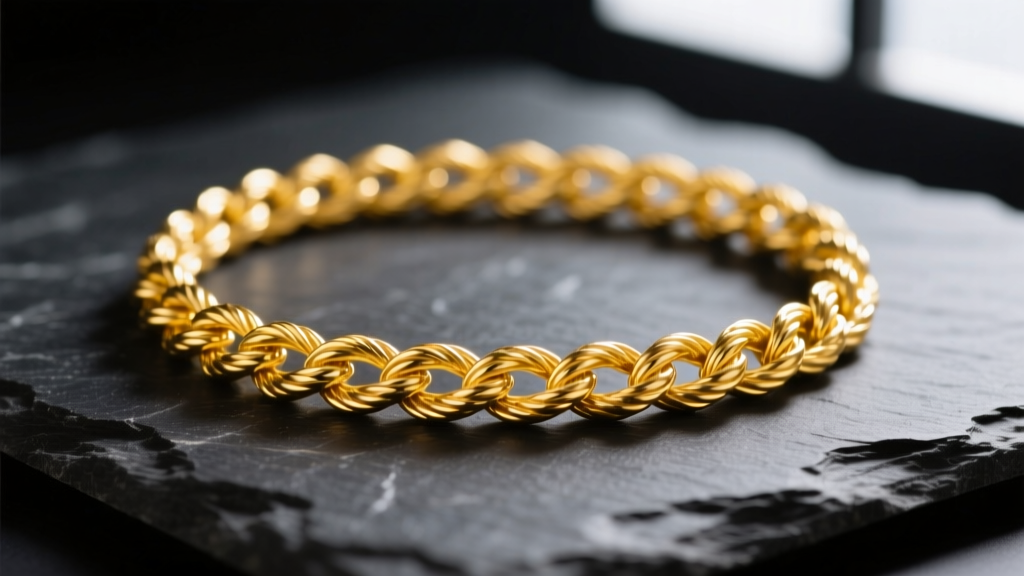
The Reality of 24k Purity: Why Your Necklace is So Fragile
Owning a 24 carat gold necklace is the pinnacle of luxury and elemental purity. While gemologists technically use the term 'carat' for gemstone weight and 'karat' for gold purity, the global search for a 24 carat gold necklace universally refers to 24-karat (99.9% pure) gold jewelry. This uncompromising purity gives the metal its unmatched, deep yellow-orange luster and hypoallergenic properties. However, it also introduces severe structural vulnerabilities.
According to the World Gold Council, pure 24k gold is exceptionally malleable. On the Mohs scale of mineral hardness, it sits at roughly 2.5—comparable to a human fingernail. This means your necklace is highly susceptible to warping, stretching, and surface abrasion from everyday friction. In 2026, as investment-grade pure gold jewelry continues to surge in popularity, understanding the metallurgical realities of your chain is no longer optional; it is essential for preserving both its aesthetic beauty and its intrinsic melt value.
Troubleshooting Common 24k Gold Chain Disasters
Issue 1: Warped or Bent Chain Links
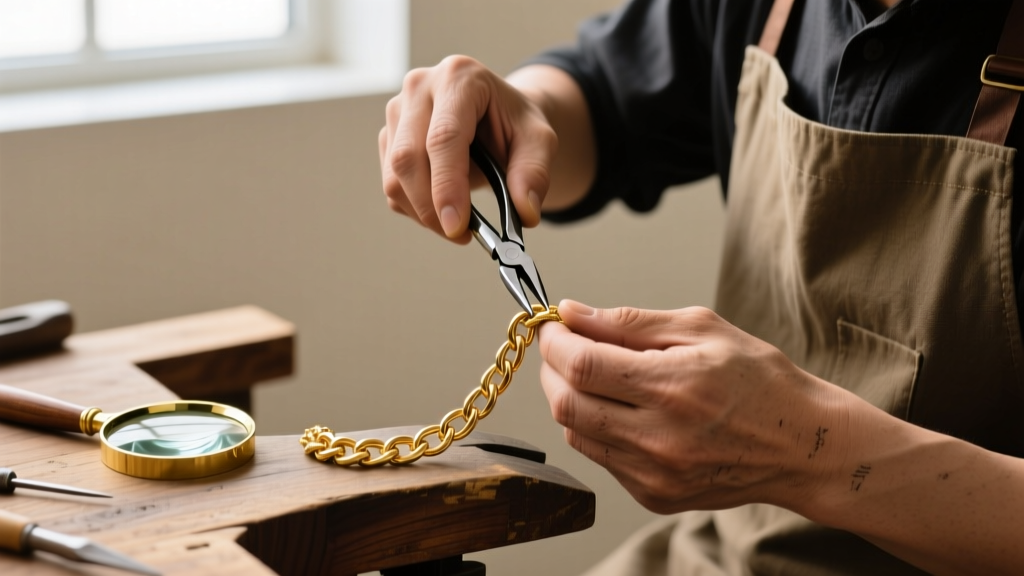
Because 24k gold lacks the alloyed metals (like copper or zinc) that provide structural rigidity, a simple snag on a sweater can easily warp a link. The most common mistake owners make is trying to bend the link back into shape with their fingers or standard steel pliers.
The Fix: Never use standard steel tools, as they will gouge the soft gold. Instead, use nylon-jaw pliers. Furthermore, gold 'work-hardens' when bent at room temperature. If a link is severely kinked, bending it back cold will cause it to snap due to internal crystalline stress. A professional jeweler will 'anneal' the link—heating it with a micro-torch to a dull cherry red (approximately 1200°F or 650°C) and immediately quenching it in water. This resets the crystalline structure, restoring the gold's malleability so it can be reshaped without breaking.
Issue 2: Clasp Failure and Spring Ring Stretching
The traditional spring ring clasp is a catastrophic failure point on a 24 carat gold necklace. The internal mechanism relies on tension, but the pure gold outer shell quickly deforms under the pressure of the steel spring, leading to a clasp that refuses to close or accidentally pops open.
The Fix: Upgrade the clasp. However, you cannot simply solder a new clasp onto a 24k chain using traditional torch methods and standard solder, as the high heat will melt the pure gold links, and the solder will dilute the chain's purity. Modern jewelers use laser welding to attach an 18k or 14k lobster clasp via a reinforced jump ring. The laser delivers a microscopic, high-heat pulse that fuses the metal instantly without transferring heat to the adjacent 24k links, preserving your chain's mass and purity.
Issue 3: Deep Scratches and Surface Dullness
Unlike 14k or 18k gold, which can be aggressively buffed with a motorized polishing wheel, polishing a 24k gold necklace removes microscopic layers of the soft metal. Over time, aggressive polishing will visibly thin the chain and reduce its gram weight.
The Fix: Utilize a technique called burnishing. Instead of abrading the gold away, a jeweler uses a highly polished agate or tungsten carbide burnishing tool to rub the scratched area. Because 24k gold is so soft, the burnisher physically pushes the displaced metal back into the scratch, smoothing the surface and restoring the mirror-like shine without removing a single milligram of gold mass.
Material Hardness & Wearability Data Chart
To understand why your 24 carat gold necklace requires such specialized troubleshooting, it helps to compare its physical properties against standard jewelry alloys. The Gemological Institute of America (GIA) provides extensive data on how alloying elements alter gold's structural integrity.
| Gold Purity | Vickers Hardness (HV) | Tensile Strength (MPa) | Primary Vulnerability |
|---|---|---|---|
| 24k (99.9%) | 25 HV | 120 MPa | Extreme bending, link stretching, deep scratching |
| 22k (91.6%) | 45 HV | 250 MPa | Moderate warping, clasp deformation |
| 18k (75.0%) | 125 HV | 450 MPa | Surface scratching, prong wear |
| 14k (58.3%) | 160 HV | 600 MPa | High durability, but prone to tarnish and skin allergies |
Data synthesis illustrates why 24k gold possesses less than half the tensile strength of 18k gold, making it unsuitable for heavy pendants or daily-wear chains without meticulous care.
Step-by-Step Cleaning Protocol for 99.9% Pure Gold
One of the greatest advantages of a 24 carat gold necklace is that it will never tarnish or oxidize; it lacks the copper or silver alloys that react with sulfur and oxygen in the air. However, it easily accumulates skin oils, lotions, and dust, which dull its natural radiance. Avoid ultrasonic cleaners at all costs—the high-frequency cavitation bubbles can literally shake apart the soft, weakened links of a pure gold chain.
"Pure gold requires the gentlest touch. Chemical dips and ultrasonic vibrations are the enemies of 24k structural integrity. Stick to thermal and mechanical gentleness." — Jewelers of America Care Guidelines.
- Prepare the Solution: Mix lukewarm distilled water with three drops of pH-neutral, phosphate-free dish soap in a glass bowl. Avoid tap water, as trace chlorine and fluoride can leave microscopic hard-water spots on the soft metal.
- Soak Briefly: Submerge the necklace for no more than 3 to 5 minutes to loosen sebum and cosmetic residues.
- Agitate Gently: Using a brand-new, ultra-soft baby hairbrush, lightly sweep the bristles over the chain links. Do not scrub; let the bristles do the lifting.
- Rinse and Dry: Rinse under a gentle stream of distilled water. Lay the chain flat on a lint-free microfiber cloth and pat dry. Never pull or stretch the wet chain, as water acts as a mild lubricant, making the links more prone to stretching under tension.
When to Seek Professional Jeweler Intervention
While minor cleaning and careful storage are well within the realm of at-home maintenance, certain issues demand professional intervention to protect your investment. If your 24 carat gold necklace exhibits chain elongation (where the links have permanently stretched into ovals), attempting to compress them back into circles will weaken the structural nodes. A master goldsmith must assess whether the links can be annealed and reshaped, or if the compromised section must be laser-welded out entirely.
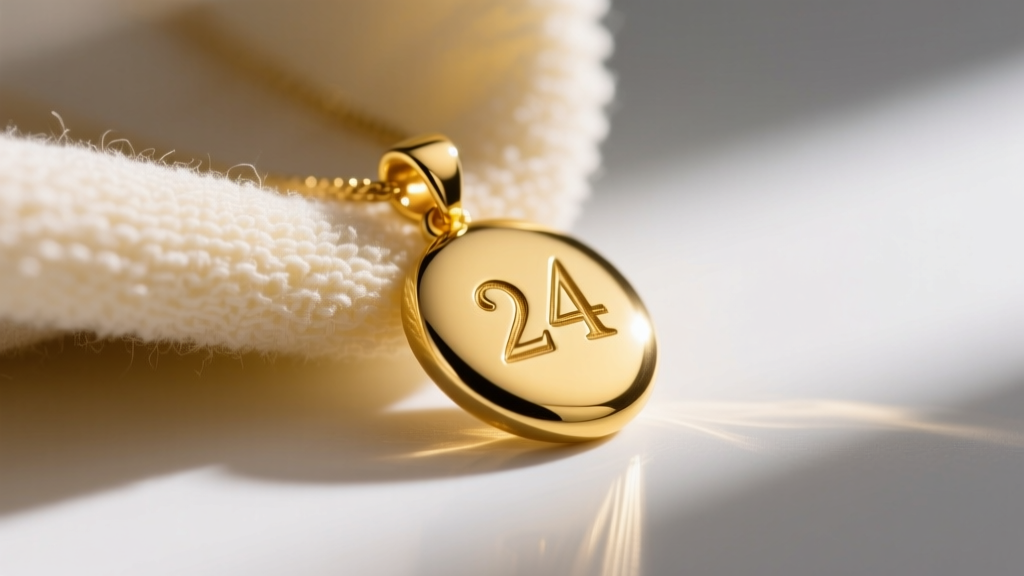
Furthermore, if you are attaching a pendant, never thread a heavy 24k gold chain through a small, rigid pendant bail. The friction will act like a saw, slowly cutting through the soft pure gold links. Always use a pendant enhancer or have a jeweler fit the pendant with a high-karat, reinforced jump ring that allows the chain to move freely without localized friction. By respecting the metallurgical limits of pure gold, your necklace will remain a flawless, radiant heirloom for generations.


