Troubleshooting Your Ann Taylor Pearl Necklace: Peeling & Repairs
Is your Ann Taylor pearl necklace peeling or tarnishing? Learn expert troubleshooting tips to clean, restring, and restore your favorite fashion pearls.

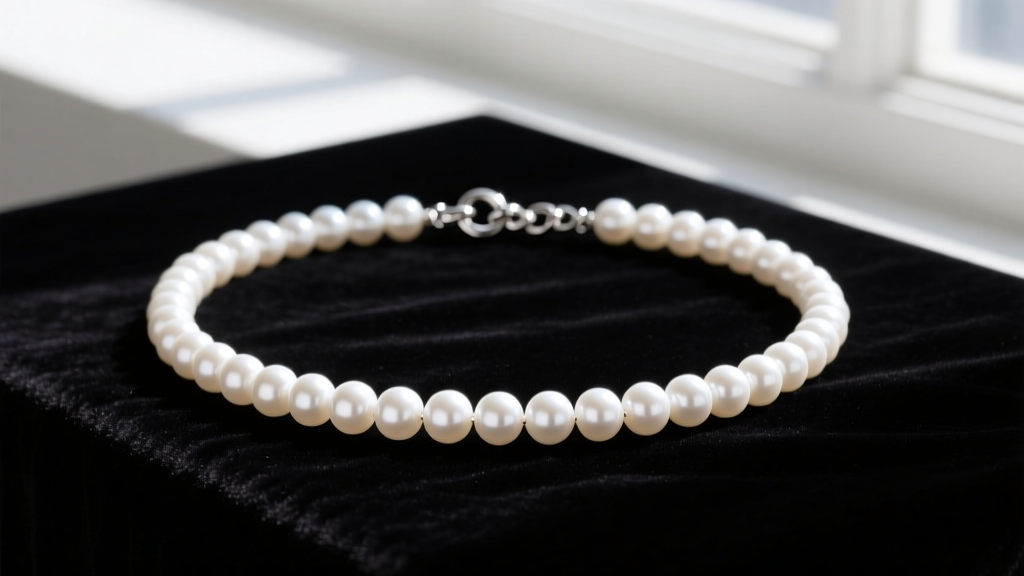
When your favorite Ann Taylor pearl necklace begins to show signs of wear, it can feel like the end of an era for a beloved wardrobe staple. Known for their elegant, office-ready aesthetics and accessible price points, Ann Taylor pearl necklaces are primarily crafted as high-end fashion jewelry. However, because they utilize simulated or coated pearls and plated base metals, they are uniquely susceptible to specific failure modes like coating delamination, clasp tarnishing, and cord stretching.
As of 2026, many vintage and contemporary Ann Taylor pieces are still in heavy rotation, but they require specialized troubleshooting that differs vastly from fine jewelry repair. This comprehensive guide will walk you through the exact anatomy of these necklaces, diagnose common issues, and provide actionable, professional-grade repair protocols to restore your piece to its original luster.
The Anatomy of an Ann Taylor Pearl Necklace
To effectively troubleshoot a damaged piece, you must first understand its material composition. Ann Taylor pearl necklaces typically do not feature solid nacreous pearls (like Akoya or South Sea pearls). Instead, they rely on two primary bead types:
- Glass-Core Coated Pearls: A dense glass bead coated with a pearlescent lacquer (often containing guanine or synthetic mica) to mimic the orient and luster of natural pearls.
- Shell Pearls: Crushed oyster shell powder bound with resin, shaped into a sphere, and finished with a protective pearlescent topcoat.
The findings—specifically the spring ring clasps, jump rings, and French wire (gimp)—are usually cast from brass or pewter and electroplated with rhodium (for a silver tone) or a gold-tone alloy. The stringing material is generally a synthetic nylon thread or a basic silk cord, often knotted between the beads to prevent catastrophic loss if the strand breaks.
Troubleshooting Common Failure Modes
Below is a diagnostic matrix to help you identify the root cause of your necklace's deterioration and the corresponding professional repair strategy.
| Symptom | Root Cause | Actionable Fix |
|---|---|---|
| Flaking or peeling bead surface | Chemical degradation from perfume, acidic sweat, or friction. | Replace individual beads with Swarovski 5818 crystal pearls. |
| Blackened or green clasp | Rhodium plating has worn off, exposing oxidizing brass base. | Polish with a dry jeweler's rouge cloth; avoid liquid dips. |
| Visible gaps between pearls | Nylon or silk cord has stretched due to humidity and tension. | Complete restringing using Griffin 100% natural silk cord. |
| Cloudy, dull luster | Micro-scratches in the lacquer topcoat from ultrasonic cleaning. | Gentle wash with distilled water and baby shampoo. |
Issue 1: Peeling or Flaking Pearl Coating
The most heartbreaking issue with fashion pearls is coating delamination. The pearlescent lacquer is highly sensitive to alcohols and acids. If you regularly apply perfume, hairspray, or lotions before putting on your Ann Taylor pearl necklace, the chemical solvents will slowly dissolve the binding agents in the lacquer. Once a pearl begins to peel, revealing the dull glass or resin core beneath, the damage is irreversible. You cannot re-coat a single bead at home with matching precision.
The Fix: You must physically replace the damaged beads. Carefully snip the cord, remove the peeled pearls, and source replacements. Because Ann Taylor discontinues specific seasonal lines, your best match for size, weight, and luster is the Swarovski Crystal Pearl (5818 series) in 'Pearlescent White'. They feature a proprietary crystal core that perfectly mimics the weight and temperature of high-end fashion glass pearls.
Issue 2: Tarnished Base Metal Findings and Clasps
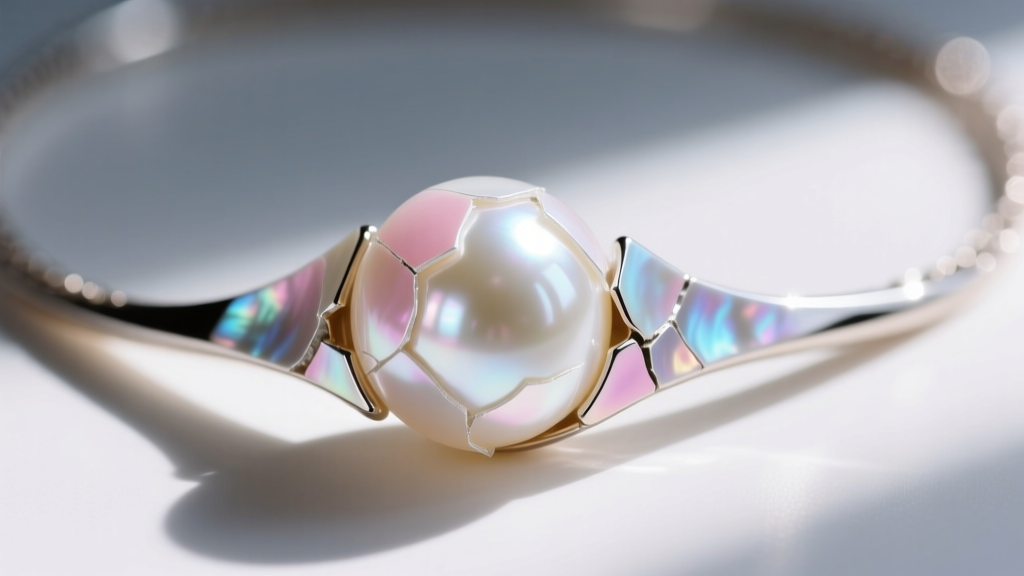
If the silver-tone clasp on your necklace is turning black, or worse, leaving a green residue on your neck, the rhodium plating has breached. Rhodium is a noble metal and does not tarnish; the tarnish is actually the underlying brass reacting with sulfur and moisture in the air. According to the Gemological Institute of America (GIA), harsh chemical cleaners can destroy both the porous pearl coating and the remaining plating.
The Fix: Never use liquid silver dips (like Tarn-X) or ultrasonic cleaners. Instead, use a dry Sunshine Polishing Cloth. These cloths are impregnated with micro-abrasives and jeweler's rouge that gently buff away brass oxidation without stripping the remaining rhodium. For severe pitting, a jeweler can re-plate the clasp via a quick rhodium electroplating bath, though this requires removing the clasp from the pearl strand first.
Step-by-Step Restoration: Restringing Protocols
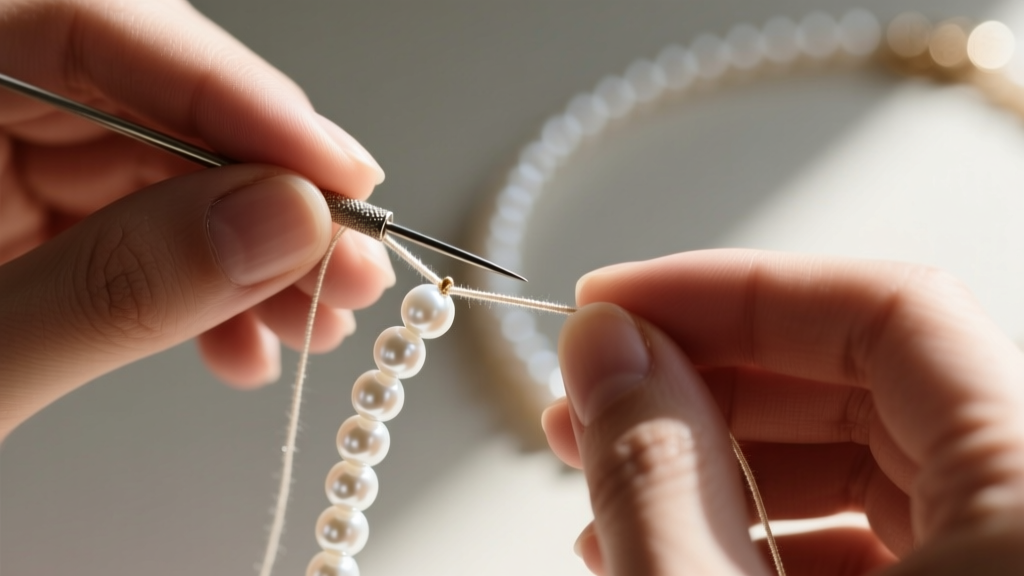
If your necklace has stretched, showing unsightly gaps of cord between the pearls, it is a structural hazard waiting to snap. Factory-strung fashion necklaces often use heat-fused nylon, which stretches irreparably over time. To restore the piece, you must restring it using traditional knotting techniques.
Choosing the Right Stringing Material
Do not reuse the old cord. Select a material based on the exact millimeter size of your Ann Taylor pearls:
- Griffin 100% Natural Silk Cord (Size 2 - 0.45mm): Ideal for 5mm to 7mm pearls. The integrated needle makes threading easy, and the natural fibers grip the bead holes securely.
- Griffin Silk Cord (Size 3 - 0.50mm): Best for 8mm to 10mm statement pearls, providing the necessary tensile strength to support the heavier glass cores.
- French Wire (Gimp): Essential for protecting the silk from the metal clasp. Use a 0.75mm sterling silver or gold-filled French wire coil at both the start and end of the strand.
For a detailed breakdown of knotting techniques and material tolerances, the Jewelers Mutual jewelry care archives offer excellent visual guides on securing the final slip knots with a micro-drop of cyanoacrylate (jewelry glue).
Proper Cleaning and Storage Protocols
Preventative maintenance is the cornerstone of fashion jewelry longevity. To safely clean an Ann Taylor pearl necklace that has accumulated skin oils and environmental dust, follow this strict protocol:
- Mix the Solution: Combine 1 cup of distilled water (never tap water, as chlorine and minerals can etch the coating) with a single drop of pH-neutral baby shampoo.
- Wipe, Don't Submerge: Dip a microfiber cloth into the solution, wring it out until it is merely damp, and gently wipe each pearl individually. Submerging the strand can cause water to become trapped in the drill holes, rotting the silk cord from the inside out.
- Dry Flat: Lay the necklace flat on a dry towel in a well-ventilated area away from direct sunlight or heat sources.
Expert Warning: Never store your pearl necklace in a plastic ziplock bag or an airtight safe deposit box. The pearlescent lacquer and the organic silk cord require ambient moisture. Airtight environments will cause the silk to become brittle and the pearl coating to craze and crack.
When to Replace vs. When to Repair
While restringing and clasp polishing are highly cost-effective (usually under $40 if done by a local bench jeweler, or $15 in DIY materials), there is a threshold where repair exceeds the garment's value. If more than 20% of the pearls are peeling, or if the brass findings are deeply pitted and snapping, it is time to retire the piece. However, by understanding the material science behind your Ann Taylor pearl necklace and adhering to these targeted troubleshooting steps, you can easily extend the lifespan of your favorite accessory for another decade of wear.


