How to Fix a Broken Mickey Necklace: Troubleshooting Guide
Learn how to repair a broken Mickey necklace. Expert troubleshooting for chipped enamel, bent silver ears, chain snapping, and pendant tangling.

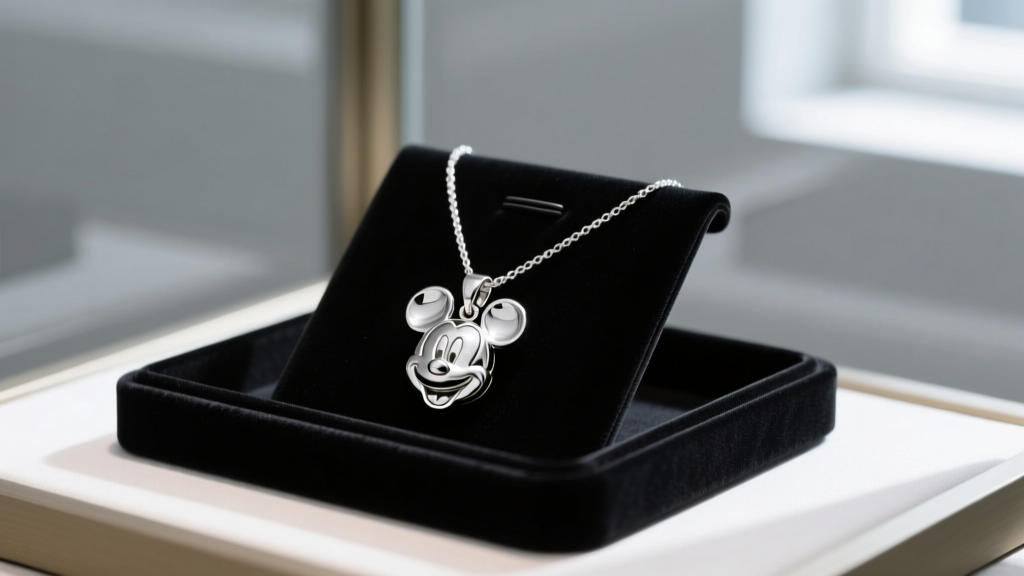
A Mickey necklace is more than just a piece of jewelry; it is a wearable piece of nostalgia and a staple of Disney-inspired fashion. However, the iconic silhouette of the Mickey Mouse head presents unique structural challenges that standard pendants do not face. As of 2026, licensed jewelers and Disney Parks have shifted toward heavier, solid-cast .925 sterling silver and 14k gold Mickey silhouettes, which, while beautiful, exacerbate stress on the chain and bail.
Whether you own a vintage 1990s Disney Store piece, a modern Pandora charm necklace, or a fine jewelry Swarovski crystal pendant, the wide profile and protruding "ears" make these necklaces highly susceptible to snagging, bending, and chain failure. This expert troubleshooting guide will walk you through the exact metallurgical and structural fixes required to restore and protect your Mickey necklace.
The Anatomy of a Mickey Necklace and Common Failure Points
Unlike a simple teardrop or circular pendant, the Mickey Mouse silhouette features a distinct tri-circle geometry. The two protruding ears act as lateral levers. When the pendant catches on a scarf, sweater, or seatbelt, the force is not distributed evenly downward; instead, it applies severe torsional stress to the bail (the loop connecting the pendant to the chain) and the chain's weakest solder joints.
The three most common failure points we see in the repair shop are:
- Chain Snapping: Caused by dynamic load spikes when the ears snag.
- Enamel Chipping: Common in Pandora and Disney Parks exclusive pieces that utilize cold enamel or vitreous glass enamel.
- Bent Ears: Sterling silver (.925) is relatively soft, making the outer edges of the ears prone to warping upon impact.
Troubleshooting Chain Breakage and Bail Wear
The most frequent issue with a Mickey necklace is a broken chain. Most commercial Disney necklaces are sold with lightweight 0.8mm or 0.9mm cable chains. According to the Rio Grande Jewelry Chain Guide, a standard 0.9mm soldered cable chain has a tensile strength of roughly 2.5 to 3 pounds. While a solid sterling silver Mickey pendant weighing 5 grams exerts only a fraction of an ounce of static downward force, a sudden snag on clothing generates a dynamic spike that easily exceeds 5 pounds, snapping the solder joint at the clasp or bail.
The Upgrade Solution: Switching Chain Styles
To permanently solve chain breakage, you must upgrade to a chain style that distributes lateral stress across multiple interlocking links without relying on single-point solder joints. Avoid rope or snake chains, which can kink and trap the wide bail of a Mickey pendant.
| Chain Type | Recommended Gauge | Max Pendant Weight | Snag Resistance |
|---|---|---|---|
| Wheat (Spiga) | 1.2mm - 1.5mm | Up to 15g | High (Interlocking ovals) |
| Box Chain | 1.1mm - 1.3mm | Up to 12g | Medium (Smooth edges) |
| Cable (Standard) | 0.9mm | Up to 4g | Low (Prone to catching) |
| Figaro | 1.5mm | Up to 18g | Medium-High |
Expert Tip: If your Mickey pendant has a wide, horizontal bail, pair it with a 1.2mm Wheat chain. The woven structure of the wheat chain prevents the pendant from sliding too far down the sides of the neck, keeping the iconic silhouette centered on your chest.
Fixing Chipped Enamel on Disney Pendants
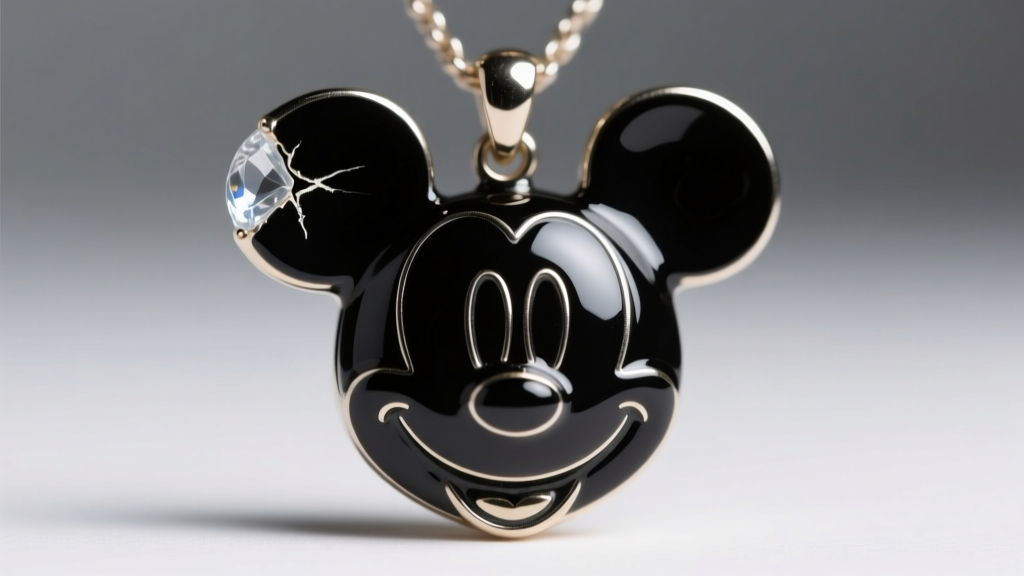
Many high-end Mickey necklaces feature deep black or vibrant red enamel. It is crucial to identify whether your pendant uses vitreous enamel (glass fused to metal at 1400°F) or cold enamel (a hardened epoxy resin). The Gemological Institute of America (GIA) notes that modern mass-produced fashion jewelry almost exclusively uses cold enamel, which is prone to chipping upon impact with hard surfaces like bathroom tiles.
Step-by-Step Micro-Resin Repair
Do not use cyanoacrylate (Super Glue) to fill an enamel chip. It shrinks as it cures, yellows under UV light, and will ruin the metallic finish surrounding the chip. Instead, use a two-part jeweler's epoxy.
- Clean the Area: Use a cotton swab dipped in isopropyl alcohol to remove skin oils from the chip. Let it dry completely.
- Mix the Epoxy: Combine equal parts of a clear, slow-cure jeweler's epoxy (like Devcon 5-Minute or G-S Hypo Cement for micro-fills).
- Tint the Resin: If repairing a black enamel Mickey pendant, mix in a microscopic amount of black onyx mica powder to match the specific depth of the original Disney enamel.
- Apply: Use a fine needle or toothpick to drop the resin into the chip. Overfill it slightly, as it will settle.
- Cure and Polish: Allow 24 hours to cure. Gently buff the excess flush with the surrounding metal using a microfiber cloth and a mild jewelry polishing compound.
Reshaping Bent Sterling Silver "Ears"
Sterling silver (.925) has a Mohs hardness of roughly 2.5 to 3, making it highly malleable. If the "ear" of your Mickey pendant gets caught in a zipper or doorframe, it will bend. Attempting to bend it back with your fingers will result in metal fatigue, work-hardening the silver until it snaps off entirely.
The Professional Flattening Method
To fix a bent ear without breaking it, you must relieve the crystalline stress in the metal. If you are attempting this at home, wrap the jaws of your pliers in masking tape or use nylon-jaw jewelry pliers to prevent marring the silver's polished finish. Gently apply pressure in small increments, bending the ear back past its original straight line and then back to center. This "flexing" prevents the silver from becoming brittle. For severe kinks, a professional jeweler will anneal the silver by heating it to 1200°F until it glows a dull cherry red, then quenching it in water to soften the metal before pressing it flat on a steel bench block with a rawhide mallet.
Preventing the "Flip and Tangle" Issue
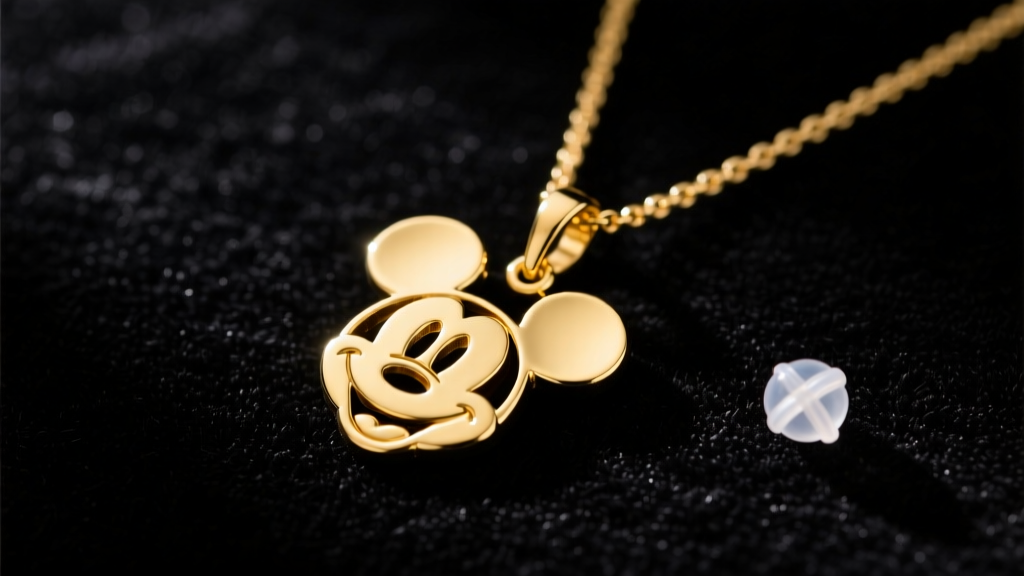
Because the Mickey Mouse head is top-heavy and wide, the center of gravity sits high on the pendant. This causes the necklace to constantly flip backward, hiding the design and tangling the chain around the bail. This is a geometric flaw inherent to the tri-circle design.
The Counterweight and O-Ring Hacks
To solve the flipping issue without altering the pendant itself, you have two highly effective options:
- The Silicone O-Ring: Slide a tiny, 2mm clear silicone jewelry O-ring onto the chain, resting it just above the bail. This creates friction against the skin and collarbone, preventing the chain from sliding freely and keeping the Mickey silhouette facing forward.
- The Counterweight Bead: If your chain features a clasp with a jump ring, attach a small, heavy metallic bead or a secondary micro-charm directly to the clasp end at the back of your neck. This shifts the center of gravity backward, acting as an anchor that forces the Mickey pendant to remain perfectly centered on your chest.
By understanding the unique structural demands of the Mickey silhouette, you can upgrade your chain, repair enamel damage, and modify the drape of the necklace to ensure your favorite piece of Disney jewelry remains pristine and perfectly displayed for years to come.


