How to Fix a Broken Silver Necklace: Beginner Repair Guide
Learn how to fix a broken silver necklace with our beginner-friendly guide. Discover DIY jump ring repairs, soldering grades, and when to seek a pro.

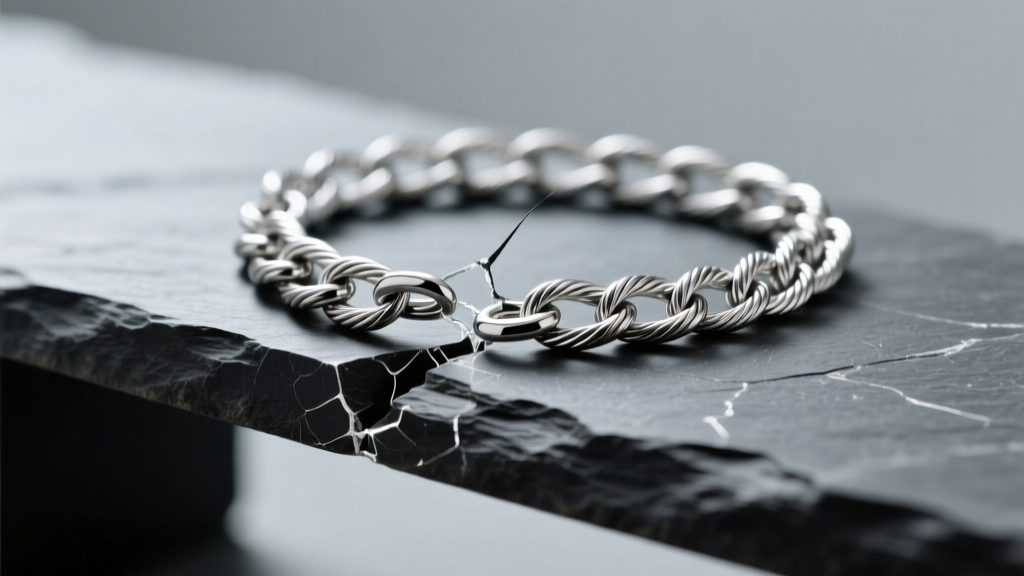
The Anatomy of a Snap: Why Do Sterling Silver Chains Break?
There is nothing quite as frustrating as reaching for your favorite pendant only to find a broken silver necklace sitting in your jewelry box. To understand how to fix it, you first need to understand why it broke in the first place. According to the Gemological Institute of America (GIA), pure silver (99.9%) is far too malleable for everyday jewelry wear. This is why almost all silver necklaces are crafted from Sterling Silver (.925), an alloy containing 92.5% silver and 7.5% copper.
While that copper adds necessary tensile strength, it also introduces a metallurgical phenomenon known as work hardening. Every time your necklace bends, twists, or catches on a sweater, the microscopic crystalline structure of the metal deforms. Over months and years of wear, this repeated stress causes the metal to become brittle. Eventually, micro-fractures develop, usually at the highest stress points: the jump rings, the clasp spring mechanisms, or the individual links resting against the nape of the neck.
Assessing the Damage: Can You Fix It at Home?
Not every broken silver necklace requires a trip to the jeweler, but attempting a DIY fix on the wrong chain type can result in permanent, unrepairable damage. Before you reach for a tool kit, identify your chain weave and the exact point of failure.
| Chain Type | Common Failure Point | DIY Fixable? | Pro Repair Cost (Est.) |
|---|---|---|---|
| Cable / Curb | Jump Ring / Clasp | Yes | $15 - $35 |
| Box Chain | Corner Link Snap | No (Requires Laser) | $45 - $85 |
| Rope Chain | Twisted Wire Fray | No (Requires Solder) | $50 - $90 |
| Omega / Herringbone | Kink / Core Wire Break | Rarely Fixable | $60 - $120 |
The Myth of Super Glue on Silver
Let us address the most common beginner mistake immediately: never use cyanoacrylate (Super Glue) on a broken silver necklace. Jewelry experts and members of the Society of North American Goldsmiths (SNAG) universally condemn this practice. Super glue does not bond well with non-porous metals. Worse, it leaves a cloudy, hardened resin residue that a professional jeweler must meticulously scrape or burn off before they can properly solder the piece. This extra cleanup work will inevitably increase your final repair bill and risks damaging the silver's finish.
Step-by-Step DIY Fix for Simple Jump Ring Separations
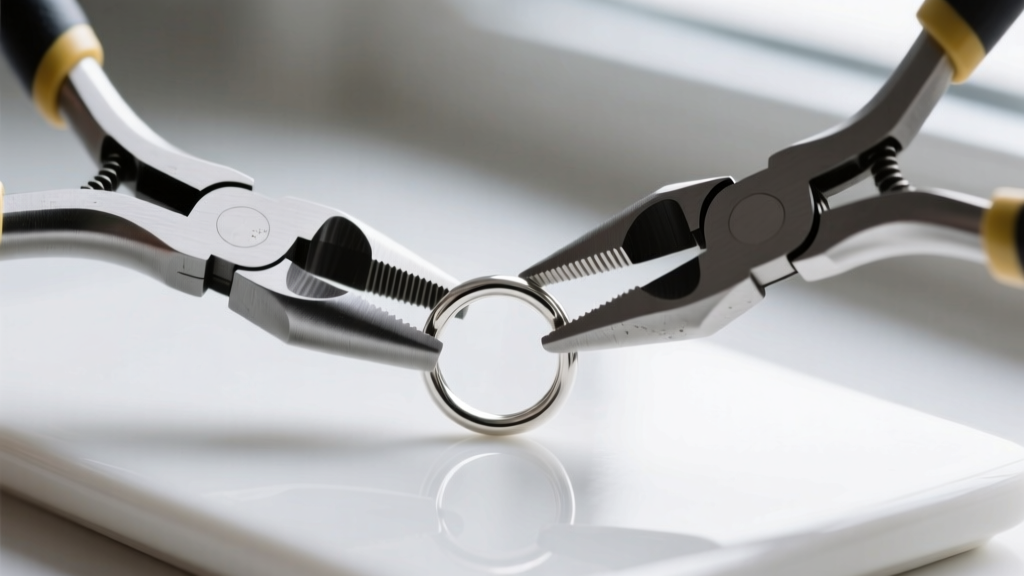
If your pendant has simply slipped off, or the chain broke precisely at the jump ring (the small circular loop connecting the clasp to the chain), you can easily fix this at home. You will need two pairs of flat-nose or chain-nose pliers. Avoid using standard hardware store pliers, as their serrated teeth will gouge and scratch the soft sterling silver.
- Secure the Ring: Grip the jump ring with your two pairs of pliers, positioning the jaws at the 3 o'clock and 9 o'clock positions, directly opposite the split in the metal.
- Twist, Don't Pull: Never pull the ring apart laterally (outward). This distorts the perfect circle and weakens the metal. Instead, gently twist one hand toward you and the other away from you, opening the ring sideways.
- Reattach the Components: Slide the broken chain end or pendant bail back onto the opened jump ring.
- Close and Align: Twist the ends back together using the same sideways motion. You should feel a slight 'click' or friction as the two cut ends pass each other and align perfectly flush. If light passes through the seam, the ring is not fully closed and will eventually catch on fabric and snap again.
When to Call a Professional Jeweler
If the break occurred in the middle of a chain link, or if you are dealing with a complex weave like a Figaro, Box, or Rope chain, DIY repair is off the table. These repairs require metallurgical bonding through soldering or laser welding. According to guidelines from the Jewelers Vigilance Committee (JVC), consumers should always seek a reputable bench jeweler who can clearly explain their repair methodology, especially when dealing with hollow-core chains that can easily melt under improper heat.
Understanding Silver Solder Grades and Laser Welding
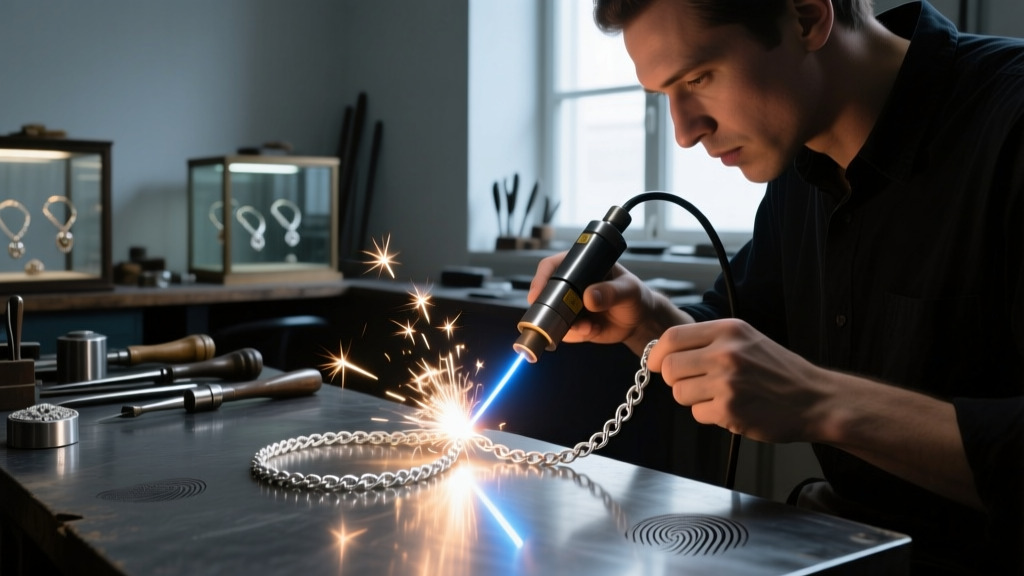
When a professional repairs a broken silver necklace, they do not just melt the chain back together; they introduce a filler metal known as silver solder. Because silver has a relatively low melting point (around 1,640°F for sterling), bench jewelers use specialized solders graded by their melting temperatures to prevent the original chain from melting:
- Hard Solder (Melts at ~1,450°F): Used for the initial construction of chains and major structural joins.
- Medium Solder (Melts at ~1,390°F): Often used for setting bezels or secondary repairs.
- Easy Solder (Melts at ~1,325°F): The go-to grade for repairing a broken silver necklace, as it flows into the fracture without risking the integrity of the surrounding links.
For highly delicate chains, or chains situated near heat-sensitive gemstones (like opals or turquoise), jewelers will bypass traditional torch soldering entirely. Instead, they use laser welding. A laser welder uses concentrated pulses of light to fuse the silver at a microscopic level without requiring flux or heating the surrounding metal, making it the absolute safest method for fragile antique silver pieces.
Preventative Care to Avoid Future Snaps
Once your necklace is repaired, implementing a few basic care protocols will drastically extend its lifespan and prevent future work-hardening failures.
Expert Tip: Always unclasp your silver necklace before sleeping. The friction of cotton sheets and the weight of your body rolling over the chain creates immense lateral tension on the links, which is the number one cause of premature chain stretching and snapping.
Furthermore, store your necklaces flat or hanging vertically to prevent kinking. If you own an Omega or Herringbone chain, never fold it, as the interlocking plates will permanently crease, severing the internal core wire. Finally, remove your silver jewelry before entering chlorinated pools or hot tubs; chlorine reacts violently with the copper in sterling silver, causing rapid stress corrosion cracking that can turn a healthy chain brittle in a matter of hours.
By understanding the metallurgy of your jewelry and knowing exactly when to use a pair of pliers versus when to hand it over to a master jeweler, you can ensure your favorite silver pieces remain intact and beautiful for decades to come.


