Chain Necklace Pearl Troubleshooting: Fixing Tarnish, Knots & Nacre
Expert troubleshooting for your chain necklace pearl designs. Learn to fix metal tarnish transfer, untangle station knots, and repair jump rings.

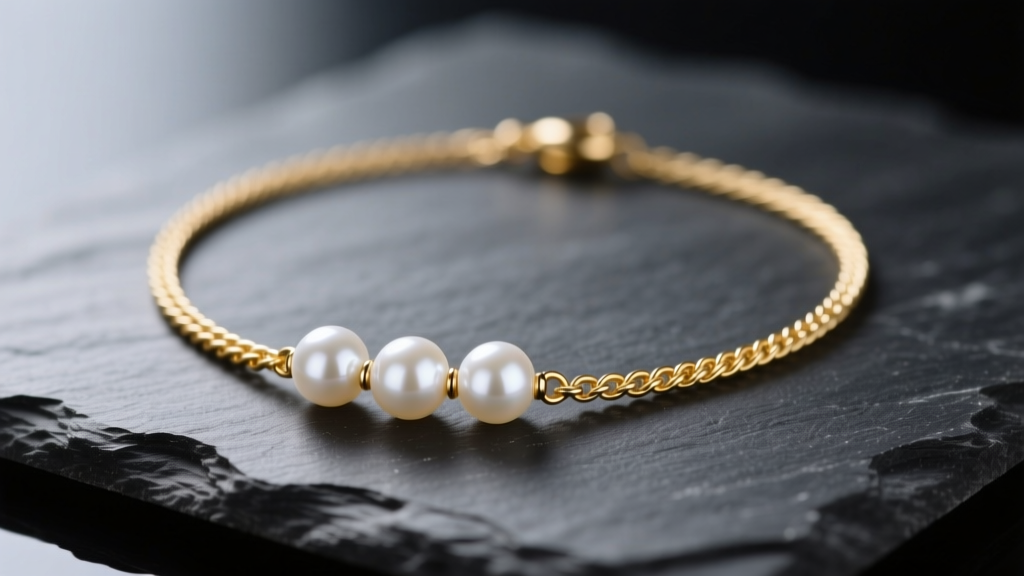
The Anatomy of a Chain Necklace Pearl Design
The hybrid chain necklace pearl design—whether featuring a single pendant or a multi-station layout—bridges the gap between organic elegance and modern minimalism. However, combining a delicate organic gemstone (calcium carbonate and conchiolin) with industrial metal alloys creates unique structural and chemical vulnerabilities. Unlike homogenous metal chains or fully silk-strung pearl strands, these hybrid pieces suffer from specific failure modes: galvanic tarnish transfer, mechanical tangling at drill sites, and jump ring stress fractures.
In this comprehensive troubleshooting guide, we will dissect the most common issues plaguing pearl and chain combinations. By understanding the exact material science and mechanical tolerances involved, you can rescue damaged pieces, prevent future degradation, and make informed purchasing or repair decisions.
Problem 1: Nacre Discoloration from Metal Tarnish Transfer
The Chemistry of the Stain
Pearls are highly porous. The nacre surface consists of microscopic aragonite platelets held together by an organic protein called conchiolin. When a chain necklace pearl is crafted using sterling silver (92.5% silver, 7.5% copper), the copper alloy reacts with ambient sulfur and moisture to form copper sulfate and silver sulfide—commonly known as tarnish. Because pearls absorb moisture and oils from the skin, this dark, oxidized metal dust transfers directly into the porous nacre, resulting in permanent gray or black staining around the drill holes or where the pearl rests against the chain.
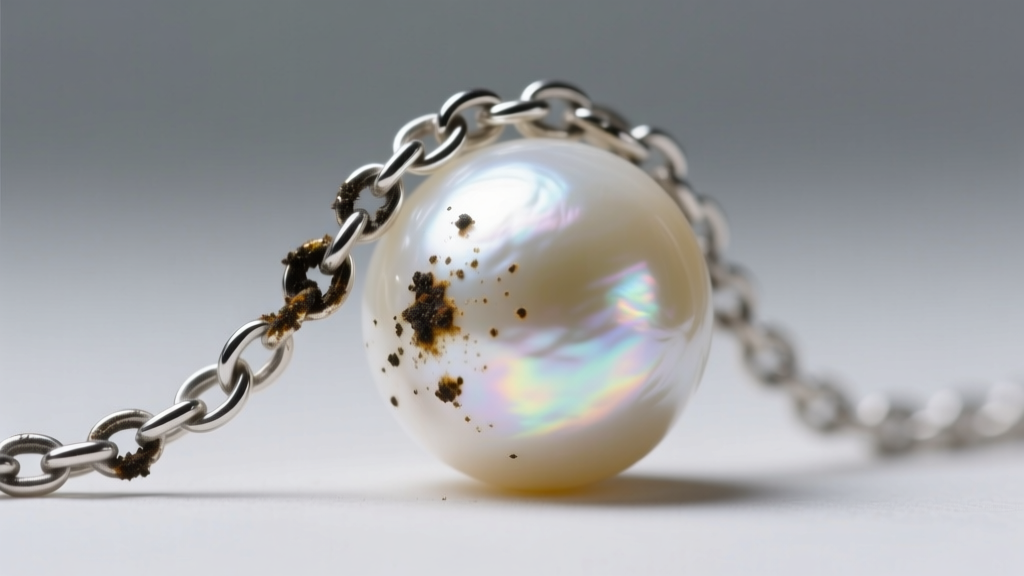
Troubleshooting and Prevention
If your pearl has already absorbed tarnish, do not use ultrasonic cleaners, ammonia, or commercial silver dips. These chemicals will instantly dissolve the nacre's luster. According to the Gemological Institute of America (GIA), pearls should only be cleaned with a damp, lint-free microfiber cloth. For severe tarnish etching, a professional lapidary may need to lightly polish the pearl, though this removes precious layers of nacre.
The Fix: To prevent this, upgrade your chain hardware. If you must use sterling silver, ensure it is heavily rhodium-plated (costing roughly $15–$45 for professional dipping). Better yet, pair pearls exclusively with 14k or 18k solid gold, platinum, or high-grade titanium, which do not contain copper and will not off-gas sulfur compounds onto the nacre.
Problem 2: The "Station Necklace" Tangling Nightmare
Station necklaces—where pearls are interspersed at intervals along a continuous chain—are notoriously prone to tangling. The smooth, rigid surface of a metal chain easily slips through the relatively large drill holes of freshwater or Akoya pearls, creating complex micro-knots that tighten under the weight of the metal.
Chain Link Geometry vs. Pearl Drill Holes
The probability of tangling is directly correlated to the chain's link geometry and flexibility. Highly fluid chains act like threads, wrapping around the pearls and catching on the sharp inner edges of the drill holes.
| Chain Link Style | Tangle Risk with Pearls | Best Pearl Type Pairing |
|---|---|---|
| Cable / Rolo | Low (Rigid links resist wrapping) | Round Freshwater, Akoya |
| Snake / Herringbone | High (Fluid, kinks permanently) | Single Pendant Only |
| Box Chain | Medium (Can catch on baroque edges) | Baroque, Keshi |
| Wheat / Spiga | Low (Woven structure is too thick) | Large Tahitian, South Sea |
How to Untangle a Pearl Station Chain
Never pull a tangled pearl chain. The tensile strength of a delicate 0.9mm cable chain is low, and pulling will snap the links or crack the pearl at the drill site. Instead, lay the necklace flat on a glass or ceramic surface. Apply a single drop of mineral oil or finely milled baby powder to the knot to eliminate metal-on-metal friction. Using two size-10 beading needles, gently wiggle the center link of the knot outward. The Pearl Paradise care guidelines emphasize avoiding talcum powders with added fragrances, as synthetic perfumes can degrade the pearl's orient.
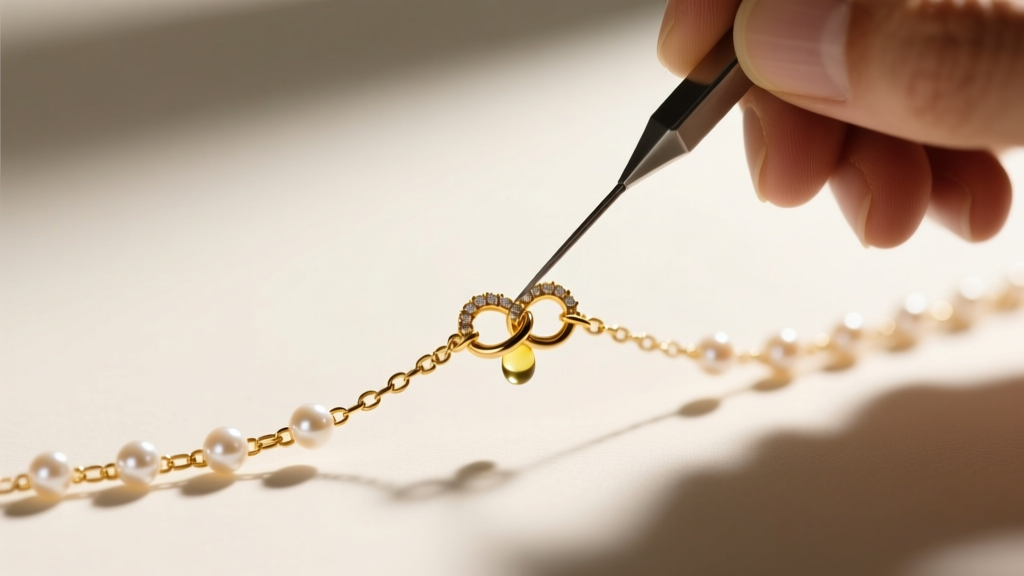
Problem 3: Jump Ring Stress and Clasp Failure
The Gauge vs. Drill Hole Dilemma
One of the most frequent structural failures in a chain necklace pearl design occurs at the connection point. Standard freshwater pearls are drilled with holes ranging from 0.6mm to 0.8mm. Seed pearls may have holes as small as 0.4mm. Conversely, a standard 20-gauge jump ring (0.81mm thick) will not fit through the pearl, forcing jewelers to use 22-gauge (0.64mm) or 24-gauge (0.51mm) wire.
The problem? 24-gauge wire is exceptionally soft. The sheer weight of a metal chain, combined with the kinetic energy of daily movement, causes work-hardening and eventual snapping at the jump ring. Furthermore, if the jump ring is pushed directly through the pearl's drill hole, the sharp, unpolished interior edge of the nacre acts like a microscopic saw, slowly cutting through the soft gold or silver wire over time.
Engineering a Permanent Solution
To solve this, avoid passing jump rings directly through the pearl. Instead, utilize one of the following professional techniques:
- Pearl Enhancers / Bails: Use a specialized pearl bail that caps the top of the pearl, allowing a thicker 18-gauge or 20-gauge jump ring to connect the bail to the chain, bypassing the drill hole entirely.
- Wire-Wrapping with Head Pins: Insert a 22-gauge gold head pin through the pearl, create a wrapped loop at the top, and attach that loop to the chain. The wrapped loop distributes tension far better than a simple open jump ring.
- Silk Knotting at Stations: For high-end pieces, jewelers will knot silk thread on either side of the pearl, attaching the silk to the metal chain via larger, reinforced end caps. This prevents metal-on-nacre friction entirely.
Step-by-Step Pearl Chain Necklace Rescue Protocol
If your hybrid necklace is suffering from a combination of stiffness, mild tarnish, and clasp issues, follow this systematic restoration protocol:
- Inspect the Hardware: Use a 10x jeweler's loupe to examine the jump rings and clasp spring mechanism. If the jump ring gap is visible, use flat-nose pliers to twist it closed (never pull it apart laterally).
- Degrease the Chain (Not the Pearl): Dip a soft-bristled baby toothbrush in a solution of warm water and a single drop of mild, phosphate-free dish soap. Gently scrub only the metal chain links, avoiding the pearls.
- Wipe the Nacre: As recommended by the American Gem Society, wipe the pearls immediately after wearing them to remove acidic skin oils. Use a dedicated, slightly damp microfiber cloth.
- Lubricate the Clasp: If the lobster clasp is sticking, apply a microscopic amount of synthetic watch oil to the hinge pin. Wipe away all excess to prevent oil from migrating to the pearls.
- Proper Storage: Store the necklace flat in a lined jewelry box. Never hang a chain necklace pearl piece on a vertical hook, as the constant gravitational pull will stretch the metal links and stress the pearl drill holes over time.
Final Thoughts on Hybrid Jewelry Maintenance
Troubleshooting a chain necklace pearl requires a dual mindset: you must treat the metal with mechanical precision and the pearl with biological gentleness. By selecting compatible chain geometries, upgrading to non-tarnishing alloys, and utilizing proper wire-wrapping techniques, you can ensure your hybrid designs remain structurally sound and visually flawless for decades.


