How to Clean a Costume Pearl Necklace Without Ruining the Finish
Learn how to safely clean a costume pearl necklace, restore its luster, and prevent coating damage with expert maintenance tips and product guides.

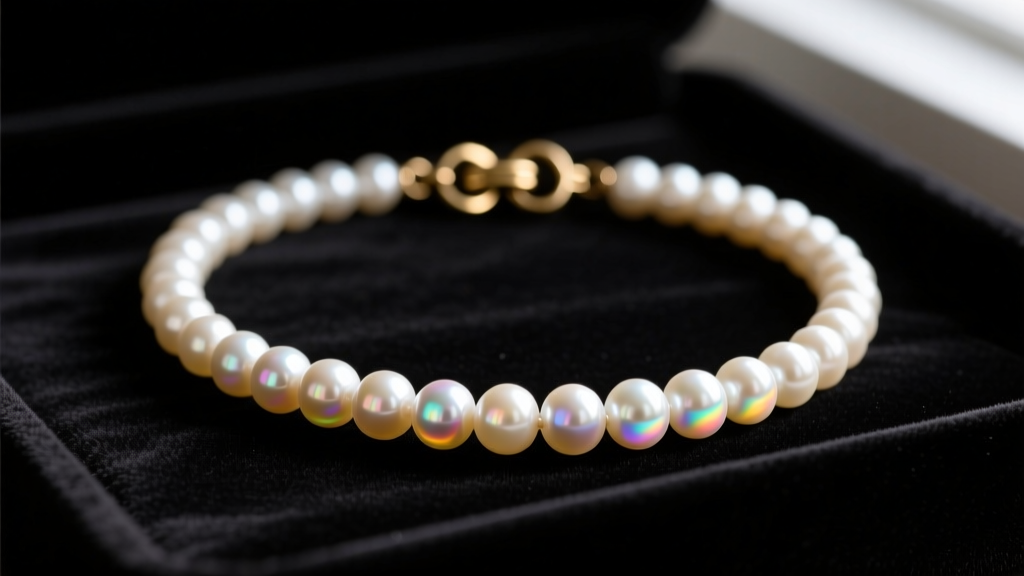
Costume pearls have remained a cornerstone of accessible luxury for over a century. Whether you own a vintage Chanel sautoir, a mid-century Majorica strand, or a modern Zara statement piece, a costume pearl necklace offers the elegant luster of Akoya or South Sea pearls without the exorbitant price tag. However, the synthetic coatings that give these beads their signature iridescence are remarkably fragile. Unlike natural or cultured pearls, which are composed of solid layers of crystalline aragonite, faux pearls rely on delicate surface treatments that can easily dissolve, peel, or yellow if subjected to the wrong cleaning agents.
As we move through 2026, advancements in synthetic mica and titanium dioxide coatings have improved the durability of modern faux pearls, but the fundamental rules of conservation remain unchanged. Improper care will strip the pearlescent finish down to the dull glass or plastic core beneath. This comprehensive guide will walk you through the exact chemistry of costume pearls, provide a safe step-by-step cleaning protocol, and outline professional-grade storage techniques to ensure your necklace survives for generations.
Understanding the Synthetic Nacre Coating
To clean a costume pearl necklace safely, you must first understand what you are actually cleaning. The 'pearl' effect is achieved by dipping a glass, plastic, or shell bead into a specialized coating. Historically, this was essence d'orient, a suspension of guanine crystals derived from fish scales. Today, high-end manufacturers like Majorica use proprietary opaline glass cores coated with multiple layers of synthetic pearlescent pigments, often bound together by delicate cellulose or acrylic resins.
The vulnerability of a costume pearl necklace lies entirely within this resin binder. While the glass core is impervious to most household chemicals, the binder is highly reactive to solvents, acids, and extreme alkalines. When the binder breaks down, the pearlescent flakes lose their adhesion, leading to the dreaded 'peeling' effect where the coating flakes off in thin, translucent sheets, exposing the milky or clear bead underneath.
The Daily Wear Protocol: Last On, First Off
The most effective cleaning method is preventative maintenance. Human sweat has a naturally acidic pH ranging from 4.5 to 7.0. When this acidity mixes with the salts and urea in perspiration, it slowly eats away at the resin binder of your costume pearls. Furthermore, the ethanol and essential oils found in modern perfumes, hairsprays, and dry shampoos act as mild solvents that can cloud the surface coating upon contact.
- The Golden Rule: Always put your costume pearl necklace on after applying cosmetics, perfumes, and hair products. Allow at least 10 minutes for these products to dry and settle on your skin before clasping your jewelry.
- The Post-Wear Wipe: Keep a clean, dry, lint-free microfiber cloth in your jewelry box. After every wear, gently wipe each bead to remove microscopic layers of skin oils and environmental pollutants. Do not use jewelry polishing cloths, as these are often impregnated with mild abrasives designed for metals, which will scratch the pearl coating.
Step-by-Step Wet Cleaning Method
When a simple dry wipe is no longer enough to remove buildup, a careful wet cleaning is required. Never submerge a costume pearl necklace in water. Submersion allows moisture to seep into the drill holes, which can degrade the internal stringing material and cause the core of plastic beads to warp or trap water, leading to internal clouding.
The 3-Bowl Technique
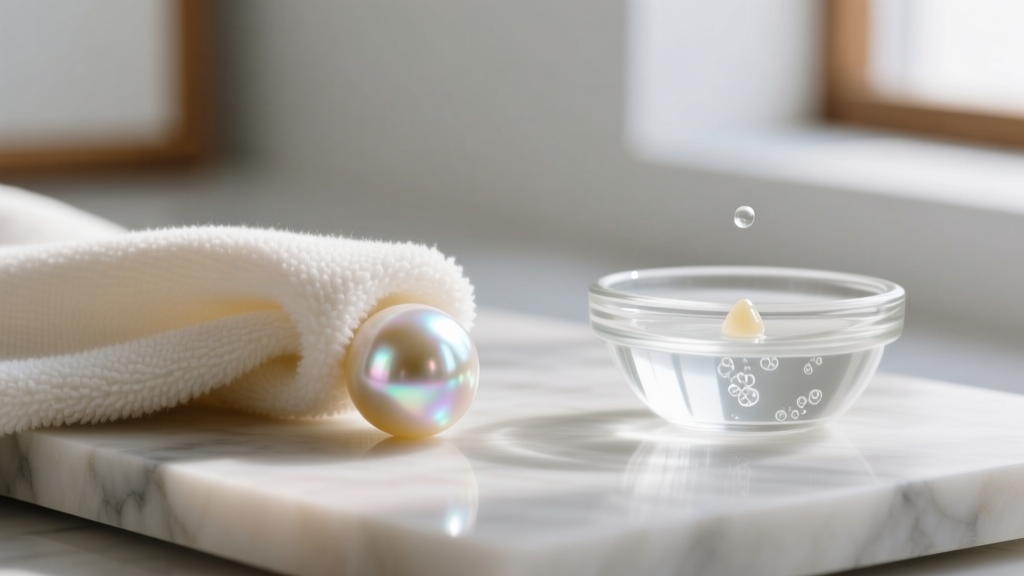
- Prepare the Solutions: Fill one bowl with lukewarm distilled water (never tap water, as chlorine and heavy minerals can leave permanent water spots on the coating). Fill a second bowl with distilled water mixed with two drops of pH-neutral baby shampoo or pure liquid castile soap. Fill a third bowl with plain distilled water for rinsing.
- The Dab Method: Dip a soft microfiber cloth or a 100% cotton swab into the soapy solution and wring it out until it is only barely damp. Gently dab and roll the cloth over each individual bead. Never scrub or apply lateral pressure.
- Rinse and Dry: Use a fresh cloth dampened with the plain distilled water to wipe away any soap residue. Immediately dry the beads with a separate, plush, dry towel.
- Air Dry Flat: Lay the necklace flat on a dry towel in a cool, well-ventilated area away from direct sunlight or heat sources. Ensure the strand is completely dry before storing to prevent mildew on the stringing thread.
Troubleshooting Common Coating Failures
Sometimes, despite your best efforts, a vintage costume pearl necklace may show signs of age. Understanding these failure modes helps you decide whether a piece can be salvaged or if it requires professional intervention.
Yellowing: This is often caused by the migration of plasticizers in vintage PVC storage bags, or the natural oxidation of the resin binder. While surface yellowing from smoke or environmental pollutants can sometimes be lifted with a specialized conservation sponge, deep chemical yellowing of the resin is irreversible.
Peeling and Flaking: Once the coating begins to peel, the structural integrity of the finish is compromised. You cannot 'glue' it back down. However, museum conservators sometimes use microcrystalline wax, such as Renaissance Wax, to stabilize the edges of the flaking coating and prevent further loss, though this will slightly alter the bead's refractive index and luster.
The Chemical Danger Chart
Many commercial jewelry cleaners are formulated for solid gold, silver, or diamonds, making them highly destructive to faux pearls. Refer to this chart before applying any product to your necklace:
| Cleaning Agent | Chemical Property | Effect on Costume Pearl Coating |
|---|---|---|
| Ammonia / Windex | Highly Alkaline | Instantly dissolves the acrylic/cellulose binder, causing immediate clouding and stripping. |
| Ultrasonic Cleaners | High-Frequency Vibration | Shatters glass cores and vibrates the delicate coating right off the bead surface. |
| Baking Soda Paste | Mild Abrasive / Alkaline | Micro-scratches the smooth topcoat, leaving a dull, matte, and permanently etched finish. |
| Rubbing Alcohol | Solvent | Dehydrates and breaks down the resin binder, leading to severe cracking and peeling. |
| Commercial Silver Dip | Acidic (Thiourea based) | Eats through the pearlescent layers and causes irreversible chemical burns to the bead. |
Hardware and Restringing Maintenance
The longevity of a costume pearl necklace is not just about the beads; the stringing material and hardware play a critical role. According to the Gemological Institute of America (GIA), pearl necklaces should be inspected annually for thread stretch and clasp wear. This is doubly true for heavier glass-core costume pearls.
Thread Selection: If your necklace needs restringing, avoid traditional silk. While silk is the standard for cultured pearls, it is highly susceptible to rotting when exposed to the cosmetics and moisture that frequently contact costume jewelry. Instead, request a high-tenacity nylon thread, such as Nymo D or Silamide. Nylon is hydrophobic, resistant to stretching, and will not degrade when exposed to skin oils.
French Wire (Bullion):strong> Ensure your jeweler uses French wire—a coiled spring of fine metal—where the thread passes through the metal clasp ring. This prevents the metal clasp from acting like a saw blade, which will eventually cut through the thread and cause your necklace to break and scatter.
Archival Storage: Preventing Yellowing and Peeling
How you store your costume pearl necklace when it is not being worn is just as critical as how you clean it. The most common mistake collectors make is storing vintage jewelry in the plastic ziplock bags it was originally sold in.
Many older plastic bags are made from Polyvinyl Chloride (PVC). Over time, PVC breaks down and releases hydrochloric acid gas and plasticizers. This off-gassing creates a micro-environment that will aggressively yellow and degrade the synthetic nacre of your costume pearls. Furthermore, storing pearls in airtight environments deprives them of the ambient moisture they need to keep their binders from drying out and cracking.
The Ideal Storage Environment
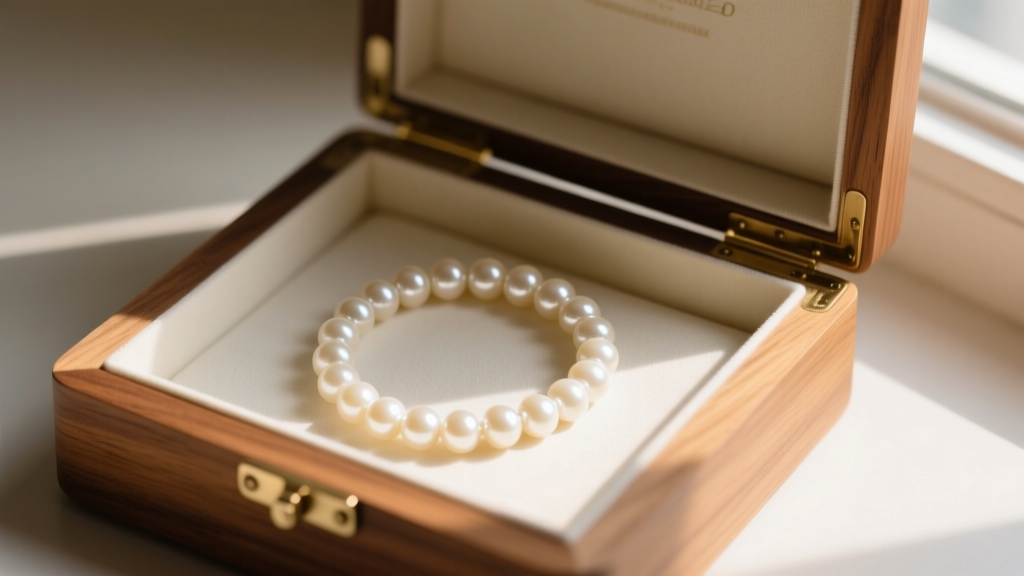
- Acid-Free Tissue: Wrap the necklace loosely in unbuffered, acid-free archival tissue paper. This protects the beads from dust and scratches while allowing the piece to 'breathe'.
- Polyethylene Bags: If you must use a plastic bag for travel, ensure it is made of inert Polyethylene (PE) or Polypropylene (PP), which do not off-gas harmful chemicals.
- Lay Flat: Never hang a heavy glass-core costume pearl necklace on a jewelry tree or hook. The constant gravitational pull will stretch the stringing thread over time, causing the beads to gap and the thread to weaken. Always store the strand coiled loosely in a flat, fabric-lined drawer or archival box.
By respecting the delicate chemistry of the synthetic coatings and adhering to these strict conservation protocols, your costume pearl necklace will maintain its brilliant, iridescent luster for decades to come, proving that accessible luxury can indeed stand the test of time.