Looking Glass Necklace Guide: Glass vs Acrylic Mirror Pendants
Compare optical glass, acrylic, and silvered mirror materials for your looking glass necklace. Discover durability, clarity, and framing metals.

The Anatomy of a Looking Glass Necklace
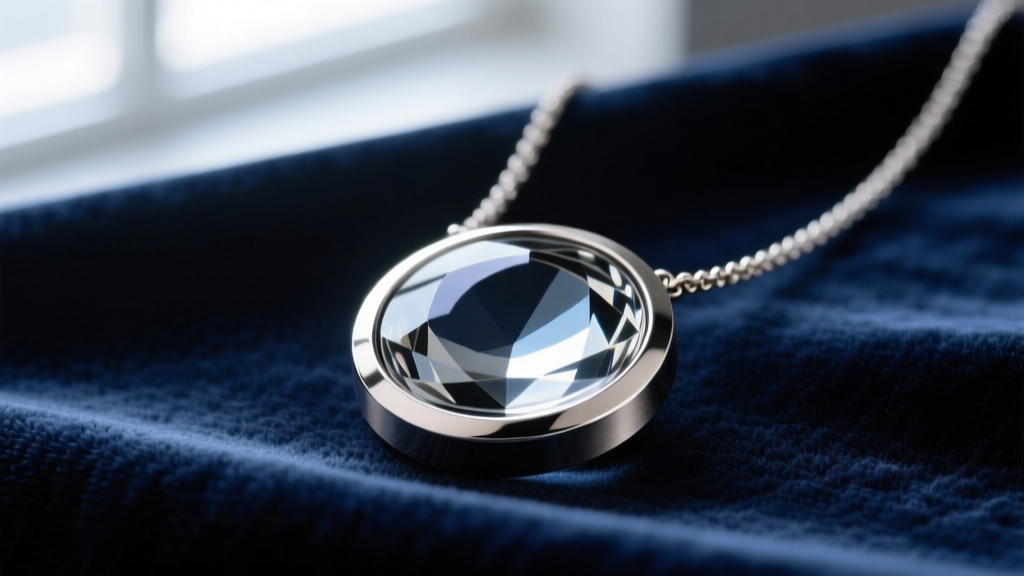
The looking glass necklace has evolved far beyond its 18th-century origins as a mere vanity accessory. Today, it represents a fascinating intersection of functional optics, historical romanticism, and modern minimalist jewelry design. Whether you are drawn to the literal reflection of a mirror pendant or the metaphorical clarity of a transparent optical drop, the material composition of your pendant dictates its longevity, weight, and visual brilliance. As a jewelry material specialist, I frequently see consumers prioritize the chain or the bail while entirely neglecting the reflective core and the bezel that holds it. In this comprehensive guide, we will dissect the exact material properties that separate a heirloom-quality looking glass necklace from a fast-fashion trinket destined to tarnish and scratch within months.
The Reflective Core: Optical Glass vs. Acrylic vs. Silvered Mirrors
The heart of any looking glass necklace is its primary reflective or transparent surface. The choice of material here impacts the pendant's Mohs hardness, refractive index, and overall weight against the collarbone.
Optical Glass (The Premium Standard)
High-end looking glass necklaces utilize borosilicate crown glass, specifically N-BK7 or similar optical grades. According to Edmund Optics, N-BK7 glass offers exceptional clarity with a refractive index of roughly 1.517 and an Abbe number of 64.17. This means the glass bends light beautifully without the chromatic aberration (color fringing) seen in cheaper alternatives. With a Mohs hardness of 6, optical glass resists everyday micro-scratches from dust and clothing. However, it is brittle; a hard drop on ceramic tile will shatter an untempered optical glass pendant.
Cast Acrylic (The Lightweight Alternative)
Polymethyl methacrylate (PMMA), commonly known as acrylic, is the go-to material for oversized, avant-garde looking glass necklaces where weight is a concern. Acrylic boasts an incredibly high light transmittance of up to 92%, making it optically brilliant. However, its fatal flaw is its Mohs hardness of just 3. This means that even wiping it with a microfiber cloth that has trapped a single grain of quartz dust (Mohs 7) will leave permanent micro-scratches, eventually giving the pendant a cloudy, frosted appearance.
Traditional Silvered Glass (The Vintage Choice)
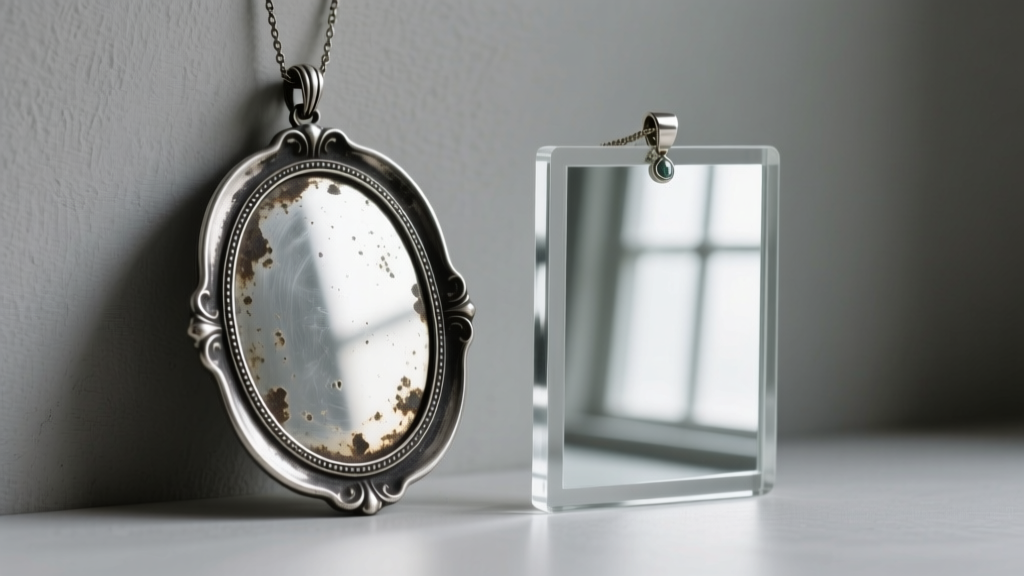
True mirror pendants rely on glass coated with a reflective metal layer. Modern pieces use vacuum-deposited aluminum or silver, protected by a copper backing and paint. While offering the truest mirror reflection, these are highly susceptible to moisture ingress.
| Material | Mohs Hardness | Weight Profile | Scratch Resistance | Shatter Risk |
|---|---|---|---|---|
| N-BK7 Optical Glass | 6.0 | Heavy | Excellent | High |
| Cast Acrylic (PMMA) | 3.0 | Ultra-Light | Poor | None |
| Silvered Mirror Glass | 5.5 - 6.0 | Medium-Heavy | Good (Front) / Poor (Back) | High |
Framing Metals: What Holds the Glass Matters
The bezel and bail of a looking glass necklace must provide structural integrity while managing the tension required to hold brittle glass securely. The Ganoksin Project notes that the thermal expansion rates of metals must be carefully considered when setting glass, as a tight bezel can crack the stone during temperature fluctuations.
Solid Sterling Silver (925)
Sterling silver remains the most popular framing metal due to its bright luster and workability. However, the 7.5% copper content required for structural hardness makes it prone to sulfide tarnishing. When setting a mirror pendant, jewelers must ensure the silver is completely sealed, as copper oxidation can stain the porous backing of a silvered mirror glass.
Jeweler's Brass & Bronze
For a warmer, vintage aesthetic, brass (copper and zinc) and bronze (copper and tin) are heavily utilized. These metals develop a rich patina over time. The danger here is verdigris—a green corrosion that occurs when copper alloys react with human sweat and environmental moisture. If a brass bezel is not lined with a hypoallergenic barrier or properly sealed with a micro-crystalline wax, the corrosion can seep into the glass housing and ruin the mirror backing.
Hypoallergenic Titanium
Grade 2 and Grade 5 titanium (ASTM F67 and F136 standards) represent the pinnacle of modern looking glass necklace engineering. Titanium offers a tensile strength far exceeding steel at a fraction of the weight, allowing for incredibly thin, sleek bezels that maximize the visible surface area of the glass. Furthermore, it is completely inert, meaning it will never tarnish or react with skin chemistry, making it the ultimate choice for a maintenance-free pendant.
Real-World Failure Modes & Maintenance
Understanding how looking glass necklaces fail in the real world allows you to make a more informed purchasing decision and adopt better care routines.
- Desilvering (Black Edge Rot): In silvered mirror pendants, microscopic gaps in the bezel seal allow humidity to reach the reflective backing. The silver oxidizes, creating a creeping black ring around the inner edge of the glass. This is irreversible.
- Bail Friction Wear: The constant rubbing of a silver chain against a brass bail will eventually wear through the softer metal, causing the pendant to snap off. Always ensure the bail is lined with a hardened steel jump ring or is made of a metal harder than the chain.
- Hydrophobic Degradation: Fingerprints and sebum (skin oils) ruin the reflection of optical glass. While 2026 manufacturing has introduced nano-ceramic hydrophobic coatings to repel oils, these coatings degrade after roughly 18 months of daily wear and require professional reapplication.
2026 Innovations in Reflective Jewelry
The jewelry industry has seen remarkable material science advancements recently. One of the most exciting developments for the looking glass necklace is the integration of dielectric mirror coatings. Unlike traditional chemical silvering, dielectric coatings use microscopically thin layers of alternating high and low refractive index materials (like titanium dioxide and silicon dioxide). This creates a mirror surface that is not only vastly more reflective than silver but is also completely impervious to moisture, entirely eliminating the risk of desilvering. Furthermore, lab-grown sapphire crystal (Mohs 9) is beginning to replace standard optical glass in luxury tiers, offering near-diamond scratch resistance for a flawless, lifelong reflection.
Final Verdict: Choosing Your Perfect Pendant
When selecting a looking glass necklace, your lifestyle should dictate the material. If you desire a lightweight, shatterproof piece for occasional evening wear, a cast acrylic pendant in a gold-vermeil bezel is a stylish, budget-friendly choice. For daily wearers who demand pristine clarity and heirloom durability, invest in an N-BK7 optical glass or sapphire crystal pendant housed in a Grade 5 titanium bezel. Avoid traditional silvered mirror glass unless it is explicitly marketed with a modern vacuum-sealed, moisture-proof gasket. By prioritizing the core material and the structural integrity of the framing metal, you ensure your looking glass necklace remains a brilliant, reflective centerpiece for decades to come.


