Honoring the Crucifix Necklace Meaning: Care & Cleaning
Discover how to honor the crucifix necklace meaning through expert care. Learn material-specific cleaning, bail maintenance, and storage.

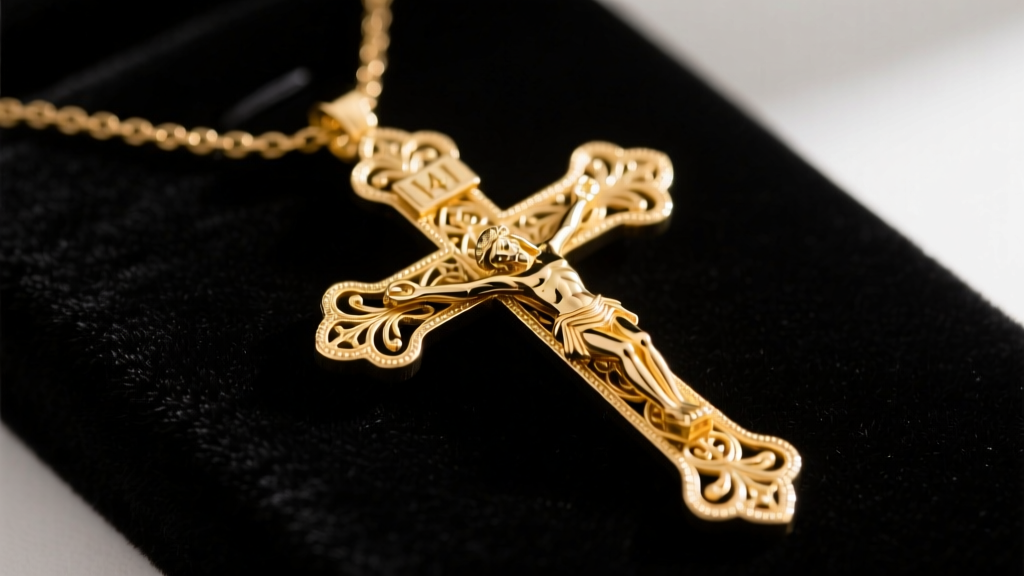
The Intersection of Faith and Metallurgy
When exploring the crucifix necklace meaning, one quickly realizes that this piece of jewelry transcends mere adornment. Unlike a bare cross, a crucifix features the corpus—the physical representation of the body of Christ. This profound symbolism of sacrifice, redemption, and faith makes the pendant a deeply personal artifact. Preserving the physical integrity of this sacred symbol is an act of reverence in itself. However, the intricate micro-details of the corpus, from the texture of the crown of thorns to the delicate facial expressions, present unique metallurgical challenges when it comes to cleaning and maintenance.
Proper care requires understanding the specific metal alloys used in your pendant, the structural vulnerabilities of the chain and bail, and the chemical reactions that cause degradation over time. In this comprehensive guide, we bridge the gap between spiritual significance and material science, providing actionable, expert-level protocols to ensure your crucifix necklace remains a pristine heirloom for generations.
Material-Specific Cleaning Protocols
Different metals react to environmental factors in vastly different ways. Using a one-size-fits-all cleaning approach is the fastest way to permanently damage the finish or structural integrity of your pendant.
Sterling Silver (.925) and Oxidized Finishes
Sterling silver is an alloy containing 92.5% pure silver and 7.5% copper. The copper is what makes the metal susceptible to tarnishing, reacting with hydrogen sulfide in the air to form silver sulfide—a dark, dull layer on the surface. Many jewelers intentionally apply an oxidized finish to silver crucifixes, using liver of sulfur to darken the crevices. This high-contrast technique makes the corpus pop against the polished edges of the cross.
Critical Warning: Never use the popular DIY aluminum foil, baking soda, and boiling water electrolysis bath on an oxidized crucifix. While this chemical reaction successfully reduces silver sulfide back to pure silver, it will completely strip the intentional dark patina from the crevices, leaving your pendant looking flat and washing out the intricate details of the corpus. Instead, use a treated silver polishing cloth (such as a Sunshine cloth) and carefully buff only the raised, high-polish edges of the cross, avoiding the darkened recesses.
Solid Gold (14k/18k) and Gold Vermeil
Gold does not tarnish, but it does accumulate sebum, dead skin cells, and environmental grime, which can dull its luster. For solid 14k or 18k gold crucifixes, a gentle bath in warm water with a few drops of pH-neutral dish soap (like Dawn) is ideal. Use a baby toothbrush with ultra-soft bristles to gently dislodge debris from behind the corpus and the INRI plaque. Avoid standard toothbrushes, as their stiff nylon bristles can inflict micro-scratches on high-polish gold surfaces.
If your crucifix is gold vermeil (a base of sterling silver plated with at least 2.5 microns of gold), you must be exceptionally gentle. Aggressive rubbing or the use of liquid silver dips will strip the gold layer, exposing the silver beneath and ruining the piece. Stick to a damp microfiber cloth and mild soapy water, patting dry immediately.
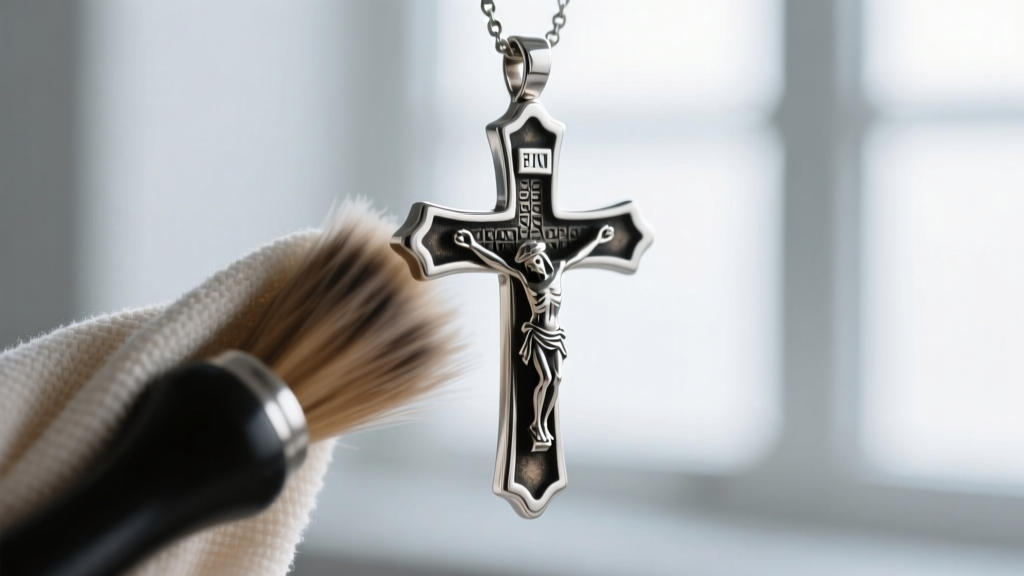
Preserving the Corpus: Detail-Safe Polishing Techniques
The defining feature that separates a crucifix from a standard cross is the corpus. Because the figure is often cast or die-struck with microscopic textures to represent anatomy, drapery, and the crown of thorns, abrasive cleaning methods are strictly prohibited.
- Ban Toothpaste and Baking Soda Pastes: These household staples contain silica and calcium carbonate, which rank high on the Mohs hardness scale. Rubbing these pastes into a silver or gold crucifix will act like liquid sandpaper, rounding off the sharp, cast edges of the thorns and softening the facial features of the corpus over time.
- Avoid Ultrasonic Cleaners for Gem-Set Pieces: If your crucifix features gemstone accents (such as ruby accents for the wounds or a diamond halo), ultrasonic high-frequency vibrations can loosen the prongs or fracture porous stones like turquoise or opals. The Gemological Institute of America (GIA) strongly advises against ultrasonic cleaning for fracture-filled or porous gems.
- Use Lint-Free Swabs: For tight crevices around the hands and feet of the corpus where grime accumulates, use a wooden cotton swab lightly dampened with isopropyl alcohol to dissolve oils without scratching the metal.
Chain and Bail Maintenance: Preventing Structural Failure
The bail—the small loop at the top of the crucifix that connects it to the chain—is the most critical point of mechanical failure on any necklace. A common and devastating mistake is pairing metals of unequal hardness, leading to severe friction wear.
| Chain Material | Bail Material | Friction Risk Level | Expert Recommendation |
|---|---|---|---|
| 316L Stainless Steel | 14k Yellow Gold | Critical | Avoid. The harder steel will act as a file, eventually sawing through the softer gold bail and causing you to lose the pendant. |
| 14k Gold Cable Chain | 14k Gold Bail | Low | Ideal pairing. Equal Vickers hardness ensures uniform, minimal wear over decades. |
| Sterling Silver (.925) | Gold Vermeil Bail | Moderate | Acceptable, but inspect the bail annually. The silver chain will eventually wear through the 2.5-micron gold plating on the bail loop. |
| Platinum | 18k Gold Bail | High | Avoid. Platinum is incredibly dense and will rapidly degrade an 18k gold bail through friction. |
To check for bail wear, remove the necklace and examine the bottom inside curve of the bail loop under a jeweler's loupe or macro lens. If the metal has thinned by more than 30%, take it to a jeweler to have a new soldered ring added before the crucifix is lost.
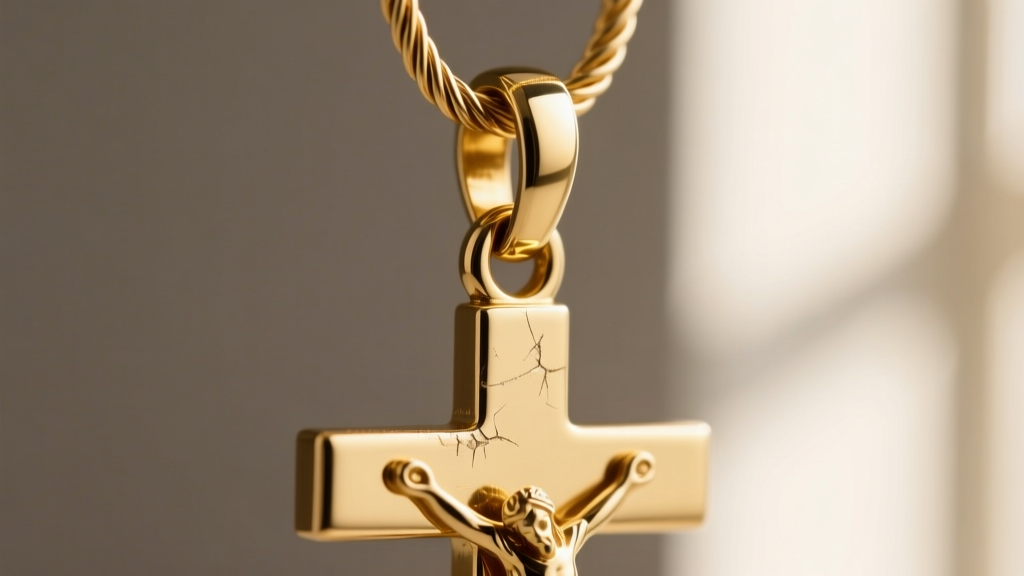
What to Avoid: Common Cleaning Mistakes
In the pursuit of restoring a vintage or heavily worn crucifix, many owners inadvertently cause irreversible damage. According to the conservation guidelines outlined by the Victoria and Albert Museum, historical and sentimental jewelry requires a conservative approach to cleaning.
"The patina of age on metal artifacts often holds historical and aesthetic value. Over-polishing not only removes metal but erases the maker's original tool marks and the soft wear that tells the story of the piece's devotion and use."
Never expose your crucifix to chlorine. Whether it's a swimming pool or household bleach, chlorine reacts catastrophically with the alloy metals in both sterling silver and karat gold. In 14k gold, chlorine attacks the copper and zinc alloys, causing a phenomenon known as stress corrosion cracking, which can cause the prongs or the bail to snap with zero warning.
Long-Term Storage and Environmental Protection
How you store your crucifix necklace when it is not being worn is just as important as how you clean it. Tossing a necklace into a communal jewelry box invites two major issues: chain tangling and accelerated galvanic tarnishing.
Store your crucifix in an individual, airtight polyethylene ziplock bag. Squeeze out as much air as possible before sealing to limit the oxygen and moisture available for oxidation. For silver crucifixes, include a 3M anti-tarnish strip inside the bag; these strips absorb airborne sulfur compounds before they can reach the metal. Keep the necklace in a cool, dark drawer away from direct sunlight and humidity fluctuations, ensuring the physical artifact remains as enduring as the crucifix necklace meaning it represents.


