How To Fix And Clean An Eagle Globe And Anchor Necklace
Troubleshoot common issues with your eagle globe and anchor necklace. Learn how to fix broken chains, clean tarnished brass, and prevent skin irritation.

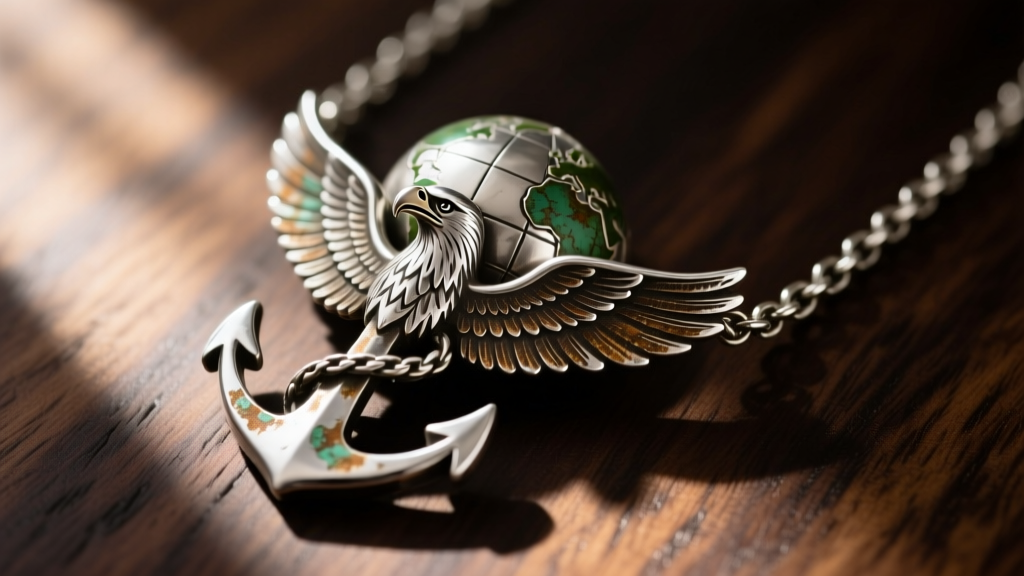
The Weight of the Emblem: Troubleshooting EGA Jewelry
The Eagle, Globe, and Anchor (EGA) is far more than a mere jewelry motif; it is the sacred emblem of the United States Marine Corps. Whether earned through the crucible of recruit training, gifted for a military retirement, or worn by a proud spouse, an eagle globe and anchor necklace carries immense sentimental weight. However, the physical reality of wearing military jewelry daily often leads to a host of frustrating problems: snapped chains, stripped enamel, severe skin irritation, and rapid tarnishing.
Mass-produced military jewelry is frequently manufactured with cost-cutting metallurgy that fails to withstand the rigors of active-duty life, physical training, or even the natural acidity of human sweat. In this comprehensive troubleshooting guide, we will diagnose the most common failures associated with EGA necklaces and provide actionable, expert-level solutions to restore and preserve your emblem for decades to come.
Diagnosing and Fixing Chain Breakage Failures
The most frequent point of failure on any pendant necklace is the chain and its connection points. For military jewelry, the traditional 2.4mm stainless steel ball chain (commonly known as a dog tag chain) is the standard, but it is inherently flawed for heavy pendants.
The Ball Chain vs. Jewelry Chain Dilemma
Ball chains rely on a small, stamped metal coupling bead to link the spheres together. When subjected to the sudden torque of physical training or snagging on gear, this coupling bead easily deforms, causing the chain to snap. Conversely, upgrading to a delicate 1.2mm cable or box chain introduces a new problem: the chain catches on body hair and clothing, eventually pulling the jump ring open.
- The Upgrade Solution: Replace the standard ball chain with a 2.5mm 316L stainless steel rope chain or a 3.0mm solid curb chain. These gauges provide the necessary tensile strength to support a solid brass or sterling silver EGA pendant without kinking.
- The Clasp Fix: Discard the standard 3mm spring ring clasp, which frequently fails when the internal spring loses tension. Upgrade to a 5mm heavy-duty lobster clasp or a secure paracord loop for a more tactical, failure-proof closure.
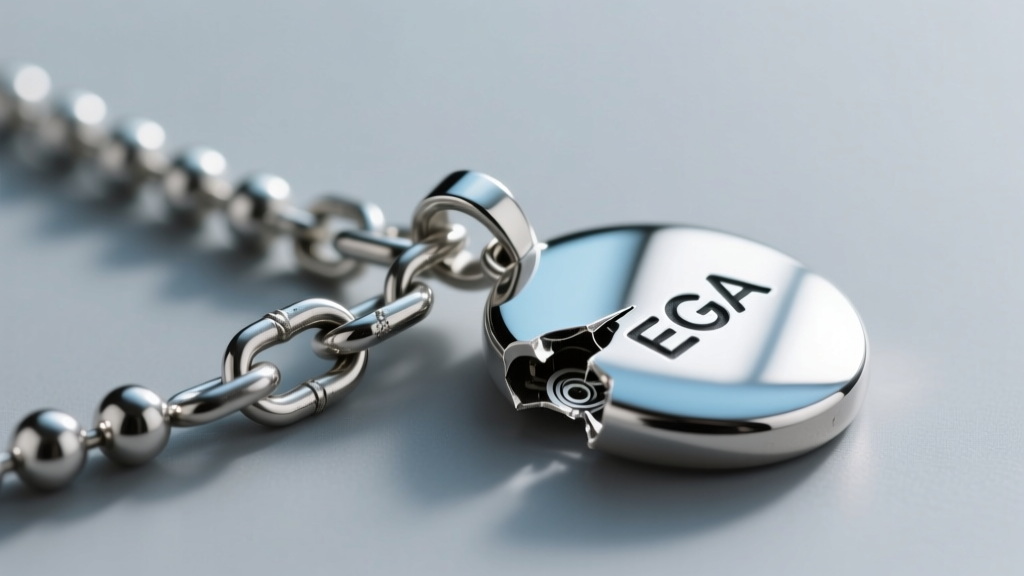
How to Properly Repair a Pulled Jump Ring
If the jump ring connecting your EGA pendant to the chain has pulled apart, do not simply squeeze it back together horizontally. This compromises the metal's structural memory and guarantees it will pull apart again. According to master jewelers, you must use two pairs of chain-nose pliers to grip the jump ring on either side of the split, then twist laterally (one hand pushes forward, the other pulls back) to open and close the ring. This maintains the circular integrity of the metal.
Solving Tarnish and Enamel Stripping
The EGA emblem relies heavily on contrast—typically bright metal against black recessed areas representing the globe's continents and the eagle's detailing. This contrast is achieved through either oxidation (antiquing) or the application of enamel (epoxy or vitreous glass).
The Danger of Commercial Silver Dips
A critical mistake many owners make is submerging their EGA necklace in commercial liquid silver cleaners (thiourea-based dips). While these chemicals instantly remove silver sulfide tarnish, they are highly acidic and will permanently strip, cloud, or dissolve the black enamel detailing, leaving you with a flat, unreadable piece of metal. The Gemological Institute of America (GIA) strongly advises against using harsh chemical dips on any jewelry featuring enamel, porous stones, or intentional antiquing.
Safe Cleaning Protocol for EGA Pendants
- For Brass or Bronze Alloys: Create a paste using baking soda and a few drops of water. Gently rub the bright areas with a microfiber cloth, avoiding the recessed black enamel. Rinse with distilled water and dry immediately to prevent water spots.
- For Sterling Silver (925): Use a treated jeweler's polishing cloth (such as a Sunshine Cloth). Wipe only the raised, high-polish surfaces of the eagle and anchor. Use a soft baby toothbrush dipped in mild dish soap (like Dawn) and warm water to gently clean dirt out of the enameled crevices without degrading the pigment.
- For Gold-Plated EGAs: Never use abrasive pastes. Gold plating on military jewelry is often a thin 'flash' layer (less than 0.5 microns). Clean only with warm soapy water and a soft lint-free cloth.
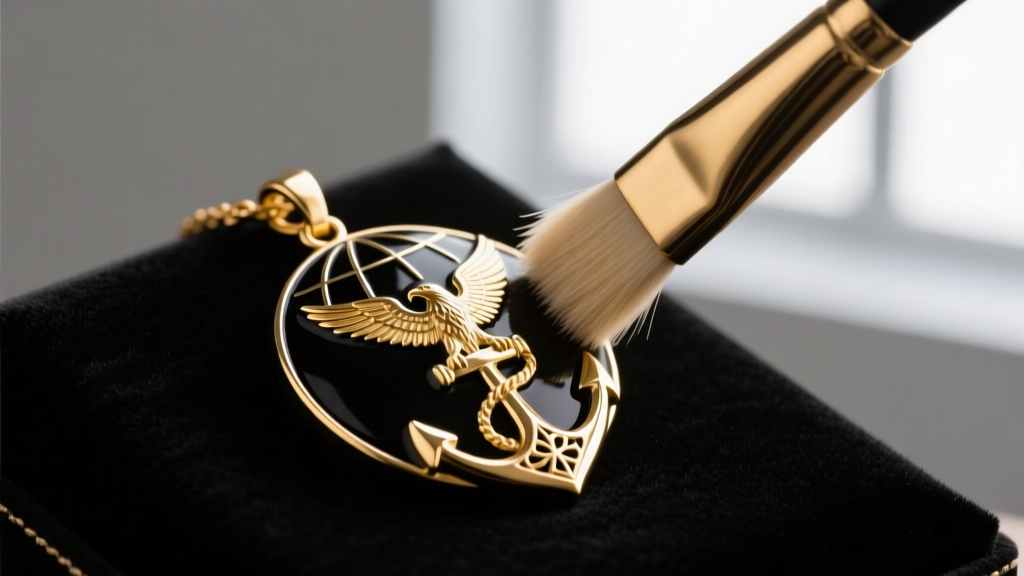
Troubleshooting 'Green Neck' and Skin Irritation
One of the most common complaints regarding affordable military jewelry is the green or black discoloration left on the skin, accompanied by contact dermatitis. This is not an allergic reaction to the metal itself, but a chemical reaction.
The Metallurgy of Skin Discoloration
Many budget-friendly EGA necklaces are cast from zinc alloys (pot metal) or brass, both of which contain high levels of copper. When copper comes into contact with the lactic acid, salts, and moisture in human sweat, it oxidizes to form copper chelates—a green compound that transfers directly to your skin. Furthermore, if the pendant contains nickel (often used as an underplate for gold or rhodium plating), it can trigger severe allergic contact dermatitis in sensitive individuals.
Actionable Fixes for Irritation
- The Polyurethane Barrier: For a quick, at-home fix, paint the back of the EGA pendant and the inside of the bail with a thin layer of clear polyurethane or clear nail polish. This creates an impermeable barrier between the copper alloys and your skin. Reapply every few months as it wears off.
- Rhodium Flash Plating: Visit a local jeweler and request a rhodium plating on the pendant and the chain. Rhodium is a hypoallergenic platinum-group metal that provides a brilliant, tarnish-resistant, and skin-safe finish. This typically costs between $35 and $60 and permanently solves the green skin issue for alloy jewelry.
- Material Upgrade: If you are purchasing a replacement, opt for an EGA milled from 316L surgical stainless steel or solid 14k gold. Surgical steel contains virtually no nickel and will not react with sweat, making it ideal for active-duty Marines in high-heat environments.
Sizing and Uniform Regulations
When wearing an eagle globe and anchor necklace while in uniform, strict adherence to Marine Corps Order (MCO) P1020.34G regarding uniform regulations is mandatory. The regulations dictate that personal jewelry must be conservative and, crucially, necklaces must not be visible when wearing the uniform.
Choosing the Correct Chain Length
To ensure your EGA remains concealed beneath the skivvy shirt and uniform blouse, chain length is paramount. A standard 18-inch chain will sit at the collarbone and inevitably become visible when the top button of the uniform is unfastened or during physical movement.
| Chain Length | Placement | Uniform Compliance | Best Use Case |
|---|---|---|---|
| 18 Inches | Collarbone | High Risk of Violation | Civilian wear, V-neck shirts |
| 22 Inches | Upper Chest | Moderate Risk | Civilian wear, Crew necks |
| 24 to 30 Inches | Sternum / Solar Plexus | Fully Compliant (Concealed) | Active Duty, Uniform wear, PT gear |
For active-duty personnel, a 24-inch or 26-inch ball chain or rope chain ensures the pendant rests safely against the sternum, completely hidden beneath the undershirt, while still allowing the wearer to feel the weight of the emblem close to the heart.
Identifying Authentic vs. Bootleg Metallurgy
The market is flooded with unlicensed, overseas-manufactured EGA jewelry. These 'bootleg' pieces are often cast using low-grade zinc alloys that become brittle over time, leading to the anchor flukes or eagle wings snapping off under minor pressure. Furthermore, the globe detailing on these pieces is often historically inaccurate or poorly proportioned.
To ensure longevity and respect for the emblem, always purchase from licensed military jewelers or recognized veteran-owned businesses. Authentic pieces will typically be stamped with a material hallmark (such as '925' for sterling silver or '14K' for gold) and will feature crisp, deep-relief casting rather than shallow, muddy details. According to the Jewelers of America, verifying hallmarks and purchasing from reputable sources is the first line of defense against premature jewelry degradation.
Final Thoughts on Preserving the Emblem
An eagle globe and anchor necklace is a lifelong commitment to the ethos of the Marine Corps. By upgrading your chain hardware to military-grade stainless steel, abandoning harsh chemical cleaners in favor of gentle mechanical polishing, and protecting the alloy from sweat-induced oxidation, you ensure that your emblem remains as resilient as the values it represents. Proper troubleshooting and preventive care will keep your EGA shining brightly, whether worn proudly in civilian life or kept close to the chest in the ranks.


