How to Fix and Clean a Necklace by Gabriella Rose
Learn how to troubleshoot, clean, and repair a necklace by Gabriella Rose. Expert fixes for tangled chains, clouded pearls, and worn clasps.

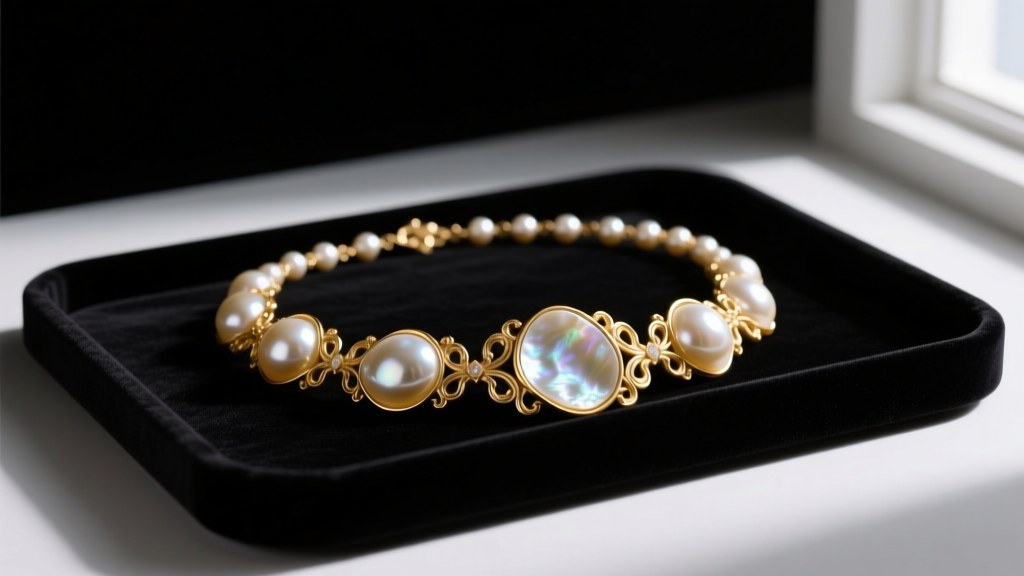
The Allure and Fragility of Artisanal Jewelry
Gabriella Rose is celebrated for its romantic, vintage-inspired aesthetics, frequently utilizing freshwater baroque pearls, intricate crystal work, and delicate gold-plated brass chains. However, the very fragility that makes a necklace by Gabriella Rose so breathtaking also makes it susceptible to specific wear-and-tear issues. In 2026, as collectors and brides increasingly invest in handcrafted, artisanal jewelry, understanding the micro-mechanics of delicate chain repair and porous gemstone care is essential. This guide moves beyond generic jewelry advice, providing bench-level troubleshooting for the exact materials and construction methods used in these exquisite pieces.
Diagnostic Checklist: Identifying Your Core Issue
Before applying any cleaning solutions or reaching for tools, diagnose the specific failure point. Delicate necklaces typically suffer from one of four distinct issues:
- Micro-Tangles: Fine 0.8mm to 1.2mm cable chains knotting due to static friction.
- Nacre Degradation: Freshwater pearls appearing chalky, dull, or yellowed from acidic exposure.
- Crystal Clouding: Swarovski or glass crystals losing their refractive brilliance due to cosmetic buildup.
- Hardware Fatigue: Jump rings pulling apart or lobster clasps failing to engage securely.
Issue 1: Untangling Fine Cable Chains Without Snapping
The chains used in a necklace by Gabriella Rose are often incredibly fine, sometimes measuring less than a millimeter in width. When these chains tangle, the natural instinct is to pull. This causes the soft brass core to stretch, work-harden, and eventually snap.
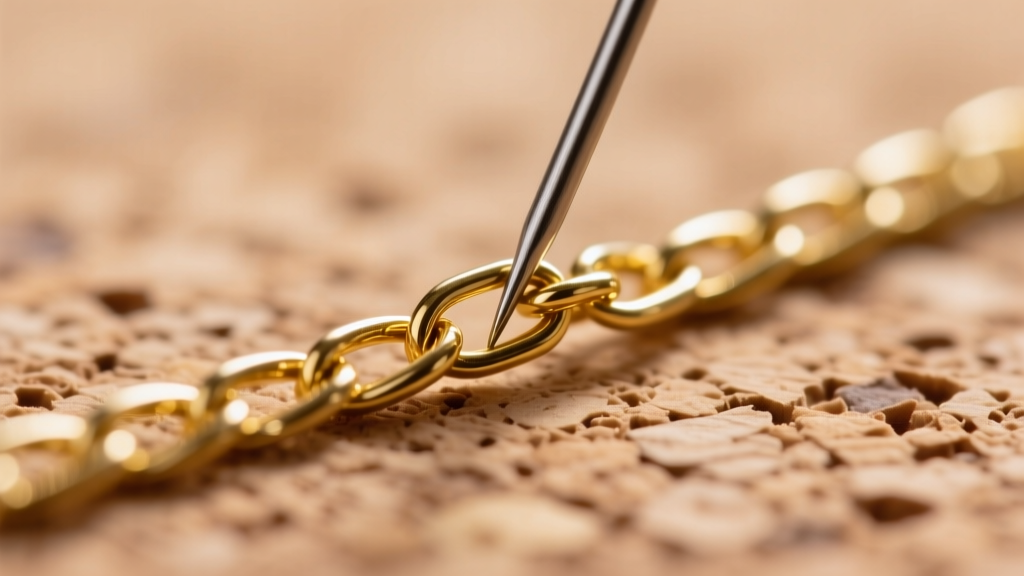
The Powder and Pin Method
To safely untangle a severe knot, lay the necklace flat on a matte corkboard or a piece of cardboard. Sprinkle a generous amount of cornstarch or talc-free baby powder directly onto the knot. The powder acts as a dry lubricant, eliminating the friction between the microscopic metal links. Using a straight sewing pin or a size 9 beading needle, gently tease the center of the knot outward. Never use tweezers. Tweezers crush the delicate oval links, creating weak points that will inevitably snap under the weight of the pendant. Once loosened, gently shake off the powder and use a soft-bristled makeup brush to clean the remaining residue from the links.
Issue 2: Restoring Clouded Pearls and Crystals
Gabriella Rose frequently incorporates organic materials like freshwater pearls. According to the Gemological Institute of America (GIA), pearls are composed of calcium carbonate and conchiolin, making them highly porous and vulnerable to acids found in sweat, perfume, and hairspray. Over time, this chemical exposure etches the nacre, causing a permanent chalky appearance if left untreated.
Critical Warning: Never place a pearl or crystal necklace in an ultrasonic cleaner. The high-frequency vibrations will shatter the crystals and strip the delicate nacre layers right off the pearl bead.
Material-Specific Cleaning Matrix
| Cleaning Agent | Freshwater Pearl | Swarovski Crystal | Gold-Plated Brass |
|---|---|---|---|
| Ultrasonic Cleaner | NEVER (Destroys nacre) | NEVER (Shatters glass) | NO (Strips plating) |
| Mild Dish Soap & Water | YES (Damp cloth only) | YES (Safe) | YES (Quick dip) |
| Rubbing Alcohol | NEVER (Dries conchiolin) | YES (Removes oils) | NO (Accelerates tarnish) |
| Distilled Water Wipe | YES (Best for sweat) | YES (Spotless finish) | YES (Safe) |
To revive clouded pearls, dampen a microfiber cloth with distilled water (never tap water, which contains chlorine) and gently wipe each pearl individually. Allow them to air dry completely on a towel before storing. For crystals, a 50/50 mix of distilled water and white vinegar on a cotton swab can safely dissolve stubborn cosmetic buildup from the crevices of the settings without damaging the metallic backing.
Issue 3: Repairing Separated Jump Rings and Clasps
The most common structural failure on any delicate pendant necklace is the separation of the jump ring—the small circular wire loop that connects the pendant to the chain or the clasp to the extender. Because Gabriella Rose pieces prioritize a dainty silhouette, these jump rings are often made of 20-gauge or 22-gauge brass wire.
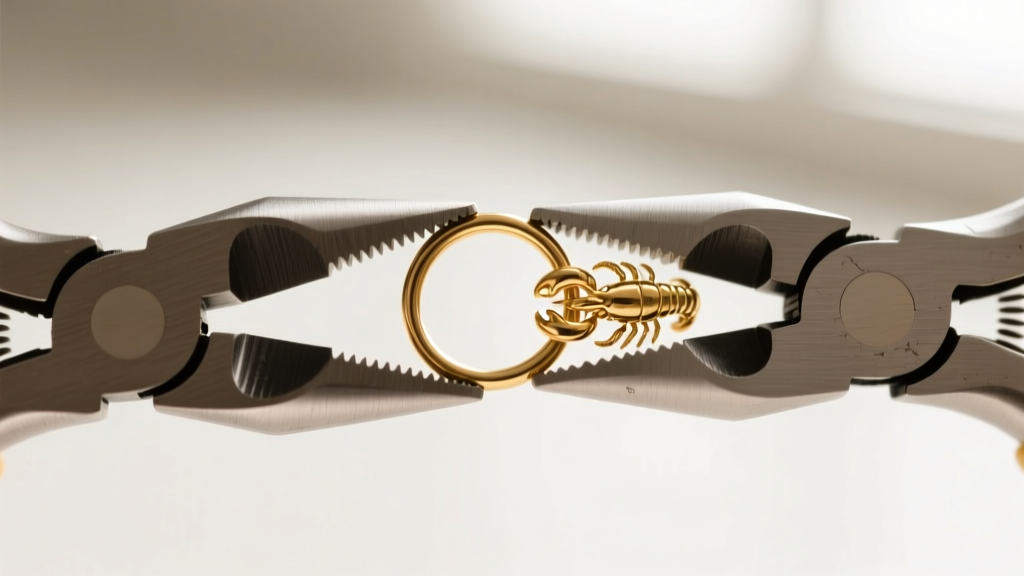
The Twist-vs-Pull Pliers Technique
When a jump ring pulls apart, the gap forms an oval shape. If you try to push the two ends back together by squeezing the sides, the wire will weaken and eventually snap due to metal fatigue. As detailed by professional Rio Grande jewelry tool suppliers, the correct bench technique requires two pairs of flat-nose pliers. Grip the jump ring on either side of the split. Instead of pulling the ring open, twist one hand toward you and the other away from you. This lateral twisting motion preserves the structural integrity of the brass wire. When closing the ring, twist it back until you hear and feel a microscopic 'click' or 'snap' as the two ends perfectly align and grind against each other, ensuring a seamless closure that won't catch on your clothing.
Long-Term Storage: Preventing Oxidation
Gold-plated brass is highly susceptible to oxidation, especially when exposed to humidity and airborne sulfur compounds. To preserve the gold vermeil or plating on your necklace by Gabriella Rose, avoid storing it in open-air jewelry boxes or humid bathrooms. Instead, store the piece in an airtight polyethylene ziplock bag alongside a 3M anti-tarnish strip. Polyethylene is chemically inert and will not react with the metal, while the anti-tarnish strip absorbs ambient sulfur, keeping the brass base metal from oxidizing and bleeding through the gold plating.
When to Seek Professional Bench Repair
While home troubleshooting can resolve tangles, clouding, and loose jump rings, certain issues require a professional jeweler's bench. If the actual cable chain links have stretched and thinned, or if the gold plating has completely worn away to reveal the raw brass underneath, DIY fixes will only cause further damage. Seek out a jeweler who specializes in laser welding and electroplating. Laser welding can fuse broken 0.8mm links without melting the surrounding delicate metal, while a professional can strip and re-plate the brass in 18k gold, restoring your vintage-inspired piece to its original 2026 showroom brilliance.


