The Engineering of a Tiny Bead Necklace: Sizing & Stringing Guide
Master the technical details of a tiny bead necklace. Explore stringing materials, bead hole sizes, clasp mechanics, and tension tolerances.

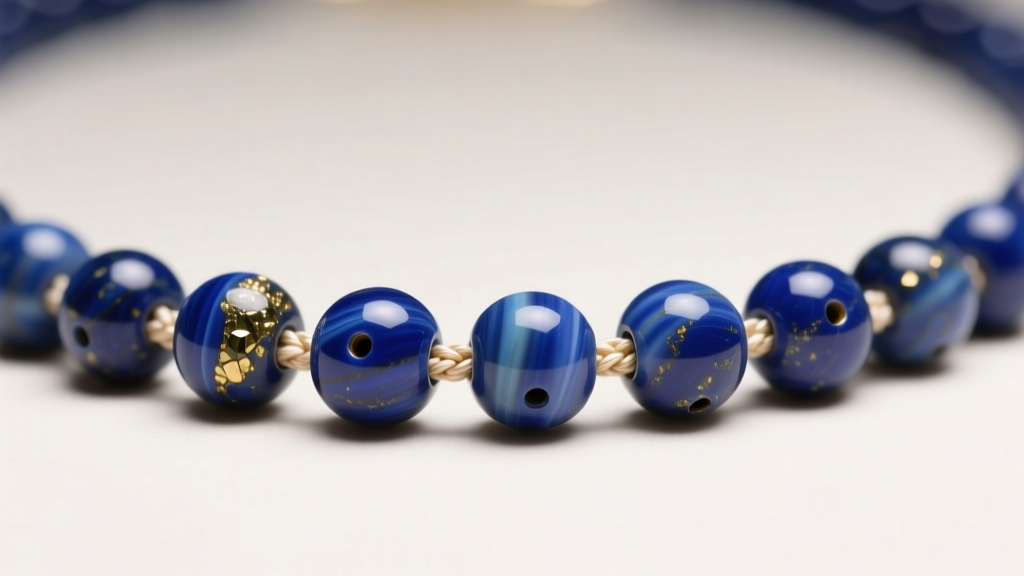
The Hidden Physics of the Tiny Bead Necklace
When evaluating fine jewelry, consumers often focus on the carat weight of gemstones or the purity of precious metals. However, the structural engineering of a tiny bead necklace requires a masterclass in micro-mechanics, tensile physics, and material science. Unlike standard 8mm or 10mm bead strands that rely on their own mass and rigid interlocking to maintain a drape, micro-beads (ranging from 1.3mm to 3mm) behave more like a fluid textile. They require specialized stringing substrates capable of navigating extreme bend radii without suffering from metal fatigue or polymer shear.
As of 2026, advancements in ultra-high-molecular-weight polyethylene (UHMWPE) threads and 49-strand stainless steel micro-wires have revolutionized how jewelers approach micro-jewelry. Yet, the fundamental failure points remain the same: drill hole abrasion, clasp-loop shear stress, and UV degradation. This guide deconstructs the technical specifications required to design, string, and maintain a tiny bead necklace that will endure decades of wear.
Bead Caliber and Drill Hole Tolerances
The foundation of any micro-bead strand is the relationship between the bead's outer diameter and its inner drill hole. According to the GIA Gem Encyclopedia, the drilling process for gemstone micro-beads often results in conical or hourglass-shaped holes, which can create microscopic sharp edges that act like saw blades against stringing threads. Understanding standard aught sizing and millimeter tolerances is critical for selecting the correct wire gauge.
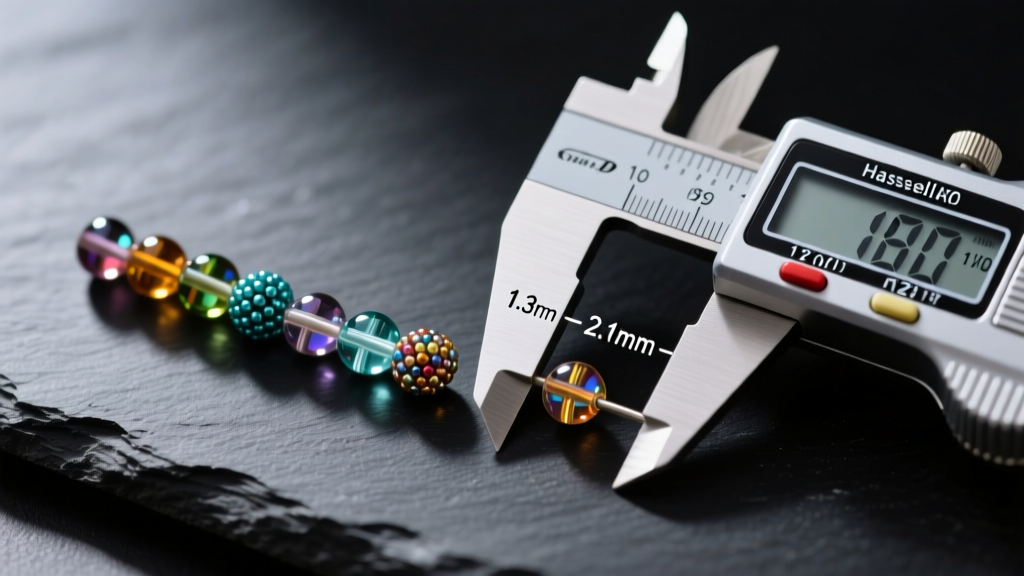
| Bead Classification | Avg Diameter | Avg Hole Size | Max Wire/Thread Gauge | Best Substrate Choice |
|---|---|---|---|---|
| 15/0 Seed Bead | 1.3mm | 0.3mm - 0.4mm | 28 AWG (0.010") | Size B Silk or 6lb UHMWPE |
| 11/0 Seed Bead | 2.1mm | 0.5mm - 0.6mm | 26 AWG (0.012") | 8lb UHMWPE or 49-strand wire |
| 2mm Gemstone Micro | 2.0mm | 0.4mm - 0.5mm | 27 AWG (0.011") | Thermally fused poly thread |
| 3mm Gemstone Micro | 3.0mm | 0.6mm - 0.8mm | 22 AWG (0.015") | 49-strand micro steel wire |
A common engineering failure occurs when jewelers attempt to force a 0.015-inch wire through a 2mm lapis lazuli bead with a 0.4mm hole, resulting in micro-fractures along the bead's equator. Always verify the drill hole tolerance with digital calipers before committing to a stringing substrate.
Stringing Substrates: Tensile Strength and Material Science
The drape of a tiny bead necklace is dictated by the flexibility of its core. Because micro-beads are incredibly light, a stiff stringing material will cause the necklace to kink and stick out at awkward angles rather than laying flat against the clavicle. There are three primary substrates used in modern micro-jewelry:
1. 49-Strand Stainless Steel Micro-Wire
Brands like Beadalon manufacture 49-strand wires in diameters as small as 0.010 inches. The 49-strand configuration is non-negotiable for tiny bead necklaces; 7-strand or 19-strand wires possess too much memory and will retain kinks if bent at the tight radii required by a 16-inch choker length. The nylon coating on these wires provides a buffer against the sharp inner edges of gemstone drill holes.
2. Thermally Fused Polyethylene (e.g., WildFire)
For beads with ultra-fine holes (under 0.4mm), steel wire is physically impossible to use. Thermally fused polyethylene threads offer a tensile strength of up to 10 lbs while maintaining a diameter of just 0.006 inches. Unlike traditional nylon, these threads do not stretch under the weight of heavy glass or stone micro-beads, and they can be heat-sealed at the clasp rather than relying solely on mechanical crimps.
3. Traditional Silk Thread
While largely replaced by synthetics for gemstones, Size B or FF silk remains the gold standard for tiny freshwater pearl necklaces. Silk requires knotting between every single bead to prevent catastrophic loss in the event of a break, a technique that adds immense labor costs but provides the ultimate fluid drape.
Clasp Integration and Shear Protection
The most vulnerable point of any tiny bead necklace is the transition from the flexible bead strand to the rigid metal clasp. When a wearer puts on or takes off the necklace, the stringing material bends at a harsh 90-degree angle against the inside of the clasp jump ring. Over time, this creates shear stress that will slice through even the strongest UHMWPE thread.
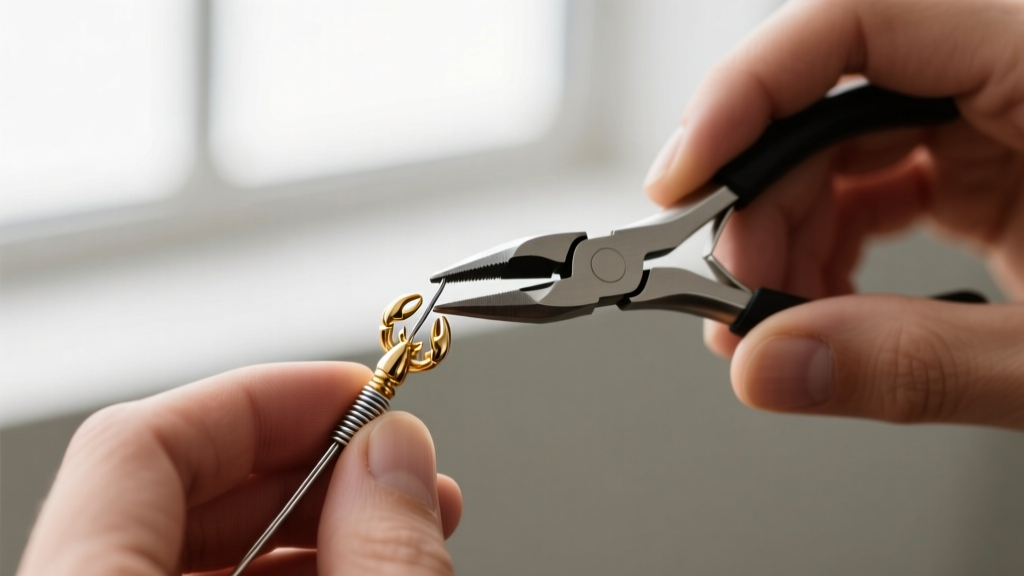
To engineer a fail-safe termination, master jewelers employ specific micro-findings:
- Wire Guardians (Horseshoe Findings): These tiny, U-shaped metal channels force the stringing wire into a perfect, protected curve, preventing the metal clasp from directly abrading the nylon coating of the wire.
- French Wire (Bullion): A microscopic coil of fine silver or gold wire slipped over the thread at the clasp loop. This is mandatory for silk-strung tiny pearl necklaces to prevent the silk from fraying against the metal jump ring.
- Micro-Crimps (1x1mm): Standard 2x2mm crimp tubes are too large for micro-wire and will slip. 1x1mm sterling silver or gold-filled crimp tubes, flattened with precision flat-nose pliers or folded with a micro-crimping tool, provide the necessary friction without adding bulky, unsightly metal nodes at the clasp.
Catenary Drape and Sizing Formulas
Designing the length of a tiny bead necklace requires an understanding of the catenary curve—the natural shape a flexible chain assumes when suspended from two points. Because micro-beads lack the rigid interlocking geometry of larger stones, a 16-inch tiny bead necklace will drape significantly lower and tighter than a 16-inch strand of 10mm beads.
When sizing for a standard collarbone drape (the princess length), jewelers must add an additional 0.5 to 0.75 inches to their standard measurements when working with beads under 3mm. Furthermore, the inclusion of a 2-inch micro-chain extender at the clasp is highly recommended. This not only allows the wearer to adjust the necklace over varying neckline depths but also provides a flexible buffer zone that absorbs sudden tensile shocks if the necklace is accidentally snagged.
Maintenance and Recalibration
Even the most perfectly engineered tiny bead necklace requires maintenance. Environmental factors such as UV exposure, chlorine, and the natural acidity of human sweat will eventually degrade polymer coatings and synthetic threads. Experts recommend that any tiny bead necklace strung on UHMWPE or nylon-coated wire be professionally inspected and restrung every 3 to 5 years. During this recalibration, the jeweler should check for micro-abrasions inside the beads and replace any compromised crimps, ensuring the structural integrity of the piece for the next decade of wear.


