How to Fix and Restore a Black Necklace With Cross
Is your black necklace with cross fading or staining your skin? Learn expert troubleshooting tips to restore plating, fix cords, and prevent tarnish.


The aesthetic of a black necklace with cross pendants is undeniably striking, offering a modern, edgy, or deeply personal alternative to traditional yellow gold or bright silver. However, black jewelry presents unique metallurgical and structural challenges. Whether your piece is a delicate black rhodium-plated chain, an oxidized sterling silver pendant, or a waxed cotton cord holding a heavy gothic cross, daily wear inevitably leads to fading, fraying, or skin discoloration.
If your favorite dark-toned jewelry is showing signs of wear, do not throw it away. As jewelry material science has evolved through 2026, we now have highly effective, accessible methods to troubleshoot and restore these pieces. Below is a comprehensive, expert-level guide to diagnosing the exact failure mode of your black jewelry and applying the correct restorative fix.
The Science of Black Finishes: Why Your Necklace is Fading
To fix a fading necklace, you must first identify the specific blackening technique used by the manufacturer. Not all black finishes are created equal, and applying the wrong restoration method can permanently ruin the piece.
1. Black Rhodium Plating
Black rhodium is not a naturally occurring metal. It is an alloy created by mixing pure rhodium with tin or indium, then electroplating it over a base of sterling silver or white gold. While it offers a stunning, mirror-like dark finish, it is inherently soft. On a black necklace with cross pendants, the highest friction point is the bail (the loop connecting the cross to the chain). The bail acts like a microscopic saw, stripping the black rhodium away to reveal the bright silver underneath within 6 to 12 months of daily wear.
2. Oxidized Sterling Silver
Oxidation is a chemical process where sterling silver is intentionally exposed to sulfur compounds to create a layer of silver sulfide (Ag2S) on the surface. According to the Silver Institute, this patina is purely superficial. If your black necklace is rubbing off and leaving dark smudges on your skin or clothes, it is likely oxidized silver that has not been properly sealed with a microcrystalline wax.
3. PVD Coating (Physical Vapor Deposition)
Modern titanium and stainless steel cross necklaces often use PVD coating, typically utilizing Titanium Aluminum Nitride (TiAlN) in a vacuum chamber. This creates a molecular bond that is incredibly hard (up to 8 on the Mohs scale). If a PVD black necklace is fading, it is usually due to extreme chemical corrosion from harsh chlorides (like swimming pool water) rather than physical friction.
Troubleshooting Skin Discoloration
A common complaint with dark jewelry is the dreaded "black neck" or "green collar" effect. This is not necessarily an allergic reaction, but rather a chemical or physical transfer.
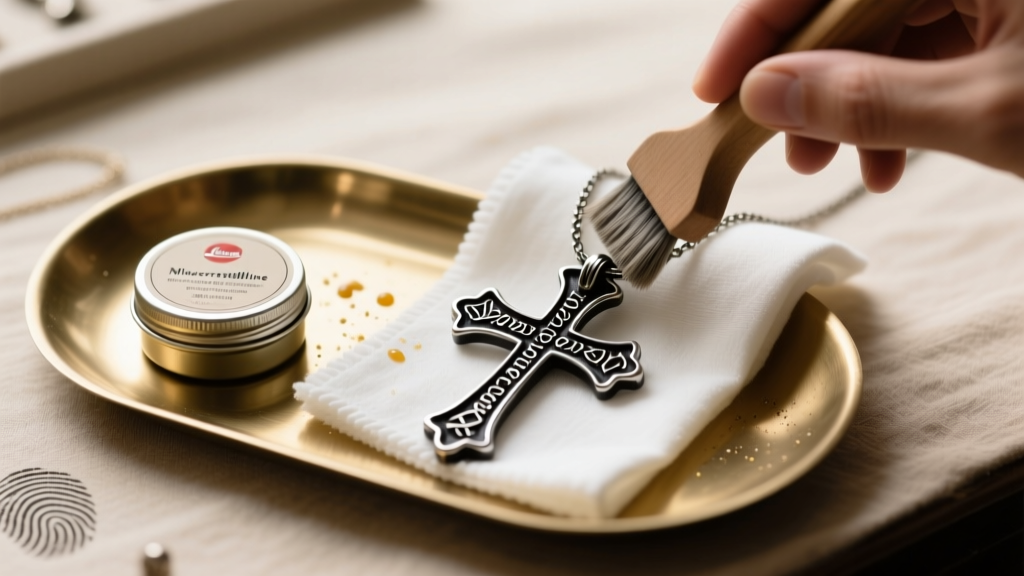
- Physical Transfer (Black Smudges): If the smudge is dark gray or black and washes off easily with soap, it is physical transfer. This happens with oxidized silver or degrading black enamel. The microscopic particles of the finish rub off against your skin's natural oils and friction.
- Chemical Reaction (Green/Black Stains): If the stain has a greenish or deep brownish-black tint and takes days to fade, it is a chemical reaction. Many budget-friendly black necklaces use a brass or copper alloy base metal beneath the black plating. When the plating wears thin, sweat (which contains sodium chloride and lactic acid) reacts with the copper to form copper chloride or copper sulfide, which stains the skin.
The Fix: For physical transfer, apply a thin coat of Renaissance Wax or a jewelry-specific nano-sealant to the back of the cross pendant. For chemical reactions caused by copper alloys, you must either have the piece re-plated with a thick barrier layer of pure silver or palladium before the black topcoat is reapplied, or apply a layer of clear, flexible UV-curing jewelry resin to the skin-facing side of the pendant.
The "Bail Saw" Effect: Fixing Frayed Cords and Chains
If you wear a heavy cross pendant on a black waxed cotton cord or a delicate black-plated chain, you have likely experienced the "Bail Saw" effect. The metal bail of the cross pendant is significantly harder than the cord or the plating on the chain. With every movement, the bail grinds into the material beneath it.
How to Stop Cord Fraying
Waxed cotton and silk cords are highly susceptible to friction. Once the wax coating wears off at the friction point, the cotton fibers separate and snap. To troubleshoot this before the cord breaks and you lose your pendant:
- Inspect the inside of the pendant's bail. If it has sharp edges or casting seams, use a piece of 1000-grit wet/dry sandpaper folded into a tiny strip to gently polish the inside of the bail smooth.
- Apply a micro-drop of cyanoacrylate (super glue) or flexible UV resin to the exact spot on the black cord where the bail rests. This creates a hardened, sacrificial shield on the cord itself.
- Pro Tip: Thread a tiny, hardened steel or titanium jump ring through the bail, and attach the cord to the jump ring. Metal-on-metal friction will completely eliminate cord fraying.
Material Durability Matrix
Understanding the lifespan of your black necklace with cross pendant helps set realistic expectations for maintenance. Below is a comparison of common black jewelry materials and their failure modes.
| Material / Finish | Mohs Hardness | Primary Failure Mode | Restoration Difficulty |
|---|---|---|---|
| Black Rhodium (over Silver) | 4.5 - 5.0 | Friction wear at the bail and clasp | Moderate (Requires professional re-plating) |
| Oxidized Sterling Silver | 2.5 (Silver) | Patina rubbing off onto skin/clothes | Easy (Re-oxidize with liver of sulfur & seal) |
| PVD Black Titanium | 7.5 - 8.0 | Chemical pitting from chlorine/sweat | Impossible (Cannot be re-plated outside a factory) |
| Black Enamel / Epoxy | 3.0 - 4.0 | Chipping from impact or temperature changes | Moderate (Requires UV resin or jeweler's epoxy) |
| Black Spinel / Onyx Beads | 7.0 - 8.0 | Stringing wire fatigue and bead cracking | Easy (Re-string on 49-strand micro-wire) |
Step-by-Step Restoration Guide for Faded Pieces
If your black necklace with cross pendant has already lost its dark luster, follow these targeted restoration steps based on your material.
Restoring Oxidized Silver
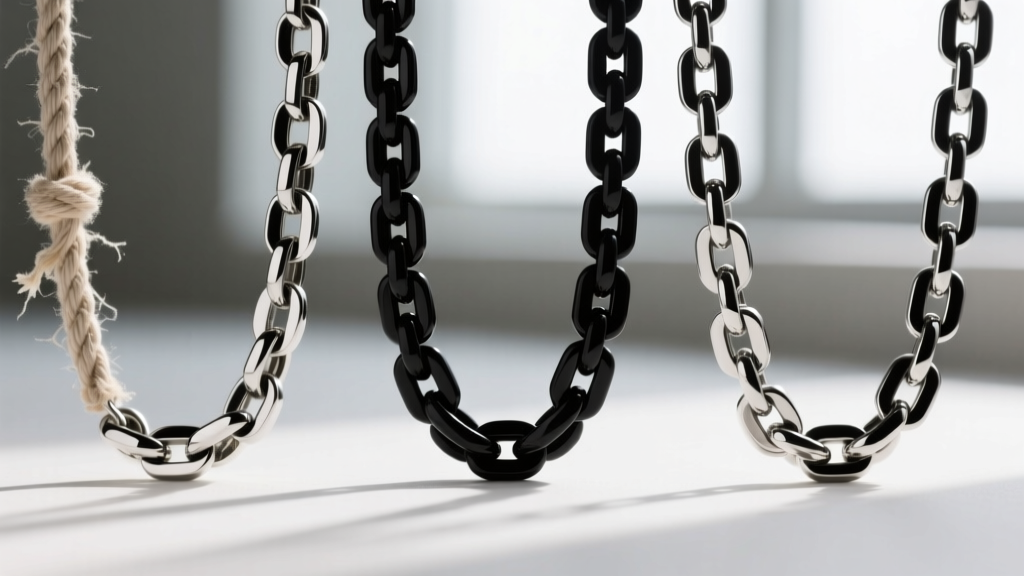
If your black silver cross has faded to a patchy gray, you can restore it at home. You will need "Liver of Sulfur" (a potassium sulfide compound). Dissolve a pea-sized amount in warm water, dip the cleaned silver cross for 10-15 seconds, and watch it turn deep black. Rinse immediately in cold water to stop the reaction. Once dry, buff the high-relief areas of the cross with a polishing cloth, leaving the crevices dark for a high-contrast, antique look. Finally, seal it with microcrystalline wax to prevent it from rubbing off on your skin. For deeper insights into silver patinas, refer to the Gemological Institute of America (GIA) educational resources on metal treatments.
Addressing Chipped Black Enamel
If the black inlay on your cross pendant has chipped, do not use standard super glue, which dries cloudy and brittle. Instead, use a two-part black jeweler's epoxy or a black UV-curing resin. Clean the chipped cavity with isopropyl alcohol, apply the resin slightly above the surface level, and cure it. Once hardened, use progressively finer grits of sandpaper (from 600 up to 2000) to sand the resin perfectly flush with the surrounding metal, finishing with a jeweler's rouge polish.
When to See a Professional Jeweler
While cord replacements, wax sealing, and oxidized silver restoration are excellent DIY projects, certain issues require professional intervention. If your black rhodium-plated chain has大面积 faded, a professional jeweler must strip the remaining plating via an electrolytic bath, polish the base metal, and apply a fresh layer of black rhodium. Attempting to paint over it with "blackening solutions" will result in a muddy, uneven finish that flakes off within days.
Furthermore, if the structural integrity of the cross pendant's bail is compromised—evidenced by thinning metal or micro-cracks near the solder joint—a jeweler must laser-weld the bail. Laser welding is essential for black jewelry because traditional torch soldering will burn the surrounding black plating or PVD coating, leaving a permanent bright spot that cannot be easily hidden.
By understanding the specific metallurgy of your black necklace with cross pendant, you can move beyond temporary fixes and implement long-term structural solutions. Whether you are sealing an oxidized patina, buffering a high-friction bail, or recognizing the limits of PVD coatings, proper troubleshooting ensures your jewelry remains as bold and intact as the day you bought it.


