Mens Blue Sapphire Necklace: 2026 Value & Budget Guide
Discover how to price and evaluate a mens blue sapphire necklace in 2026. Compare lab-grown vs. natural, chain gauges, and treatment tiers.

The True Cost of a Mens Blue Sapphire Necklace in 2026
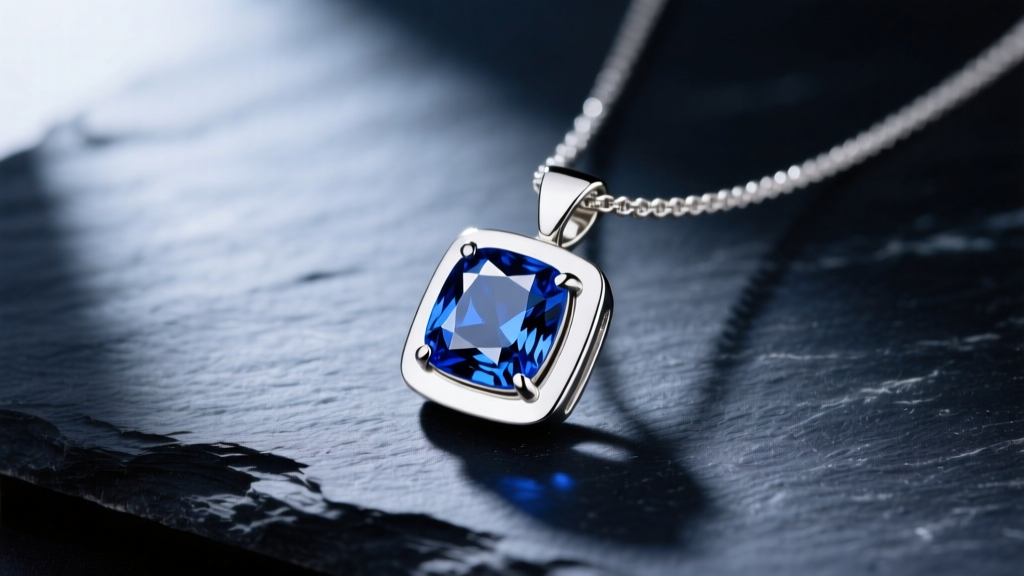
When evaluating a mens blue sapphire necklace, the gap between retail markup and intrinsic gemological value can be staggering. The market for men's fine jewelry has expanded rapidly, but pricing transparency has not kept pace. A sapphire pendant that retails for $4,500 in a luxury boutique might possess an intrinsic stone and gold value of under $1,200. Conversely, budget buyers often stumble into purchasing beryllium-diffused stones that hold zero resale value. This guide deconstructs the actual costs, material grades, and value multipliers you need to navigate the 2026 market without overpaying.
Color Grading: The 'Royal Blue' vs. 'Cornflower' Premium
The most significant value driver in any sapphire is color, specifically the interplay of hue, tone, and saturation. For men's jewelry, deeper tones are generally preferred for their understated, masculine aesthetic.
- Royal Blue: A medium-dark, highly saturated violetish-blue. In the natural market, Royal Blue commands a 30% to 50% premium over lighter stones. It is the standard for high-end men's pendants.
- Cornflower Blue: A lighter, medium-tone velvety blue. While highly prized in certain collector circles (especially from Kashmir), it often looks washed out in smaller men's pendant settings (under 2 carats).
- Ink Blue: Too dark, resulting in 'extinction' (black areas where light fails to return). Avoid stones with more than 25% extinction, as they are heavily discounted in the wholesale market.
Expert Insight: Always check for 'windowing'—a transparent, washed-out area in the center of the gem caused by a shallow pavilion cut. Cutters often window sapphires to preserve carat weight. A windowed stone should be discounted by at least 40% compared to a precision-cut equivalent.
Natural vs. Lab-Grown: Where Your Budget Actually Goes
The lab-grown sapphire market has matured significantly. According to the GIA Gem Encyclopedia, synthetic sapphires share the exact same chemical composition (Al2O3) and Mohs 9 hardness as natural stones, but their production methods dictate their price and visual characteristics.
| Sapphire Type | Growth Method | Visual Identifiers | Avg. Price (1.5ct - 2ct) | Value Retention |
|---|---|---|---|---|
| Flame-Fusion (Verneuil) | Lab-Grown | Curved striae, gas bubbles | $150 - $400 | Negligible |
| Flux-Grown (Chatham) | Lab-Grown | Platinum crucible inclusions, natural-looking silk | $600 - $1,500 | Low |
| Natural (Heated) | Mined | Rutile silk, fingerprint inclusions | $1,500 - $4,500 | Moderate |
| Natural (Unheated) | Mined | Intact silk needles, zircon halos | $6,000 - $15,000+ | High (Investment) |
Decoding Sapphire Treatments and Value Multipliers
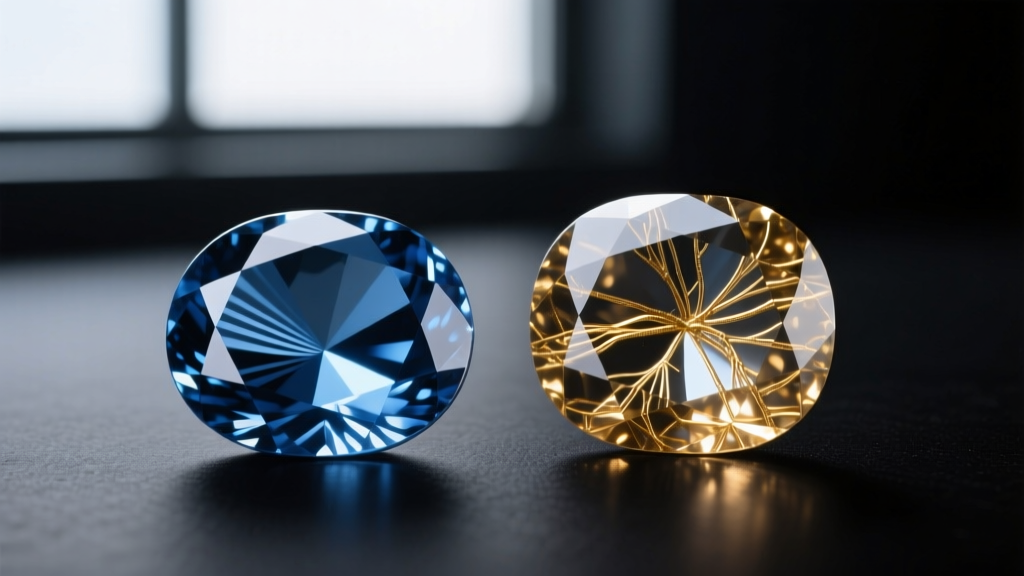
If you are purchasing a natural mens blue sapphire necklace, understanding thermal treatments is non-negotiable. The GIA's treatment guidelines clearly outline how heat and lattice diffusion alter both beauty and market value.
Standard Heat Treatment (Acceptable)
Over 90% of natural sapphires on the market are heat-treated to dissolve rutile silk and improve clarity and color. This is a permanent, universally accepted practice that does not severely penalize the stone's value, provided it is disclosed.
Beryllium Diffusion (The Budget Trap)
Beryllium diffusion involves heating the stone with beryllium powder to artificially induce or enhance blue coloration. This treatment penetrates the entire stone but is heavily stigmatized in the gemological community. A beryllium-diffused sapphire is worth a fraction of a standard heated stone. Never pay natural market prices for a lattice-diffused sapphire. Always demand a GIA or AGS report that explicitly states 'No indications of heating' or 'Heated'—if it says 'Lattice Diffusion' or 'Beryllium,' walk away.
The Golden Rule of Certification: For any natural sapphire pendant priced over $1,500, a report from a tier-one laboratory (GIA, AGS, or SSEF) is mandatory. In-house 'certificates' from jewelry brands are marketing tools, not objective gemological assessments.
Chain Selection: Gauge, Alloy, and Hidden Costs
The pendant is only half the equation. A high-quality sapphire requires a chain that matches its durability and aesthetic weight. Sapphires are Mohs 9, but the precious metal holding them is not.
Optimal Chain Gauges for Men
Men's chains typically range from 2.0mm to 5.0mm. For a standard 1.5ct to 3.0ct sapphire pendant (weighing roughly 3 to 8 grams total), a 2.5mm to 3.5mm chain provides the ideal visual balance. Anything thinner risks snapping under the pendant's dynamic weight; anything thicker overwhelms the gemstone.
Alloy Selection: White Gold vs. Platinum
Blue sapphires pair best with white metals, which enhance their cool undertones.
- 14k White Gold: The most budget-friendly and durable option. It is rhodium-plated to appear bright white, though it will require re-plating every 2-3 years. Excellent for chains and bezel settings.
- 18k White Gold: Contains more pure gold, making it slightly softer and more prone to scratching, but offers a richer feel. Requires more frequent rhodium maintenance.
- Platinum (950 Pt): The ultimate choice for heirloom pieces. It is naturally white, hypoallergenic, and develops a patina rather than wearing away. However, expect to pay a 40% to 60% premium over 14k white gold for the chain and setting hardware.
Setting Styles: Prong vs. Bezel for Active Lifestyles
While sapphires are incredibly hard, they possess distinct cleavage planes and can chip at the girdle (the outer edge) if struck against a hard surface. For men who wear their necklaces daily, including during physical activity, the setting style drastically impacts longevity.
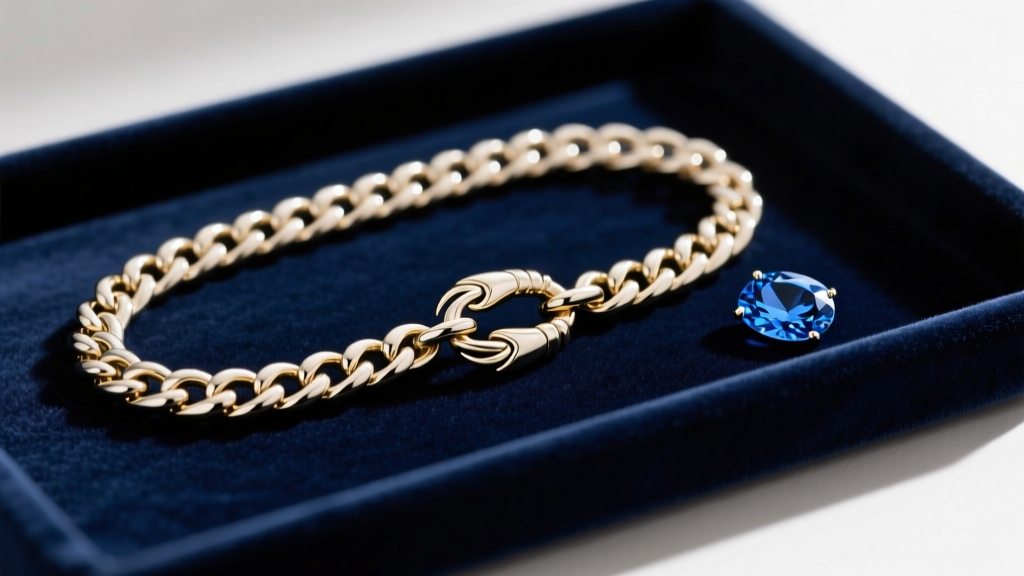
- Bezel Setting: A rim of metal completely encircles the sapphire's girdle. This is the most secure option for a mens blue sapphire necklace, protecting the edges from impacts while offering a sleek, modern, and masculine profile.
- Prong Setting: Allows more light to enter the stone, maximizing brilliance, but leaves the girdle exposed. If choosing prongs, ensure they are V-prongs at the corners of a cushion or princess cut to prevent chipping.
The 2026 Buyer's Framework: 3 Budget Tiers
To synthesize this data into an actionable purchasing strategy, here is how your budget translates to real-world options in the current market.
Tier 1: The Everyday Essential ($300 - $800)
What you get: A high-quality flux-grown lab sapphire (1.5ct - 2.0ct) set in solid 14k white gold or sterling silver with a thick rhodium plating. The chain will be a 2.5mm rope or curb link.
Value Proposition: Maximum visual impact and durability for daily wear without the anxiety of losing a high-value asset. Flux-grown stones avoid the obvious curved striae of cheap flame-fusion synthetics.
Tier 2: The Fine Jewelry Standard ($1,500 - $3,500)
What you get: A natural, heat-treated Ceylon (Sri Lankan) or Australian sapphire (1.0ct - 1.5ct) with excellent saturation. Set in a 14k or 18k white gold bezel pendant on a 3.0mm Cuban or box chain.
Value Proposition: You are paying for earth-mined rarity and natural inclusions. This tier offers the best balance of intrinsic value retention and wearable luxury. Ensure the piece comes with a GIA identification report.
Tier 3: The Investment Heirloom ($6,000+)
What you get: A natural, completely unheated sapphire (2.0ct+) with 'Royal Blue' or 'Vivid Blue' grading. Set in a custom-forged Platinum (950 Pt) mounting with a heavy 4.0mm platinum chain and a secure box clasp with safety catches.
Value Proposition: Unheated sapphires of this caliber are finite resources. This is not just jewelry; it is a tangible asset that historically appreciates, provided the provenance and laboratory documentation are impeccable.
Final Verdict: Maximizing Value Without Compromising Durability
Securing the right mens blue sapphire necklace requires looking past the showroom lighting and focusing on gemological data. If your goal is purely aesthetic, a flux-grown lab sapphire in a 14k white gold bezel setting offers unbeatable durability and style for under $1,000. However, if you view jewelry as a store of value, allocate your budget toward a natural, heat-treated stone with a reputable GIA report, prioritizing cut quality and color saturation over sheer carat weight. By matching the right metal gauge, clasp type, and setting style to your lifestyle, you ensure the piece remains a cornerstone of your wardrobe for decades to come.


