How to Polish Silver Necklace: Expert Technical Care Guide
Master how to polish silver necklace pieces with our expert metallurgical guide. Learn chemical vs. mechanical methods, grit sizes, and finish care.

The Metallurgy of Tarnish: Why Silver Darkens
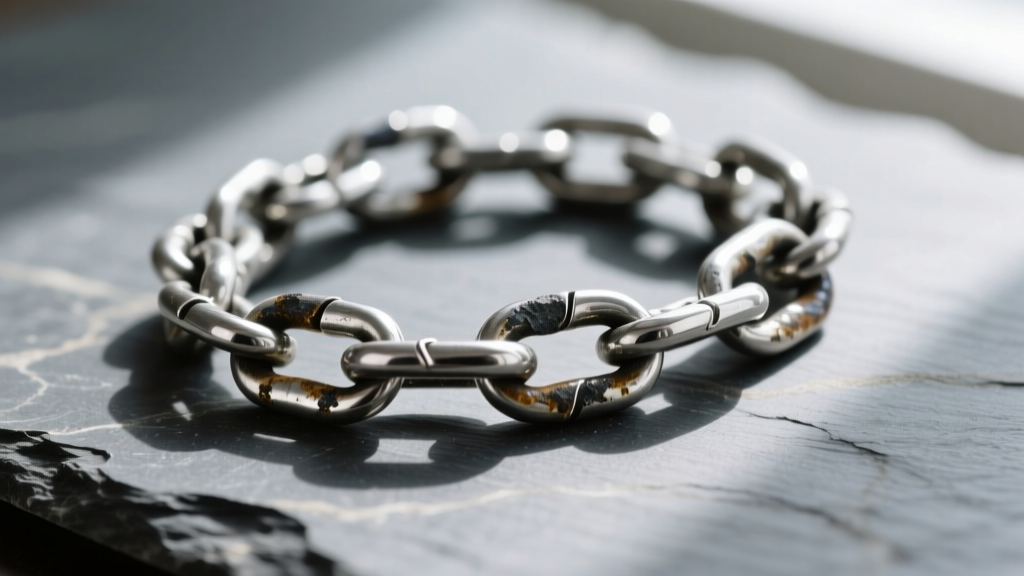
Before you learn how to polish silver necklace components effectively, you must understand the chemical reality of tarnish. A common misconception is that silver oxidizes in the traditional sense. In reality, pure silver (Ag) does not react with oxygen at room temperature. Instead, the dark layer you see on your jewelry is silver sulfide ($Ag_2S$).
Sterling silver is an alloy comprising 92.5% pure silver and 7.5% copper (or occasionally other metals like zinc or germanium). When the copper in the alloy interacts with moisture and airborne hydrogen sulfide or sulfur dioxide, it accelerates the galvanic corrosion process. The resulting silver sulfide forms a microscopic crystalline lattice on the surface. Understanding this distinction is critical because it dictates whether you should use mechanical abrasion or chemical reduction to restore the necklace's luster.
According to the Gemological Institute of America (GIA), the rate of sulfide formation is heavily dependent on environmental humidity and the presence of volatile sulfur compounds, which are commonly emitted by materials like wool, felt, and certain types of cardboard packaging.
Mechanical vs. Chemical Polishing: A Technical Breakdown
When determining how to polish silver necklace chains and pendants, professionals divide techniques into two distinct categories: mechanical removal and electrochemical reduction. Each carries specific risks regarding metal loss and surface micro-scratching.
Mechanical Abrasion (Cloths & Compounds)
Mechanical polishing physically shears the silver sulfide layer off the surface. Because silver is remarkably soft—ranking just 2.5 to 3 on the Mohs hardness scale—aggressive mechanical polishing will remove microscopic layers of the base metal alongside the tarnish.
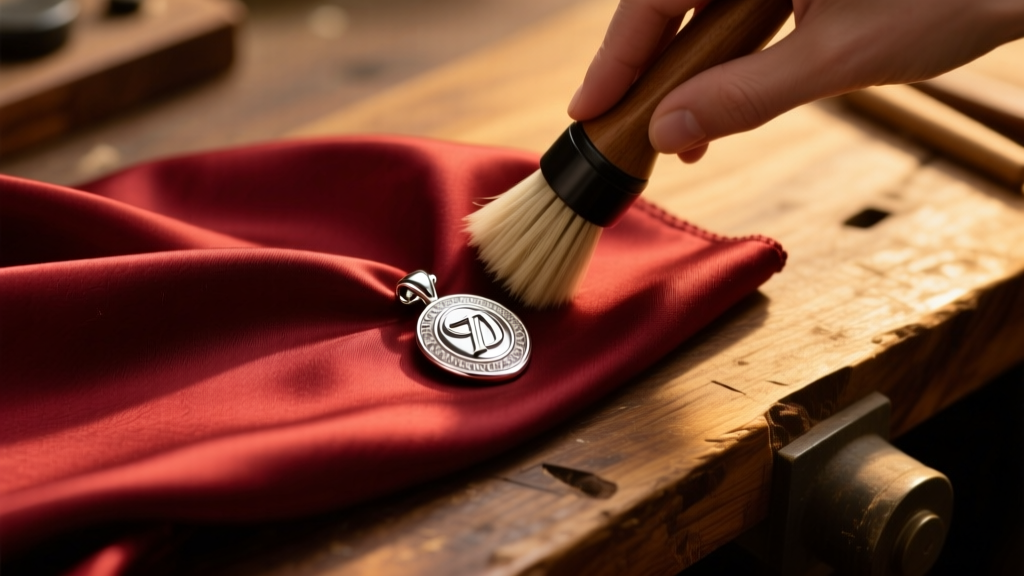
Professional jewelers utilize jeweler's rouge (finely milled iron oxide, $Fe_2O_3$) or aluminum oxide compounds embedded in microfiber or flannel cloths. For severe tarnish, bench jewelers may employ Micromesh abrasive pads. These pads utilize a progressive grit system:
- 1500 to 2400 Grit: Used for heavy sulfide scaling and minor surface scratches.
- 3200 to 6000 Grit: Refines the surface, removing the micro-marring left by lower grits.
- 8000 to 12000 Grit: Produces a mirror-like, optical-grade finish without the need for liquid compounds.
Warning: Never use toothpaste or baking soda pastes for mechanical rubbing. The silica and calcium carbonate particles in these household items are highly irregular and will inflict deep, permanent micro-scratches on high-polish sterling silver.
Electrochemical Reduction (The Aluminum Foil Method)
Unlike mechanical polishing, electrochemical reduction does not remove any base metal. Instead, it reverses the chemical bond of the silver sulfide, transferring the sulfur atoms from the silver to a more anodic metal (aluminum).
This process requires an electrolyte solution (typically sodium bicarbonate dissolved in boiling water) and an aluminum cathode. When the tarnished silver necklace touches the aluminum in the hot electrolyte bath, a galvanic cell is created. The aluminum sacrifices itself, drawing the sulfur away from the silver and releasing trace amounts of hydrogen sulfide gas (which smells like rotten eggs).
While highly effective for intricate chain weaves (like Byzantine or Snake chains) where cloths cannot reach, this method must be strictly avoided if your necklace features porous gemstones such as turquoise, opal, lapis lazuli, or pearls. The boiling water and alkaline electrolyte will permanently fracture or dissolve these organic and porous stones.
Method Comparison Matrix
To select the correct protocol, consult this technical matrix based on your necklace's construction and tarnish severity.
| Method | Mechanism | Abrasiveness | Best Application | Risk Level |
|---|---|---|---|---|
| Impregnated Polishing Cloth | Mechanical | Ultra-Low | Light tarnish, daily maintenance, high-polish pendants | Low |
| Jeweler's Rouge on Wheel | Mechanical | Medium | Heavy scratches, restoring mirror finishes on solid pieces | Medium (Removes metal) |
| Aluminum Foil Electrolyte | Electrochemical | None | Intricate chains, heavy uniform sulfide scaling | High for porous gems |
| Commercial Liquid Dips | Chemical (Thiourea) | None | Quick cleaning of diamond/sapphire set silver | High (Causes micro-pitting) |
Specialized Finishes: Rhodium and Oxidized Silver
Standard polishing protocols will ruin specialized surface treatments. Before applying any friction or chemical bath, you must identify the necklace's finish.
Caring for Rhodium-Plated Sterling
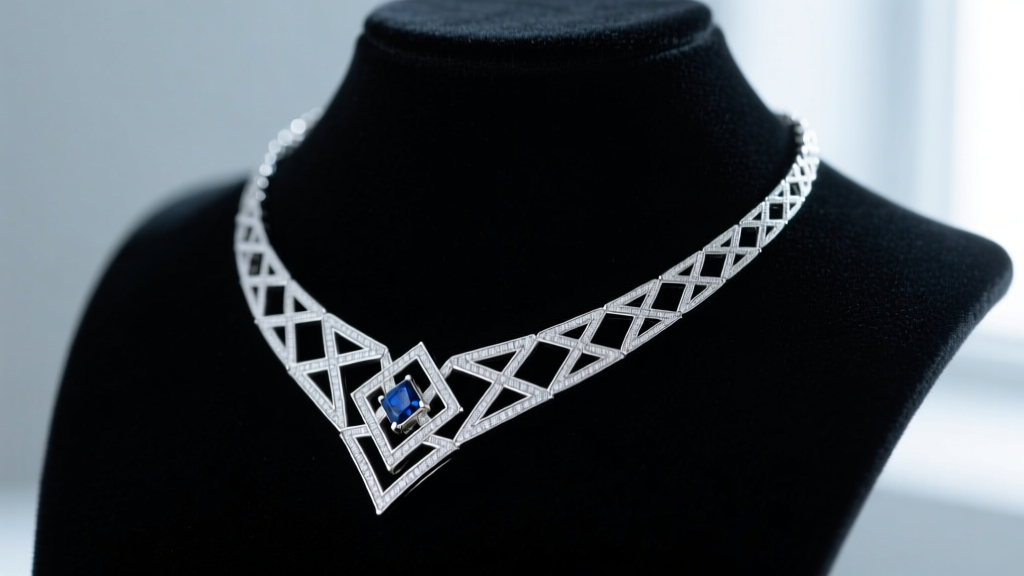
Many high-end sterling silver necklaces are electroplated with a microscopic layer of rhodium (typically 0.75 to 1.0 microns thick) to prevent tarnish and provide a bright, platinum-like reflectivity. Rhodium is a member of the platinum group metals and is highly inert. You cannot polish rhodium. If a rhodium-plated necklace appears dull, it is usually due to a buildup of skin oils, lotions, and environmental dust, not tarnish. Clean it using only a mild, phosphate-free dish soap and a soft cellulose sponge. If the underlying silver sulfide is showing through (a condition known as 'bleed-through'), the necklace requires professional re-plating, not polishing.
Preserving Intentional Oxidation
Oxidized silver is intentionally treated with liver of sulfur (potassium sulfide) to create dark, antiqued recesses that highlight the relief of a pendant or chain link. Using commercial liquid dips or the aluminum foil electrolyte method will instantly strip this intentional patina, leaving the piece looking flat and unnaturally bright. To clean an oxidized necklace, use a barely damp microfiber cloth to gently wipe only the raised, high-polish areas, avoiding the darkened crevices entirely.
Step-by-Step Professional Polishing Protocol
For a standard, un-plated, high-polish sterling silver necklace with moderate tarnish and no porous stones, follow this expert-approved sequence:
- Ultrasonic Degreasing: Before polishing, remove surface lipids. Submerge the necklace in an ultrasonic cleaner filled with warm water and a few drops of ammonia-free jewelry detergent for 3 minutes. (Skip this if the piece contains emeralds, opals, or pearls).
- Rinse and Dry: Rinse thoroughly in distilled water to prevent hard water spot mineralization. Dry completely with a lint-free cellulose cloth.
- Targeted Abrasion: Using a high-quality silver polishing cloth embedded with micro-abrasives, apply moderate pressure using linear strokes (not circular) to minimize the visibility of any inevitable micro-marring.
- Detailing Crevices: For tarnish trapped in chain links or pendant bail joints, use a wooden toothpick or a soft-bristled makeup brush dipped in a minimal amount of jeweler's rouge to gently dislodge the sulfide.
- Final Buffing: Use a clean, untreated flannel cloth to buff away any residual compound residue, restoring the optical reflectivity of the silver.
Preventative Storage Parameters
The most effective way to manage silver sulfide is to prevent its formation. The Canadian Conservation Institute recommends strict environmental controls for silver storage. Keep your necklaces in an environment where the relative humidity (RH) is maintained below 40%.
Store pieces in airtight polyethylene zip-lock bags (avoid PVC plastics, which emit plasticizers that accelerate corrosion). Inside the bag, include a 3M Anti-Tarnish strip or a packet of activated charcoal. These materials act as sacrificial scavengers, absorbing airborne hydrogen sulfide and sulfur dioxide before they can reach the silver lattice. By mastering the metallurgy of tarnish and utilizing precise, non-destructive polishing methods, you can preserve the structural integrity and optical brilliance of your silver necklaces for decades.


