The Vintage Onyx Necklace: 2026 Style & Trend Guide
Explore 2026 trends for the vintage onyx necklace. Learn to authenticate Art Deco and Victorian pieces, master layering, and decode pricing.

The Resurgence of Dark Elegance: Onyx in 2026
As the fashion landscape moves through 2026, the pendulum has swung decisively away from the ultra-minimalist 'quiet luxury' movement toward a richer, more narrative-driven aesthetic. Dubbed 'Gothic Minimalism' and 'Dark Academia Evolution' by trend forecasters, this shift has placed the vintage onyx necklace at the absolute center of contemporary styling. Unlike the ubiquitous gold chains of the early 2020s, black onyx offers a striking, high-contrast anchor that grounds both avant-garde runway looks and elevated everyday wardrobes. The deep, light-absorbing black of genuine onyx provides a moody sophistication that modern synthetic alternatives simply cannot replicate. Whether you are sourcing an authentic 1920s Art Deco piece or a Victorian mourning pendant, understanding the gemological, historical, and stylistic nuances of these necklaces is essential for the modern collector and style enthusiast.
Decoding Eras: Art Deco vs. Victorian Mourning
When hunting for a vintage onyx necklace, you are primarily navigating two distinct historical epochs, each with its own design language, metal pairings, and structural hallmarks. Identifying the era is the first step in determining both the value and the styling potential of the piece.
The Art Deco Era (1920–1935)
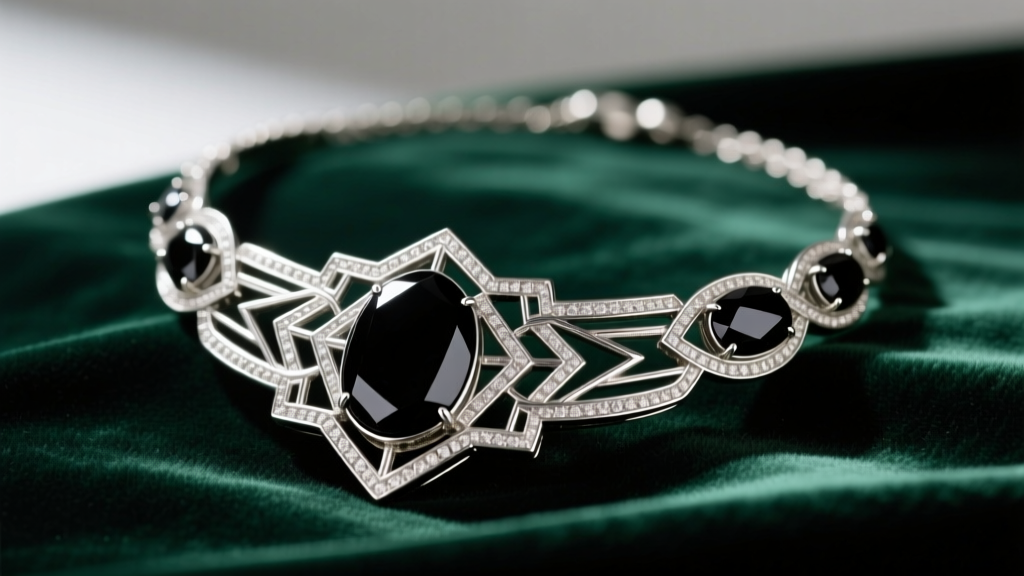
Art Deco jewelry is synonymous with the geometric brilliance of the Jazz Age. Vintage onyx necklaces from this period frequently feature calibre-cut onyx—stones custom-cut to fit seamlessly into intricate, stepped geometric patterns. Designers of the 1920s loved the stark contrast of black onyx against bright white metals. You will frequently find these pieces set in platinum, white gold, or silver, often accented with marcasite, seed pearls, or calibre-cut rubies. The craftsmanship is exceptionally precise, with milgrain detailing and hand-engraved filigree backing that is rarely seen in modern manufacturing.
Victorian Mourning Jewelry (1861–1901)
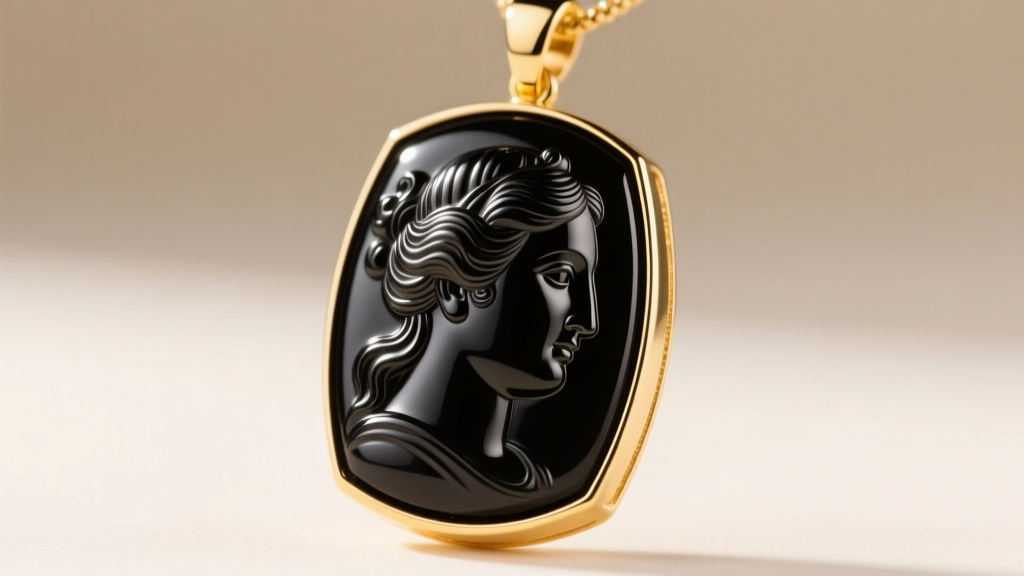
Predating the Art Deco movement, the Victorian era saw a massive surge in dark jewelry following the death of Prince Albert in 1861. Queen Victoria’s prolonged mourning dictated decades of fashion. While genuine onyx was used in high-end Victorian pieces, it was often carved into cameos or intaglios rather than faceted geometrically. According to the Victoria and Albert Museum, mourning jewelry was deeply symbolic, frequently incorporating woven hair compartments or black enamel borders. The metal settings were typically yellow gold, rose gold, or rolled gold plate, offering a warmer, more romantic contrast to the black stone compared to the icy platinum of the 1920s.
Material Forensics: Genuine Onyx vs. French Jet
The most critical skill for any collector is distinguishing genuine black onyx from its historical imposters. In the 19th and early 20th centuries, 'French Jet' (a highly polished black glass) and 'Vauxhall Glass' were widely used as affordable alternatives to onyx and jet. Furthermore, gutta-percha and vulcanite (early hardened rubbers) were molded into dark mourning pieces.
Gemologically, true black onyx is a variety of chalcedony. As noted by the Gemological Institute of America (GIA), naturally occurring solid black chalcedony is exceedingly rare. The vast majority of vintage black onyx was created through an ancient sugar treatment process: porous gray or white agate was soaked in a sugar solution and then heated in sulfuric acid, which carbonized the sugar and turned the stone a permanent, deep black. This treatment is stable, accepted in the gem trade, and does not diminish the stone's value.
The Thermal and Tactile Tests
- Temperature: Genuine onyx is a dense silicate mineral. When touched to the cheek or the inside of the wrist, it will feel distinctly cold and take longer to warm to body temperature than French Jet (glass) or vulcanite.
- Weight: Onyx has a specific gravity of roughly 2.60 to 2.65. A vintage onyx necklace will feel noticeably heavier and more substantial in the hand than a comparable piece made of molded gutta-percha or hollow glass.
- The Sound Test: Gently tap two beads or stones together. Genuine onyx produces a sharp, high-pitched 'clink', whereas glass produces a duller thud, and vulcanite or gutta-percha will sound almost entirely muted and soft.
2026 Market Pricing & Era Comparison
The market for vintage jewelry has matured significantly, with buyers prioritizing verified provenance and original condition over restored pieces. Below is a breakdown of what you can expect to pay in the current 2026 estate jewelry market.
| Era / Style | Defining Characteristics | Common Metals | 2026 Market Price Range |
|---|---|---|---|
| Victorian Mourning (Carved) | Cameos, intaglios, enamel borders, hair compartments | 9k-15k Yellow Gold, Rolled Gold | $400 – $1,800 |
| Art Deco Geometric | Calibre-cut, filigree, marcasite accents, stepped motifs | Sterling Silver, Platinum, White Gold | $350 – $2,500 |
| Retro (1940s) | Bold, chunky links, large cabochons, floral motifs | 14k Rose/Yellow Gold, Gold-Filled | $600 – $3,000 |
| Mid-Century Modern | Abstract shapes, mixed media, minimalist silver settings | Sterling Silver, Mixed Base Metals | $150 – $800 |
2026 Styling Frameworks: Beyond the Vintage Blouse
The historical weight of a vintage onyx necklace can sometimes trap it in overly formal or costumey styling. The key to wearing these pieces in 2026 is intentional juxtaposition—mixing the dark, historical gravity of the onyx with modern, relaxed, or unexpectedly bright garments.
The Modern Layering Matrix
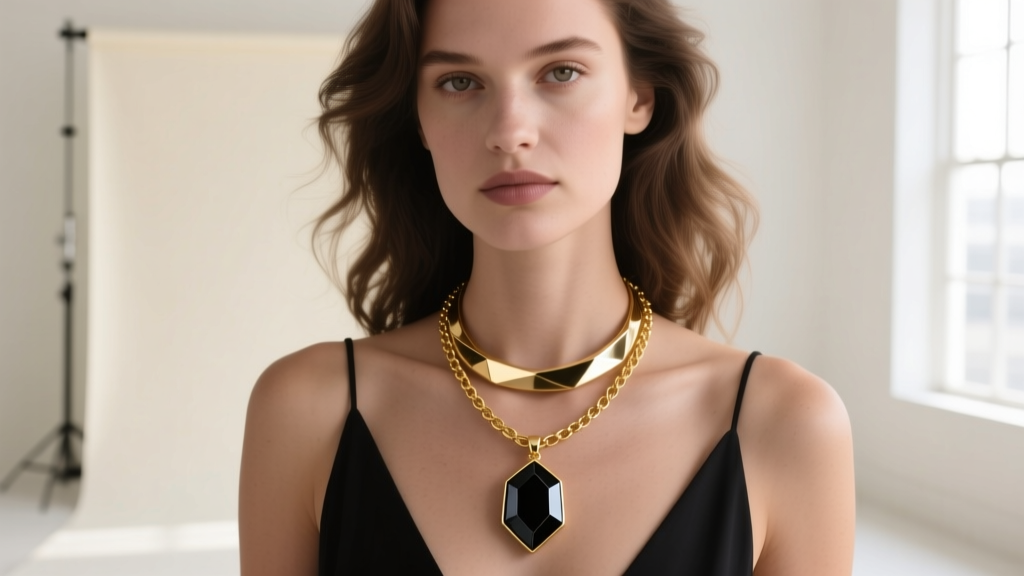
Layering is no longer about simply piling on chains; it is about creating a structured visual hierarchy. A vintage onyx necklace, particularly a 16-inch Art Deco filigree pendant or a 14-inch Victorian bead choker, serves as the perfect 'anchor' piece in a layered stack.
- The Anchor (14-16 inches): Your vintage onyx piece sits closest to the collarbone. Its dark color draws the eye inward and frames the face.
- The Bridge (18-20 inches): Introduce a modern, textural gold chain, such as a 14k yellow gold paperclip or rope chain. The bright yellow gold against the black onyx and white skin creates a striking, luxurious contrast that feels highly contemporary.
- The Terminator (22-24 inches): Finish with a simple, weighted gold coin pendant or a sleek, unadorned gold bar to elongate the torso and balance the visual weight of the dark onyx.
Neckline Pairings
Because black onyx absorbs light, it requires the right canvas to pop. Avoid high, ruffled collars which compete with the intricate metalwork of vintage settings. Instead, opt for deep sweetheart necklines, sharp square necks, or unbuttoned silk blouses that expose the sternum. The stark geometry of an Art Deco onyx pendant resting against bare skin or a crisp, white poplin shirt is a masterclass in 2026 minimalist styling.
Sourcing & Authentication Checklist
When purchasing a vintage onyx necklace from estate sales, auction houses, or online platforms like 1stDibs and specialized Etsy dealers, always scrutinize the findings. The clasp and jump rings often tell a more accurate story than the stones themselves.
Expert Authentication Tip: Examine the clasp mechanism. A simple 'C' clasp without a safety catch strongly indicates a pre-1920s origin. The 'trombone' clasp (a push-pull tube mechanism) is a hallmark of European Art Deco pieces from the 1920s and 30s. If you see a modern lobster clasp on a purportedly 19th-century piece, it has been repaired or altered, which can reduce its historical value by up to 30%.
Furthermore, check the backing of the onyx settings. High-quality Art Deco pieces will feature open-back settings or finely finished closed backs with hand-engraved patterns. If the backing is completely smooth, heavily soldered, or shows signs of modern laser welding, proceed with caution. Always request high-resolution macro photography of the clasp, the prongs, and the stone's girdle before committing to a high-ticket vintage purchase.
Final Thoughts
The vintage onyx necklace is far more than a relic of the past; it is a versatile, deeply historical artifact that brings an unmatched level of sophistication to modern jewelry wardrobes. By understanding the gemological realities of dyed chalcedony, mastering the visual cues of different historical eras, and applying contemporary layering techniques, you can transform a piece of history into a defining element of your 2026 personal style. Whether you are drawn to the stark, geometric lines of the 1920s or the romantic, carved cameos of the 1880s, onyx remains the ultimate statement in dark elegance.


