Fixing a Flipping Necklace Star: Troubleshooting Snags & Flips
Is your necklace star constantly flipping upside down or snagging on clothes? Discover expert troubleshooting tips to fix bail friction and sharp points.

The Celestial Dilemma: Why Your Star Pendant Misbehaves
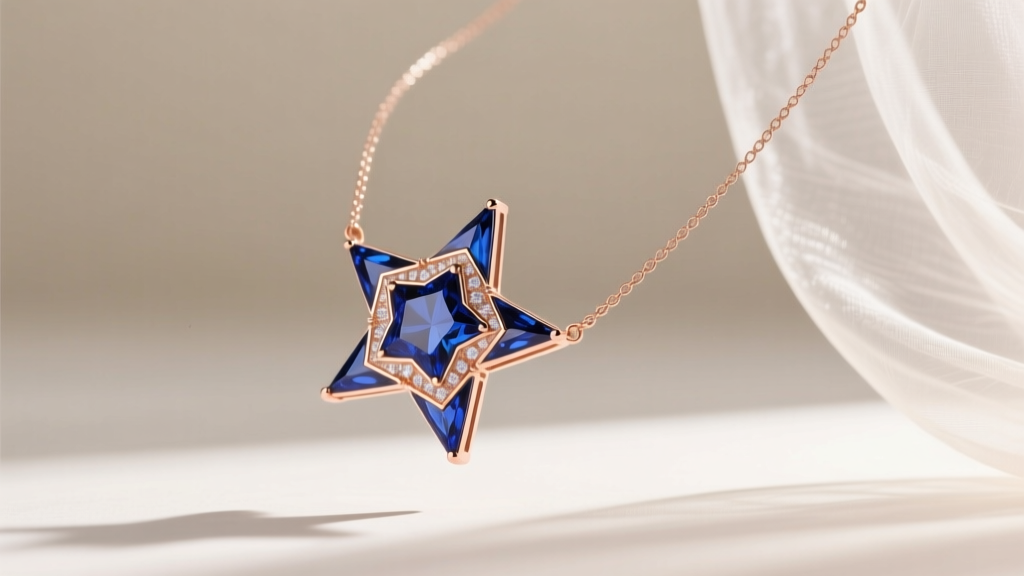
Celestial motifs have dominated jewelry trends well into 2026, but owning a necklace star comes with distinct mechanical frustrations that flat or circular pendants simply do not face. Whether you are wearing a delicate 14k gold shooting star or a solid sterling silver pentagram, the unique geometry of star-shaped jewelry creates specific physical vulnerabilities. The two most common complaints bench jewelers hear are the 'pendant flip'—where the star constantly rests upside down or sideways—and severe snagging on knitwear, silk, and hair.
These issues are rarely defects in the metal itself; rather, they are failures in physics, geometry, and chain pairing. By understanding the center of gravity, bail friction, and the acute angles inherent in star designs, you can troubleshoot and permanently fix your favorite celestial pieces. Below is a comprehensive, expert-level guide to diagnosing and resolving the most common necklace star problems.
The Physics of the Pendant Flip
The 'pendant flip' occurs when the rotational torque of your necklace chain overcomes the static hang of the pendant. A star shape, particularly an asymmetrical shooting star or a top-heavy five-point star, inherently shifts the center of mass away from the bail (the loop connecting the pendant to the chain).
When the center of mass is misaligned with the chain's drop point, gravity forces the pendant to rotate until equilibrium is reached. Unfortunately, this equilibrium is often upside down. Furthermore, if the bail is too tight against the chain, friction locks the pendant in whatever position it was last bumped into, preventing it from naturally righting itself.
Diagnosing Bail Friction
To test if bail friction is your culprit, lay the necklace flat on a table. Hold the chain on both sides of the pendant and gently pull taut. If the star pendant does not immediately swing freely and settle into its correct orientation, your jump ring or bail is too small for the chain's gauge. A standard 4mm round jump ring made from 20-gauge wire has an inner diameter of roughly 2.4mm. If you are using a 1.5mm box chain, the clearance is less than 1mm, creating a binding effect that traps the star in an inverted position.

Why Stars Snag: The Geometry Problem
Snagging is the bane of the necklace star. The acute angles of a star—often cutting down to 36 degrees at the outer points and 90 degrees at the inner vertices—act like micro-hooks against woven fabrics.
In modern CAD (Computer-Aided Design) jewelry manufacturing, stars are often designed with mathematically perfect, razor-sharp inner corners. While this looks crisp in a 3D render, it translates to a physical catch-point in the real world. When a star pendant is cast using the lost-wax method, the extreme tips can also suffer from minor casting porosity or microscopic roughness that isn't fully polished out during mass tumbling, exacerbating the snagging issue.
The Edge-Blunting Solution
You do not need to sacrifice the crisp silhouette of your star to stop it from ruining your cashmere sweaters. A skilled bench jeweler can perform a technique called 'edge blunting' or 'micro-radiusing.' Using a fine needle file or a cup bur, the jeweler will slightly radius the inner vertices from a harsh 90 degrees to a softer 105 degrees. To the naked eye, the star still looks perfectly sharp, but the microscopic hook is eliminated, allowing silk and knitwear to glide over the metal rather than catching on it.
Troubleshooting Matrix: Fixes for Star Necklaces
Use the table below to identify your specific necklace star issue and apply the corresponding structural fix. These modifications can be done at home with basic jewelry pliers or requested from a local jeweler for a minimal bench fee (typically $15 to $35).
| Problem Symptom | Root Cause | Expert Fix | Estimated Cost |
|---|---|---|---|
| Pendant flips upside down and stays there | Bail friction; chain is too thick for the jump ring | Upgrade to a 5mm or 6mm oval jump ring (22-gauge) to increase swing clearance | $10 - $20 |
| Shooting star hangs crooked or sideways | Asymmetrical weight distribution; center of mass is off-axis | Add a 1mm or 1.5mm gold/silver bead to the lowest point as a micro-counterweight | $25 - $45 |
| Outer points constantly catch on clothing | Acute outer tips and rough casting porosity | Hand-polish tips with a rouge cloth; request micro-radiusing from a jeweler | $15 - $30 |
| Pendant spins continuously while walking | Chain torque from high-twist chains (Snake, Omega, Herringbone) | Switch to a low-torque chain like a 1.0mm - 1.2mm Cable, Rope, or Box chain | Cost of new chain |
Metallurgy and Plating Wear on Star Points
Beyond mechanical flipping and snagging, the physical shape of a star accelerates metal wear. If you own a rhodium-plated sterling silver or white gold necklace star, you have likely noticed the tips turning yellow or black long before the rest of the pendant shows wear.
According to metallurgical standards referenced by the Gemological Institute of America (GIA), sharp edges and high points experience exponentially more contact friction than flat surfaces. A standard 0.5-micron flash plating will wear through in three to six months on the tips of a star pendant due to this localized friction. When having a star pendant replated, always request a 'heavy plating' of 1.0 to 2.0 microns. While it costs slightly more upfront, it extends the life of the rhodium finish on those vulnerable points by years, not months.

Chain Pairing: The Hidden Culprit of the Flip
The type of chain you pair with your necklace star dictates its rotational behavior. Chains that are manufactured with a natural twist or 'memory' will continuously transfer that rotational energy to the pendant.
- Snake Chains & Herringbone Chains: These lie flat against the skin but possess high rotational torque. As your body moves, the chain twists, forcing the star pendant to spin. Avoid these for top-heavy stars.
- Omega Chains: Rigid and unforgiving, Omega chains do not allow a bail to swing freely. The star will lock into whatever angle the rigid collar rests at.
- Cable & Box Chains (1.0mm - 1.5mm): These are the ideal pairings. Their symmetrical, low-torque links allow the pendant's bail to act as a true pendulum, naturally righting the star pendant via gravity.
Expert Maintenance Checklist for Celestial Jewelry
To keep your star pendants pristine and functioning correctly, integrate these specific care steps into your jewelry routine. The Jewelers of America recommends regular inspections for pieces with complex geometries to prevent long-term structural failures.
Pro Tip: Never sleep in a star pendant. The pressure of your body weight against the mattress will bend the delicate outer points of the star over time, permanently warping the symmetry and altering the center of gravity, which guarantees future flipping issues.
Monthly Inspection Routine
- Check the Jump Ring Seam: Star pendants exert uneven leverage on the jump ring when they snag. Inspect the seam of the jump ring monthly to ensure it hasn't been pulled open.
- Feel the Inner Vertices: Run your fingernail along the inner 'valleys' of the star. If you feel a burr or sharp catch, it is time for a professional polishing to prevent fabric damage.
- Inspect the Bail Loop: Ensure the bail loop hasn't thinned due to friction against the chain. A worn bail can snap unexpectedly, leading to the loss of the pendant.
By addressing the physics of the bail, softening the CAD-perfect angles, and pairing your pendant with a low-torque chain, your necklace star will finally lay flat, shine brightly, and stay exactly where it belongs.