How to Stop a Stud Necklace From Flipping and Tangling
Is your stud necklace constantly flipping or tangling? Learn expert troubleshooting tips to fix pendant flipping, chain twisting, and clasp migration.

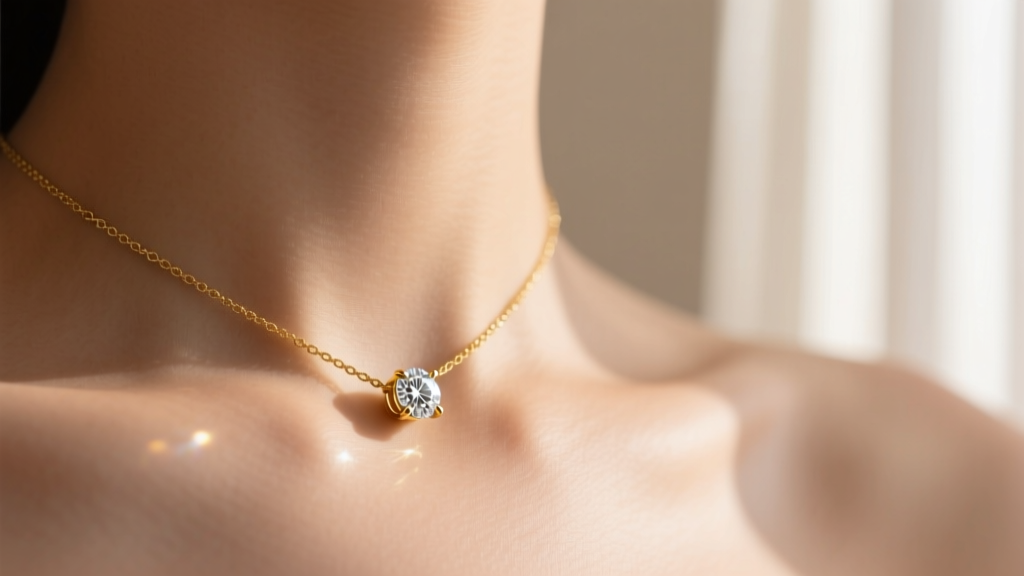
The stud necklace—often featuring a single, solitaire gemstone or a minimalist metal disc designed to sit flush against the décolletage like an ear stud—is a staple of modern jewelry. Yet, despite its elegant simplicity, it is notoriously prone to mechanical frustrations. If your pendant constantly flips upside down, your chain twists into microscopic knots, or the clasp migrates to the front of your neck, you are fighting physics, not bad luck. This guide provides expert-level troubleshooting to permanently resolve the most common structural failures of the stud necklace.
The Physics of Pendant Flipping (The "Turtle" Effect)
When a stud necklace flips upside down, exposing the flat back plate or the post mechanism, the issue is almost always a misaligned center of gravity. The pendant acts as a pendulum. If the bail (the loop connecting the pendant to the chain) is soldered too close to the pendant's center of mass, the piece lacks the rotational inertia required to stay upright. Furthermore, if the chain is too thick or rigid, it forces the bail into a horizontal position, pushing the top of the pendant forward and causing it to invert.
Troubleshooting the Flip: Bails and Weight Ratios
To stop the flipping, you must address the connection point and the chain-to-pendant weight ratio. According to jewelry manufacturing standards outlined by Rio Grande, a delicate chain must be able to drape fluidly through the bail without creating tension.
- Swap to a Floating Bail: If your stud pendant has a rigid, soldered V-bail, take it to a jeweler to be replaced with a floating jump ring or a hidden tubular bail. This allows the pendant to swing freely and self-correct when it shifts.
- The 1:3 Weight Rule: Your chain should weigh at least one-third of the pendant. If you have a heavy 4-gram diamond stud pendant on a flimsy 0.8mm cable chain, the chain will ride up the neck, pulling the bail out of alignment.
| Chain Type | Wire Gauge (mm) | Max Pendant Weight | Best For |
|---|---|---|---|
| Cable | 0.8 - 1.0mm | 1.5g | Lightweight bezel studs |
| Box | 1.0 - 1.2mm | 3.0g | Medium prong-set stones |
| Rope | 1.2 - 1.5mm | 5.0g+ | Heavy solitaire diamonds |
Solving Chain Twist and Clasp Migration
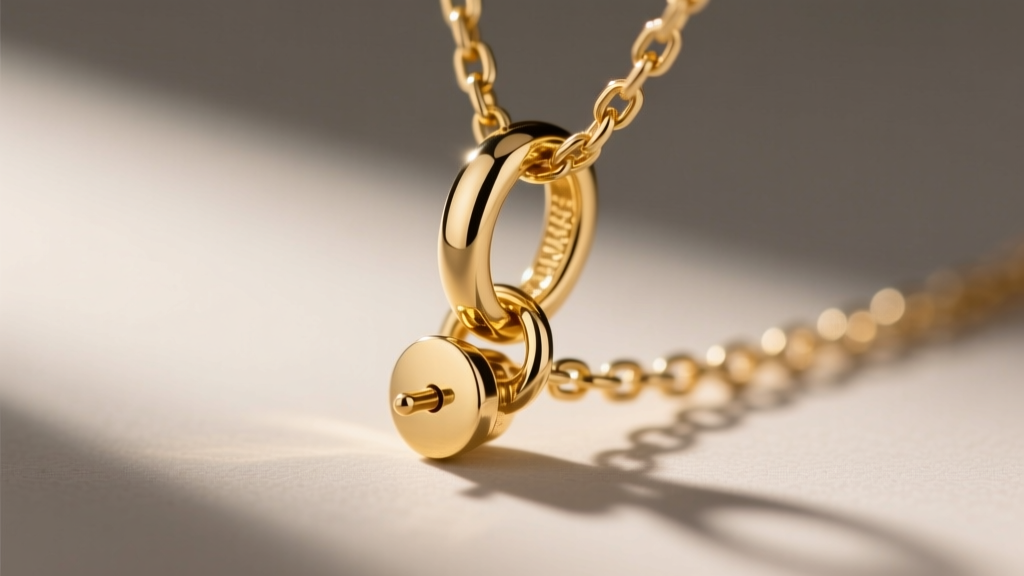
There is nothing more annoying than reaching for your necklace clasp only to find it has slid around to the front of your throat. Clasp migration occurs when the clasp is heavier than the chain itself, or when the chain weave lacks the friction to hold the clasp at the nape of the neck.
Why Snake and Box Chains Twist
Snake chains and micro-box chains are highly susceptible to torsional twisting. Because their links are tightly packed and smooth, they act like a coiled spring. When you move, the kinetic energy travels down the chain, causing it to kink. Once kinked, the chain shortens on one side, pulling the heavy lobster clasp forward.
Actionable Fixes for Migration
- The Silicone Stopper Hack: Purchase a 2mm silicone friction bead (often sold as earring backs or chain stoppers). Thread it onto the chain about one inch away from the clasp. This creates a high-friction anchor point that grips the skin and hair at the nape of the neck, preventing the clasp from sliding.
- Upgrade the Clasp: Swap a heavy brass-core lobster clasp for a lightweight 14k gold spring ring or a magnetic neodymium clasp, which distributes weight more evenly.
- Switch to a High-Friction Weave: If twisting is chronic, restring your stud pendant on a rope or wheat chain. The spiraled links create natural micro-friction against the skin, anchoring the necklace in place.
Material Failures: Contact Dermatitis and Solder Allergies
Many wearers assume they are allergic to gold or silver when their skin breaks out in a red, itchy rash directly beneath the stud pendant. In reality, the culprit is usually the solder used to attach the pendant's backing plate or bail. As noted by the Gemological Institute of America (GIA), jewelry solder often contains nickel, cadmium, or zinc to lower the melting point during manufacturing. Even if the pendant is stamped 14k or 18k, the solder joint can leach these allergens onto your sweaty décolletage.
How to Fix Solder Irritation
If your stud necklace causes contact dermatitis, do not throw it away. You have two professional options:
- Laser Welding: A master jeweler can use a laser welder to reattach the bail or backing plate. Laser welding fuses the exact karat gold of the piece without requiring nickel-bearing solder wires or corrosive fluxes.
- Titanium Backing Plate: For severe nickel allergies, a jeweler can fabricate a custom backing plate out of Grade 5 titanium (Ti-6Al-4V), which is entirely biocompatible and hypoallergenic, and rivet it to the back of the stud.
- The Temporary Fix: Coat the back of the pendant and the solder joints with a layer of clear, hypoallergenic nail polish or a specialized jewelry shielding lacquer. Reapply every 3 to 4 weeks.

Preventing Snags on Delicate Knitwear
A prong-set stud necklace is a magnet for cashmere, silk, and loose-knit sweaters. The microscopic burrs on the tips of the prongs act like tiny hooks. Over time, normal wear causes the prongs to lift slightly away from the gemstone's girdle.
Expert Troubleshooting Tip: Run a piece of sheer nylon pantyhose lightly over the face of your stud pendant. If the nylon snags, your prongs are lifting. Do not attempt to push them down with household pliers, as this can crack the gemstone's table. A jeweler will use a specialized prong pusher and a jeweler's file to smooth the tips into a flush, rounded profile.
If you frequently wear delicate fabrics, consider transitioning your stud necklace from a prong setting to a bezel setting. A bezel wraps a continuous ribbon of metal around the gemstone's edge, eliminating all snag points while actually increasing the security of the stone against impact.
Summary Checklist for a Perfect Drape
To ensure your stud necklace performs flawlessly, run through this quick diagnostic checklist before wearing:
- Verify the bail moves freely and is not choked by a thick chain link.
- Ensure the chain weight is proportional to the pendant (avoid heavy pendants on micro-chains).
- Check the back of the pendant for rough solder joints if you have sensitive skin.
- Use a silicone stopper bead near the clasp to prevent frontward migration.
By understanding the mechanical and metallurgical realities of your jewelry, you can transform a frustrating, constantly adjusting stud necklace into a seamless, elegant extension of your personal style.


