How to Fix a Flipping Ying Yang Necklace: Troubleshooting Guide
Is your ying yang necklace constantly flipping or tangling? Learn expert troubleshooting tips to fix pendant flipping, tarnishing, and chain issues.

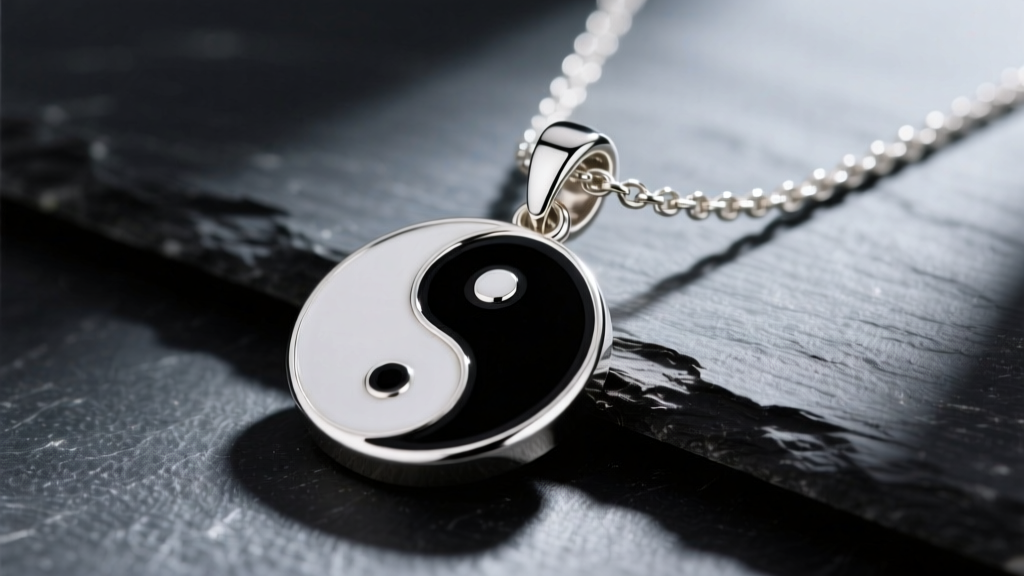
The Anatomy of a Ying Yang Necklace and Common Failure Points
The ying yang necklace remains one of the most iconic symbolic pendants in global jewelry, representing balance and harmony. However, from a structural engineering perspective, the very geometry that makes this design visually appealing also makes it a notorious troublemaker. The perfect circular silhouette, combined with the frequent use of mixed metals or interlocking components, creates unique mechanical and chemical vulnerabilities that standard pendants do not face.
As jewelry manufacturing techniques have evolved through 2026, we have seen a shift toward more complex, multi-material ying yang designs. While aesthetically stunning, these modern iterations often suffer from three primary failure points: radial flipping due to bail tolerance issues, mechanical binding in interlocking halves, and galvanic corrosion where contrasting metals meet. Below is a comprehensive, expert-level troubleshooting guide to diagnosing and resolving the most common issues plaguing your ying yang necklace.
Problem 1: The Pendant Keeps Flipping Upside Down
The most frequent complaint regarding any circular pendant is that it refuses to lay flat against the chest, constantly flipping to reveal the back of the bail. This is not a defect in the pendant itself, but rather a mismatch in the physics of the chain-to-bail ratio.
The Physics of Bail Tolerance
A standard ying yang pendant features a top-drilled hole or a soldered bail loop. If the inner diameter (ID) of this bail is 4.5mm, and you are wearing a delicate 1.2mm cable chain, there is 3.3mm of lateral play. Because the pendant is perfectly circular, its center of gravity is radial. When the thin chain slides to the far edge of the wide bail, the weight distribution shifts, acting as a pendulum that forces the pendant to rotate 180 degrees.
Actionable Fixes for Flipping
- The Silicone O-Ring Trick: Purchase a pack of micro silicone jewelry stabilizers (often sold as 1mm inner diameter O-rings). Slide one onto your chain and position it directly inside the bail loop. This reduces the lateral play and forces the chain to remain centered.
- Upgrade the Chain Profile: Swap the thin cable chain for a 3.0mm wheat chain or a 2.5mm box chain. The thicker, more rigid profile naturally fills the bail's ID, preventing the pendant from sliding off-center.
- Jeweler Intervention: Take the piece to a local bench jeweler and ask them to solder a smaller 2.0mm jump ring inside the existing 4.5mm bail. This is a permanent, low-cost fix (typically $15–$25) that permanently resolves the flipping issue.
Problem 2: Interlocking Halves Get Stuck or Separate
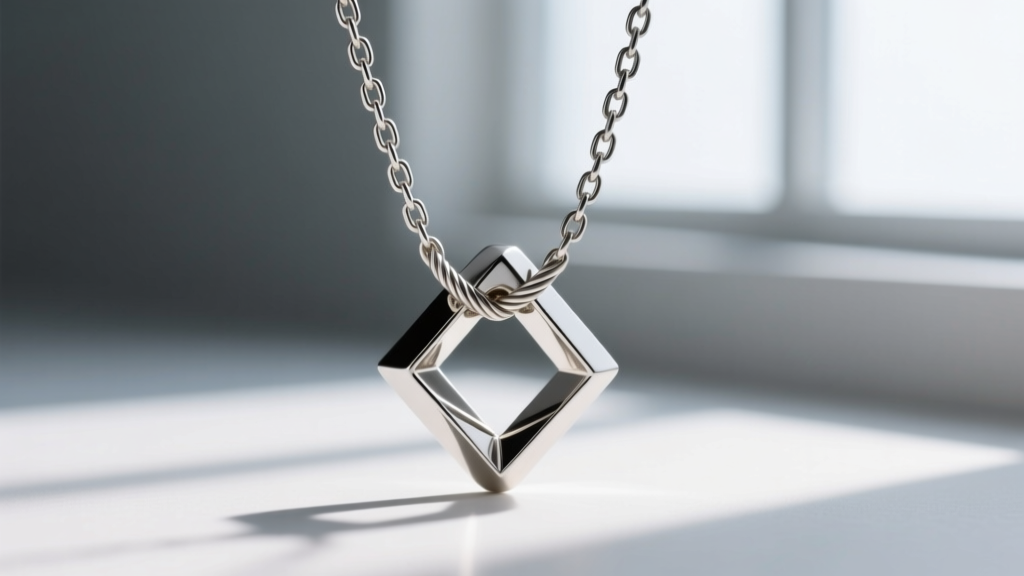
Many contemporary ying yang necklaces feature two distinct halves that interlock via mechanical friction grooves or hidden rare-earth micro-magnets. Over time, these precision-machined tolerances (often as tight as 0.2mm) become compromised by environmental debris.
Debris Accumulation and Cleaning Protocols
Dead skin cells, sebum, lotion, and fine dust pack into the seams of interlocking pendants. When this organic matter dries, it acts like a weak adhesive, causing the halves to stick or preventing them from snapping together flush.
The Fix: Do not use ultrasonic cleaners. The high-frequency cavitation can shatter cold enamel inlays or dislodge epoxy-set micro-pavé accents commonly found on the 'dots' of the ying yang symbol. Instead, use a soft-bristled baby toothbrush dipped in 99% isopropyl alcohol. Gently agitate the seams for 30 seconds. The alcohol will dissolve the sebum and evaporate instantly without leaving a moisture residue that could rust internal micro-magnets.
Magnet Degradation
If your interlocking necklace relies on magnets and they are losing their grip, the neodymium cores may have been exposed to high heat or physical impacts. Unfortunately, neodymium magnets cannot be 'recharged' once their magnetic domain alignment is disrupted. In this case, a jeweler can carefully drill out the old magnet and epoxy a replacement N52-grade micro-magnet into the cavity.
Problem 3: Galvanic Corrosion and Mixed-Metal Tarnishing
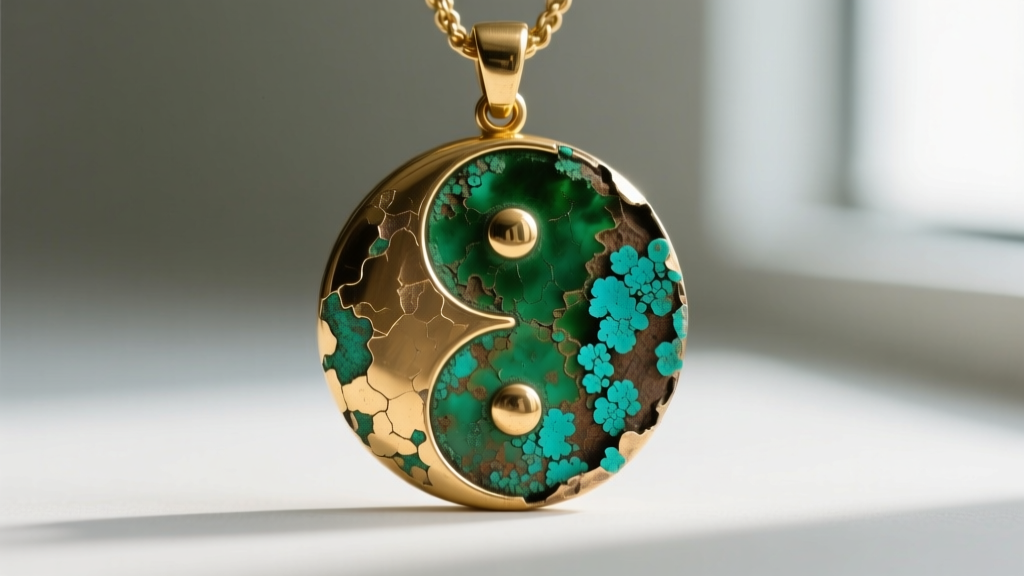
The ying yang symbol inherently requires two contrasting colors, which historically meant using two different metals. A highly common configuration is a sterling silver (925) 'white' half paired with a gold-plated brass 'dark' half. When these two dissimilar metals are exposed to an electrolyte—namely, human sweat—a galvanic cell is formed.
Understanding the Galvanic Series
In this electrochemical reaction, the less noble metal (brass) acts as the anode and corrodes rapidly, while the more noble metal (silver or gold) acts as the cathode. This results in the brass oxidizing and leaving a green copper carbonate residue on your skin, while the silver rapidly sulfides and turns black.
| Metal 1 (Yin Half) | Metal 2 (Yang Half) | Electrolyte Risk (Sweat) | Corrosion Outcome & Troubleshooting |
|---|---|---|---|
| Sterling Silver (925) | Gold-Plated Brass | High | Brass oxidizes, silver sulfides. Seal with micro-crystalline wax. |
| Surgical Steel (316L) | Black PVD Titanium | Low | Minimal risk. PVD coatings are highly inert and hypoallergenic. |
| Solid 14k Gold | Solid Sterling Silver | Medium | Silver tarnishes over time, gold remains unaffected. Requires routine polishing. |
| Zinc Alloy (Base) | Copper Alloy (Base) | Extreme | Rapid degradation and skin staining. Best avoided for daily wear. |
To halt galvanic corrosion on an existing mixed-metal ying yang necklace, apply a thin layer of micro-crystalline wax (such as Renaissance Wax) to the back of the pendant. This creates an invisible, breathable barrier that prevents skin oils and sweat from bridging the two metals, effectively stopping the electrochemical reaction.
Problem 4: Chain Tangling and the Pendulum Effect
Circular pendants are heavy relative to their surface area, creating a concentrated point of weight on the chain. This causes the chain to bunch up behind the neck and knot itself, a phenomenon jewelers refer to as the 'pendulum effect'.
Resolving Chain Knotting
If your ying yang necklace is constantly tangling, the issue is likely the clasp and the chain's flexibility. A standard spring-ring clasp is lightweight and easily slips through the links of a loose chain. Jewelers of America recommends upgrading to a lobster claw clasp, which adds just enough counterweight to the back of the neck to keep the chain anchored. Additionally, switching to a chain with a rigid interlocking pattern, such as a Singapore chain or a Foxtail chain, drastically reduces the ability of the links to fold in on themselves and form knots.
When to Seek Professional Jeweler Intervention
While many troubleshooting steps can be performed at home, certain structural failures require professional equipment. If the soldered bail on your ying yang necklace has cracked, or if the jump ring connecting the pendant to the chain has pulled open, do not attempt to bend it back into place with pliers. Repeated bending of work-hardened metals like sterling silver or 14k gold will cause microscopic fissures, leading to a complete snap.
A professional bench jeweler will use a laser welder to fuse the cracked bail without applying ambient heat to the rest of the pendant. This is crucial for ying yang necklaces featuring heat-sensitive materials like black onyx inlays, cold enamel, or resin, which would melt or fracture under the flame of a traditional jeweler's torch.
By understanding the mechanical tolerances and chemical interactions inherent in the design of a ying yang necklace, you can transition from constant frustration to effortless wear. Whether you are stabilizing a flipping bail with a silicone O-ring or halting galvanic corrosion with a micro-crystalline sealant, these targeted interventions will ensure your jewelry remains as balanced in function as it is in symbolism.


