Gold Ball and Chain Necklace Repair and Troubleshooting
Learn how to fix, untangle, and repair a gold ball and chain necklace. Expert troubleshooting for clasps, knots, and broken wire links.

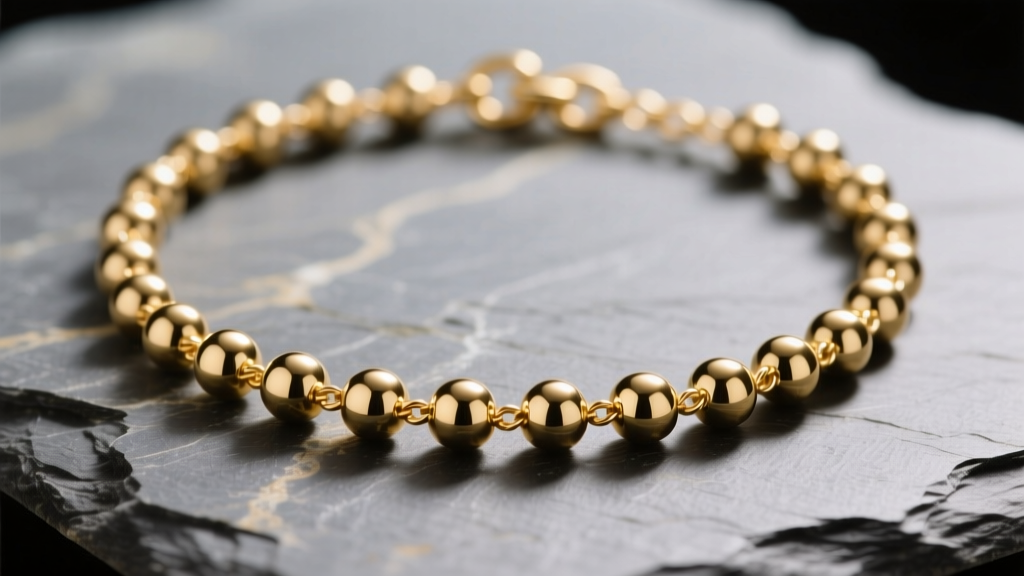
Understanding the Anatomy of a Ball Chain
A gold ball and chain necklace, technically referred to in the jewelry industry as a bead chain, is a marvel of minimalist engineering. Unlike traditional cable or curb chains that rely on interlocking oval links, a ball chain consists of small spherical beads—ranging from 1.2mm to 4.5mm in diameter—connected by microscopic lengths of wire. While visually striking and highly flexible, this unique architecture introduces specific structural vulnerabilities. The connecting wire is exceptionally thin, typically measuring between 0.3mm and 0.5mm (roughly 26 to 28 gauge). Furthermore, the metallurgical properties of the gold alloy heavily dictate the chain's durability. According to the Gemological Institute of America (GIA), 14k gold alloys possess a higher Vickers hardness (approximately 130-150 HV) due to their copper and zinc content, making them more resistant to tensile stretching. Conversely, an 18k gold ball and chain necklace, being softer (110-130 HV), is significantly more prone to wire deformation when subjected to sudden pulling or snagging.
Problem 1: Severe Tangling and Knotting
Ball chains tangle differently—and often more severely—than standard link chains. The spherical beads act as multi-directional anchors. When a thin wire loop passes over a bead, the bead's volume prevents the loop from easily sliding back through, creating a self-tightening slip knot effect. Pulling on a tangled ball chain will only cinch the microscopic wire tighter around the sphere, eventually leading to wire fatigue and breakage.
The Powder and Pin Technique
To safely untangle a gold ball and chain necklace without stressing the delicate wire links, you must eliminate friction. Never use oil or lotion, as these will trap dirt in the crevices and dull the gold's finish. Instead, lay the necklace flat on a hard, non-porous surface like a glass or ceramic tray. Generously dust the knot with talc-free cosmetic powder or cornstarch. Using two fine sewing needles or beading awls, gently tease the center of the knot outward. The powder acts as a dry lubricant, allowing the gold spheres to slide past one another without the wire binding. Once the knot is loosened, use a soft-bristled brush to remove the powder residue.

Problem 2: Clasp Slippage and Failure
The most common point of failure on a ball chain is the clasp. Manufacturers typically pair these necklaces with a 'tube clasp' or 'snap clasp.' This mechanism relies on a tiny, folded internal metal tab that acts as a leaf spring, snapping into a hollow groove on the opposing insert. Over time, repeated opening and closing, combined with the natural oils from your skin, can cause this internal tab to flatten or the outer tube to expand slightly, resulting in a clasp that refuses to stay shut.
Troubleshooting the Tube Clasp
If your clasp is slipping, do not attempt to bend the internal tab with a metal tool, as you risk snapping the microscopic spring. Instead, use nylon-jaw pliers to gently compress the outer tube of the clasp. Apply even, minimal pressure to reduce the tube's diameter by a fraction of a millimeter. This restores the friction fit required for the snap mechanism to engage. If the internal spring is entirely broken, the clasp must be replaced.
Upgrading to a Lobster Claw
For a more secure, long-term solution, many jewelers recommend cutting off the failing tube clasp and upgrading to a solid 5mm or 6mm lobster claw clasp. This requires soldering a 2mm jump ring to the terminal bead's end cap. Ensure the jump ring is fully soldered closed; an open jump ring will easily slip through the gap between the gold balls, resulting in the loss of the necklace.
Troubleshooting Matrix: Symptoms and Solutions
| Symptom | Root Cause | DIY Solution | Professional Fix |
|---|---|---|---|
| Clasp won't snap shut | Bent tube or worn internal spring tab | Gently squeeze outer tube with nylon-jaw pliers | Solder on a new 5mm lobster claw clasp |
| Chain keeps tangling | Static friction and spherical anchoring | Apply talc-free powder and use twin needles | Professional ultrasonic cleaning to remove sticky residues |
| Visible wire stretching | Tensile overload on soft 18k or 22k gold | None; stop wearing immediately to prevent snapping | Chain replacement or laser reinforcement |
| Ball detached from chain | Wire fatigue or accidental pulling | None (never use cyanoacrylate superglue) | Precision laser welding |
Problem 3: Snapped Wires and Detached Balls
If a gold ball and chain necklace is snagged on clothing or pulled, the connecting wire will stretch and eventually snap. A common and disastrous mistake made by consumers is attempting to reattach a loose ball using cyanoacrylate (Super Glue). Superglue will permanently cloud the polished surface of the gold, create a brittle bond that fails under sheer stress, and make it nearly impossible for a professional jeweler to clean the area later without using harsh chemical solvents that may damage the alloy.
Why Traditional Torch Soldering Fails
You cannot repair a ball chain with a traditional jeweler's torch. The gold spheres, especially those larger than 2.5mm, are often hollow to reduce the overall weight and cost of the piece. Applying the broad, intense heat of a butane or oxy-acetylene torch will instantly warp the hollow beads, melt the microscopic connecting wire, and destroy the structural integrity of the surrounding links. Even if the beads are solid gold, the heat sink effect of the sphere will draw the solder away from the tiny wire joint, resulting in a failed repair.
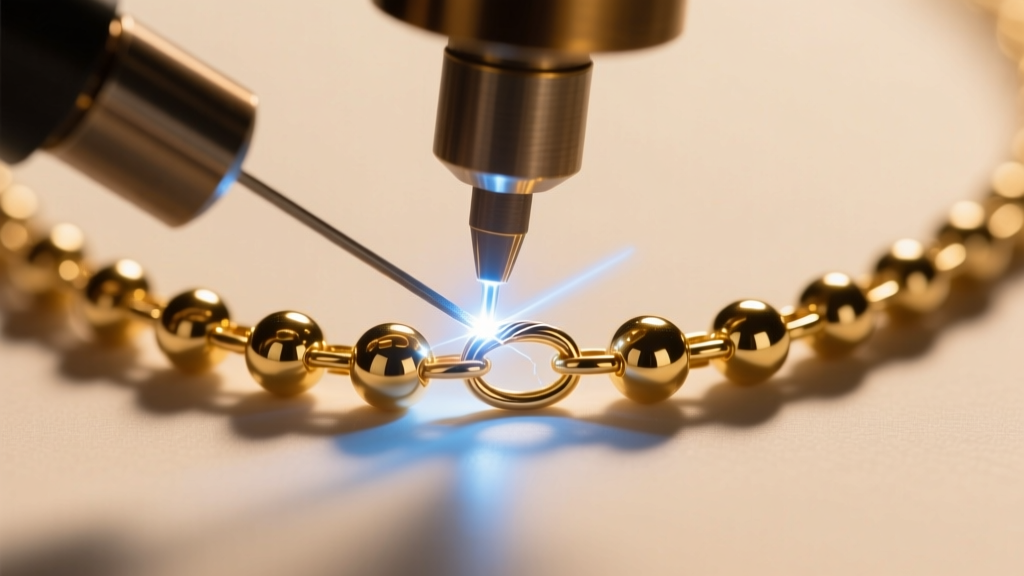
Laser Welding: The Professional Standard
The only viable method for repairing a broken gold ball and chain necklace is pulse-arc or laser welding. A laser welder concentrates a microscopic beam of high-intensity light onto a pinpoint area, melting the metal in milliseconds without transferring heat to the adjacent hollow beads. A skilled jeweler will use a 0.10mm or 0.15mm 14k gold laser wire to fuse the broken link back to the bead's equator. According to guidelines from Jewelers of America, seeking out a bench jeweler equipped with laser welding technology is essential for repairing delicate, heat-sensitive chains and hollow-form jewelry.
Preventative Maintenance for Longevity
Because of their inherent structural delicacy, ball chains require specific care routines to maximize their lifespan. Always remove your gold ball and chain necklace before sleeping, as the friction against cotton sheets and the tossing motion can easily wrap the chain around itself, creating severe knots. When storing the piece, never toss it loosely into a jewelry box where it can intertwine with heavier, abrasive items like gemstone pendants or thick curb chains. Instead, store it flat in an individual anti-tarnish polyethylene pouch. Finally, avoid exposing the chain to harsh chlorine in swimming pools or hot tubs; chlorine reacts aggressively with the copper and silver alloys in 14k and 18k gold, leading to microscopic stress corrosion cracking in the already-thin connecting wires.


