Mindful Breathing Necklace Troubleshooting: Fix Airflow & Fit Issues
Struggling with your mindful breathing necklace? Learn how to fix airflow resistance, clean blocked tubes, and choose hypoallergenic materials.

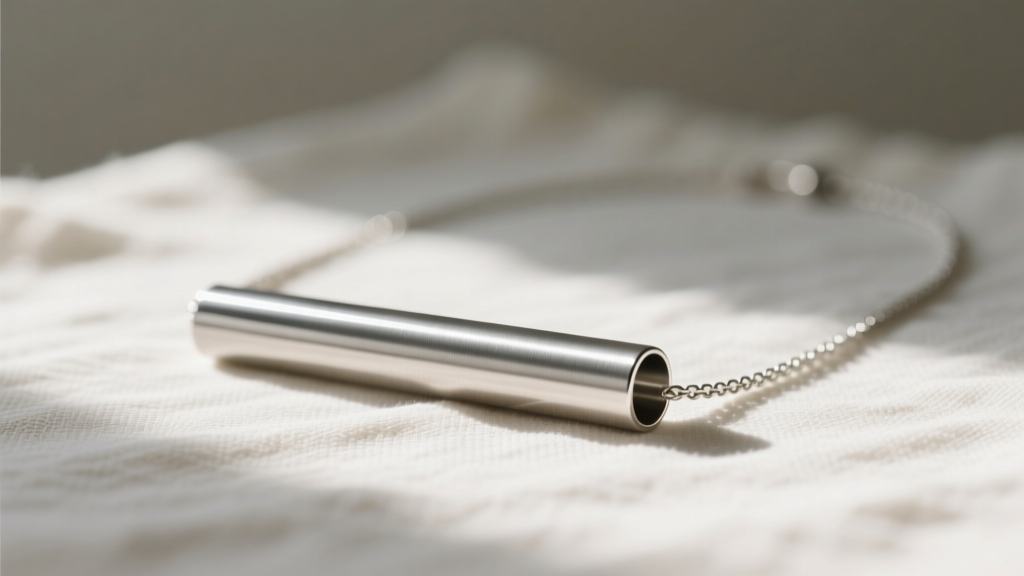
A mindful breathing necklace is more than a minimalist fashion statement; it is a somatic regulation tool designed to extend your exhalation, stimulate the vagus nerve, and shift your nervous system from sympathetic (fight-or-flight) to parasympathetic (rest-and-digest) dominance. However, when the physical mechanics of the jewelry fail, the psychological benefits vanish. If your breathing tube feels restrictive, causes skin irritation, or harbors unpleasant odors, you are not experiencing user error—you are dealing with a hardware problem. This guide provides expert-level troubleshooting to optimize your mindful breathing necklace for daily anxiety relief and meditation.
The Core Mechanic: Why Airflow Resistance Matters
The primary function of a breathing tube pendant is to create back-pressure during exhalation. By forcing the breath through a narrow cylinder, you naturally slow your exhale rate. According to the Mayo Clinic, prolonged exhalation is critical for activating the parasympathetic nervous system and lowering heart rate. If your necklace is failing to provide this resistance, or if it is providing too much, the somatic feedback loop is broken. The issue almost always traces back to the inner diameter (ID) and the total length of the tube.
Troubleshooting Airflow: Too Restrictive or Too Loose?
Many users abandon their breathing necklaces because they feel lightheaded or feel like they are suffocating. This is a dimensional mismatch between the jewelry and the user's lung capacity. Standard commercial breathing necklaces typically feature an inner diameter of 3.0mm to 4.0mm and a length of 60mm.
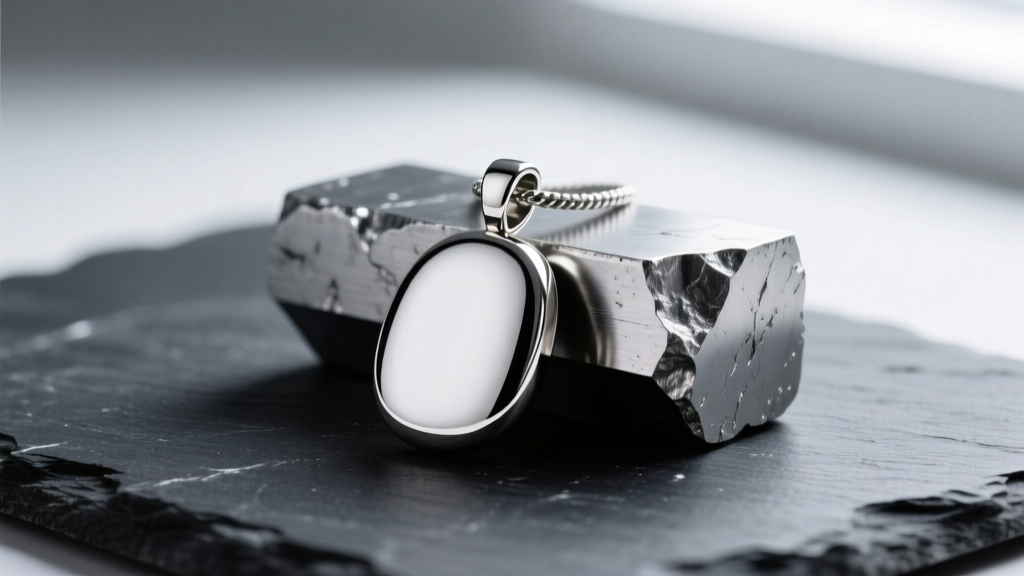
The Airflow Dimension Matrix
Use the table below to diagnose your airflow issue and determine if you need to swap your pendant for a different specification.
| Inner Diameter | Tube Length | Target Exhale | Best Use Case |
|---|---|---|---|
| 2.5mm - 3.0mm | 60mm - 75mm | 8 - 12 seconds | Deep anxiety, panic attack mitigation |
| 3.5mm - 4.0mm | 50mm - 60mm | 5 - 8 seconds | Daily mindfulness, smoking cessation |
| 4.5mm - 5.5mm | 40mm - 50mm | 3 - 5 seconds | Beginners, users with asthma or COPD |
Solution for Lightheadedness: If you are using a 3.0mm ID tube and feel dizzy, your exhale is being restricted too severely, causing a temporary drop in CO2 tolerance. Switch to a wider 4.5mm ID tube or a shorter 40mm length to reduce the back-pressure.
Solution for Lack of Focus: If you are easily breathing out in 3 seconds and your mind is wandering, your tube is too wide. Upgrade to a longer, narrower tube (e.g., 70mm length, 2.5mm ID) to force a slower, more deliberate 10-second exhale.
Material Sensitivities: Solving Contact Dermatitis
Because a mindful breathing necklace rests against the sternum and frequently comes into contact with your lips and saliva, material biocompatibility is non-negotiable. If you are experiencing redness, itching, or a metallic taste, you are likely reacting to nickel or copper alloys.
Decoding the Metallurgy
- 316L Surgical Stainless Steel: The industry standard for affordable breathing tubes. While highly corrosion-resistant, 316L contains 8-10% nickel. Prolonged exposure to sweat and saliva can cause nickel leaching, triggering contact dermatitis in sensitive individuals (as noted by the National Center for Biotechnology Information).
- ASTM F136 Titanium (Grade 5): The ultimate upgrade for sensitive skin. Implant-grade titanium contains zero nickel, is 45% lighter than steel, and will never react with saliva or stomach acid if accidentally swallowed. It is the only recommended material for users with severe metal allergies.
- 925 Sterling Silver: While beautiful, silver tarnishes rapidly when exposed to the sulfur compounds in human saliva. If you use a silver breathing tube, you must polish it weekly to prevent ingesting silver sulfide.
The Fix: If you suspect a nickel allergy, immediately stop using 316L steel. Apply a hydrocortisone cream to the affected chest area and invest in an ASTM F136 titanium pendant. Do not attempt to coat your current steel pendant in clear nail polish, as the friction of the chain and the acidity of saliva will strip the coating within days.
The Biofilm Problem: Deep Cleaning Protocols
The most common reason users throw away their breathing necklaces is the buildup of a foul-smelling biofilm inside the tube. Saliva, dead skin cells, and environmental dust combine to create a bacterial layer that restricts airflow and smells like sulfur.
Step-by-Step Ultrasonic and Manual Cleaning
Do not use bleach or harsh chlorine cleaners on your breathing tube. Chlorine destroys the passivation layer of stainless steel, leading to rapid pitting and rust. Instead, follow this professional cleaning protocol:
- The Mechanical Sweep: Use a 0.8mm stainless steel pipe cleaner or a specialized jewelry threading wire. Dip it in isopropyl alcohol (90% or higher) and push it through the tube 3-4 times to physically dislodge the biofilm matrix.
- The Ultrasonic Bath: Place the pendant in an ultrasonic jewelry cleaner filled with warm water and a few drops of enzymatic dish soap. Run a 3-minute cycle at 40kHz. The cavitation bubbles will blast microscopic debris from the inner walls that the wire cannot reach.
- The Drying Phase: Moisture left inside the tube breeds bacteria. Use compressed air (like a camera lens duster) to blow out the remaining water, then let it sit on a microfiber cloth in direct sunlight for 10 minutes. UV light provides a final layer of sterilization.
Chain Mechanics and Pendant Weight Distribution
A breathing necklace must hang perfectly at the sternum to be accessible during moments of acute anxiety. If the chain constantly tangles in your hair or the pendant flips upside down, the hardware configuration is flawed.
Upgrading Your Suspension System
- Box Chains: Visually appealing but notorious for catching on body hair and snagging on knitwear. Avoid them for daily wear.
- Wheat Chains (Spiga): The superior metal choice. The woven, directional links lay flat against the skin, resist kinking, and allow the heavy cylindrical pendant to slide freely without catching.
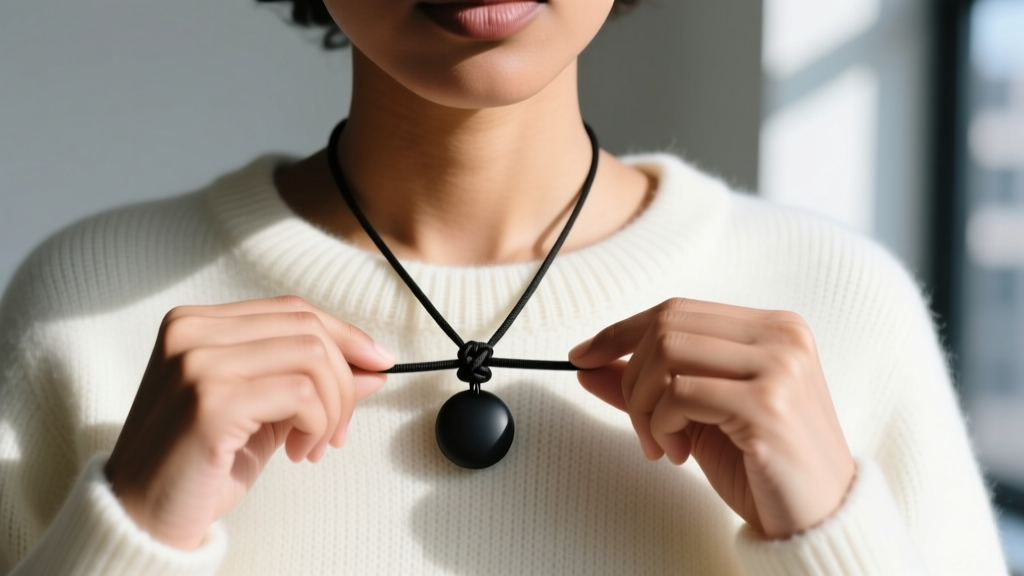
- Adjustable Cotton/Waxed Cords: For users who want precise length control. A 2mm waxed cotton cord with a silicone slider bead allows you to adjust the pendant from collarbone length (for discreet use in public) to chest length (for deep meditation sessions) in seconds.
Weight Distribution Fix: If your pendant keeps flipping upside down, the bail (the loop connecting the tube to the chain) is too loose. Use a pair of nylon-jaw jewelry pliers to gently squeeze the bail ring closed, ensuring a snug fit against the chain. This forces the pendant to hang vertically at all times.
When to Retire Your Breathing Tube
Even high-quality metals have a functional lifespan when used as an oral-adjacent tool. Inspect the inner rim of your tube under a bright LED light. If you see deep scratches, pitting, or a dull, grayish film that ultrasonic cleaning cannot remove, the metal's surface has degraded. Deep scratches harbor anaerobic bacteria that no amount of cleaning will reach. As a general rule, replace a daily-use 316L stainless steel tube every 12 to 18 months, and a titanium tube every 3 to 5 years. By maintaining the physical integrity of your mindful breathing necklace, you ensure that your somatic regulation tool remains a reliable anchor for your mental health.


