Beginner's Guide to the FF Necklace: Styling the FF Monogram
Discover everything about the FF necklace. Learn how to style, layer, and authenticate the iconic FF monogram pendant for any occasion in 2026.

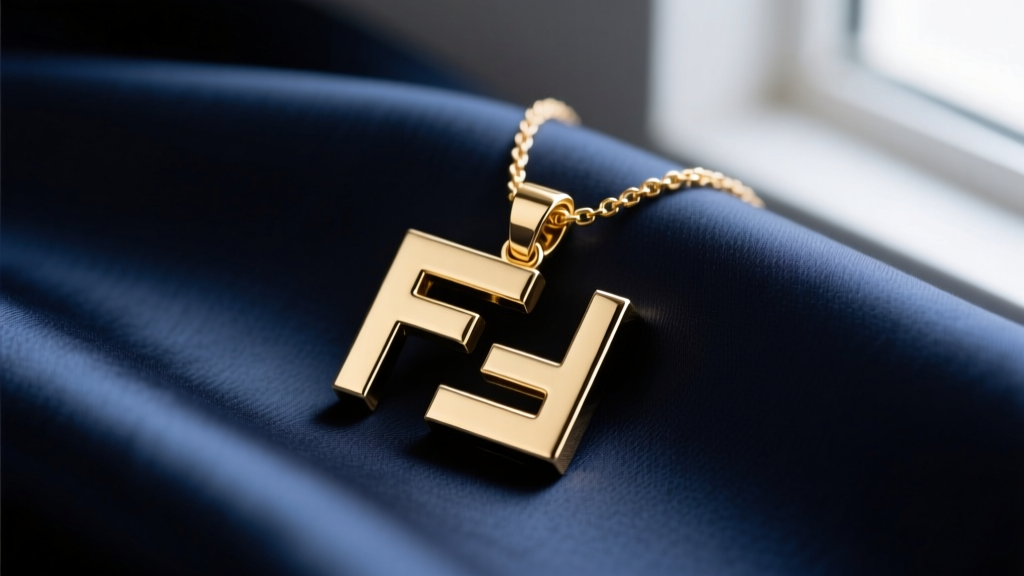
What Exactly is an FF Necklace?
In the landscape of luxury and vintage-inspired fashion jewelry, few motifs carry the immediate recognition and historical weight of the interlocking FF logo. When collectors and stylists refer to an FF necklace, they are typically referencing a pendant or chain featuring the iconic Zucca monogram originally designed for Fendi. As we navigate the 2026 vintage revival and the ongoing dominance of logomania, understanding the heritage, hardware, and styling nuances of the FF necklace is essential for both new collectors and seasoned jewelry enthusiasts.
The FF logo was born in 1965 when Karl Lagerfeld, who had just begun his legendary tenure at Fendi, sketched the interlocking letters to stand for "Fun Furs." According to Fendi's official heritage archives, the motif quickly transcended fur linings and canvas bags, eventually making its way into the brand's fine and fashion jewelry lines. Today, an FF necklace is not merely a brand identifier; it is a piece of wearable mid-century fashion history that bridges the gap between vintage archival finds and modern luxury staples.
Material Breakdown: Hardware, Chains, and Gauges
One of the most common mistakes beginners make when shopping for an FF necklace is assuming all pieces are crafted from the same materials. The metal composition varies wildly depending on the decade of production and the specific jewelry tier (fashion vs. fine).
Vintage Fashion Jewelry (1980s–1990s)
The most highly sought-after vintage FF necklaces from the late 80s and 90s are typically crafted from heavy brass bases with thick 18k or 24k gold plating (often referred to as gold wash). These pieces are substantial, with pendants usually weighing between 10 and 14 grams. The chains on these vintage pieces are equally robust, frequently utilizing 3.0mm to 4.0mm curb or cable chains designed to support the heavy pendant without warping. The hardware usually features a durable lobster clasp or a heavy-duty spring ring, stamped with the classic Fendi serif logo.
Modern Fine and Demi-Fine Jewelry (2020s–2026)
Contemporary FF necklaces have bifurcated into two distinct categories. The demi-fine fashion lines often utilize sterling silver bases with thick gold vermeil or enamel inlays, featuring much more delicate 1.2mm to 1.5mm cable chains. Conversely, Fendi's high jewelry and fine jewelry divisions now produce FF pendants in solid 18k yellow, white, or rose gold, frequently accented with pavé diamonds. These solid gold pieces will bear the "750" purity hallmark alongside the maker's mark, a crucial detail for authentication.
The Art of Layering: Styling Your FF Pendant
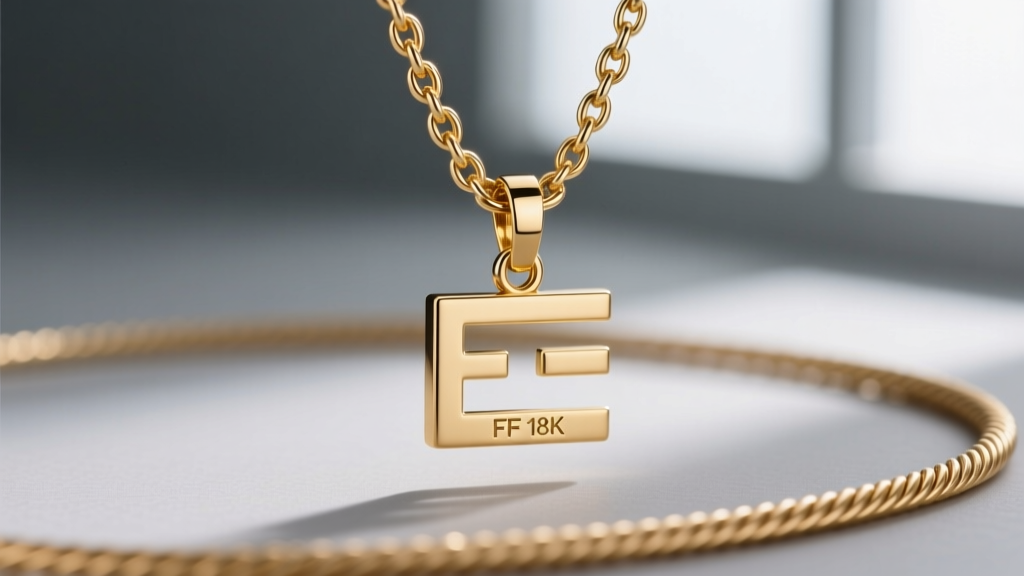
The interlocking geometry of the FF monogram makes it an exceptional anchor piece for layered necklace stacks. However, because the logo is visually complex, it requires strategic pairing to avoid looking cluttered. Here is a structural framework for layering your FF necklace in 2026:
- The 16-Inch Anchor: Wear your FF pendant on a 16-inch chain so it rests just below the collarbone. This acts as the visual focal point of your stack.
- The 18-Inch Minimalist Bridge: Add an 18-inch plain chain (such as a 1.5mm snake chain or a simple bead chain) without any additional pendants. This provides negative space and frames the FF logo.
- The 22-Inch Lariat or Chain: Finish the stack with a 22-inch or 24-inch chain. If you choose a pendant for this lowest layer, ensure it is an abstract geometric shape or a simple pearl, avoiding other recognizable logos or letters that will compete with the FF motif.
- Metal Mixing Rules: While mixing metals is highly encouraged in current styling, try to keep the FF pendant itself as the dominant metal tone. If your FF necklace is yellow gold, use white gold or silver for the supporting chains to make the monogram pop.
Authentication Guide: Spotting a Fake FF Necklace
Because of the high resale value of vintage Fendi jewelry, the secondary market is unfortunately saturated with counterfeit FF necklaces. Authenticating these pieces requires a jeweler's loupe (10x magnification) and an understanding of Italian hallmarking laws. As outlined in the comprehensive Lang Antiques guide to jewelry hallmarks, Italian jewelry post-1968 must adhere to strict stamping regulations regarding metal purity and maker identification.
Below is a critical comparison chart to help you evaluate a potential purchase:
| Feature | Authentic FF Necklace | Counterfeit FF Necklace |
|---|---|---|
| Hallmarks & Stamping | Deep, crisp laser engraving or stamped plaque reading "FENDI", "MADE IN ITALY", and metal purity (e.g., 750 or 925). Font is perfectly aligned. | Shallow, poorly aligned stamping. Often missing "MADE IN ITALY" or featuring incorrect, modern sans-serif fonts on vintage-style pieces. |
| Weight & Density | Heavy brass base (vintage) or dense solid gold (modern). Typical pendant weight ranges from 8 to 14 grams. Feels substantial and cold to the touch. | Lightweight, hollow-feeling pot metal or cheap alloy. Pendant weight is often under 4 grams. Feels unnaturally light and warms up quickly. |
| Enamel Quality | If the piece features black or colored enamel, the finish is completely flush with the metal borders, resembling glass with no bleeding. | Uneven enamel surface, visible bubbles, or black paint spilling over the metal edges. Often feels raised above the metal borders. |
| Chain Hardware | Custom clasps featuring the Fendi logo or high-quality standard clasps with clean solder joints on the jump rings. | Flimsy, generic spring ring clasps with visible gaps in the solder joints. Jump rings are often thin and easily pulled apart. |
2026 Market Pricing: What Should You Pay?
Understanding the current market value of an FF necklace will protect you from overpaying on resale platforms or underestimating the value of an estate find. Prices fluctuate based on condition, rarity, and material composition.
- Vintage Gold-Plated Brass (1980s–1990s): Excellent condition pieces typically range from $150 to $400 on curated vintage platforms. Pieces with original tags or rare enamel colorways (like deep burgundy or emerald) can push closer to $600.
- Modern Demi-Fine / Vermeil (2020s): Retail prices for contemporary gold-plated sterling silver FF pendants generally sit between $450 and $900, depending on whether they feature mother-of-pearl or onyx inlays.
- Modern Fine Jewelry (Solid 18k Gold & Diamonds): Entry-level solid gold FF pendants start around $2,500, while fully pavé diamond iterations or large-scale statement pieces can easily exceed $12,000 at boutique retail.
Care and Maintenance for Longevity
To preserve the gold wash on vintage FF necklaces or the brilliance of modern solid gold pieces, proper maintenance is non-negotiable. Never use ultrasonic cleaners on vintage gold-plated brass or any FF necklace featuring enamel inlays, as the high-frequency vibrations can shatter the enamel or strip the gold plating entirely. Instead, use a soft, untreated microfiber cloth to gently buff the metal after each wear to remove skin oils and perfumes. For deep cleaning solid gold pieces, a mild solution of warm water and phosphate-free dish soap applied with a baby-soft toothbrush is the safest method to restore the monogram's original luster without compromising the metal's integrity.
Whether you are hunting for a rare 1990s archival piece or investing in a modern diamond-encrusted pendant, the FF necklace remains a masterclass in logo design and luxury jewelry styling. By paying close attention to gauge sizes, hallmarks, and layering proportions, you can confidently wear and collect this iconic monogram for decades to come.


