Fixing a Kohl's Cross Necklace: Tarnish, Tangles & Clasp Issues
Is your favorite Kohl's cross necklace tarnished, tangled, or stuck? Learn expert troubleshooting for clasps, green skin, and loose stones.

A meaningful gift or a personal staple, the classic Kohl's cross necklace remains one of the most popular jewelry purchases in the mid-tier department store market. Whether you opted for a sterling silver piece from the SONOMA Goods for Life collection, a gold-plated brass pendant from Apt. 9, or a pavé cubic zirconia design from Jewelry We Love, these necklaces offer incredible aesthetic value. However, as of 2026, mass-market fashion and bridge jewelry still face the same metallurgical realities as they did a decade ago. Daily wear exposes these pieces to sweat, cosmetics, friction, and environmental sulfur, leading to a host of common frustrations.
If your favorite pendant is turning your skin green, the chain is hopelessly knotted, or the spring-ring clasp refuses to close, do not throw it in a drawer. As a jewelry troubleshooting specialist, I have compiled this comprehensive diagnostic and repair guide to help you restore your Kohl's cross necklace to its original glory using household tools and professional techniques.
Decoding the Metal Stamp: What Are You Actually Wearing?
Before applying any chemical cleaner or physical force, you must identify the base metal of your necklace. Kohl's typically sells cross necklaces in two primary categories, and the troubleshooting methods differ vastly between them.
- Stamped '925' (Sterling Silver): This indicates the piece is 92.5% pure silver and 7.5% alloy (usually copper). The copper is added for durability but is the exact culprit behind silver sulfide tarnish. According to the Gemological Institute of America (GIA), sterling silver is highly reactive to sulfur compounds in the air and human sweat.
- Unmarked or Stamped 'Brass' (Plated Base Metal): If your gold or silver-toned necklace lacks a 925 stamp, it is likely a brass or copper alloy plated with a micro-layer of gold, rhodium, or silver. Once this plating wears thin, the base metal reacts with your skin's lactic acid.
Troubleshooting Tarnish and the Dreaded 'Green Neck'
The most frequent complaint regarding department store jewelry is the green or black smudge left on the collarbone. This is not an allergic reaction; it is a simple chemical reaction. When the copper in sterling silver or brass alloys mixes with the salts and acids in your perspiration, it creates copper chloride, which transfers to your skin.
The Electrochemical Silver Bath (For 925 Sterling Only)
If your solid sterling silver cross has turned black or yellow, skip the abrasive polishing cloths, which strip away the precious metal. Instead, use an electrochemical reduction bath to convert silver sulfide back into pure silver.
- Line a glass bowl with aluminum foil, shiny side up.
- Place your tarnished necklace on the foil, ensuring the metal touches the aluminum.
- Add 1 tablespoon of baking soda and 1 tablespoon of sea salt.
- Pour 1 cup of boiling water over the mixture. You will see bubbles and smell a faint rotten egg odor (sulfur leaving the silver).
- Let it sit for 3 to 5 minutes, then remove with plastic tongs, rinse in distilled water, and pat dry with a microfiber cloth.
CRITICAL WARNING: Never use the aluminum foil bath on oxidized silver (crosses with intentionally blackened crevices for contrast) or on necklaces with glued-in gemstones, as the boiling water will dissolve the jeweler's epoxy.
Stopping the 'Green Neck' on Plated Jewelry
If your gold-plated Kohl's cross is leaving a green mark, the plating has worn through to the brass core. To halt this without re-plating the piece, clean the back of the pendant with isopropyl alcohol and apply a thin coat of Renaissance Wax or a hypoallergenic skin guard polish. This creates an invisible, sweat-proof barrier between the copper alloy and your skin.
The Spring-Ring Clasp Failure: Why It Sticks and How to Fix It
Kohl's cross necklaces typically utilize a standard 5mm or 7mm spring-ring clasp. Over time, these clasps fail to snap shut, or the tiny lever becomes stuck. This is rarely a broken spring; it is almost always a buildup of dead skin cells, lotion, and pocket lint inside the clasp housing, which creates friction against the internal tension coil.
The Needle and Alcohol Flush
Do not use WD-40 or household oils, which will attract more dust and eventually turn into a hardened sludge. Instead, perform a micro-flush:
- Depress the clasp lever and hold it open.
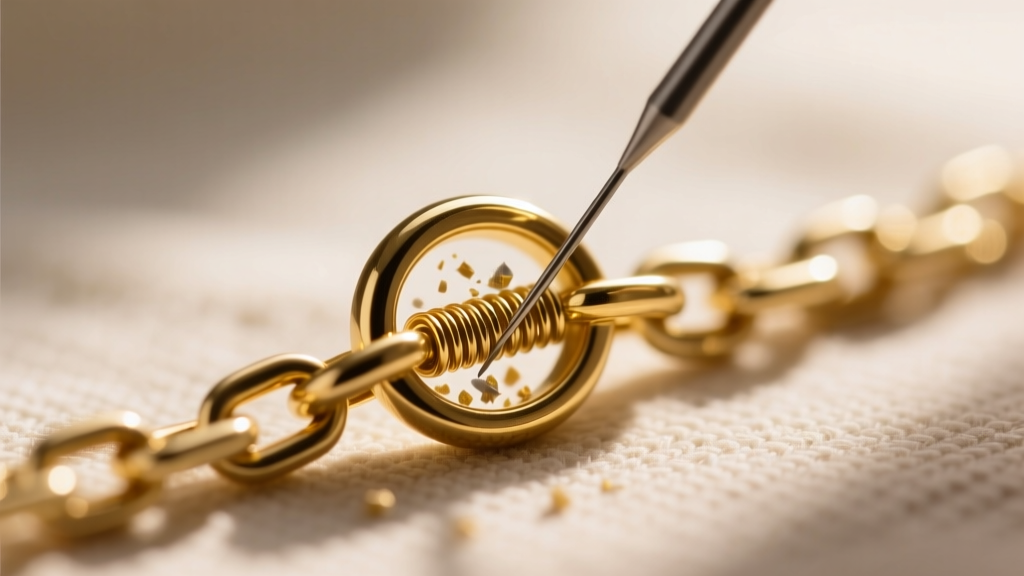
- Take a fine sewing needle and gently scrape the inside groove of the ring where the lever retracts.
- Using a Q-tip soaked in 90% or higher isopropyl alcohol, flush out the loosened debris.
- Apply a microscopic drop of synthetic watch oil (or sewing machine oil) to the lever pivot point using the tip of a toothpick. Pump the lever ten times to distribute the lubricant.
Untangling Micro-Box Chains Without Snapping Them
Box chains and rope chains are incredibly popular for cross pendants due to their durability and light reflection. However, their interlocking geometric links are notorious for catching on each other, creating tight, seemingly impossible knots. Pulling a 1.2mm box chain will result in work-hardening the metal and snapping the links.
| Chain Type | Tangle Risk | Best Lubricant for Untangling |
|---|---|---|
| Micro-Box (1.0mm - 1.5mm) | High (Geometric links catch) | Baby Powder / Talc |
| Rope Chain (1.5mm - 2.0mm) | Medium (Twists upon itself) | Drop of Olive Oil |
| Cable / Link Chain | Low (Open links slip) | Dish Soap & Water |
The Corkboard and Pin Method
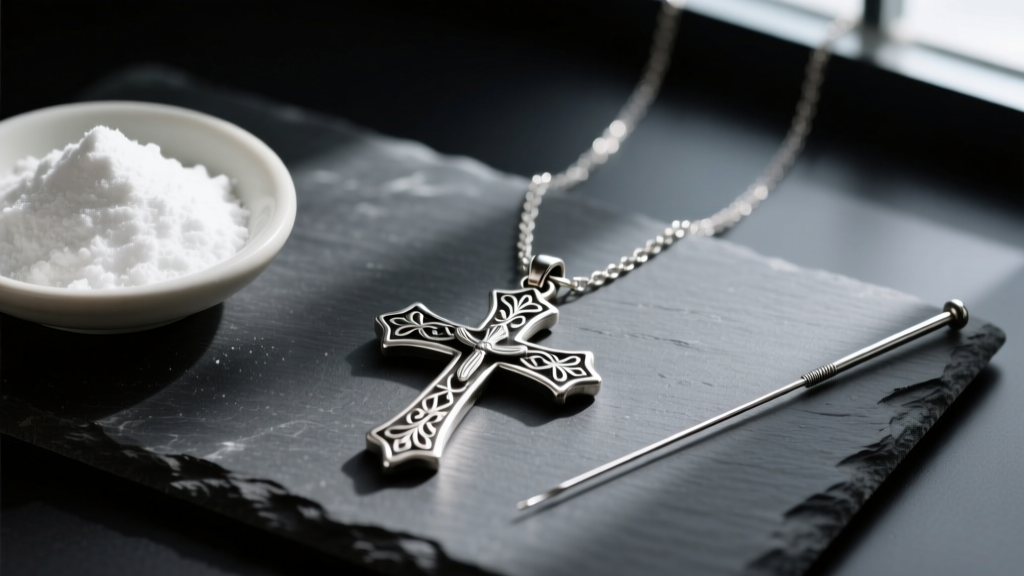
To safely remove a knot from a delicate Kohl's box chain, lay the necklace flat on a piece of corkboard or thick cardboard. Sprinkle a generous amount of talcum powder or baby powder directly onto the knot to eliminate metal-on-metal friction. Take two fine sewing needles and insert them into the very center of the knot. Instead of pulling outward, gently wiggle the needles in opposite directions to loosen the core tension. Once the center link is free, the rest of the knot will easily unravel.
Loose Pavé Stones: Emergency CZ Rescue
Many Kohl's cross necklaces feature pavé-set cubic zirconia (CZ) stones. Because CZ ranks at 8 to 8.5 on the Mohs hardness scale, the stones themselves will not scratch easily. However, the cast silver or brass micro-prongs holding them are relatively soft. Snagging your necklace on a sweater can pull a prong away from the stone's girdle, leaving the CZ loose and ready to fall out.
Burnishing the Prong
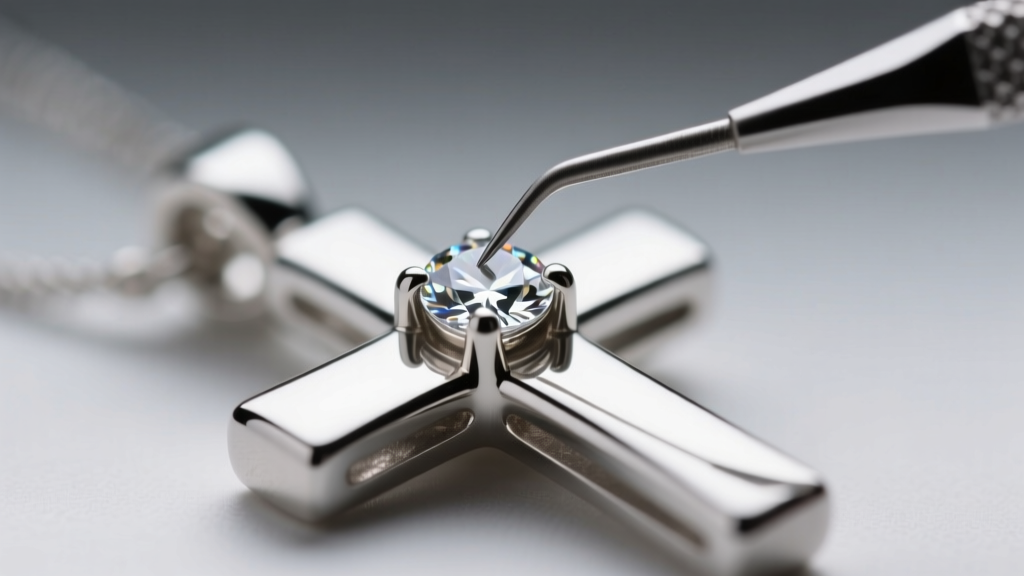
If you notice a stone rattling or shifting when you tap the pendant, stop wearing it immediately. You can temporarily secure the stone at home using a dental pick or a modified wooden toothpick (shaved to a fine point). Place the pendant on a soft mousepad. Position the tip of the pick on the bent prong, and apply gentle, downward pressure toward the center of the stone, effectively 'wiping' the metal back over the edge of the CZ. Do not push straight down on the stone itself, as concentrated point-pressure can fracture the gem.
When to Abandon DIY and See a Professional
While household troubleshooting can solve 90% of issues with fashion and bridge jewelry, certain failures require a professional jeweler's laser welder or soldering torch. According to the Federal Trade Commission's Jewelry Guides, consumers should be aware of the limitations of plated jewelry repairs. If your Kohl's cross necklace has a completely snapped chain link, a broken jump ring that has pulled through the pendant bail, or severe plating loss that requires electroplating, take it to a local bench jeweler. Attempting to use a butane torch on gold-plated brass will melt the base metal and destroy the piece entirely.
By understanding the specific metallurgy of your necklace and utilizing targeted, non-destructive troubleshooting methods, you can extend the lifespan of your favorite cross pendant for years to come, keeping its meaning and beauty fully intact.