Troubleshooting Your Mini Bas Relief Pendant Necklace
Solve common issues with your mini bas relief pendant necklace. Learn how to fix flipping, clean intricate details, and prevent chain breakage.

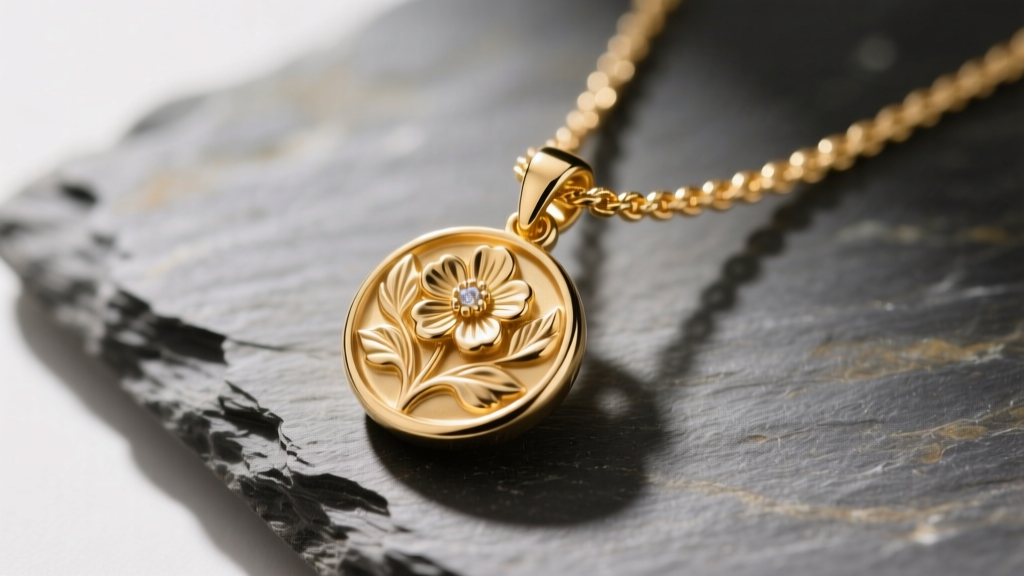
When you invest in a mini bas relief pendant necklace, you are acquiring a piece of wearable micro-sculpture. Bas relief (or low relief) jewelry features designs that project only slightly from the background, typically with a Z-axis depth of less than 1.5 millimeters. While these miniature pendants—often ranging from 10mm to 18mm in diameter—offer incredible artistry, vintage-inspired texture, and a subtle elegance, their unique structural geometry introduces specific engineering vulnerabilities.
Unlike flat stamped pendants or fully three-dimensional cast charms, a mini bas relief pendant necklace exists in a transitional state. The raised elements are highly susceptible to friction, the recessed areas act as traps for oils and debris, and the uneven weight distribution frequently causes the pendant to flip upside down against the skin. As we move through 2026, advancements in laser-welding and micro-casting have improved the baseline quality of these pieces, but the fundamental physics of wearing low-relief miniatures remain unchanged.
This comprehensive troubleshooting guide addresses the four most common failure points of bas relief miniatures, providing actionable, bench-level solutions to preserve your jewelry's detail and structural integrity.
Troubleshooting 1: The Pendant Keeps Flipping Upside Down
The most frequent complaint regarding a mini bas relief pendant necklace is the "pendulum effect," where the pendant continuously flips to show its flat, unadorned back. This is not a defect in the chain; it is a physics issue related to the center of gravity.
Weight Distribution and Bail Modification
In bas relief casting, the bulk of the metal mass is concentrated in the lower half or the center of the design, while the bail (the loop the chain passes through) is soldered to the thin top edge. When suspended, the heavy bottom swings outward, and the smooth back slides against the skin, causing the pendant to rotate.
- The Counter-Weight Solution: A master jeweler can solder a microscopic 1mm sterling silver or gold bead to the upper back of the pendant, directly behind the bail. This shifts the center of gravity backward, forcing the sculpted side to face outward.
- The European Bail Swap: If your pendant has a standard loop bail, replacing it with a V-bail or European-style tube bail lowers the pivot point, stabilizing the pendant against the sternum.
- Chain Stiffness: Highly flexible chains (like 0.8mm snake chains) allow the pendant to rotate freely. Switching to a slightly stiffer chain, such as a 1.2mm box chain, provides enough lateral resistance to keep the pendant oriented forward.
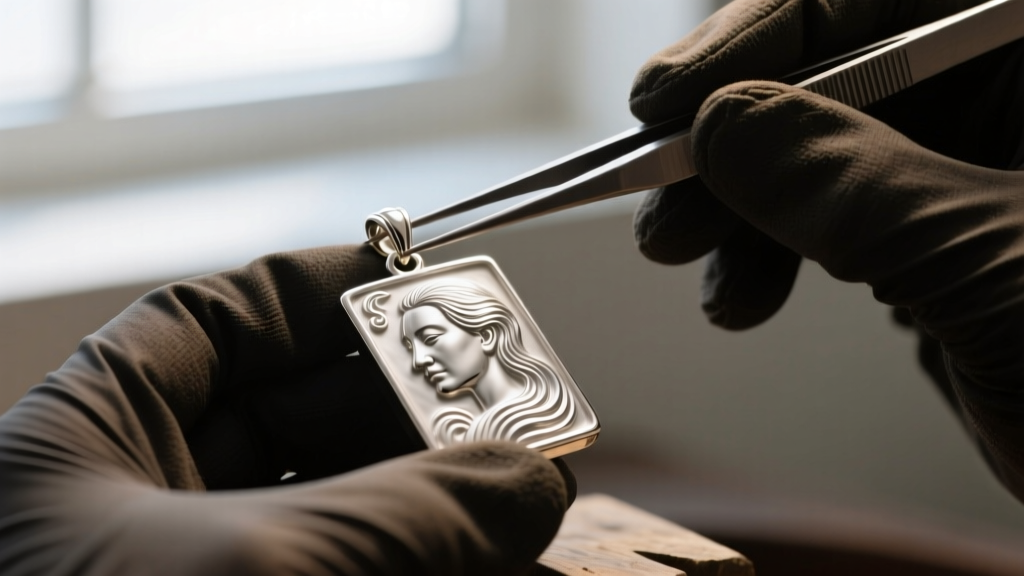
Troubleshooting 2: Loss of Detail and Surface Abrasion
Because the sculpted elements of a bas relief piece project outward, the "high points" of the design act as primary friction zones against clothing, seatbelts, and skin. Over time, these high points undergo planishing—a smoothing effect caused by repetitive micro-abrasion that literally rubs the facial features, floral petals, or geometric lines off the pendant.
Metal Hardness and Wear Resistance
The rate at which your mini bas relief pendant necklace loses its detail is entirely dependent on the metallurgical properties of the alloy. According to data referenced by the Sheffield Assay Office, the alloy composition drastically dictates the lifespan of low-relief details.
| Metal Alloy | Mohs Hardness | Relief Wear Rate | Best Chain Pairing |
|---|---|---|---|
| Sterling Silver (925) | 2.5 - 3.0 | High (Rapid Planishing) | 0.8mm - 1.0mm Cable |
| 14k Yellow Gold | 3.0 - 3.5 | Moderate (Ideal for Relief) | 1.0mm Box or Rope |
| 18k Yellow Gold | 2.5 - 3.0 | High (Softer Alloy) | 0.8mm Snake Chain |
| Platinum 950 | 4.0 - 4.5 | Very Low (Develops Patina) | 1.2mm Wheat Chain |
Pro-Tip for Silver Wearers: If you own a sterling silver bas relief piece, ask your jeweler to apply a thick flash of rhodium plating. While rhodium will eventually wear off the high points, it acts as a sacrificial barrier, preserving the underlying silver detail for years longer than bare metal.
Troubleshooting 3: Tarnish and Grime in Recessed Crevices
The defining characteristic of bas relief is the contrast between the raised design and the recessed background. Unfortunately, those recessed crevices are perfect traps for sebum, lotions, perfume, and environmental dust. When this organic matter mixes with oxidized silver or copper alloys, it creates a hardened, dark sludge that destroys the visual contrast of the pendant.
Safe Cleaning Protocols for Miniature Reliefs
Many consumers make the mistake of using ultrasonic cleaners or harsh chemical dips on a mini bas relief pendant necklace. The Gemological Institute of America (GIA) warns that ultrasonic vibrations can easily fracture micro-pave stones or loosen opaque enamels often used in the recessed backgrounds of relief pendants to enhance contrast.
"Never use a hard-bristled toothbrush on low-relief jewelry. The stiff nylon bristles will micro-scratch the polished high points while failing to reach the narrow, sub-millimeter crevices where tarnish actually accumulates."
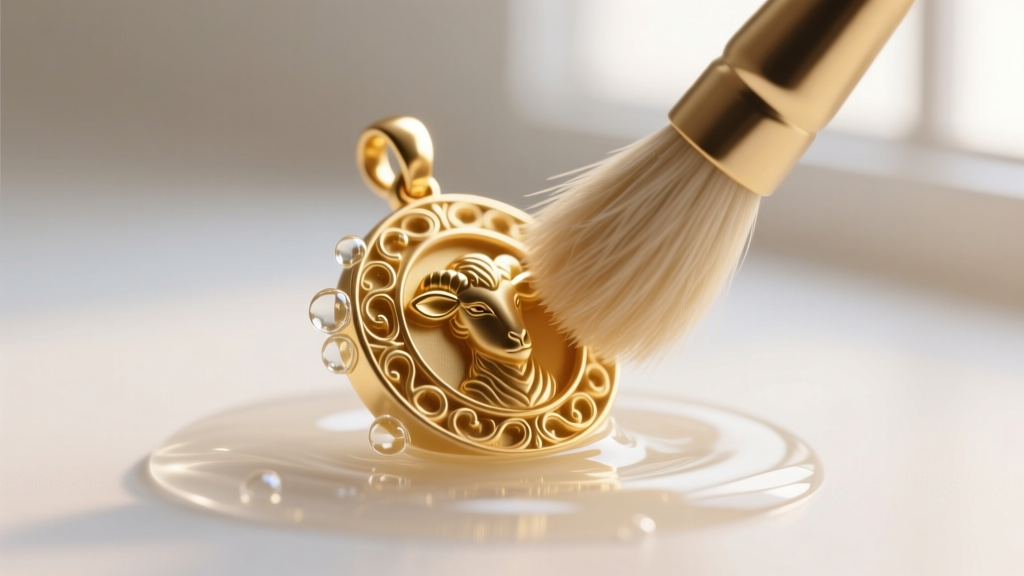
The Goat-Hair Method: Instead of a toothbrush, use a soft goat-hair detailing brush (available from jewelry supply houses or makeup aisles). Mix a few drops of mild, phosphate-free dish soap in distilled water. Gently agitate the recesses with the goat-hair brush, then rinse with distilled water. Distilled water is critical; tap water contains minerals that will leave microscopic white spots in the crevices upon drying.
Troubleshooting 4: Bail Friction and Chain Snapping
A miniature pendant requires a miniature bail. The interior dimensions of a mini pendant bail are often as small as 2.0mm x 1.5mm. This creates a severe bottleneck when pairing the pendant with modern chains, leading to two major structural failures.
The Sawing Effect
If you force a chain that is too thick through a micro-bail, the pendant will not hang flat. Instead, it will sit at an angle, causing the edge of the bail to rub aggressively against a single link of the chain. Over a few months of wear, the hardened bail acts like a microscopic saw, cutting through the chain link and resulting in a lost pendant.
Conversely, if the chain is too thin (e.g., a 0.5mm thread chain), it can slip into the microscopic seam where the bail is soldered to the pendant body, eventually prying the bail open through leverage when the pendant catches on a sweater.
The Ideal Chain-to-Bail Ratio
According to manufacturing guidelines from the Jewelers of America, the chain width should never exceed 60% of the bail's interior width to allow for fluid movement and prevent work-hardening of the metal. For a standard mini bas relief pendant with a 2.0mm interior bail loop, your chain should be no thicker than 1.2mm. If your favorite chain is too thick, a jeweler can easily cut the original bail and laser-weld a heavier, wider jump-ring bail to accommodate your preferred chain without compromising the delicate relief work below.
Summary Checklist for Long-Term Maintenance
To ensure your miniature sculptural necklace survives daily wear, implement this bi-annual maintenance routine:
- Inspect the Bail Loop: Use a jeweler's loupe to check the inside of the bail for deep grooves caused by chain friction. If a groove exceeds 30% of the metal thickness, have it laser-welded immediately.
- Check the Counter-Weight: If you had a balancing bead added to the back, ensure the solder joint has not cracked from impact against your sternum.
- Deep Clean the Crevices: Perform the distilled water and goat-hair brush cleaning every three months to prevent the calcification of skin oils in the low-relief background.
- Rotate Your Chains: Swap between a rope chain and a box chain to distribute the friction wear evenly across the interior of the pendant bail.
By understanding the unique mechanical and metallurgical challenges of low-relief jewelry, you can transform a fragile novelty piece into a lifelong heirloom. A mini bas relief pendant necklace requires a bit more mindfulness than a flat stamped charm, but the depth, artistry, and tactile beauty it offers make the troubleshooting entirely worthwhile.


