Solving Common Mother Child Necklace Wear & Tear Issues
Troubleshoot common mother child necklace issues like chain tangling, pendant flipping, and clasp breakage. Expert repair tips and metal care inside.

The Sentimental Value vs. Daily Wear Reality
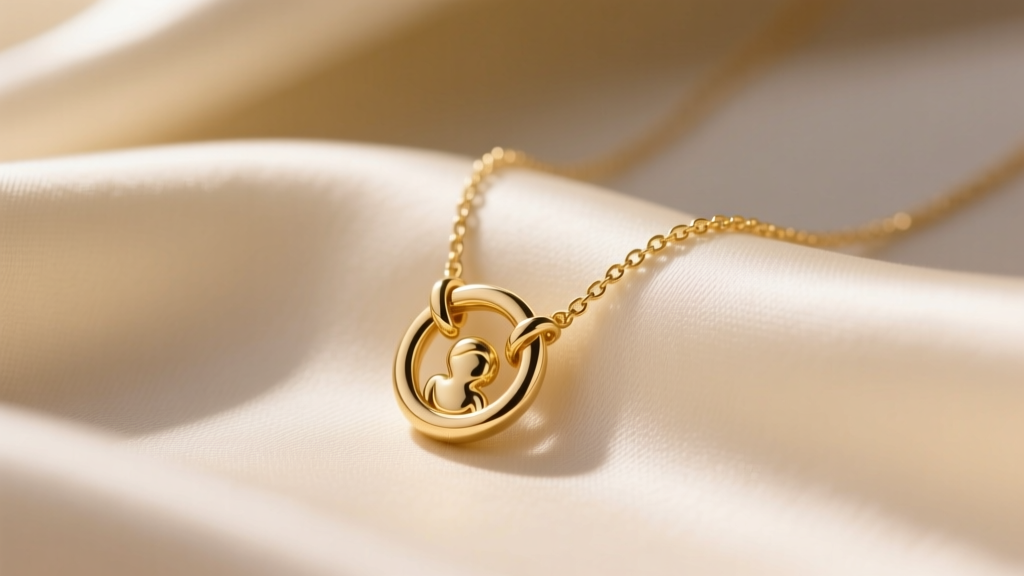
A mother child necklace is more than just an accessory; it is a deeply sentimental anchor. Whether it features interlocking rings, a silhouette profile, or an umbilical cord motif, this piece of jewelry is typically worn daily, resting against the skin through countless hugs, feedings, and chaotic mornings. However, this constant wear introduces severe mechanical and chemical stress. Delicate chains snap under the sudden torque of a toddler's grip, pendants perpetually flip to show their blank backs, and mixed-metal alloys trigger contact dermatitis. Troubleshooting these issues requires moving beyond generic jewelry care and understanding the specific physics, metallurgy, and structural engineering of daily-wear pendants.
Problem 1: The Physics of the 'Pendant Flip'
The most frequent complaint among mothers is that the pendant constantly rotates backward, hiding the design. This is rarely a defect in the pendant itself; it is a mismatch between the bail (the loop connecting the pendant to the chain) and the chain's thickness. When a standard 5mm x 3mm oval bail is threaded onto a thick 1.8mm rope chain, the pendant lacks lateral stability. The center of gravity shifts with every movement, causing the heavier bottom of the pendant to swing backward.
Troubleshooting the Bail and Chain Interface
To solve the pendant flip, you must reduce the 'play' inside the bail. If you are unwilling to switch to a thinner chain, visit a bench jeweler to have a smaller 'V-bail' or 'snap-on bail' soldered onto the pendant. Alternatively, you can thread two small 1.5mm silicone spacer beads onto the chain, positioning them on either side of the bail to lock the pendant in the center of the collarbone. This prevents the lateral sliding that initiates the backward flip.
Problem 2: Chain Breakage from Toddler Tugging
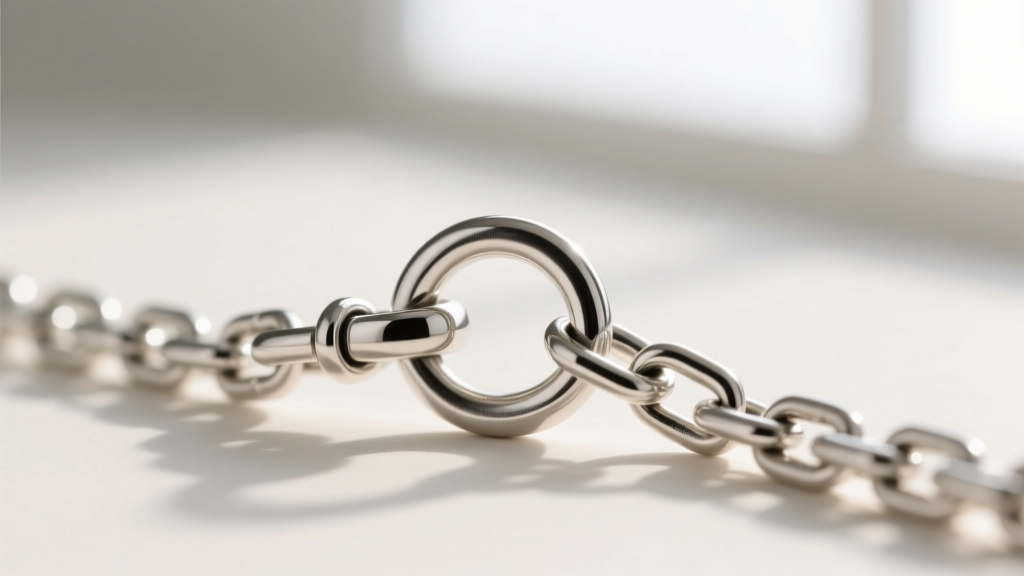
Toddlers grab, and when they do, they exert sudden, high-torque force. A standard 0.9mm cable chain will snap at approximately 2.5 to 3.5 pounds of tensile pressure. A sudden yank from a 2-year-old can easily generate 6 to 8 pounds of localized force, shearing the solder points on delicate links. Furthermore, unsoldered jump rings (the tiny circles connecting the chain to the clasp) are the primary failure point, as they simply pull apart under stress.
Chain Style and Tensile Strength Matrix
When replacing or selecting a chain for a mother child necklace that will be worn around young children, prioritize structural integrity over delicate aesthetics. Refer to the matrix below to choose a chain that can survive daily maternal wear:
| Chain Style | Optimal Gauge | Break Point (Lbs) | Toddler-Safe? |
|---|---|---|---|
| Cable | 0.9mm - 1.1mm | 2.5 - 3.5 | No |
| Box | 1.2mm - 1.5mm | 4.0 - 5.5 | Yes (with caution) |
| Wheat | 1.2mm - 1.8mm | 6.0 - 8.0 | Yes |
| Rope | 1.5mm - 2.0mm | 7.0 - 9.0 | Yes (but snags hair) |
Note: Always ensure the jeweler uses soldered jump rings at the clasp and pendant connections. A soldered jump ring requires the metal to be physically cut to fail, whereas an unsoldered ring will simply unspool under pressure.
Problem 3: Skin Irritation and 'Green Neck' Syndrome
Mother child pendants often incorporate mixed metals, enamel, or heavy sterling silver bases. Sterling silver (925) is an alloy containing 92.5% pure silver and 7.5% copper. When exposed to the sulfur compounds in human sweat, lotions, and perfumes, the copper reacts to form copper sulfide, resulting in black tarnish and the dreaded 'green neck' stain. Furthermore, many affordable pendants are plated with a micro-thin layer of rhodium or gold. According to the Gemological Institute of America (GIA), standard commercial plating is often less than 0.1 microns thick, wearing off in a matter of weeks against the friction of the collarbone, exposing the nickel-bearing base metals underneath and triggering contact dermatitis.
Metallurgical Solutions for Sensitive Skin
If your mother child necklace causes itching or redness, the piece likely contains nickel or the rhodium barrier has degraded. To troubleshoot this:
- The Permanent Fix: Upgrade to solid 14k or 18k gold, or 316L surgical stainless steel. The ASTM International standards for jewelry safety heavily restrict nickel release; solid 14k gold and 316L steel easily pass these biocompatibility thresholds.
- The Restoration Fix: Take the piece to a professional jeweler for a 'heavy flash' rhodium plating. Request a thickness of at least 0.5 to 1.0 microns, which will provide a durable, hypoallergenic barrier that lasts 2 to 3 years with daily wear.
- The Temporary Fix: Paint the back of the pendant and the inner links of the chain with clear, medical-grade liquid bandage or polyurethane-based clear nail polish. Reapply every two weeks.

Problem 4: Clasp Failures and Magnetic Weakness
Many mother child necklaces are shipped with spring-ring clasps or magnetic clasps for ease of use. Spring rings contain a tiny internal steel spring that frequently snaps or loses tension due to lotion buildup. Magnetic clasps, while convenient for mothers with limited dexterity, possess a shear-strength weakness; a lateral pull from a child's hand will slide the magnets apart instantly. The Jewelers of America recommends upgrading high-wear necklaces to mechanical locking clasps to prevent catastrophic drops.
Upgrading Your Clasp Hardware
Replace the factory clasp with a 5mm or 7mm solid lobster clasp. Lobster clasps utilize a solid cast lever and a heavier spring, requiring intentional downward pressure to open. For the ultimate security, ask a bench jeweler to install a 'locking lobster clasp,' which features a secondary screw-down sleeve that physically blocks the lever from being depressed, making it entirely toddler-proof.
Proactive Maintenance Checklist
To ensure your mother child necklace survives the early years of motherhood without requiring constant bench repairs, implement this bi-weekly maintenance protocol:
- The Tug Test: Gently pull the chain near the clasp and the bail. If you see the jump ring gap open even a fraction of a millimeter, take it to a jeweler for soldering immediately.
- The Ultrasonic Warning: Never put mother child pendants with glued-in gemstones, pearls, or enamel detailing into an ultrasonic cleaner. The high-frequency vibrations will shatter the adhesive bond. Clean these pieces using a soft baby toothbrush, warm water, and a single drop of phosphate-free dish soap.
- The Lotion Rule: Apply body lotions, sunscreens, and perfumes at least 5 minutes before putting the necklace on. Emulsifiers in lotions trap dead skin cells and oils inside the tiny crevices of box and rope chains, accelerating tarnish and weakening the metal over time.
Conclusion
A mother child necklace is designed to commemorate an unbreakable bond, but the physical materials require deliberate engineering to match that sentiment. By addressing bail friction, upgrading to high-tensile wheat or box chains, ensuring biocompatible metal grades, and installing mechanical lobster clasps, you can transform a fragile keepsake into a resilient, everyday heirloom capable of surviving the beautiful chaos of motherhood.


