How to String a Custom Spiritual Beads Necklace: Step-by-Step Guide
Learn how to design and string a custom spiritual beads necklace. Our step-by-step guide covers gemstone pairing, cord selection, and knotting.

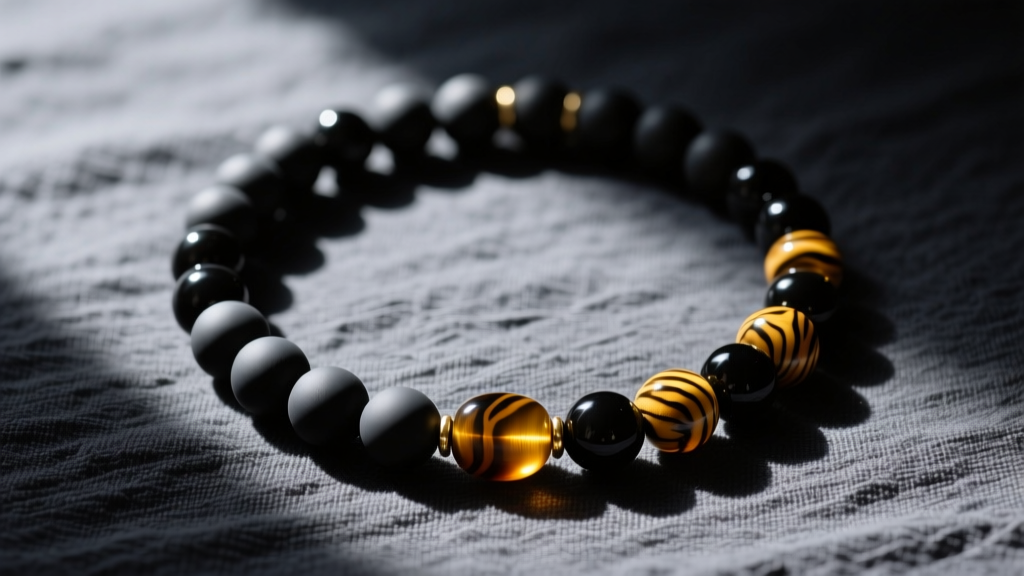
Creating a custom spiritual beads necklace is more than just a jewelry-making exercise; it is a tactile meditation. Whether you are crafting a 108-bead mala for mantra recitation or a shorter 45cm chakra-alignment piece for daily wear, the structural integrity and metaphysical resonance of your necklace depend entirely on your material choices and stringing techniques. In this comprehensive guide, we will walk through the exact lapidary standards, bead math, and macramé knotting methods required to build a durable, high-vibration spiritual beads necklace from scratch.
The Anatomy of a Durable Spiritual Beads Necklace
The most common failure point in handmade beadwork is cord degradation. Gemstones are essentially tiny files; if the cord is softer than the stone's drill hole edge, it will eventually fray and snap. According to the GIA Gem Encyclopedia, understanding the Mohs Hardness Scale is critical when selecting your stringing material.
Matching Cord to Gemstone Hardness
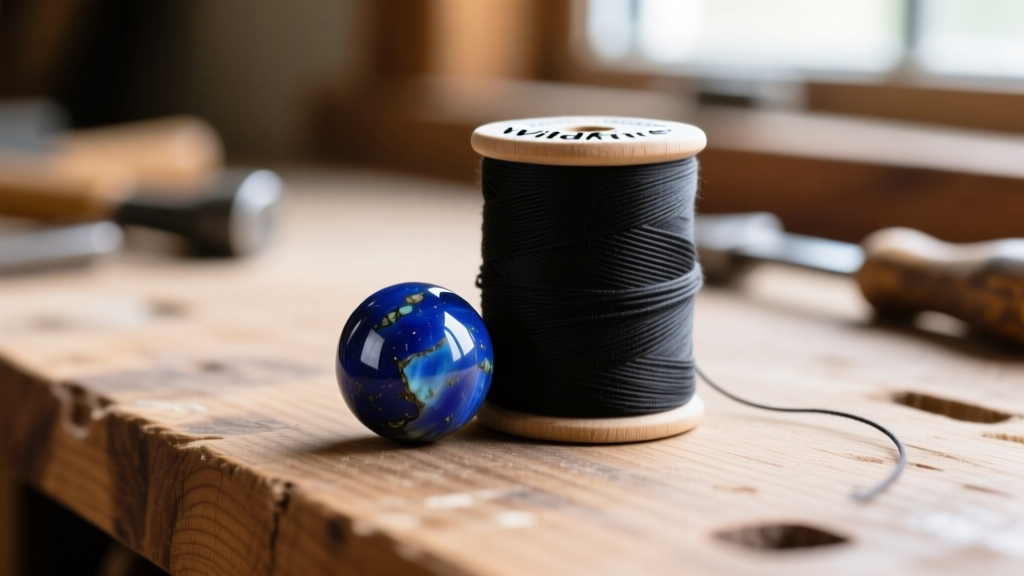
- Hard Stones (Mohs 7+): Quartz, Amethyst, Tiger's Eye, and Lapis Lazuli have sharp, abrasive drill holes. Never use natural silk for these. Instead, use a thermally bonded synthetic thread like Wildfire Bead Thread (0.008 inch / 0.20mm) or FireLine. These materials are virtually un-frayable and resist abrasion.
- Soft/Porous Stones (Mohs 3-6): Turquoise, Malachite, Selenite, and Amber have smoother, less aggressive drill holes. You can safely use Griffin Silk Cord (Size 0.5mm or 0.7mm) for a traditional, luxurious drape. However, silk stretches over time, so you must pre-stretch the cord before stringing.
- Heavy/Beaded Fringe: If your spiritual beads necklace includes heavy metal spacer beads or a large guru bead, use a multi-strand braided nylon like Super-Lon (S-Lon) Weight #18.
Expert Insight: The International Gem Society notes that standard 8mm gemstone beads typically feature drill holes ranging from 0.8mm to 1.2mm. Always verify the hole diameter of your guru bead (the central anchor bead), as these are often drilled wider (1.5mm+) to accommodate the folded cord loop and knot.
Step 1: Sizing and Bead Math
Before cutting your cord, you must calculate the exact number of beads required. A standard spiritual beads necklace worn as a choker or collar sits at 40cm to 45cm, while a traditional mala drops to 60cm or more. Use the following formula:
(Target Necklace Length in mm) ÷ (Bead Diameter in mm) = Total Bead Count
Bead Count Reference Chart
| Necklace Style | Target Length | 8mm Beads Needed | 10mm Beads Needed |
|---|---|---|---|
| Choker / High Collar | 400 mm (15.7") | 50 beads | 40 beads |
| Standard Princess | 450 mm (17.7") | 56 beads | 45 beads |
| Long Matinee | 600 mm (23.6") | 75 beads | 60 beads |
| Traditional Mala | 864 mm (34.0") | 108 beads | 86 beads (approx) |
Note: Always subtract the width of your clasp or sliding knot hardware from the target length before calculating your bead count. Add 2 extra beads to your purchase order to account for drilling defects or cracking during stringing.
Step 2: Metaphysical Pairing and Layout Design
A spiritual beads necklace often serves a specific energetic purpose. When designing your layout, consider the energetic flow of the stones. A common framework is the Chakra Alignment sequence, which moves from grounding stones at the clasp to higher-consciousness stones near the center or guru bead.
Example Layout: The Grounding-to-Clarity Sequence
- Base (Clasp area): Black Tourmaline or Smoky Quartz (Root Chakra - grounding and protection).
- Mid-Section: Rose Quartz or Green Aventurine (Heart Chakra - emotional balance).
- Centerpiece/Guru Bead: Clear Quartz or Amethyst (Crown Chakra - clarity and spiritual connection).
Design Tip: Use 2mm to 3mm metallic or seed bead spacers between your primary 8mm gemstones. This not only adds visual contrast and flexibility to the drape but also prevents the gemstones from grinding against each other, which can chip softer stones like fluorite or apatite.
Step 3: Stringing and the Macramé Sliding Knot
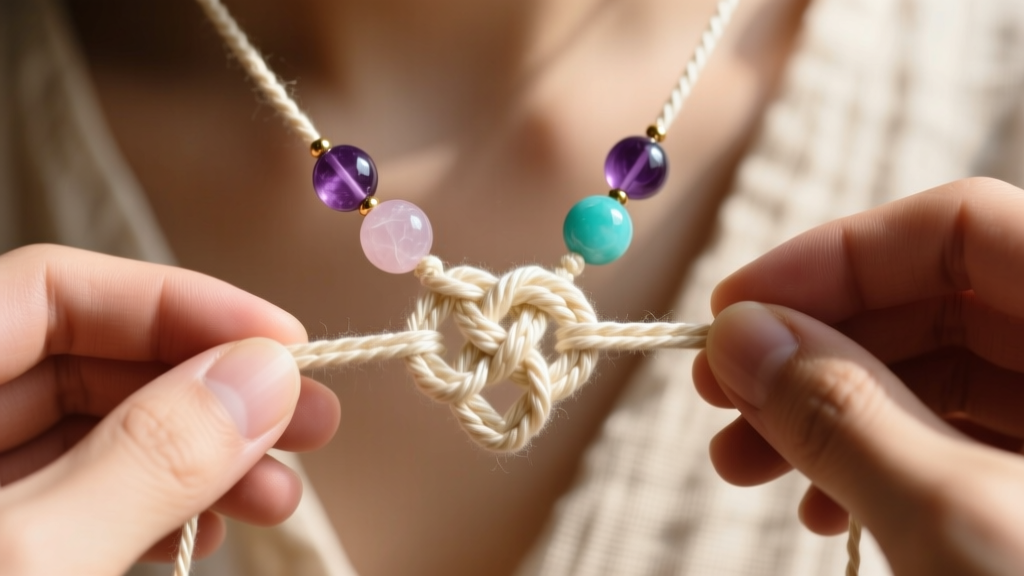
The most versatile closure for a spiritual beads necklace is the adjustable macramé sliding knot. It allows the wearer to adjust the length over different necklines and eliminates the need for metal clasps, which some practitioners believe disrupt the energetic circuit of the stones.
Materials for the Closure
- Main stringing thread (e.g., Wildfire 0.20mm)
- Knotting cord: 1mm Waxed Cotton or S-Lon Tex 210 (approx. 1 meter length)
- 2 small accent beads (2mm metal or glass) for the cord tails
Step-by-Step Knotting Instructions
- Form the Loop: Overlap the two ends of your main beading cord by about 5cm. Ensure the beads are snug but not overly tight; the necklace needs a slight amount of flex to prevent snapping when bent.
- Anchor the Knotting Cord: Take your 1mm waxed cotton cord and place the center of it over the overlapping main cords. You will now be working a series of square knots (sliding knots) around the two main cords.
- The First Half-Knot: Take the right knotting cord, pass it over the main cords, and under the left knotting cord. Take the left knotting cord, pass it under the main cords, and pull it up through the loop created by the right cord. Pull tight.
- The Second Half-Knot: Reverse the process. Left cord over the main cords and under the right. Right cord under the main cords and up through the left loop. Pull tight.
- Repeat: Alternate these steps to create a square knot spiral. Make about 8 to 10 square knots (roughly 1.5cm of knotting) to ensure a secure grip that will slide with friction but won't pull apart.
- Finish the Tails: Trim the excess knotting cord, leaving about 2cm tails. Thread a small 2mm accent bead onto each tail and tie a simple overhand knot at the very end to prevent the beads from slipping off. Melt the very tips of the cotton/synthetic mix with a lighter to seal them.
Troubleshooting Common Stringing Failures
Even experienced jewelers encounter structural issues. Here is how to troubleshoot the most common problems when building a spiritual beads necklace:
Problem: The Cord Keeps Fraying Inside the Guru Bead
Cause: The drill hole of the guru bead is poorly finished, leaving sharp silica or quartz dust ridges inside the channel.
Solution: Use a diamond-coated bead reamer to gently smooth the interior of the hole. Alternatively, insert a microscopic dab of jeweler's epoxy or a flexible wire guard into the hole to shield the cord from the abrasive edges.
Problem: The Necklace Stretches and Sags Over Time
Cause: Using natural silk or nylon without pre-stretching, combined with the weight of heavy stones like hematite or jasper.
Solution: Always pre-stretch synthetic or silk cords by hanging a light weight from them for 24 hours before stringing. For heavy stones, switch to a thermally bonded, zero-stretch thread like Wildfire, or use 49-strand micro-braided beading wire coated in clear nylon.
Problem: The Sliding Knot is Too Loose or Too Tight
Cause: Incorrect tension during the macramé process, or using a knotting cord that is too thick/thin for the main cord.
Solution: The knotting cord should be roughly 3 to 4 times thicker than the main stringing cord. If using a 0.20mm main thread, a 1.0mm waxed cotton knotting cord provides the perfect friction coefficient. If the knot is too tight to slide, gently roll it between your palms to loosen the fibers. If too loose, add two more square knots to the spiral.
Care, Cleansing, and Maintenance
A spiritual beads necklace requires physical and energetic maintenance. Physically, wipe the beads with a dry microfiber cloth after wearing to remove skin oils and cosmetics, which can degrade porous stones like turquoise and lapis lazuli over time. Never submerge your necklace in water, as this will rot natural silk cords and cause metal spacer beads to oxidize or rust.
Energetically, cleanse your necklace regularly using methods safe for all stones: sound baths (using singing bowls or tuning forks), smudging with palo santo or sage, or placing the necklace on a selenite charging plate overnight. Avoid salt water or direct sunlight cleansing, as UV rays can fade amethyst and rose quartz, and salt can corrode the stringing materials and metallic accents.
By respecting both the material science of lapidary arts and the intentional design of spiritual jewelry, your custom necklace will remain a durable, beautiful, and resonant tool for years to come.


