How to Fix, Replace, and Choose Clasps for Necklaces
Learn how to troubleshoot broken clasps for necklaces, replace them using proper gauge sizing, and choose secure locks for heavy pendants.

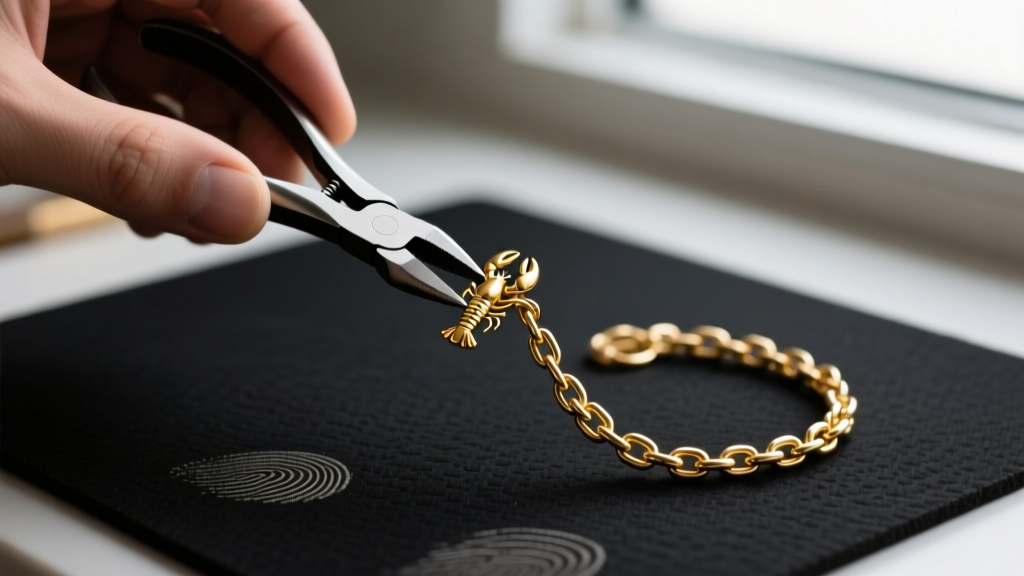
There are few things more frustrating in jewelry ownership than hearing the faint tink of a heavy gold chain hitting the floor because a clasp failed. Whether you are dealing with a stiff lobster claw, a stripped barrel clasp, or a toggle that refuses to stay centered, hardware failure is the leading cause of lost pendants and broken chains. Understanding the mechanics, metallurgy, and proper gauge sizing of clasps for necklaces is essential for both everyday wearers and serious collectors.
In this comprehensive troubleshooting guide, we will diagnose the most common clasp failures, provide a step-by-step framework for replacing them at home, and help you select the most secure locking mechanisms based on your chain's exact weight and gauge.
The Anatomy of Clasp Failures: Why They Break
Before attempting a repair, it is critical to understand why specific clasps fail. Not all metal behaves the same way under tension, and manufacturing shortcuts often lead to premature breakage.
The Lobster Claw Spring Problem
Many consumers assume that a 14k or 18k gold lobster clasp is made entirely of gold. However, pure gold and even standard 14k gold alloys lack the elastic memory required to function as a spring. According to metallurgical data from the Gemological Institute of America (GIA), gold alloys are too malleable for high-tension springs. Therefore, the internal spring mechanism of almost all precious metal lobster clasps is actually made of hardened stainless steel or a base metal. When moisture, sweat, or lotion enters the clasp cavity, the internal steel spring corrodes and snaps, leaving the gold exterior completely intact but functionally useless.
Barrel Clasp Cross-Threading
Barrel clasps (or screw clasps) rely on delicate internal threading. The most common failure mode is cross-threading, which occurs when the user forces the two halves together at a slight angle. Over time, this strips the soft sterling silver or gold threads, resulting in a clasp that screws together loosely and eventually unspools during wear.
Toggle Clasp Slippage
Toggle clasps rely on gravity and tension to keep the T-bar seated inside the O-ring. If the chain is too short, or if the T-bar is slightly too narrow for the O-ring's inner diameter, the necklace will shift, causing the toggle to slip through the ring and drop the piece.
Step-by-Step Guide to Replacing a Broken Clasp
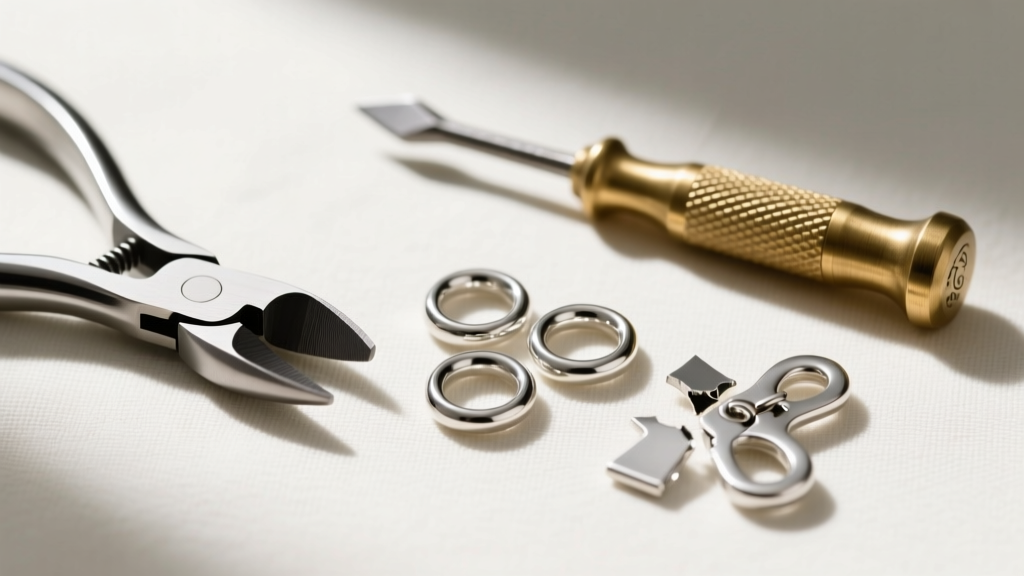
Replacing a clasp is a straightforward cold-connection repair if you use the correct tools and jump ring sizing. Never use standard hardware store pliers; their serrated teeth will permanently mar precious metals.
Tools Required
- Smooth-jaw chain-nose pliers: For gripping jump rings without scratching.
- Flush cutters: For trimming excess wire if you are fabricating a new jump ring.
- Brass awl: To gently pry open jump rings without warping them.
- Replacement jump rings: Must match the metal and gauge of the chain.
The Jump Ring Sizing Rule
A frequent mistake in DIY jewelry repair is using a jump ring that is too thick for the clasp's swivel loop, or too thin to support the chain's weight. According to the Rio Grande Jump Ring Sizing Guide, the wire gauge of the jump ring should always be equal to or thicker than the wire gauge of the chain itself. Furthermore, the Outer Diameter (OD) of the jump ring must be large enough to accommodate both the chain's end link and the clasp's loop. For a standard 18-gauge cable chain, a 20-gauge or 18-gauge jump ring with a 4.0mm to 5.0mm OD is the industry standard.
Execution: The Twist, Not the Pull
Never pull a jump ring apart laterally (like opening a book). This warps the circle into an oval, weakening the metal and making it impossible to close flush. Instead, grip the jump ring with two pairs of chain-nose pliers on either side of the split, and twist one hand forward and the other backward. Slide the chain link and the new clasp onto the ring, then twist the ends back together until you feel a slight 'click' of the metal seating flush.
Choosing the Right Clasp for Your Necklace Weight
Matching the clasp to the chain's weight and pendant load is crucial for security. A delicate 22-gauge chain requires a lightweight spring ring, while a heavy 12-gauge Cuban link requires a robust box clasp.
| Clasp Type | Best Chain Gauge | Max Weight Capacity | Security Rating |
|---|---|---|---|
| Spring Ring | 22g - 18g | Under 15 grams | Low (Prone to spring failure) |
| Lobster Claw | 18g - 14g | 15 - 40 grams | Medium-High (Standard daily wear) |
| Box Clasp with Safety | 14g - 10g | 40 - 100+ grams | Very High (Best for heavy gold) |
| Magnetic (Neodymium) | 20g - 16g | 20 - 50 grams | Medium (Can detach if snagged) |
| Toggle | 16g - 12g | Variable | Medium (Requires proper chain length) |
Upgrading to Secure Locking Mechanisms
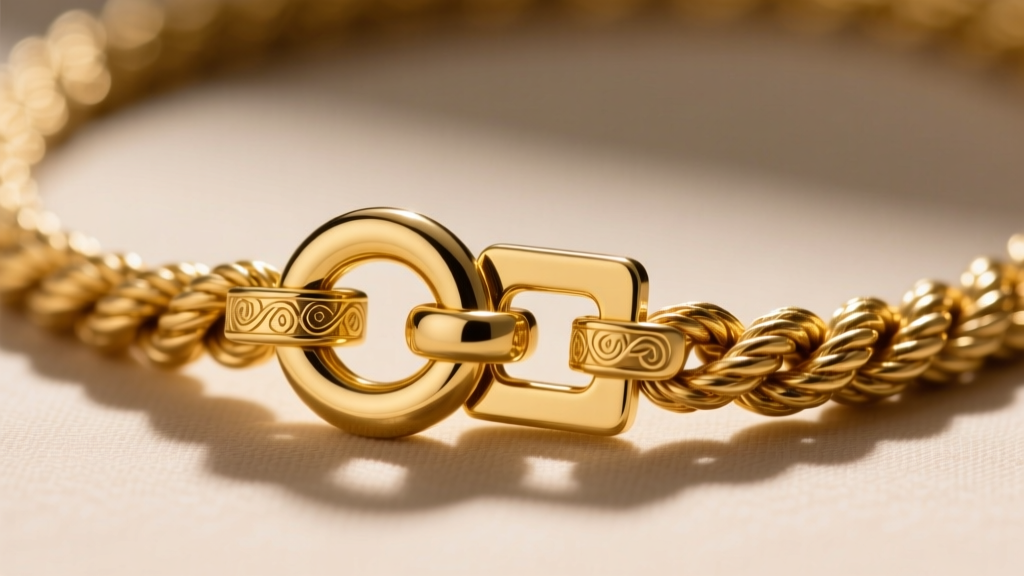
If you are frequently wearing heavy pendants or valuable diamond tennis necklaces, standard lobster clasps are insufficient. You must upgrade to mechanical locking clasps.
Box Clasps with Figure-Eight Safeties
A box clasp features a V-shaped metal tongue that compresses and clicks into a rectangular box housing. While the friction fit is strong, heavy chains can pull the tongue loose over time. High-end manufacturers weld a 'figure-eight' safety latch—a secondary wire loop that snaps over a small bead on the outside of the box. This redundant safety mechanism ensures that even if the primary tongue fails, the necklace remains secured to your neck.
Screw-In Safety Barrels with Silicone O-Rings
To solve the cross-threading issue of traditional barrel clasps, modern jewelers have begun inserting microscopic silicone O-rings inside the threading. This provides friction-grip resistance, ensuring the clasp stays tightly screwed together without the need for excessive torque that strips the metal.
Troubleshooting Accessibility and Dexterity Issues
For individuals with arthritis, neuropathy, or limited fine motor dexterity, operating a 4mm lobster claw or threading a tiny barrel clasp can be an agonizing daily hurdle. Fortunately, ergonomic alternatives exist that do not sacrifice security.
N52 Neodymium Magnetic Clasps
Standard ceramic magnets are too weak for jewelry and will detach if a sweater snags the chain. When sourcing magnetic clasps, look for those utilizing N52 grade Neodymium magnets. N52 is the highest commercially available grade of rare-earth magnet, providing a pull-force strong enough to hold a 50-gram chain securely, while still allowing the user to break the seal with a deliberate sideways twist.
Oversized Toggle and Hook Clasps
Enlarging the hardware is the simplest ergonomic fix. Upgrading to a toggle clasp with a 25mm O-ring and a 30mm T-bar allows users with limited pinch strength to secure their necklace using a gross-motor grasping motion rather than fine-motor pinching. Ensure the chain length is at least 18 inches when using a toggle; if the chain is too tight against the neck, the lack of slack will prevent the T-bar from rotating fully inside the ring.
Final Maintenance Pro-Tips
To extend the lifespan of your clasps for necklaces, incorporate these three maintenance habits into your routine:
- Lubricate Barrel Threads: Once a year, apply a microscopic dot of jeweler's wax or beeswax to the threads of a screw clasp. This prevents cross-threading and repels moisture.
- Check Jump Ring Gaps: Run your fingernail over the seam of your jump rings. If your nail catches on a gap, the metal has stretched and needs to be squeezed flush with pliers before it snags on clothing and pulls apart.
- Rinse After Swimming: Chlorine and saltwater accelerate the corrosion of the steel springs inside gold and silver lobster clasps. Always rinse the clasp area under fresh, warm water after swimming.
By understanding the mechanical limitations of your jewelry and matching the right hardware to your specific chain gauge and lifestyle, you can eliminate the anxiety of clasp failure and keep your most cherished pendants exactly where they belong.


