Choosing a Ruby with Diamond Necklace: Gem Grades & Metal Guide
Discover how to evaluate a ruby with diamond necklace. Compare gemstone grades, metal settings, and durability properties to make a lasting investment.

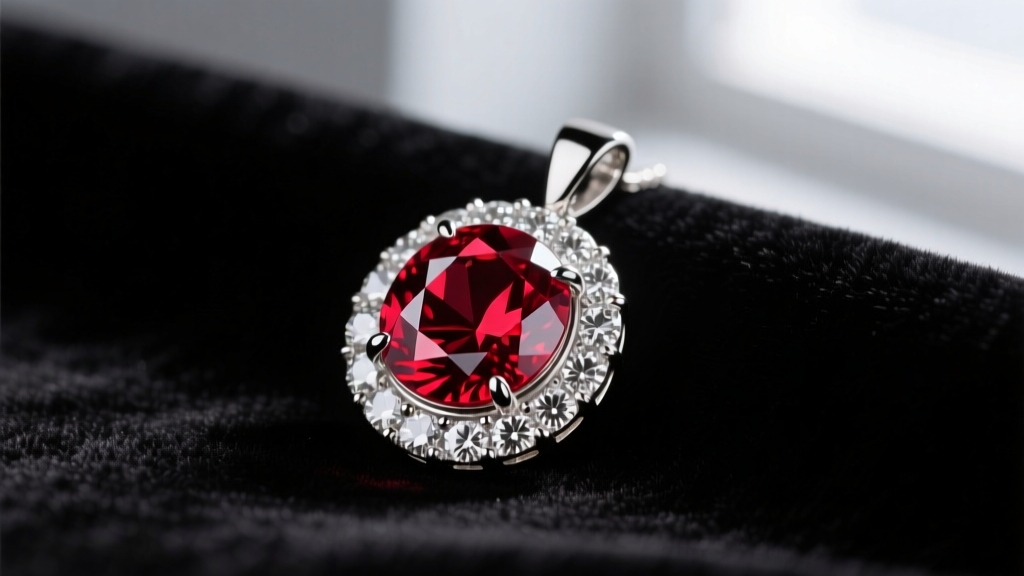
When investing in fine jewelry, few combinations command the room quite like a ruby with diamond necklace. The optical contrast between the deep, velvety red of corundum and the icy, high-dispersion scintillation of carbon creates a visual tension that is both classic and striking. However, beyond the immediate aesthetic appeal, evaluating this specific gemstone pairing requires a rigorous understanding of material properties, structural engineering, and gemological grading. As we navigate the luxury jewelry market in 2026, buyers must look past marketing terminology and focus on the physical realities of how these stones interact with their metal settings over decades of wear.
Gemstone Properties: Corundum vs. Carbon
To understand the longevity of your necklace, we must first examine the crystalline structure of the featured gems. Ruby is a variety of the mineral corundum (aluminum oxide), while diamond is pure crystallized carbon. While most consumers are familiar with the Mohs scale of mineral hardness—where diamond sits at an unyielding 10 and ruby at a 9—hardness only measures resistance to scratching. It does not measure toughness, which is a material's resistance to chipping, breaking, or cleaving upon impact.
Ruby Toughness and Parting Planes
Despite its high Mohs rating, ruby exhibits distinct parting planes along its rhombohedral and basal directions. This means that if a ruby pendant is struck at a highly specific angle against a hard surface, it can cleave or chip. According to the Gemological Institute of America (GIA), ruby has 'good' toughness, but it requires protective setting styles, particularly if the stone features a pear or marquise cut with vulnerable pointed tips. Furthermore, the refractive index of ruby (1.76 to 1.78) is notably lower than that of diamond (2.42), meaning rubies rely on their rich body color and internal fluorescence (particularly in UV-rich daylight) rather than pure light return to captivate the eye.
Diamond Accents: Melee Specifications
In a ruby and diamond pendant, the diamonds are typically utilized as accent stones or a surrounding halo. These small diamonds, known in the trade as 'melee' (generally weighing under 0.15 carats each), vary drastically in cut quality. For a high-end necklace, you must insist on full-cut melee. Full-cut diamonds feature the standard 57 or 58 facets of a larger brilliant-cut stone. Conversely, cheaper manufacturers use single-cut melee, which possess only 17 or 18 facets. Single-cut stones appear glassy and lack the fiery scintillation required to properly frame a vivid red ruby. Always request a specification sheet from the jeweler confirming full-cut melee accents.
Ruby Treatments and Origin Valuations
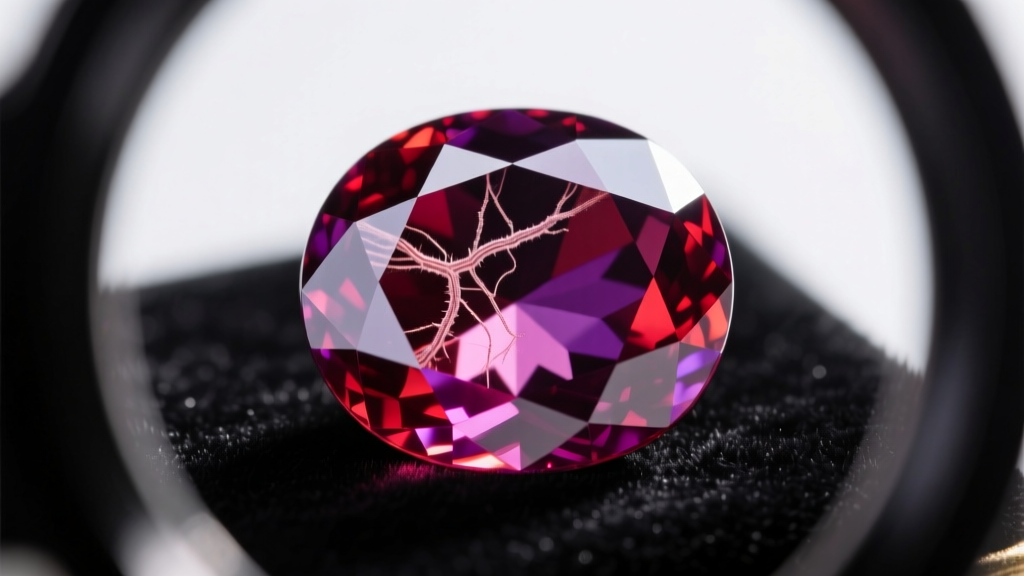
The material integrity and market value of the ruby in your necklace are heavily dictated by its origin and post-mining treatments. The American Gem Trade Association (AGTA) mandates strict disclosure of all gemstone enhancements, which is critical for necklace pendants that rest against the skin and are exposed to environmental elements.
- Unheated (No Heat):} The holy grail of ruby collecting. These stones have only been cut and polished. They command massive premiums and are highly stable.
- Traditional Heat Treatment:} An accepted, permanent practice that dissolves rutile silk inclusions and improves color saturation. The structural integrity remains excellent.
- Fracture Filling (Glass-Lead Filled):} A severe red flag. Low-grade rubies are infused with lead-glass to mask fractures. These stones are highly unstable; exposure to mild acids (even lemon juice or sweat) can etch the glass filler, causing the stone to crumble. Never purchase a glass-filled ruby for a daily-wear necklace.
Metal Alloys: Which Setting Secures Your Gems?
The metal chosen to cradle your ruby and diamonds dictates the structural lifespan of the necklace. The constant friction against the skin, combined with the microscopic impacts of daily life, causes metal fatigue. Below is a comparative analysis of the most common precious metals used in 2026 for high-value gemstone pendants.
| Metal Alloy | Vickers Hardness (HV) | Prong Durability | Maintenance Profile |
|---|---|---|---|
| Platinum 950 | 125 - 140 HV | Exceptional (Work-hardens, bends rather than breaks) | Low (Develops a patina, no plating required) |
| 18k White Gold | 120 - 135 HV | Good (Brittle over time, prone to micro-fractures) | High (Requires rhodium re-plating every 1-2 years) |
| 18k Yellow Gold | 115 - 125 HV | Moderate (Softer, prongs wear down faster) | Low (Can be polished easily, no plating) |
| 14k Rose Gold | 140 - 160 HV | High (Copper content increases structural rigidity) | Low (Color is intrinsic, no plating needed) |
For a ruby with diamond necklace intended for frequent wear, Platinum 950 is the undisputed champion. Unlike gold alloys, which lose microscopic particles of metal when scratched, platinum simply displaces. This means the prongs holding your valuable gems will not thin out over a decade of wear, drastically reducing the risk of catastrophic stone loss.
Prong Architecture and Failure Modes
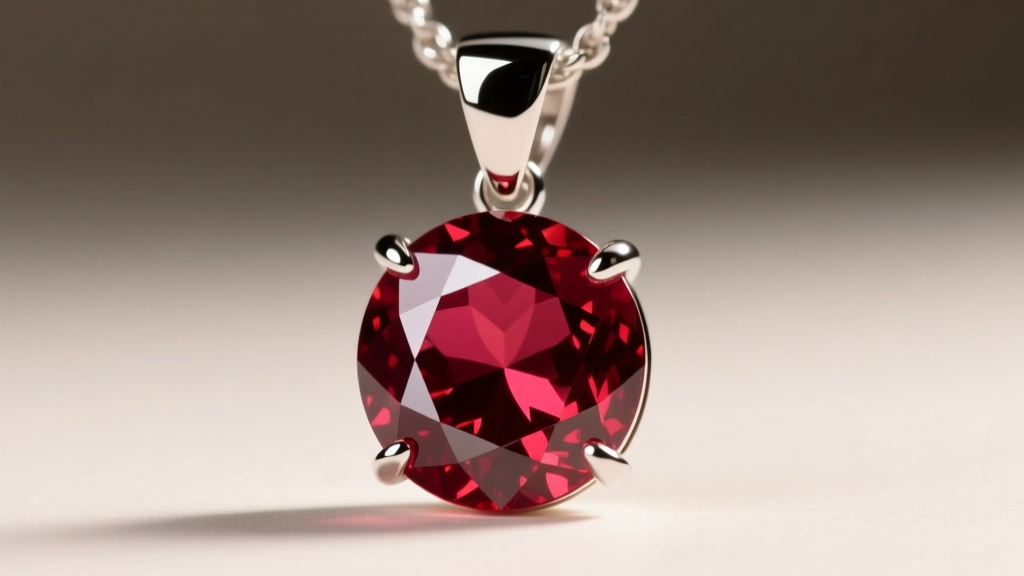
The physical interface between the metal and the gemstone is the most critical point of failure in any necklace. When setting a center ruby surrounded by a diamond halo, jewelers typically employ a shared-prong or pavé setting for the diamonds, and a robust four or six-prong setting for the ruby.
'A prong should never be a mere decorative afterthought. For a 2-carat ruby, I mandate a minimum wire thickness of 1.1mm for the prongs, with a precisely filed bead that covers exactly 15% of the stone's crown. Anything less invites disaster upon the first accidental impact.' — Master Bench Jeweler, Jewelers of America Symposium.
One common failure mode in white gold settings is rhodium masking. Because white gold is rhodium-plated to appear bright white, the plating can fill in microscopic stress fractures in the prongs. When the rhodium eventually wears off, the jeweler discovers the prong is nearly snapped in half. Platinum eliminates this hidden danger entirely, as its natural white-gray color requires no galvanic masking.
2026 Market Pricing and Valuation Tiers
Understanding the material properties directly correlates to understanding the pricing structure of a ruby with diamond necklace. The market has stratified into distinct tiers based on gemological reports (such as those from GIA, Gübelin, or SSEF) and metal weight.
Tier 1: Commercial & Fashion ($1,500 - $4,500)
Features heat-treated Mozambican rubies (1.00 - 2.00 carats) with single-cut diamond melee set in 14k white or yellow gold. The ruby will likely have visible inclusions and a slightly purplish or brownish secondary hue. Suitable for occasional wear, but the gold prongs will require annual checking.
Tier 2: Fine Jewelry & Heirloom ($6,000 - $18,000)
Features unheated Mozambican or traditionally heated Burmese rubies (2.00 - 4.00 carats) displaying 'Vivid Red' saturation. Accented with full-cut VS-clarity diamond melee, secured in 18k gold or platinum. This is the sweet spot for serious collectors who want exceptional durability and vibrant color without the astronomical premiums of unheated Burmese origin.
Tier 3: Investment & Museum Grade ($35,000+)
Reserved for unheated Burmese rubies carrying the coveted 'Pigeon's Blood' designation from top-tier Swiss laboratories. Set in heavy platinum mountings with VVS-clarity, perfectly calibrated diamond halos. These pieces are bought as alternative asset classes and are often insured as part of a broader investment portfolio.
Care Protocols for Dual-Gemstone Jewelry
Maintaining a ruby and diamond pendant requires a nuanced approach, as the two stones react differently to cleaning methods. While diamonds are virtually impervious to chemical damage and can withstand ultrasonic cleaners, rubies demand a gentler touch. If your ruby has been traditionally heat-treated, ultrasonic vibrations can sometimes exacerbate existing internal tension fractures, leading to a cracked stone. Furthermore, if the necklace features any melee diamonds that have been fracture-filled (a rare but possible occurrence in lower-tier jewelry), ultrasonic heat will melt the filler.
The Golden Rule of Cleaning: Always use a lukewarm solution of mild, phosphate-free dish soap and a soft-bristled baby toothbrush. Gently agitate the solution around the back of the pendant (the pavilion), where skin oils and lotions accumulate and block light return. Rinse with distilled water to prevent hard water spots, and dry with a lint-free microfiber cloth. Have a professional jeweler inspect the prong tension and structural integrity of the bail (the loop connecting the pendant to the chain) every 18 months to ensure your masterpiece remains secure for generations.


