Scallop Necklace Value Guide: Pricing, Metals, and Worth
Discover the true value of a scallop necklace. Compare solid gold, vermeil, and designer pricing to make a smart, lasting jewelry investment.

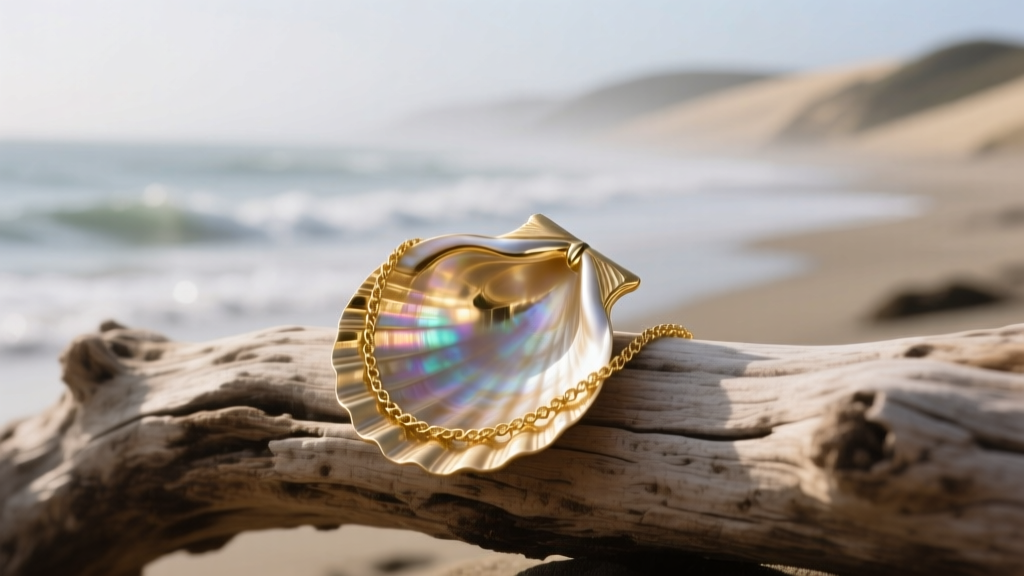
The Coastal Premium: Decoding the Market
The scallop motif has transcended seasonal summer trends to become a permanent fixture in fine jewelry collections. As we navigate the 2026 jewelry market, the demand for coastal-inspired pieces remains exceptionally high. However, this popularity has flooded the market with options ranging from $30 fast-fashion trinkets to $3,000 luxury designer pieces. For the savvy consumer, this massive price disparity raises a critical question: how do you accurately assess the true value of a scallop necklace?
Evaluating a shell pendant requires looking past the aesthetic and examining the metallurgy, casting techniques, and brand markups. A scallop shell is a deceptively complex shape to manufacture. Its natural ridges, known as striations, and its cupped undercuts present unique challenges for jewelers. Understanding these manufacturing nuances is the key to determining whether you are investing in a timeless heirloom or overpaying for disposable, plated brass.
The Material Matrix: What You Are Actually Paying For
The foundation of any jewelry value assessment begins with the base metal and the finishing technique. When shopping for a scallop necklace, you will generally encounter three distinct tiers of material quality. According to the Federal Trade Commission Jewelry Guides, terms like 'gold plated' and 'vermeil' have strict legal definitions regarding the thickness of the gold layer and the purity of the base metal.
| Material Tier | Base Metal | Gold Layer / Purity | Avg. Price (15-20mm) | Value Retention |
|---|---|---|---|---|
| Fast Fashion / Plated | Brass or Zinc Alloy | Flash Plated (<0.1 microns) | $25 - $65 | Poor (Tarnishes in months) |
| Demi-Fine / Vermeil | Sterling Silver (925) | Heavy Vermeil (2.5+ microns) | $120 - $250 | Moderate (Lasts 2-5 years) |
| Fine Jewelry / Solid | Solid 14k or 18k Gold | Solid Alloy (58.5% - 75% Gold) | $350 - $750+ | Excellent (Generational) |
While a flash-plated brass shell might look identical to a solid gold piece on a website, the physical reality of daily wear will quickly expose the difference. Solid gold retains intrinsic melt value and can be polished indefinitely, whereas plated pieces eventually reveal their base metal, requiring costly re-plating services that often exceed the original purchase price.
Designer Tax vs. Artisan Metallurgy
One of the most common traps in the shell jewelry market is the 'designer tax.' High-end fashion houses frequently release scallop necklaces crafted from gold-plated brass, retailing for $250 to $450. You are paying for the logo and the seasonal runway association, not the metallurgical integrity. Conversely, an independent artisan casting a 14k solid gold scallop pendant might charge $400, offering vastly superior material value and longevity.
According to the Gemological Institute of America (GIA), the durability of gold jewelry is heavily dependent on its alloy composition and casting quality. Artisan jewelers typically use vacuum-assisted lost-wax casting, which ensures that molten gold fills the microscopic details of the shell's ridges without trapping air bubbles.
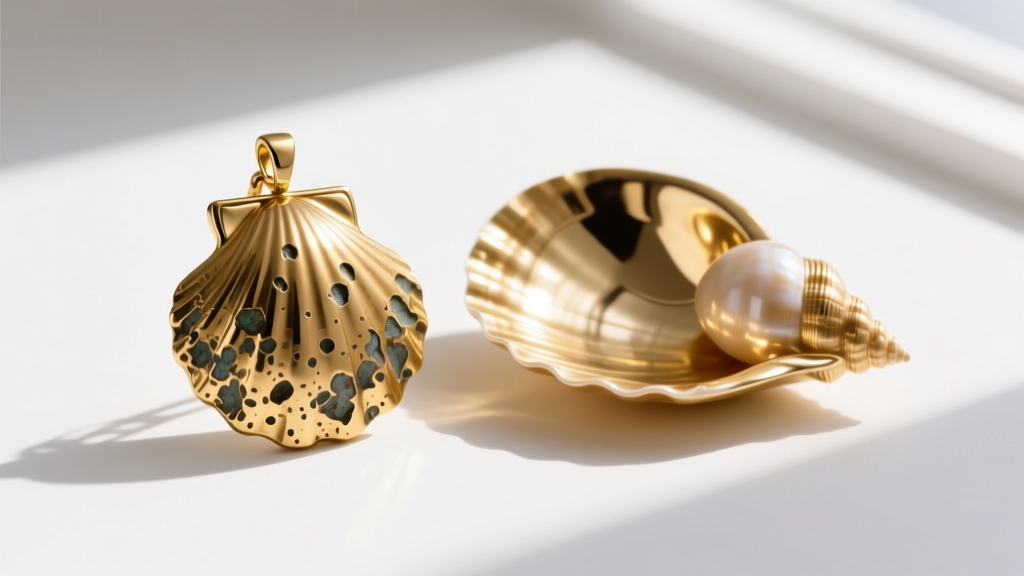
Common Failure Modes in Budget Scallop Pendants
If you opt for the lower end of the budget spectrum, be aware of the specific structural vulnerabilities inherent to shell-shaped jewelry:
- Ridge Friction Wear: The raised striations of a scallop shell act as high-friction contact points against your collarbone and clothing. On gold-plated pieces, these ridges are the first areas to wear through to the base metal, often within the first 90 days of daily wear.
- Casting Porosity: Budget manufacturers often cast real shells directly or use low-quality 3D-printed wax molds without vacuum assistance. This results in micro-porosity—tiny pits in the metal that trap sweat, lotions, and dead skin, accelerating tarnish and causing brass bases to turn the skin green.
- Pinched Bails: The bail (the loop connecting the shell to the chain) on cheap pendants is often just pinched metal wrapped around the shell's hinge, rather than laser-soldered. This creates a weak point that snaps under minor tension.
How to Appraise a Scallop Shell Pendant Before Buying
To ensure you are getting fair market value, conduct a physical or high-resolution visual appraisal using the following criteria. If buying online, demand macro-photography of the pendant's reverse side and the bail connection.
1. Weigh the Gold: A standard 20mm solid 14k gold scallop shell should weigh between 2.5 and 4.5 grams, depending on the thickness of the cup. At current gold market rates, the raw material cost alone for a 3-gram 14k shell is significant. If a seller claims a large pendant is 'solid gold' but prices it under $200, it is almost certainly hollow, heavily alloyed, or plated.
2. Inspect the Shell Hinge: Look at the top of the shell where the bail attaches. High-value pieces will feature a seamlessly soldered jump ring or a custom-cast integrated bail. Avoid pieces where the chain simply threads through a hollow, un-reinforced hole at the top of the shell, as the soft gold will eventually wear through and drop the pendant.
"When evaluating textured pendants like scallop shells, always examine the recessed areas between the ridges. In high-quality castings, the valleys are smooth and polished. In mass-produced pieces, you will see a grainy, sand-like texture indicative of poorly finished cast molds." — Master Bench Jeweler Appraisal Standards
The Final Verdict: Budgeting for Your Perfect Shell
Assessing the value of a scallop necklace ultimately depends on your intended use and budget parameters. Here is the strategic breakdown for 2026 shoppers:
The Under $100 Bracket (Vermeil & Heavy Plate): If your budget is strict, avoid brass entirely. Seek out sterling silver bases with a minimum of 2.5 microns of gold vermeil. Brands specializing in demi-fine jewelry offer excellent entry-level value here. Expect to replace or re-plate the piece every few years, but it will not turn your skin green.
The $300 - $600 Bracket (Solid 14k Gold): This is the sweet spot for true value. At this price point, you are purchasing a permanent fixture for your jewelry wardrobe. Look for independent jewelers who provide exact gram weights and use recycled 14k gold. A well-cast 14k scallop necklace in this tier offers the best cost-per-wear ratio and can be passed down as an heirloom.
The $800+ Bracket (Designer & 18k Gold): You are paying for brand prestige, heavy 18k gold alloys (which offer a richer, more buttery yellow hue but are slightly softer), or intricate hand-engraving. Only enter this tier if you are buying from a heritage jewelry house or an artisan who hand-carves the wax model, ensuring no two shell ridges are exactly alike.
Ultimately, a scallop necklace is more than a fleeting summer trend; it is a nod to the timeless geometry of nature. By prioritizing metallurgical integrity over fast-fashion markups, you can secure a piece that captures the ocean's beauty and retains its intrinsic value for decades to come.


