The Metallurgy of a Copper Chain Necklace: Patina, Gauges & Care
Explore the technical metallurgy of a copper chain necklace. Learn about gauge thickness, patina oxidation, skin reactivity, and structural care.

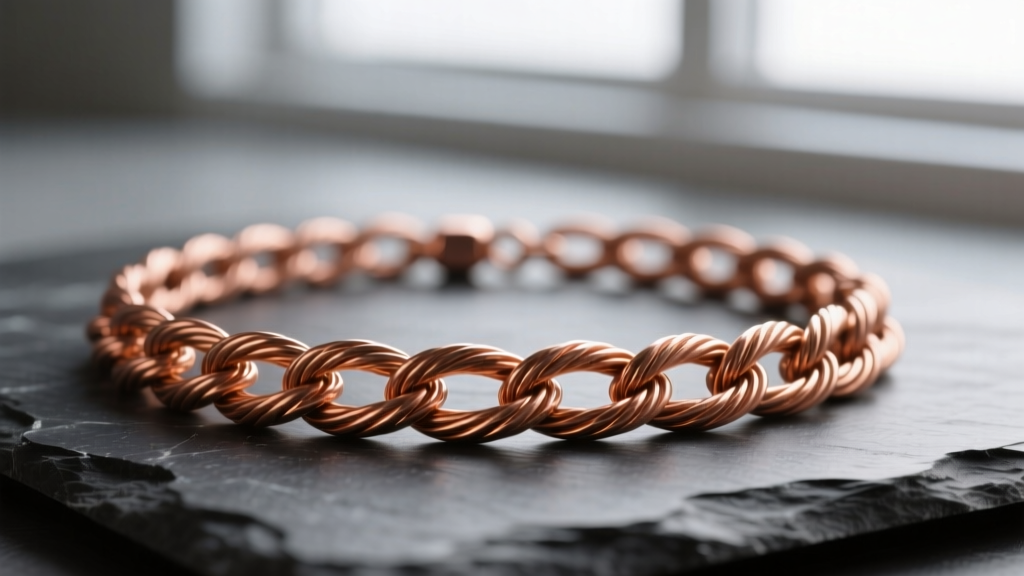
When selecting a copper chain necklace, most consumers focus solely on the warm, earthy aesthetic of the metal. However, from a metallurgical and structural perspective, copper presents a unique set of challenges and advantages that demand a technical understanding. Unlike gold or platinum, copper is a highly reactive, relatively soft transition metal. Its behavior on the skin, its structural limits under tensile stress, and its inevitable oxidation timeline are governed by strict chemical principles. This guide provides an expert deep dive into the material science of copper jewelry, equipping you with the data needed to select, wear, and maintain a copper chain necklace with precision.
The Metallurgical Profile: C11000 vs. Alloys
Not all copper jewelry is created equal. The highest quality pure copper chains are typically fabricated from C11000, also known as Electrolytic Tough Pitch (ETP) copper. ETP copper contains a minimum of 99.9% copper and a maximum of 0.04% oxygen. This specific grade is the industry standard for electrical and high-purity jewelry applications because it offers exceptional malleability and a distinct, deep salmon-pink hue when freshly polished.
However, pure C11000 copper has a Vickers hardness (HV) of roughly 50 in its fully annealed state, making it highly susceptible to scratching and deformation. To counteract this, many jewelers utilize copper alloys. Brass (copper and zinc) and Bronze (copper and tin) increase the Vickers hardness to 100-150 HV, drastically improving scratch resistance. Yet, purists seeking the specific antimicrobial properties and exact color profile of elemental copper must accept the structural trade-offs of C11000. According to the Copper Development Association, the addition of even trace amounts of silver or cadmium can alter the work-hardening rate, a critical factor in chain link durability.
Structural Integrity: Wire Gauge and Link Failure Modes
The longevity of a copper chain necklace is inextricably linked to its wire gauge and the resulting tensile strength of the individual links. Because copper work-hardens rapidly—meaning its crystal lattice develops dislocation tangles when bent or drawn—chain links are subjected to immense internal stress during the manufacturing process. If not properly annealed after drawing, the links will be brittle and prone to snapping under minor loads.
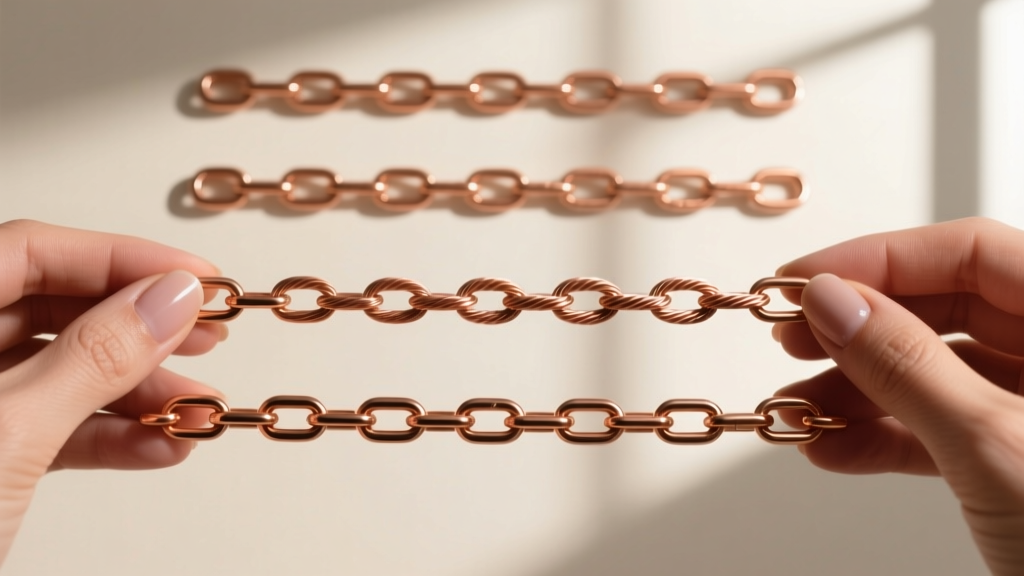
When evaluating a copper chain, you must match the American Wire Gauge (AWG) to your intended pendant weight. Using a gauge that is too fine for a heavy pendant will result in the elongation of the links, eventually leading to structural failure at the clasp or bail.
| AWG Size | Diameter (mm) | Approx. Tensile Load Limit | Best Application |
|---|---|---|---|
| 16 Gauge | 1.29 mm | ~18-22 lbs | Heavy statement pendants, thick rope chains |
| 18 Gauge | 1.02 mm | ~12-15 lbs | Standard pendants, everyday durability |
| 20 Gauge | 0.81 mm | ~7-9 lbs | Lightweight pendants, delicate layering |
| 22 Gauge | 0.64 mm | ~4-5 lbs | Ultra-fine chains, no pendants recommended |
For a reliable daily-wear copper chain necklace, 18 AWG is the optimal threshold. It provides enough cross-sectional area to resist the work-hardening fatigue caused by the constant articulation of the links against the collarbone.
The Oxidation Timeline: Managing Patina and Verdigris
Copper is a noble metal, but it is not inert. When exposed to atmospheric oxygen, a copper chain necklace will immediately begin a multi-stage oxidation process. Understanding this timeline allows you to either arrest the process for a bright finish or accelerate it for an antique aesthetic.
Stage 1: Cuprite and Tenorite Formation
Within days of exposure to oxygen and ambient humidity, the bright salmon-pink surface of the copper will dull as a microscopic layer of cuprite (copper(I) oxide) forms. This layer is typically red or pinkish but quickly oxidizes further into tenorite (copper(II) oxide), which presents as a dark brown or matte black. This is the standard "antique" finish seen on many commercial copper chains.
Stage 2: Carbonates and Chlorides (Verdigris)
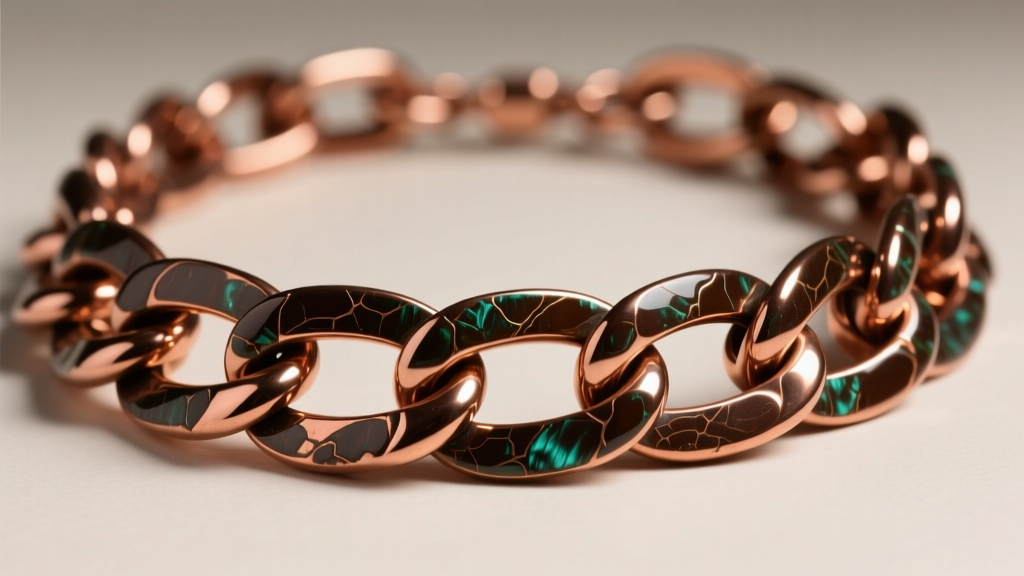
When the copper reacts with carbon dioxide, moisture, and chlorides (from sweat or environmental salt), it forms copper carbonates like malachite and azurite, or copper chlorides. This results in the powdery green or blue-green crust known as verdigris. While aesthetically pleasing on the Statue of Liberty, powdery verdigris on a necklace chain can degrade the structural integrity of the links and cause severe skin irritation.
"To stabilize a deliberate dark patina on copper without it progressing to powdery green carbonates, the metal must be sealed immediately after chemical oxidation using a micro-crystalline wax or a specialized acrylic polymer."
— Technical guidelines from Ganoksin Jewelry Making Forum
Dermatological Reactivity and the "Green Skin" Phenomenon
The most common complaint regarding copper chain necklaces is the green discoloration left on the skin. This is not a sign of toxicity or low-quality metal; rather, it is a predictable chemical chelation process. Human sweat contains water, sodium chloride, urea, and lactic acid, with a pH typically ranging from 4.5 to 7.0.
When the acidic environment of the skin meets the copper chain, the copper ions (Cu2+) are released and bind with the amino acids and proteins in your sweat, forming copper chelates. These chelates are green and are easily absorbed into the outermost layer of the epidermis. Individuals with a lower skin pH (more acidic sweat) or those who wear copper in high-humidity environments will experience this effect much faster.
Barrier Methodologies
If you wish to wear a pure copper chain without the chelation effect, you must introduce a physical barrier between the metal and the epidermis. Standard clear nail polishes are insufficient as they chip and contain solvents that can react with the copper. Instead, jewelry conservators recommend Everbrite ProtectaClear or Renaissance Wax. ProtectaClear is a tough, clear, skin-safe coating that cures into a flexible polymer, entirely neutralizing the chelation process while maintaining the visual depth of the metal.
Maintenance Protocols and Chemical Cleaning
Restoring a heavily oxidized copper chain necklace to its original luster requires the removal of the tenorite and cuprite layers. Mechanical polishing alone is often insufficient for chain links due to the inaccessible interior surfaces of the links. Chemical reduction is required.
- Avoid Ammonia: Never use ammonia-based cleaners (like standard glass cleaners) on copper. Ammonia forms a deep blue, water-soluble complex with copper that will aggressively strip the metal and weaken the links.
- Mild Acid Baths: A solution of white vinegar (acetic acid) and non-iodized table salt creates a mild hydrochloric acid environment that dissolves copper oxides in seconds. Submerge the chain for no more than 60 seconds, then immediately neutralize with a baking soda and water bath.
- Abrasive Compounds: For targeted polishing of the outer link surfaces, use a jeweler's rouge or a specialized copper cream containing ultra-fine silica abrasives (under 10 microns) to prevent micro-scratching.
- Ultrasonic Caution: While ultrasonic cleaners are excellent for removing sebum and dirt from the crevices of a copper chain, they should only be used with neutral pH solutions. Acidic solutions in an ultrasonic tank will cause rapid, uneven etching of the copper surface.
Conclusion
A copper chain necklace is far more than a simple accessory; it is a dynamic, reactive material that interacts continuously with its environment and the wearer. By understanding the metallurgical grade of the copper, selecting the correct AWG for your structural needs, and actively managing the oxidation and chelation processes, you can ensure the longevity and beauty of the piece. Whether you choose to maintain a mirror-polished C11000 finish or cultivate a rich, sealed tenorite patina, mastering the technical nuances of copper will elevate your jewelry curation from passive wearing to active material stewardship.


