Troubleshoot a Slipping Paperclip Necklace With Pendant
Is your charm sliding off-center? Learn expert troubleshooting tips to secure a pendant on a paperclip necklace, from bail sizing to clasp weights.

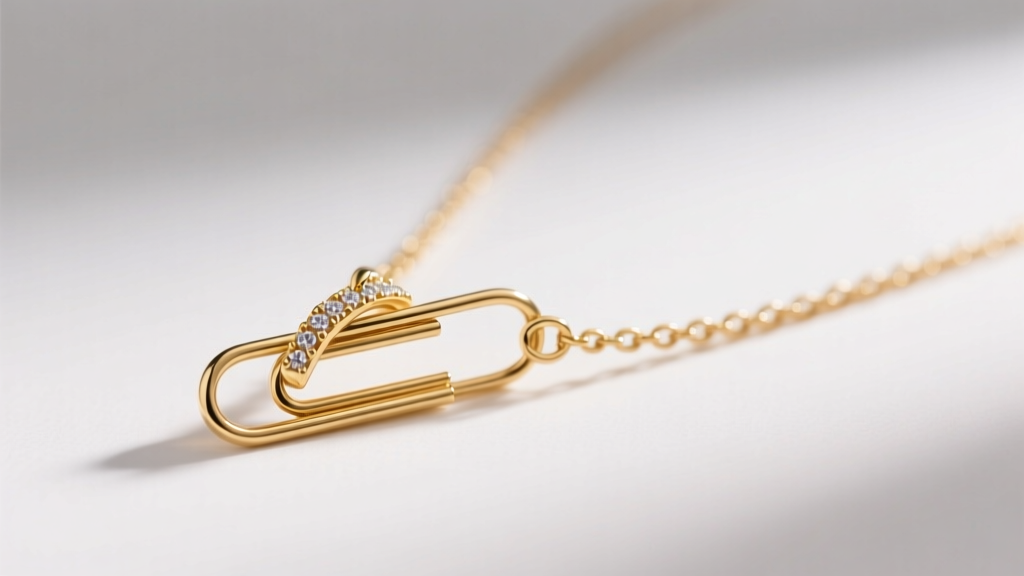
The Geometry Problem: Why Pendants Slip on Elongated Links
The modern paperclip necklace with pendant is a staple of contemporary jewelry layering, prized for its industrial chic aesthetic and lightweight drape. However, from a structural engineering perspective, the very design that makes the paperclip chain visually striking—its elongated, rectangular links—creates a mechanical nightmare for pendant integration. Standard curb or cable chains feature uniform, nearly square links that naturally center a pendant bail. In contrast, a typical paperclip link measures anywhere from 12mm to 15mm in length, but only 3mm to 5mm in width.
When you thread a standard pendant bail onto these elongated links, the bail has excessive lateral travel. Gravity and body movement cause the pendant to slide continuously along the 15mm horizontal axis of the link, resulting in an off-center, asymmetrical look. Furthermore, because the links are flat rather than rounded, the pendant can easily flip upside down or become wedged between two links, causing frustrating tangles and potential metal fatigue. Troubleshooting a paperclip necklace with pendant requires moving beyond standard jewelry practices and applying precise hardware sizing, weight distribution, and friction management.
Troubleshooting Matrix: Common Hardware Failures
Before replacing your chain or pendant, diagnose the exact mechanical failure. Below is a troubleshooting matrix utilized by bench jewelers to resolve the most common integration issues specific to elongated link chains.
| Issue | Root Cause | Hardware Solution |
|---|---|---|
| Pendant slides laterally off-center | Bail inner width exceeds the chain link width, allowing horizontal travel. | Add a 4mm or 5mm solid jump ring as a 'keeper' to restrict lateral movement. |
| Pendant flips upside down | Top-heavy bail design or flat link profile lacking a rounded resting groove. | Switch to a weighted V-bail or a European-style bail with a fixed lower loop. |
| Chain tangling at the nape | Flat, stamped link edges catching on adjacent links during movement. | Upgrade to a beveled or semi-hollow paperclip chain; polish inner link edges. |
| Clasp migrates to the front | Front-heavy chain and pendant outweigh the standard 5mm spring ring clasp. | Install a 2-gram counterweight tag or upgrade to a 12mm solid cast lobster clasp. |
Bail Sizing Mathematics: The Inner Diameter Rule
The most frequent mistake consumers and novice jewelers make when pairing a paperclip necklace with pendant is ignoring the inner diameter (ID) of the bail relative to the outer width of the chain link. According to manufacturing standards outlined by Rio Grande, a bail must have an ID at least 0.5mm larger than the chain's maximum width to thread smoothly. However, for a paperclip chain, this standard rule creates the slipping problem.
If your paperclip chain has a link width of 4.5mm, a standard 5mm ID bail will slide on easily but will also slide sideways across the 15mm length of the link. To solve this, you must introduce a secondary restriction mechanism. The most elegant solution is the use of a silicone O-ring stopper or a 'keeper' jump ring. By threading a 20-gauge, 4mm solid gold jump ring through the bail and the chain link, you effectively reduce the lateral travel zone from 15mm down to 4mm, locking the pendant in the dead center of the collarbone.
Calculating the Perfect Bail-to-Link Ratio
For custom jewelry designs, aim for a bail that features an integrated horizontal channel. Tube bails with an inner silicone sleeve provide friction against the smooth metal of the paperclip link, preventing the slip without requiring additional jump rings. If you are retrofitting an existing pendant, measure the link width using digital calipers. If the link is 3.8mm wide, source a snap-on bail with a 4.0mm inner width, and gently crimp the bail's prongs to create a custom friction fit that grips the flat edges of the paperclip link.
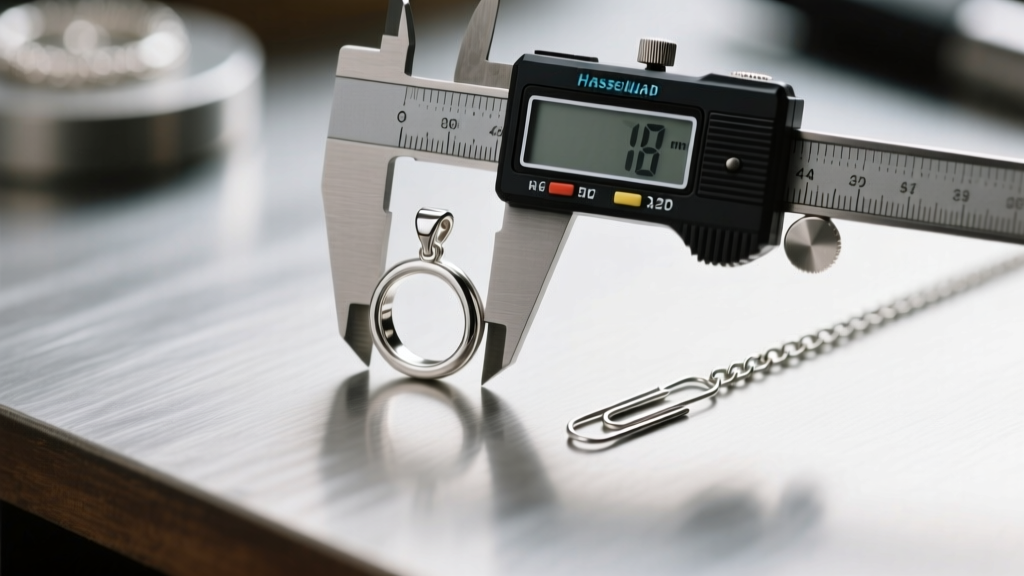
The Clasp Migration Phenomenon
A secondary, often overlooked issue when styling a paperclip necklace with pendant is clasp migration. Paperclip chains, particularly those made of solid 14k gold or stainless steel, are inherently front-heavy due to the mass of the elongated links and the added pendant. A standard 5mm spring ring clasp weighs approximately 0.1 grams. When the front of the necklace weighs 4 to 6 grams, gravity dictates that the heavier front will pull downward, forcing the lightweight clasp to slide around the neck and rest awkwardly next to the pendant.
To troubleshoot this, you must balance the fulcrum of the necklace. Bench jewelers solve this by adding a counterweight. Soldering or attaching a small, 1.5 to 2-gram solid metal 'counterweight tag' or a heavy decorative bead directly adjacent to the clasp creates an equilibrium. Alternatively, swapping the flimsy spring ring for a heavy-duty 12mm or 15mm solid cast lobster clasp adds enough mass to the back of the neck to keep the clasp anchored at the nape. The Jewelers of America frequently recommends evaluating clasp-to-chain weight ratios for all heavy pendant configurations to prevent uneven wear on the chain's terminal jump rings.
Metal Friction and the 'Saw' Effect
When troubleshooting long-term wear, we must consider the metallurgical interaction between the chain and the pendant. Paperclip links are typically stamped and drawn, leaving microscopic flat, sometimes slightly sharp, inner edges. If you hang a soft, high-karat gold pendant (like 18k or 22k gold) directly onto a harder metal paperclip chain (such as 10k gold, platinum, or stainless steel), the chain link will act like a microscopic file against the pendant bail.
This phenomenon, driven by differences in the Vickers Hardness (HV) scale, can saw completely through a delicate pendant bail in under six months of daily wear. For instance, 14k yellow gold has a Vickers hardness of roughly 130 HV, while stainless steel sits around 150-200 HV. To prevent this mechanical abrasion, always introduce a sacrificial buffer. Use a hardened steel or platinum jump ring as the intermediary connector between the pendant bail and the paperclip chain. The Gemological Institute of America (GIA) provides extensive resources on metal durability and galvanic reactions, emphasizing that mixing metals of vastly different hardness levels in high-friction zones requires intermediary findings to preserve the structural integrity of the softer piece.
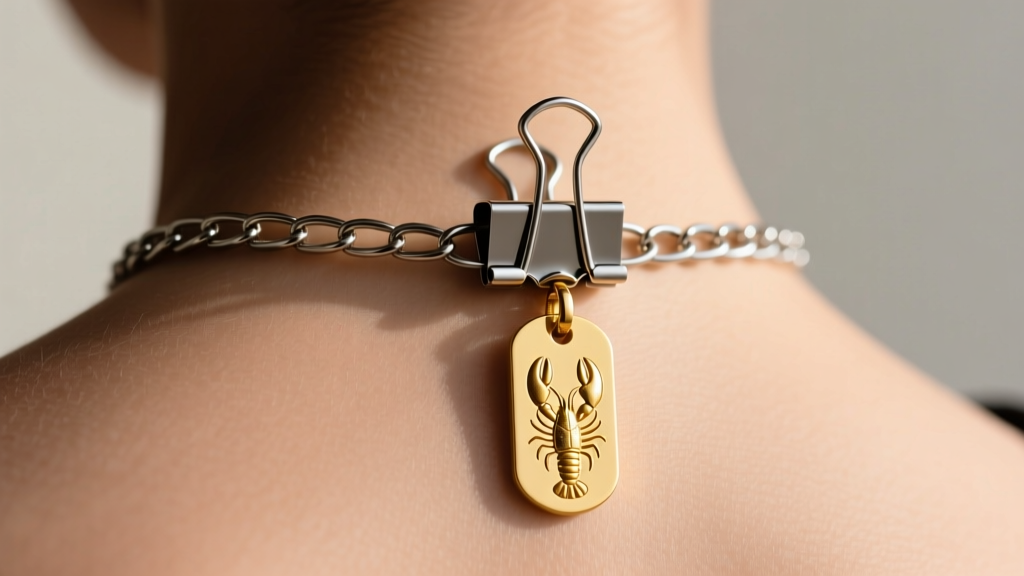
Preventing Chain Tangling in Flat-Link Designs
The final major troubleshooting hurdle for the paperclip necklace with pendant is the notorious 'catch and tangle' effect. Because the links are elongated and flat, they possess a high surface area that easily overlaps and snags on adjacent links, especially when layered with other chains or worn under high-collared clothing. When a pendant is added, its weight pulls the chain taut, increasing the tension and making it harder for snagged links to naturally release.
To mitigate this, inspect the profile of your paperclip chain before purchasing or wearing it. Hollow paperclip chains are lightweight but prone to crushing and tangling due to their sharp, stamped edges. Opt for 'beveled' or 'semi-rounded' paperclip links, where the jeweler has lightly filed or tumbled the edges to create a smoother, more oval-like cross-section. This slight rounding drastically reduces the surface area available for snagging, allowing the chain to glide fluidly over itself and the pendant bail, ensuring your necklace remains untangled and elegantly draped throughout the day.


