Troubleshooting Common Industrial Chain Necklace Issues
Learn how to troubleshoot, clean, and repair your industrial chain necklace. Expert fixes for tarnish, broken clasps, and stiff links.

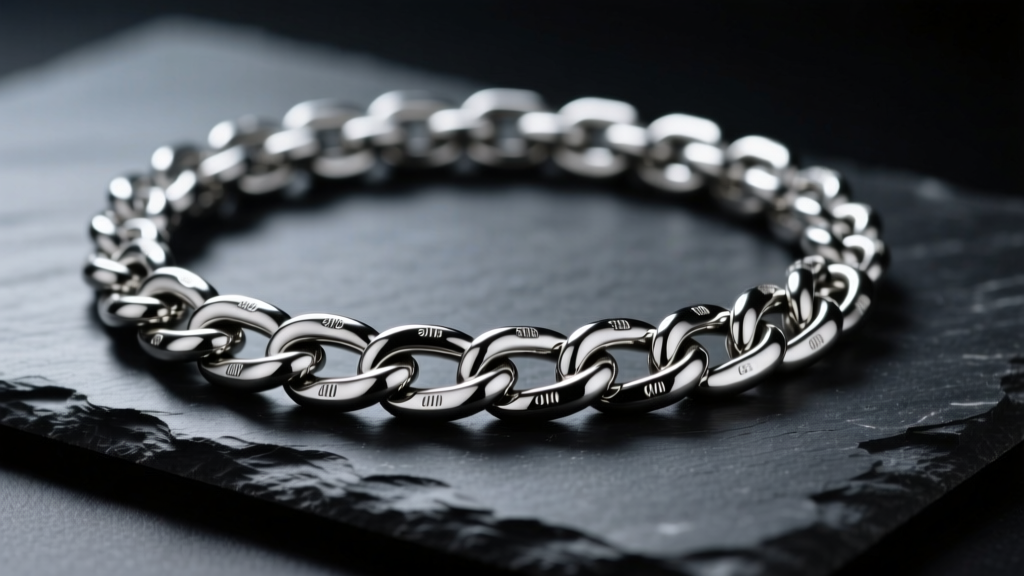
Industrial chain necklaces—ranging from heavy Cuban links and motorcycle chains to thick Figaro and rope styles—are prized for their bold, utilitarian aesthetics. However, the sheer weight and complex interlocking structures of these pieces make them uniquely susceptible to mechanical fatigue, chemical tarnishing, and clasp failures. Whether you are wearing a solid brass statement piece or a 316L stainless steel everyday chain, understanding the metallurgy and mechanics of your jewelry is critical for long-term preservation.
In this comprehensive troubleshooting guide, we break down the most common failure points of an industrial chain necklace and provide bench-jeweler-approved solutions to restore, repair, and maintain your heavy-duty links.
Why Industrial Chain Necklaces Fail: The Anatomy of Wear
Unlike delicate cable chains, industrial chains feature thick, tightly interwoven links that create high-friction pivot points. When a heavy chain swings or catches on clothing, the lateral torque is transferred directly to the jump rings and the clasp. Over time, this repetitive stress causes work hardening in the metal, making jump rings brittle and prone to snapping. Furthermore, the deep crevices between links trap sebum, dead skin cells, and environmental pollutants, creating a micro-environment that accelerates galvanic corrosion and tarnishing.
According to metallurgical guidelines from Rio Grande, the specific alloy of your chain dictates its primary vulnerability. Brass and bronze chains suffer from copper oxidation, while sterling silver reacts to atmospheric sulfur. Even highly resistant 316L stainless steel can experience pitting if exposed to high-chloride environments like swimming pools or heavy sweat without proper maintenance.
Troubleshooting Tarnish and the 'Green Neck' Phenomenon
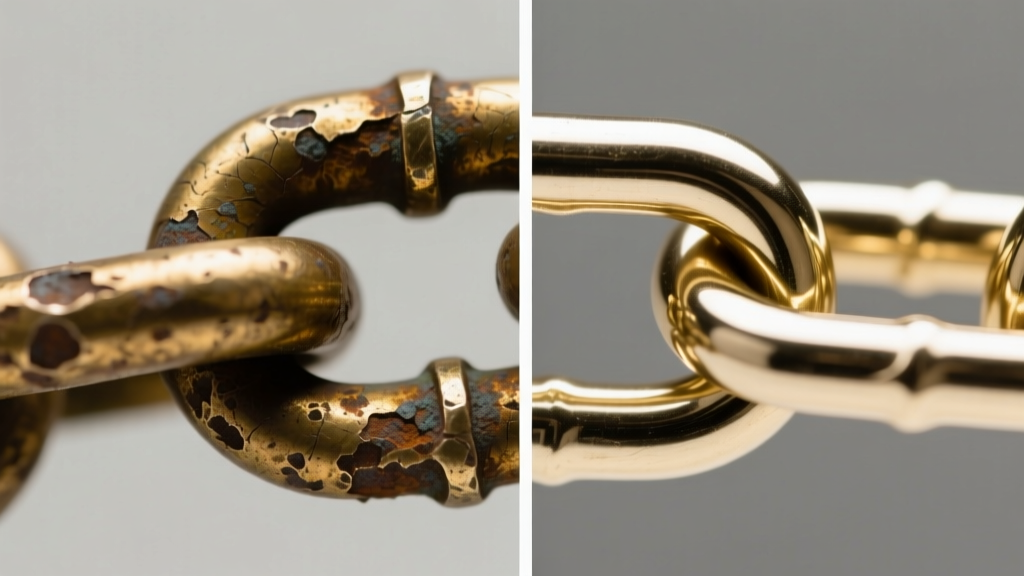
One of the most frequent complaints regarding industrial brass or copper-alloy chains is skin discoloration. The notorious 'green neck' effect is not an allergic reaction; it is a chemical process where copper in the alloy reacts with the chlorides and fatty acids in your sweat to form copper chelates, which then transfer to the skin.
Material-Specific Cleaning and Sealing Protocols
To troubleshoot tarnish and prevent skin staining, you must match the cleaning agent to the specific metal grade. Using the wrong chemical dip can permanently ruin the patina or strip protective plating.
| Material Grade | Common Failure Mode | Troubleshooting Protocol | Preventative Sealant |
|---|---|---|---|
| 316L Stainless Steel | Seized links, dullness, chloride pitting | 40kHz ultrasonic bath with distilled water and mild surfactant | None required; microfiber buffing |
| Solid Brass / Bronze | Copper oxidation, skin staining (green neck) | Mechanical polishing with Brasso or Wright's Brass Polish | Renaissance Wax or clear polyurethane |
| 925 Sterling Silver | Sulfur tarnish (blackening), micro-scratches | Aluminum foil, baking soda, and hot water ion-transfer bath | Anti-tarnish cloth storage bags |
| Titanium (Grade 23) | Dirt buildup in deep crevices | Warm water, dish soap, and a soft-bristle brush | None required |
Permanent Fixes for Skin Staining
If you own a vintage brass industrial chain necklace and want to wear it daily without the green stain, temporary fixes like clear nail polish will eventually chip and create a messy, uneven texture. The professional solution is to take the piece to a bench jeweler for rhodium plating or electrocoating. This creates a microscopic, hypoallergenic barrier that permanently seals the copper alloys away from your skin while maintaining the chain's metallic luster.
Fixing Stiff, Seized, or Squeaky Links
Because industrial chains have wide, flat link surfaces (especially in Cuban and curb styles), they are prone to accumulating microscopic debris that acts like sandpaper, grinding down the metal and causing links to seize. If your chain has lost its fluid drape and feels rigid, do not force the links open, as this will warp the geometry and weaken the structural integrity.
The Ultrasonic Cavitation Method
To safely deep-clean seized links, use a 40kHz ultrasonic jewelry cleaner. The high-frequency sound waves create microscopic vacuum bubbles in the liquid that implode against the metal, blasting dirt out of the tightest crevices without manual scrubbing. Run the chain for 3-minute cycles in a solution of distilled water and a drop of ammonia-free dish soap.
Proper Lubrication for Heavy Chains
Never use standard oil-based lubricants (like WD-40 or sewing machine oil) on an industrial chain necklace. Oil attracts dust and lint, which will quickly turn into a black, abrasive sludge inside the links. Instead, use a PTFE (Teflon) dry lubricant. Apply a single drop to the pivot points of the stiff links, flex the chain gently to work it in, and wipe away all excess. The PTFE will leave a dry, frictionless film that repels dust while restoring the chain's fluid movement.
Clasp and Jump Ring Failures: Heavy Chain Solutions
The weakest point of any heavy necklace is the connection between the chain and the clasp. Standard lobster claws and lightweight spring rings are engineered for chains weighing under 20 grams. If your industrial chain necklace weighs 50, 100, or even 200 grams, the sheer pendulum force of the chain will eventually bend the clasp's trigger mechanism or snap the jump ring.
Upgrading the Clasp Hardware
According to hardware specialists at Jewelers of America, heavy statement pieces require specialized findings. If your chain exceeds 80 grams, you must upgrade to one of the following:
- Screw-Lock Barrel Clasps: These thread together and can support immense weight, though they are difficult to fasten with one hand.
- Heavy-Duty Trigger Clasps (15mm+): Featuring a reinforced internal spring and a thicker cast body, these can handle the lateral torque of a heavy Cuban link chain.
- Magnetic Locking Clasps: Modern neodymium magnetic clasps with a secondary mechanical twist-lock offer excellent security and ease of use for heavy chains.
Solving the Jump Ring Problem
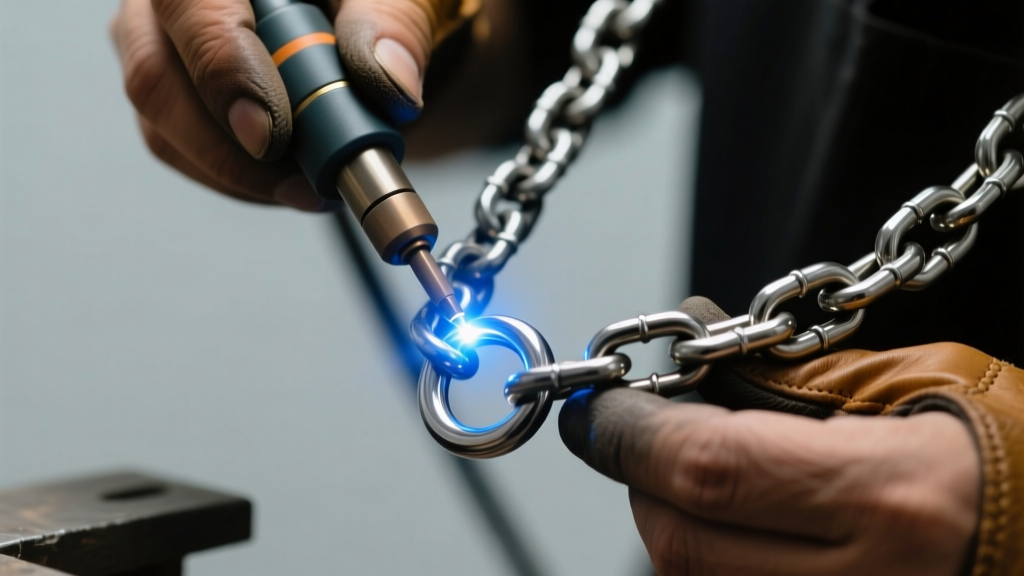
If the jump ring connecting your clasp keeps pulling apart, it is likely made of dead-soft wire and was never properly soldered. For silver and gold chains, a jeweler can easily solder the jump ring shut. However, 316L stainless steel and titanium cannot be traditionally soldered with a jeweler's torch due to their high melting points and oxidation properties. As of 2026, the industry standard for fixing steel industrial chains is desktop laser welding. A laser welder uses concentrated light to fuse a microscopic bead of matching steel wire across the jump ring seam, creating a permanent, seamless seal without damaging the surrounding polished links.
Preventative Maintenance Schedule
To ensure your industrial chain necklace remains a lifelong staple, implement this strict maintenance schedule:
- After Every Wear: Wipe the chain down with a clean, dry microfiber cloth to remove sweat, sebum, and lotions before storing.
- Monthly: Inspect the jump rings and clasp mechanism. Use a jeweler's loupe (10x magnification) to check for hairline fractures or thinning metal at the pivot points.
- Bi-Annually: Perform a deep ultrasonic clean and re-apply PTFE dry lubricant to the links. If the chain is brass or silver, apply a fresh coat of Renaissance Wax to seal the metal against atmospheric moisture.
By treating your industrial chain necklace with the same mechanical respect as a precision timepiece, you can prevent catastrophic failures and keep your heavy-duty links draping perfectly for decades.


