How to Style and Layer a Winged Heart Necklace Perfectly
Master the art of styling a winged heart necklace. Learn step-by-step layering techniques, neckline pairings, and expert metal care tips.

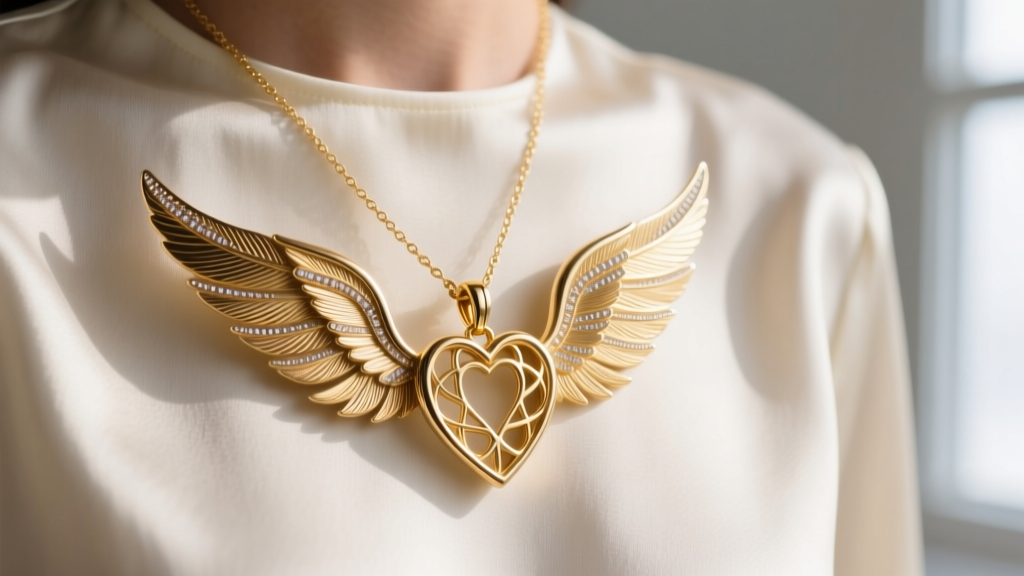
Decoding the Anatomy and Proportions
The winged heart necklace is a timeless motif that bridges the gap between romantic sentimentality and edgy, celestial aesthetics. However, styling this specific pendant requires an understanding of its unique geometry. Unlike a simple solitaire or geometric pendant, the wings add horizontal volume, which fundamentally changes how the piece sits on the collarbone and interacts with other jewelry.
Wing Spread vs. Folded Designs
When selecting your focal piece, note the wingspan. A spread-wing design (typically spanning 25mm to 40mm horizontally) acts as a statement piece and requires a thicker chain—such as a 1.5mm to 2.0mm box or rolo chain—to support the visual and physical weight. Conversely, a folded-wing or angel-wing design (usually under 20mm wide) is more delicate and pairs best with a 0.9mm cable or snake chain. According to the FTC Jewelry Guides, always verify the metal stamp; for everyday wear, opt for 14k solid gold or heavily plated vermeil (minimum 2.5 microns of gold over 925 sterling silver) to ensure the intricate feather milgrain details do not wear away prematurely.
The Step-by-Step Layering Framework
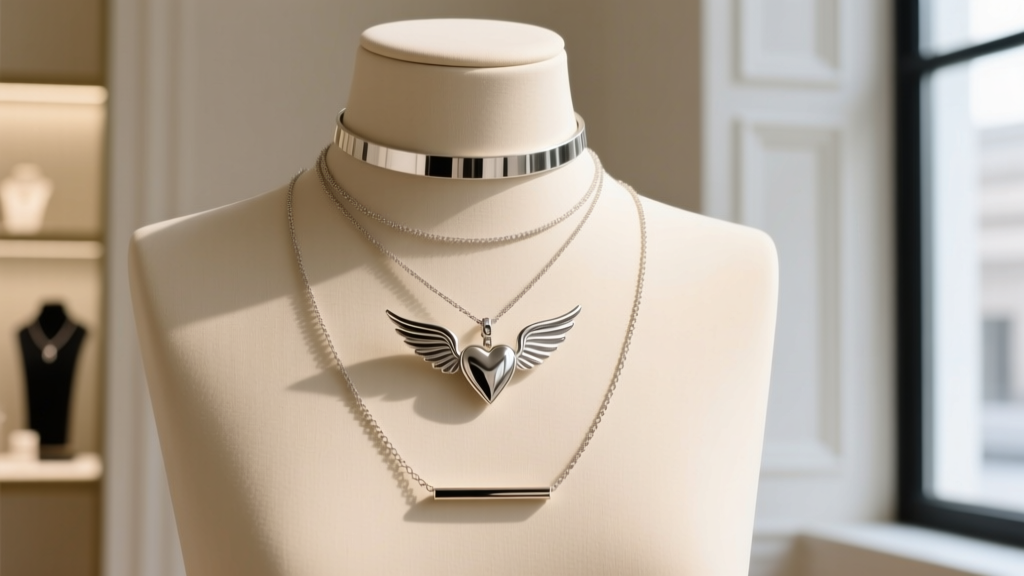
Layering a winged heart necklace requires a strategic approach to prevent the wings from catching on adjacent chains. The golden rule of necklace layering is the 2-inch spacing rule. This ensures each piece has enough negative space to move independently without tangling.
Step 1: The Anchor (14 to 16 Inches)
Start with a minimalist choker or collar. A simple 14-inch gold bead chain or a 16-inch herringbone chain sits above the collarbone. This anchor piece frames the face and provides a visual baseline without competing with the intricate detailing of the wings.
Step 2: The Focal Point (18 Inches)
Place your winged heart necklace at the standard princess length (18 inches). This allows the heart to rest perfectly in the hollow of the throat or just above the bust line. Ensure the bail (the loop connecting the pendant to the chain) is a standard open loop rather than a hidden bail, as this allows the pendant to swing freely and self-correct if it flips backward.
Step 3: The Elongator (20 to 24 Inches)
Finish the stack with a longer, vertical element to draw the eye downward. A 22-inch lariat, a simple bar pendant, or a matte-finish chain works best. Avoid adding another wide pendant at this length, as it will clash with the horizontal wingspan of the heart.
| Layer Position | Ideal Length | Recommended Chain Type | Thickness (mm) |
|---|---|---|---|
| Anchor | 14" - 16" | Herringbone or Bead | 1.0mm - 1.5mm |
| Focal (Winged Heart) | 18" | Box or Cable | 1.2mm - 2.0mm |
| Elongator | 20" - 24" | Rolo or Lariat | 0.8mm - 1.2mm |
Matching Your Necklace to Specific Necklines
The horizontal volume of the wings means you must carefully consider the neckline of your garment to avoid a cluttered silhouette.
- V-Neck and Plunging Necklines: This is the ideal pairing. The V-shape of the neckline naturally mirrors the inverted triangle shape of the heart and wings. Stick to an 18-inch length so the pendant floats in the center of the V without touching the fabric hem.
- Crew Necks and Turtlenecks: A winged heart can easily look choked against a high crew neck. If wearing a turtleneck, skip the anchor chain and wear the winged heart on a longer 20-inch or 22-inch chain over the fabric. The contrast of the metal against the knitwear creates a striking, intentional look.
- Off-the-Shoulder and Boat Necks: These necklines expose the collarbones, making them perfect for a shorter 16-inch winged heart choker. The wings will lay flat against the skin, emphasizing the décolletage without competing with fabric edges.
Troubleshooting Common Layering Tangles
The most common issue with layering a winged heart necklace is the wings catching on the links of a secondary chain, particularly snake or herringbone chains. To prevent this, never layer a textured chain (like a rope chain) directly against the pendant chain. The friction will cause micro-abrasions on the metal wings. If you must wear multiple chains that tend to knot, utilize a silicone necklace spacer clasp at the back of the neck. This small, discreet disc holds the chains parallel and maintains the exact 2-inch spacing at the front, completely eliminating the risk of the wings snagging on adjacent links.

Long-Term Care and Maintenance Protocol
The intricate crevices of the feather detailing on a winged heart pendant are magnets for lotion, perfume, and environmental dust. Proper maintenance is critical to preserve the light-reflecting properties of the metal.
The Weekly Cleaning Routine
Do not use ultrasonic cleaners on winged heart pendants, especially if the wings feature pavé-set diamonds or gemstones. The high-frequency vibrations can loosen the delicate prongs used in micro-settings. Instead, follow the guidelines recommended by the Gemological Institute of America (GIA) for safe at-home cleaning:
- Mix a few drops of mild, phosphate-free dish soap into a bowl of lukewarm water.
- Submerge the necklace for 5 to 10 minutes to loosen surface oils.
- Use a soft-bristled baby toothbrush to gently agitate the crevices between the feathers and the bail. Brush in the direction of the metal grain to avoid micro-scratches.
- Rinse thoroughly under lukewarm running water, ensuring the drain is plugged.
- Pat dry with a lint-free microfiber cloth. Avoid air-drying, as water spots can etch into silver alloys over time.
Storage Best Practices
When storing your winged heart necklace, never toss it into a communal jewelry box. The wings can easily become bent or warped if crushed under heavier pieces. Store the necklace flat in a dedicated anti-tarnish pouch, or hang it from a velvet-lined hook to maintain the structural integrity of the bail and chain. By following these precise styling and care protocols, your winged heart necklace will remain a pristine, versatile staple in your jewelry rotation for years to come.


