Japanese Bead Necklace Engineering: Beads, Thread & Weaves
Explore the technical engineering of a Japanese bead necklace. We analyze Miyuki Delica sizes, thread tension, and Kumihimo vs. off-loom weaves.

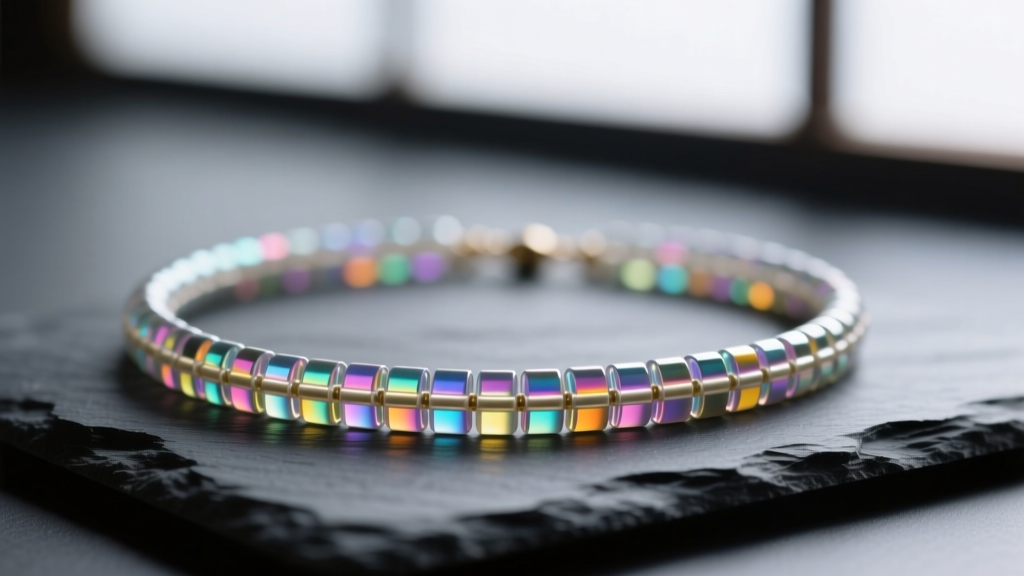
Constructing a high-end japanese bead necklace is less about simple stringing and more about structural engineering. Unlike mass-produced costume jewelry, a meticulously crafted bead necklace relies on precise material tolerances, tensile strength calculations, and geometric weave architecture. As of 2026, advancements in glass manufacturing and polymer thread technology have elevated bead weaving from a traditional craft to a precise micro-textile discipline. This guide deconstructs the technical specifications required to engineer a durable, flawless Japanese bead necklace, from the microscopic tolerances of cylinder beads to the shear strength of modern braided threads.
The Core Components: Japanese Cylinder vs. Round Seed Beads
The foundation of any premium Japanese bead necklace lies in the uniformity of the glass components. Japanese manufacturers, primarily Miyuki and Toho, dominate the global market due to their strict adherence to dimensional tolerances. While traditional round seed beads (rocaille) possess slight organic variations, modern cylinder beads are engineered for geometric perfection.
Dimensional Tolerances and Aspect Ratios
When designing a necklace that requires multiple thread passes—such as a peyote or herringbone stitch—the aspect ratio (the relationship between the bead's length and diameter) and hole size are critical. According to the official Miyuki specifications, an 11/0 Delica bead measures exactly 1.6mm in length and 1.3mm in diameter, with a hole size of 0.8mm. The manufacturing tolerance is held to an astonishing +/- 0.02mm.
By 2026, Toho's Aiko cylinder beads have pushed this tolerance even further, utilizing laser-calibrated sorting to ensure a +/- 0.01mm variance. This uniformity eliminates the 'stair-stepping' effect seen in lesser beads, allowing the necklace to drape like a fluid metallic fabric rather than a rigid plastic chain.
Structural Thread Selection and Tension Mechanics
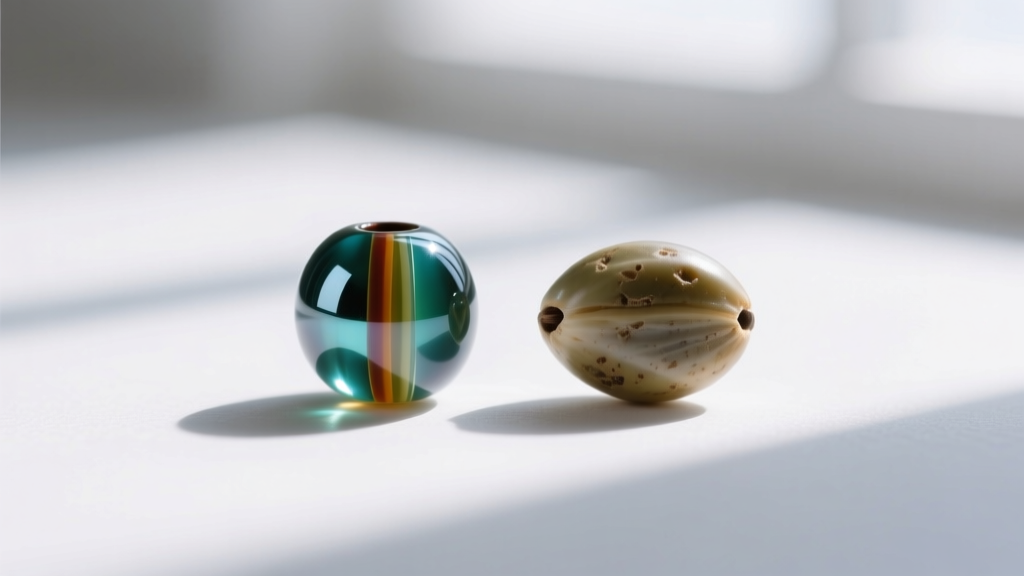
The structural integrity of a Japanese bead necklace is entirely dependent on the thread. The glass edges of seed beads, particularly those with sharp corners like hex-cut or triangular beads, act as microscopic blades that will sever standard cotton or silk threads over time.
Gel-Spun Polyethylene vs. Thermally Bonded Copolymers
Expert beaders rely on two primary categories of synthetic threads:
- Gel-Spun Polyethylene (e.g., FireLine): Rated by pound-test rather than diameter. A 6lb FireLine thread has a diameter of 0.006 inches (0.15mm). It possesses zero stretch, which is vital for maintaining rigid tubular structures like rope necklaces. However, its lack of memory means it can kink if spooled improperly.
- Thermally Fused Copolymers (e.g., WildFire): As detailed by Berkley/FireLine material science data, thermally bonded threads feature a smooth, thermoplastic coating that resists fraying and needle abrasion. A 0.0065-inch WildFire thread offers superior drape for collars and bib necklaces, as the thermal coating provides a slight memory that helps the necklace conform to the clavicle.
Expert Tip: Always pair 11/0 Japanese cylinder beads with a size 10 or 12 beading needle (such as John James). A size 12 needle has an eye width of roughly 0.45mm, allowing it to pass through the 0.8mm hole of an 11/0 Delica bead up to four times without snapping the thread or shattering the glass.
Weave Architecture: Off-Loom vs. Kumihimo Braiding
The structural behavior of the finished necklace is dictated by the weave architecture. Selecting the wrong stitch for the desired drape will result in a piece that either buckles or snaps under its own weight.
| Weave Technique | Structural Profile | Thread Consumption | Best Application |
|---|---|---|---|
| Even-Count Peyote | Highly flexible, flat, fabric-like drape. | High (approx. 8x the length of the piece) | Wide collar necklaces, geometric pendants. |
| Tubular Herringbone (Ndebele) | Dense, spring-like, high tensile strength. | Very High (approx. 12x the length) | Heavy rope necklaces, structural bezels. |
| 8-Strand Kumihimo | Solid core, spiral or chevron pattern, minimal stretch. | Low (thread is hidden inside the braid core) | Long lariat necklaces, heavy focal pendant ropes. |
The Shift to PVD Metallic Finishes
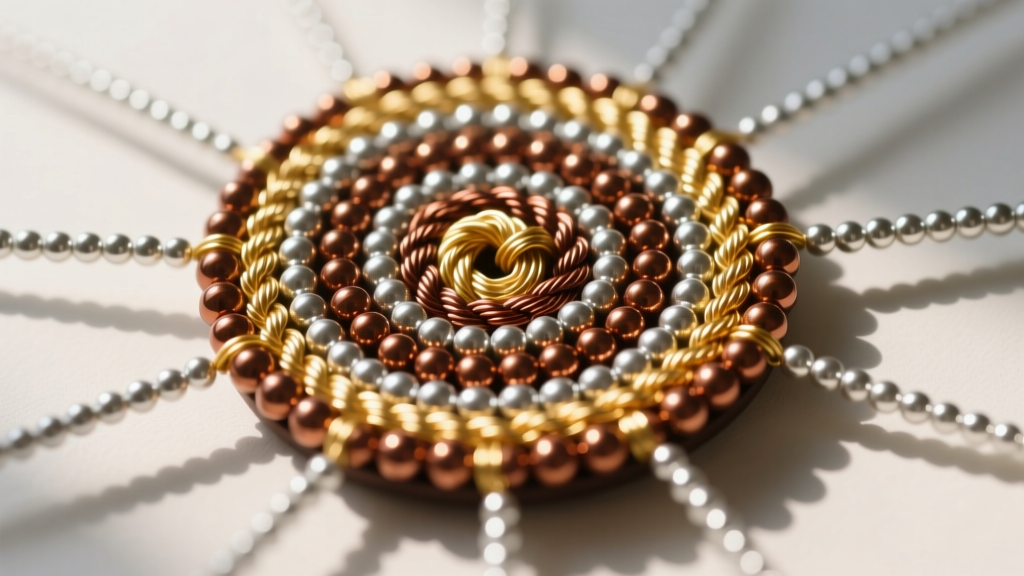
Historically, metallic Japanese beads were created using galvanic plating, which was prone to peeling when exposed to the acidic pH of human skin or friction from Kumihimo braiding disks. Recent manufacturing shifts have introduced Physical Vapor Deposition (PVD) coatings. PVD bonds the metallic layer at a molecular level, ensuring that a Japanese bead necklace featuring gold or gunmetal finishes will not degrade, even with daily wear.
Clasp Integration and Finishing Mechanics
The transition point between the flexible bead weave and a rigid metal clasp is the most common failure point in necklace engineering. Crimp beads, while standard in wire stringing, are fundamentally unsuited for synthetic threads, as the metal crushes and severs the polyethylene fibers.
The French Wire and Bead Tip Method
For off-loom weaves, the most secure finishing method involves weaving the thread back into the body of the necklace for at least two inches, creating a friction lock. For Kumihimo braids, the terminal ends must be bound with synthetic whip-stitching, inserted into a metal end-cap, and secured with a two-part jeweler's epoxy (such as Devcon 5-Minute Epoxy). Never use cyanoacrylate (Super Glue), as it dries brittle and will shatter upon impact, causing the braid to slip out of the end-cap.
Failure Modes and Troubleshooting Tension Warping
Even with perfect materials, a Japanese bead necklace can fail if tension mechanics are misunderstood.
- Edge Curling in Peyote Stitch: This occurs when the foundational row is pulled too tightly. The solution is to weave the first three rows using a larger bead or a thicker thread to establish a relaxed baseline tension, then switch to the primary thread.
- Thread Abrasion at the Clasp: If a jump ring is used to connect the weave to a lobster clasp, the microscopic burr on the jump ring's cut will saw through the thread. Always use a soldered jump ring or a seamless wire loop to eliminate shear points.
- UV Degradation of Dyed Beads: Certain vibrant Japanese beads (particularly lined and AB-coated finishes) can degrade under prolonged UV exposure. For heirloom-quality pieces intended for daily outdoor wear, specify opaque, color-lined, or metallic-finish beads from Toho's permanent finish catalog.
Sourcing and Authenticity Verification
As the demand for precision beadwork grows, the market has seen an influx of counterfeit cylinder beads that mimic the packaging of premium Japanese brands. Authentic Miyuki and Toho beads are packaged in anti-static, UV-resistant tubes with laser-etched lot numbers. When sourcing materials for a Japanese bead necklace, always verify the dye lot. Even a 1% variance in the glass coloring process between batches can result in a visible banding effect across a wide, solid-color peyote collar. By adhering to these strict engineering principles, material specifications, and weave architectures, you ensure that the resulting necklace is not merely an accessory, but a durable, micro-architectural textile designed to last generations.


