2026 Latin Trends: How to Shop for a Necklace en Español
Discover 2026 Latin jewelry trends and master essential terminology. Learn how to shop, authenticate, and style a necklace en español.

The 2026 Market Shift: Why Bilingual Jewelry is Surging
The global jewelry landscape in 2026 is undergoing a vibrant cultural renaissance, heavily driven by Latin American aesthetics and bilingual expression. As cross-cultural fashion becomes the norm rather than the exception, the demand for heritage pieces and Spanish-inscribed jewelry has skyrocketed. Whether you are navigating a boutique in Bogotá, browsing an online artisan market in Oaxaca, or simply looking to add a culturally rich piece to your collection, knowing how to shop for a necklace en español is an essential skill for the modern collector.
This surge is not just about aesthetics; it is about heritage and storytelling. Bilingual nameplates, traditional protective amulets, and region-specific gold and silver standards are dominating trend forecasts. According to market analyses highlighted by the Gemological Institute of America (GIA), consumers are increasingly prioritizing culturally significant, high-karat gold and traceable artisan silver over mass-produced, generic alternatives. To truly tap into this movement, one must understand the terminology, the material grades, and the unique hallmarking systems that define Latin American jewelry.
The Essential Glossary: Decoding a Necklace en Español
When browsing Spanish-language jewelry sites or speaking with Latin American jewelers, direct translations can sometimes lead to sizing or style misunderstandings. The architecture of a necklace is described with specific terminology that dictates its length, weight, and purpose. Below is a critical translation and specification guide to ensure you order exactly what you envision.
| Spanish Term | English Equivalent | Standard Length / Gauge | Best Use Case & Styling |
|---|---|---|---|
| Gargantilla | Choker | 14" - 16" / 1.0mm - 2.0mm | Sits tightly on the collarbone; ideal for delicate pendants or solo wear. |
| Collar | Standard Necklace | 18" - 22" / 2.5mm - 4.0mm | The versatile everyday length; perfect for medallas and mid-sized charms. |
| Cadena | Chain (Only) | Varies / 1.5mm - 6.0mm | Refers strictly to the metal link structure without any attached pendants. |
| Dije / Colgante | Charm / Pendant | N/A (Bail size 3mm - 6mm) | The decorative focal point; 'dije' usually implies a smaller charm. |
| Medalla | Medal / Medallion | N/A (Typically 15mm - 30mm) | Religious or cultural discs, often featuring intricate relief engravings. |
Understanding these distinctions prevents costly mistakes. For instance, asking for a 'collar' when you actually want a 'gargantilla' will result in a chain that sits inches lower on your chest than intended. Furthermore, Latin American jewelers measure chain thickness in exact millimeters, so specifying a 2.5mm cadena ensures you receive a substantial piece rather than a fragile 1.0mm thread chain.
Material Deep-Dive: Taxco Silver and Colombian Gold Standards
One of the most critical aspects of shopping for a necklace en español is understanding regional material preferences and hallmarking laws, which differ vastly from United States standards.
The 18k Gold Preference
In the US, 14k gold (58.5% purity) is the standard for fine jewelry due to its durability. However, across Mexico, Colombia, and much of South America, 18k gold (75% purity) is the undisputed benchmark for quality. When shopping for an oro necklace, expect a richer, deeper yellow hue and a higher price point per gram. Authentic pieces will be stamped with '750' or '18k'. If a vendor in a Latin market offers you '10k' or '14k' gold without prompting, it is often a sign that the piece was imported from the US or manufactured for the tourist trade, rather than being a traditional local creation.
Authenticating Taxco Silver
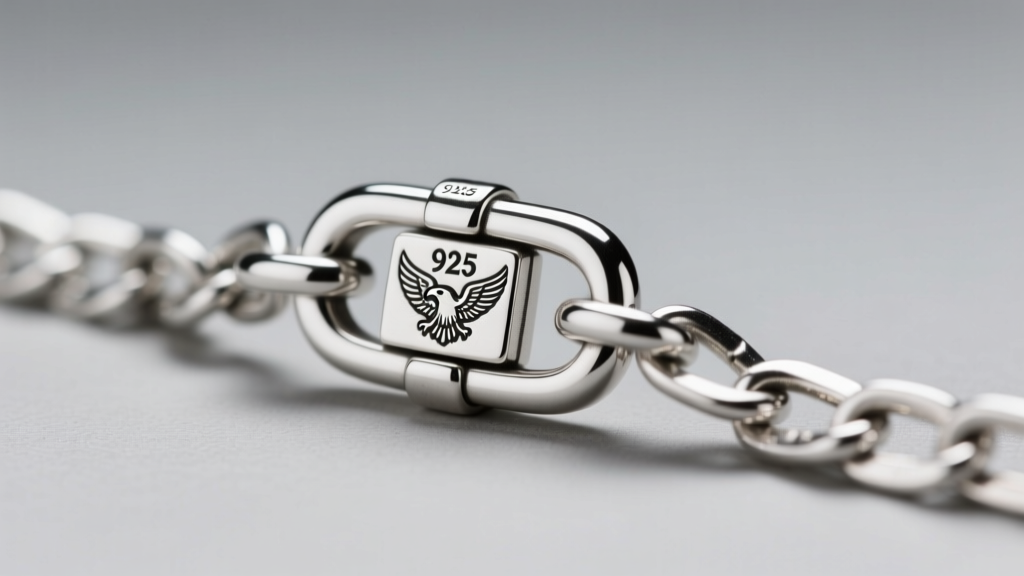
Taxco, Mexico, is globally renowned for its sterling silver craftsmanship. However, verifying authenticity requires looking beyond the standard '925' stamp. According to guidelines referenced by the Silver Institute, authentic vintage and modern Taxco pieces feature an 'Eagle' assay mark.
- Eagle 1: Indicates the piece was assayed in Mexico City.
- Eagle 3: The hallmark for Taxco, Guerrero.
- Modern Registration: Post-1979 pieces use a letter/number system (e.g., 'TC-123'), where the first letters indicate the city and artisan.
Cultural Pendants: Azabache, Medallas, and Nombre Plates
The pendant, or dije, is where the cultural narrative of the necklace truly shines. In 2026, three specific styles are dominating the Latin-inspired jewelry market:
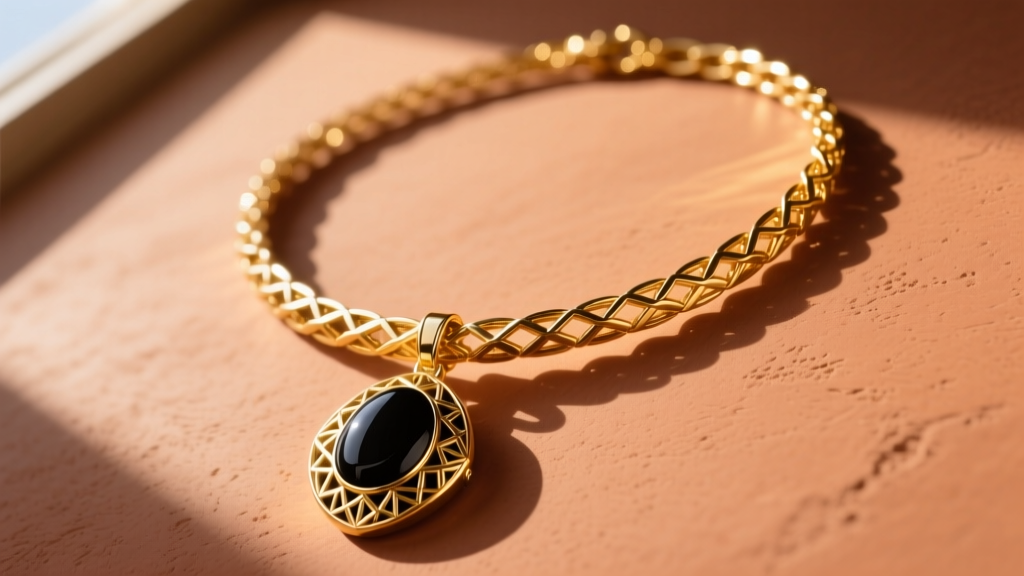
1. El Azabache (Jet): Traditionally used to ward off the 'mal de ojo' (evil eye), azabache is a deep black fossilized wood. Authentic azabache is carved, not molded, and feels warm to the touch compared to black glass or onyx. It is almost always accented with a tiny red coral bead or a 14k gold cap. A genuine carved azabache fist (the figa) pendant on a 16-inch red cord or thin gold chain remains a staple for both infants and fashion-forward adults.
2. Las Medallas Religiosas: Religious medallions, such as the Virgen de Guadalupe or San Benito, are experiencing a surge in high-fashion styling. Rather than wearing them strictly for devotion, 2026 trends see oversized, 25mm to 30mm 18k gold medallions layered over streetwear or contrasted with elegant silk blouses. Look for 'relief' carving (where the background is cut away, leaving the figure raised) rather than cheap, flat laser-etching.
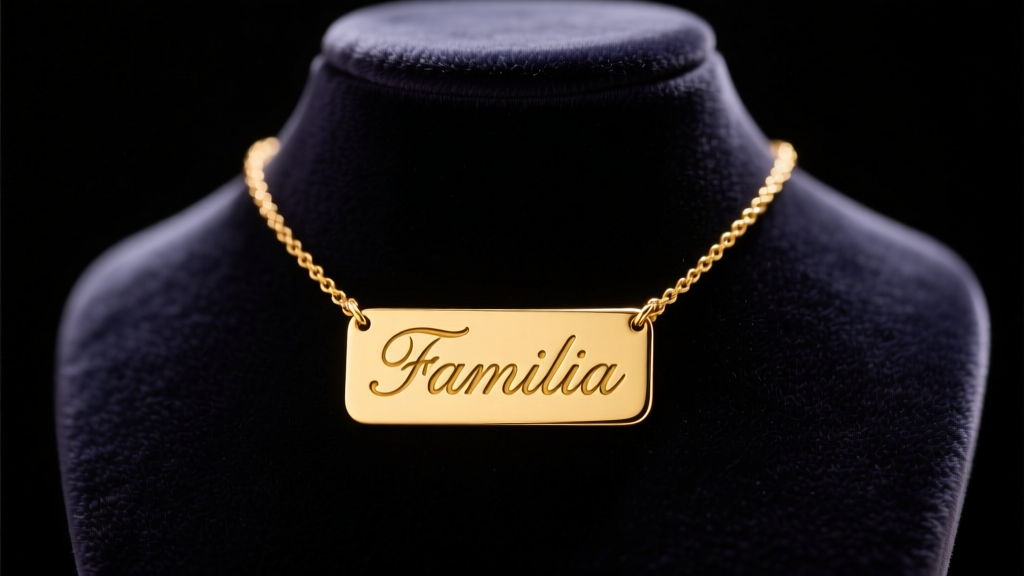
3. Placas de Nombre (Nameplates): While the Carrie Bradshaw effect popularized English nameplates, the bilingual market has embraced terms of endearment. Necklaces spelling out 'Familia', 'Mi Vida', 'Te Amo', or 'Bendecida' in sweeping, interconnected cursive scripts are highly sought after. For optimal durability, these should be cut from 1.2mm to 1.5mm thick 14k or 18k gold sheet metal, with the chain integrated directly into the first and last letters to prevent bending.
Layering the Latin Way: The 'Cascada' Technique
Layering necklaces is an art form, and the Latin approach—often referred to as the cascada (waterfall) technique—relies heavily on varying both the length and the visual weight (gauge) of the chains. To achieve this look without tangling, follow this precise structural framework:
- The Base (Gargantilla): Start with a 15-inch or 16-inch chain. Keep the gauge thin (1.0mm to 1.5mm). A simple cadena de eslabón (cable chain) with a tiny, flush-set diamond or emerald dije works best.
- The Core (Collar Medio): The second layer should sit exactly two inches below the first, at 18 inches. Increase the gauge to 2.5mm. This is where you place your primary focal point, such as an 18mm Virgen de Guadalupe medalla or a bold gold hoop.
- The Anchor (Collar Largo): The final layer drops to 22 or 24 inches. Use a heavy, textured chain (like a 4.0mm Cuban link or rope chain) that can support a large, substantial pendant. This piece should rest near the sternum, anchoring the entire visual cascade.
By strictly adhering to a two-inch drop between layers and progressively increasing the millimeter gauge of the chains, you ensure that each piece remains visible and tangle-free, creating a cohesive, high-impact silhouette that honors the rich traditions of Latin American jewelry craftsmanship.


