Silver Flower Necklace Value: 2026 Pricing & Quality Guide
Discover the true value of a silver flower necklace in 2026. Compare 925 sterling pricing, plating options, and quality markers before you buy.

The Anatomy of a Silver Flower Necklace: What Are You Paying For?
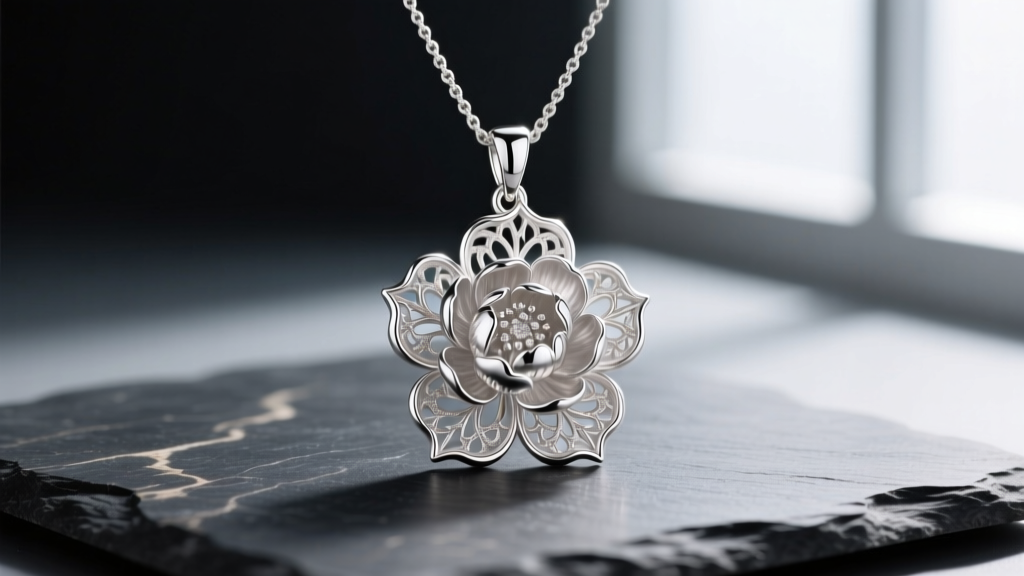
When shopping for a silver flower necklace, the botanical motif is only half the story; the metallurgy and manufacturing methods dictate the true value and longevity of the piece. In 2026, the market is saturated with everything from $15 dropshipped pendants to $300 artisan-cast floral necklaces. To assess value accurately, you must first understand the silver grade.
The industry standard for floral jewelry is 925 Sterling Silver, which consists of 92.5% pure silver and 7.5% alloy (usually copper). This copper addition is non-negotiable for intricate floral designs. Pure 999 fine silver is far too soft; if a daisy or lotus pendant were cast in fine silver, the delicate protruding petals would bend or warp under the slightest pressure. Conversely, some mass-market brands use lower-grade alloys or silver-plated brass, which will eventually peel and cause skin discoloration.
Manufacturing technique also heavily influences price and detail. Lost-wax casting allows for deep, three-dimensional petal textures and organic curves, typical of mid-tier to high-end pieces. Die-striking or sheet-metal stamping, on the other hand, produces flat, two-dimensional floral silhouettes. While stamped pieces are cheaper and lighter, they lack the structural depth and light-reflecting facets of a cast pendant.
2026 Market Pricing: Budget vs. Mid-Tier vs. Artisan
With raw silver spot prices fluctuating between $28 and $34 per troy ounce in early 2026, the intrinsic melt value of a standard 5-gram floral pendant is roughly $4.50 to $5.50. Therefore, you are primarily paying for labor, design, brand markup, and finishing (like rhodium plating). Here is a realistic pricing framework to help you gauge if a silver flower necklace is fairly priced.
| Quality Tier | Pendant Weight | Manufacturing Method | 2026 Fair Price Range | Best For |
|---|---|---|---|---|
| Fast Fashion | 1.5g - 2.5g | Stamped Sheet / Hollow Cast | $15 - $35 | Trend-chasing, temporary wear |
| Mid-Tier Commercial | 3.5g - 6.5g | Lost-Wax Cast, Rhodium Plated | $45 - $95 | Everyday wear, gifting |
| Artisan / Independent | 7.0g - 14.0g | Hand-Carved Wax, Oxidized Finish | $120 - $280+ | Heirloom pieces, unique styling |
If you encounter a heavy, intricately detailed 10-gram pendant selling for $25, it is almost certainly not solid 925 silver. It is likely a base metal like zinc alloy or brass with a microscopic silver wash.
Red Flags: How to Spot Overpriced or Low-Quality Silver
Evaluating a silver floral pendant requires a critical eye for structural integrity and legal hallmarking. According to the Federal Trade Commission (FTC) Jewelry Guides, a piece must contain at least 925 parts per thousand of pure silver to be legally stamped or marketed as "Sterling" or "925" in the United States. However, counterfeit stamps are rampant in unregulated online marketplaces.
- Porosity and Pitting: Inspect the surface of the silver petals under bright light. Cheap casting processes often result in porosity—tiny pinprick holes or a "sandpaper" texture on the metal. This not only ruins the aesthetic but creates weak points where the pendant can snap.
- The "Hollow-Cast" Dent Trap: Some manufacturers cast the back of a floral pendant as a hollow dome to save on silver weight. While this makes the piece look large and substantial, hollow silver is incredibly prone to denting. If you press your thumbnail into the back of a petal and it yields, put it back.
- Deceptive Alloys: Beware of terms like "Tibetan Silver," "Alpaca," or "Nickel Silver." These are historical trade names for copper-nickel-zinc alloys that contain zero actual silver. They are cheap, prone to severe tarnishing, and can cause allergic contact dermatitis.
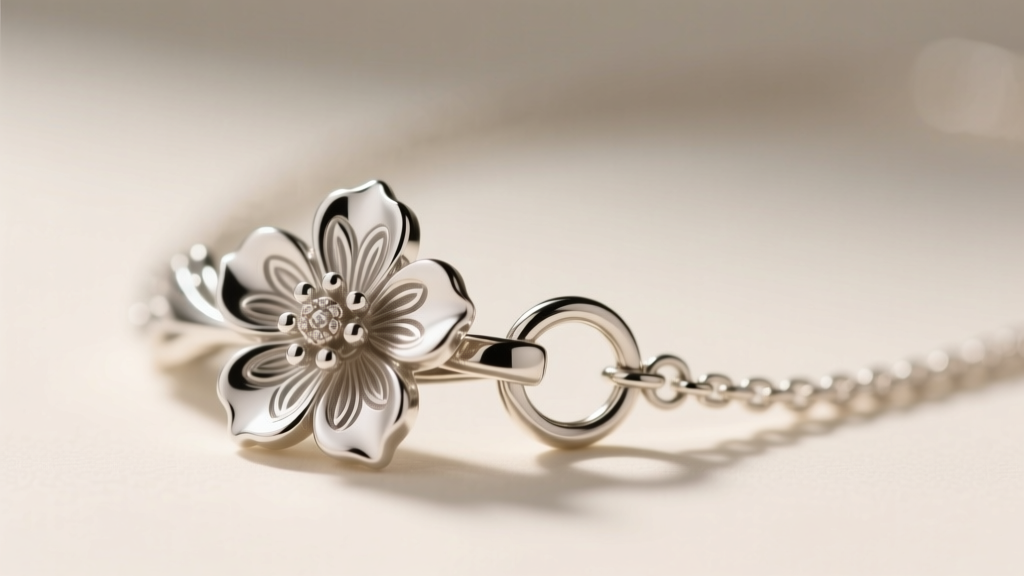
- Weak Jump Rings: The jump ring is the small loop connecting the flower pendant to the chain. On budget necklaces, this ring is often made of thin, un-soldered wire. A heavy floral pendant will easily pull this ring open, resulting in a lost piece of jewelry. Look for soldered jump rings or a minimum wire gauge of 18-gauge (1.0mm).
Chain Pairing: Matching Weight and Hardware
A common failure mode in floral jewelry is pairing a heavy, ornate pendant with an inadequate chain. A 6-gram solid silver rose or lotus pendant acts as a pendulum, placing continuous stress on the chain's links.
For pendants weighing between 4 and 8 grams, you need a chain with a minimum break strength of 15 pounds. A 1.5mm to 2.0mm cable, curb, or rope chain is ideal. Avoid delicate box chains under 1.2mm, as their square links are notorious for kinking and snapping under the shifting weight of a botanical pendant. Additionally, ensure the pendant's bail (the loop it hangs from) is large enough to slide freely over the chain's clasp; otherwise, you will be forced to open and weaken the chain's jump ring every time you put it on.
Gemstone and Enamel Accents: Do They Add Value?
Many silver flower necklaces incorporate center stones or colored petals to mimic real flora. Understanding these accents is crucial for budget assessment.
Enamel Work
Guilloché enamel (fired glass enamel over an engraved silver base) is a hallmark of high-end artisan work and adds significant value and longevity. Conversely, cold enamel (essentially a hardened epoxy resin) is used in mass-market pieces. Cold enamel will yellow, chip, and peel within a year or two of daily wear, drastically reducing the necklace's lifespan.
Center Stones
If the center of the silver flower features a gemstone, verify its origin. Cubic Zirconia (CZ) and nano-simulated stones are standard for the $40–$80 range and offer excellent brilliance. However, if a seller is charging over $150 for a silver pendant, you should expect natural semi-precious stones like moonstone, sapphire, or tourmaline, set securely in prong or bezel settings rather than glued into place.
Care & Maintenance to Protect Your Investment
Because 925 sterling silver contains copper, it will naturally oxidize and tarnish when exposed to sulfur in the air, humidity, and cosmetics. Floral designs, with their deep crevices and overlapping petals, are particularly prone to trapping moisture and tarnish.
To maintain your necklace, store it in an airtight anti-tarnish bag with a silica gel packet when not in use. If your piece features a dark, oxidized background meant to highlight the raised silver petals (a technique called patination), avoid using harsh silver dip liquids, which will strip the intentional darkening and leave the piece looking flat and overly bright. Instead, use a soft polishing cloth to gently buff only the raised, high-polish areas of the flower.
Final Verdict: Is a Silver Floral Pendant Worth It?
A silver flower necklace is an excellent investment in the $50 to $120 range, provided it is cast in solid 925 sterling silver, features a soldered jump ring, and avoids hollow-cast construction. By prioritizing metal weight, structural integrity, and quality hardware over inflated brand names, you can secure a timeless botanical piece that will endure for decades without breaking the bank.


