Restore and Repair Your Tarnished Silver Palm Tree Necklace
Is your silver palm tree necklace tarnished or broken? Learn expert troubleshooting tips to repair delicate fronds, stop green skin, and restore shine.

The Coastal Curse: Diagnosing Accelerated Tarnish
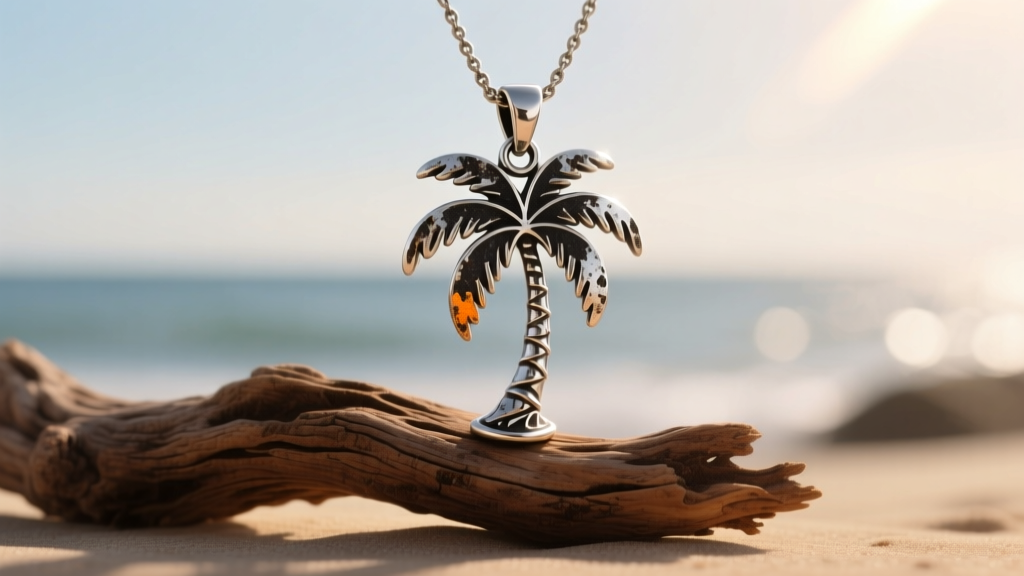
The silver palm tree necklace is a quintessential piece of coastal jewelry, evoking memories of beach vacations and tropical getaways. However, the very environments where these necklaces are worn most often are the harshest on sterling silver. If your once-bright palm pendant has turned a dull, bruised yellow or black, you are experiencing accelerated sulfide tarnishing.
Sterling silver (925) is an alloy composed of 92.5% pure silver and 7.5% copper. According to the Gemological Institute of America (GIA), it is the copper content that reacts with hydrogen sulfide and moisture in the air to create silver sulfide—the black crust on your jewelry. Coastal environments are particularly aggressive; the combination of high humidity, salt spray, and airborne sulfur creates a perfect storm for rapid oxidation.
Troubleshooting Tip: If you frequently wear your necklace at the beach, consider upgrading to an Argentium silver palm tree pendant for your next purchase. Argentium replaces some of the copper with germanium, which forms a transparent, self-healing oxide layer that drastically slows down tarnishing, making it ideal for humid, salty climates.
Troubleshooting Structural Failures: Snapped Fronds and Weak Bails
Palm tree pendants feature intricate, protruding fronds and deeply textured bark. While visually stunning, these delicate cantilevers are highly susceptible to metal fatigue and snagging. A common issue is a frond snapping off after catching on a towel, sweater, or beach bag.
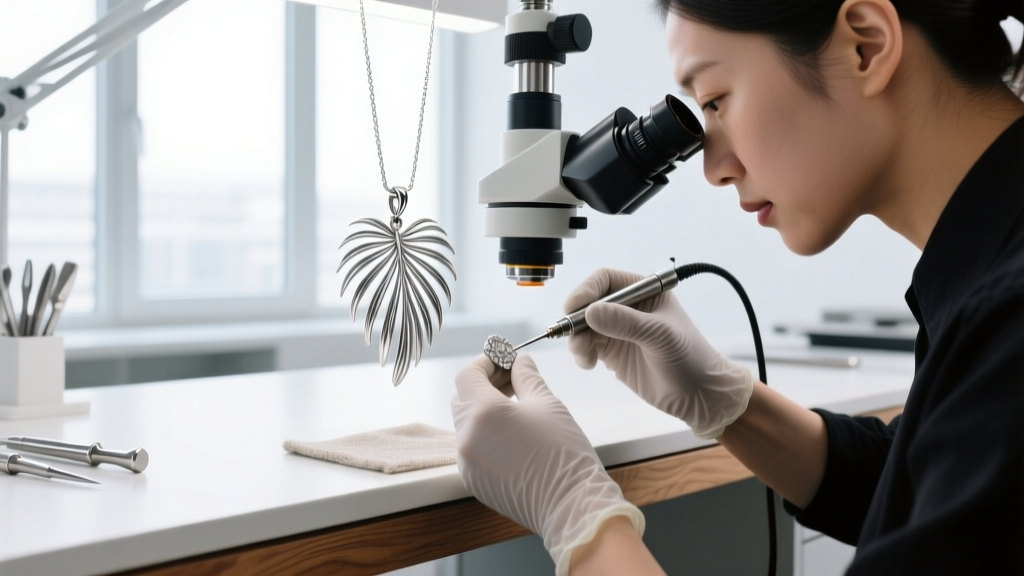
The Problem with Traditional Soldering: Many local jewelers will default to traditional torch soldering. However, applying a broad flame to a delicate 0.5mm silver palm frond risks melting the surrounding intricate details or causing the entire pendant to warp due to uneven heat distribution.
The Expert Fix: Seek out a jeweler equipped with a laser welder. Laser welding uses a highly focused beam of light to fuse metal at a microscopic level without transferring heat to the surrounding areas.
- Cost Expectation: Laser welding a single delicate frond typically ranges from $45 to $85 in 2026.
- Bail Reinforcement: If the bail (the loop connecting the pendant to the chain) is thinning, ask the jeweler to re-tube it or add a 20-gauge sterling silver jump ring to distribute the weight and prevent future snapping.
The Tangle Factor: Matching Chains to Asymmetrical Pendants
A frequent complaint among silver palm tree necklace owners is that the pendant constantly flips upside down or the chain tangles into a microscopic bird's nest. Palm tree pendants are often asymmetrical or top-heavy, meaning they require a specific chain profile to hang correctly and resist tangling.
| Chain Type | Ideal Gauge | Tangle Resistance | Verdict for Palm Pendants |
|---|---|---|---|
| Box Chain | 1.2mm - 1.5mm | High | Best Overall. The flat, interlocking squares lay flat against the skin and support the weight of detailed pendants without kinking. |
| Wheat Chain | 1.0mm - 1.2mm | Medium-High | Excellent Aesthetic. The braided look mimics natural textures, complementing the bark of the palm tree, though it can trap sunscreen. |
| Rope Chain | 1.5mm - 2.0mm | Medium | Good for Heavy Pieces. Very durable and hides scratches well, but the twisted links can occasionally catch on delicate palm fronds. |
| Cable Chain | 0.9mm - 1.1mm | Low | Avoid. Standard oval links are highly prone to tangling and lack the structural rigidity to keep a top-heavy palm pendant facing forward. |
Contact Dermatitis and the 'Green Neck' Phenomenon
If your silver palm tree necklace is leaving a green or black smudge on your collarbone, your necklace is not necessarily fake—it is reacting to its environment. The copper in 925 sterling silver reacts with the acids in your sweat, as well as the chemicals found in sunscreens, lotions, and perfumes.
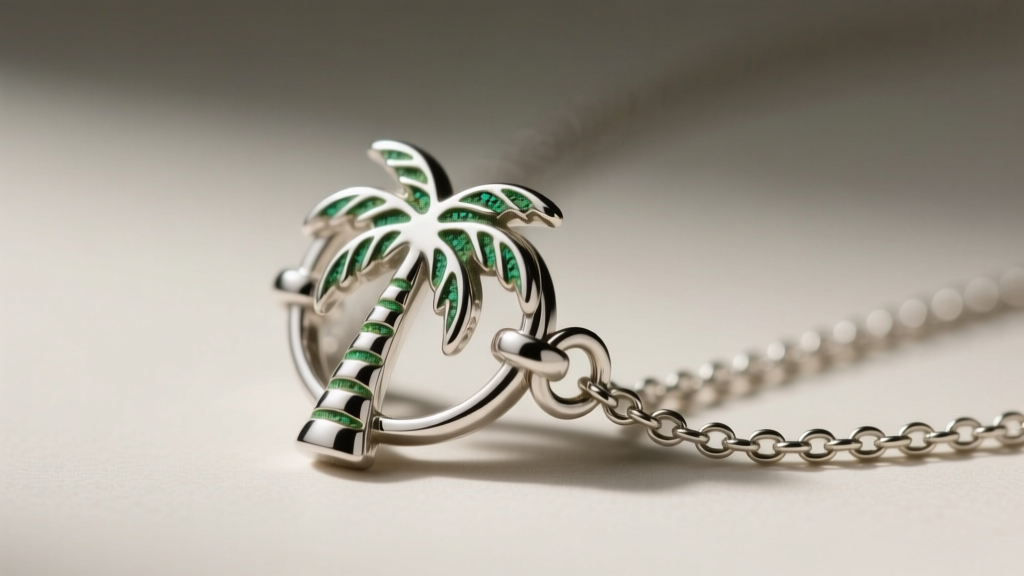
Beachgoers are especially prone to this because sunscreen often contains zinc oxide or titanium dioxide, which can accelerate the chemical reaction against copper alloys. Furthermore, if your necklace lacks a proper hallmark, it may be silver-plated brass or copper, which will cause severe green discoloration once the thin silver layer wears away. Always verify the official hallmarks to ensure you are wearing genuine sterling silver.
Troubleshooting the Green Smudge:
- Immediate Fix: Clean the back of the pendant and the chain with a polishing cloth to remove built-up copper salts.
- Long-Term Solution: Have a professional jeweler apply a rhodium plating (0.1 to 0.2 microns thick) to the back of the pendant and the inner links of the chain. Rhodium is a platinum-group metal that is completely hypoallergenic and will create a permanent barrier between the copper alloy and your skin.
Step-by-Step Restoration Without Ruining Antiqued Details
Many high-quality silver palm tree necklaces feature intentional oxidation—a process where the crevices of the bark and the underside of the fronds are blackened to provide contrast and depth. Never use the popular internet hack of baking soda, boiling water, and aluminum foil. This electrochemical reaction will strip the intentional antiquing, leaving your palm tree looking flat, gray, and lifeless.
Instead, follow this expert-approved restoration protocol recommended by the Jewelers of America:
- The Gentle Bath: Mix a few drops of phosphate-free dish soap (like Dawn) into a bowl of lukewarm water. Avoid hot water, which can weaken the adhesive if your pendant features any inlaid materials like mother-of-pearl or turquoise.
- Targeted Agitation: Submerge the necklace for 3 minutes. Use an extra-soft baby toothbrush to gently sweep along the grain of the palm bark. Do not scrub in circles, as this can create micro-scratches on the high-polish fronds.
- The Drying Phase: Rinse thoroughly under distilled water (tap water contains chlorine and minerals that cause spotting). Pat dry with a microfiber cloth, and use a hair dryer on the 'cool' setting to blast moisture out of the deep bark crevices.
- Selective Polishing: Use a treated silver polishing cloth only on the raised, high-polish edges of the palm fronds. Avoid pressing the cloth into the recessed, darkened areas to preserve the pendant's three-dimensional contrast.
Expert Insight: Store your silver palm tree necklace in an airtight ziplock bag with a silica gel packet and an anti-tarnish 3M strip when not in use. Keeping the humidity below 40% is the single most effective way to prevent silver sulfide from forming in the first place.